The Mauryan Empire stands as India’s first large-scale imperial state, offering crucial insights for students and exam preparation into sophisticated ancient governance. This detailed exploration, guided by the historical research of scholars like Romila Thapar, moves beyond the traditional view of a hyper-centralized state, revealing a complex layered administration. Key to its rise were robust economic foundations, driven by agricultural expansion, strategic trade routes, and the widespread adoption of metallic coinage, which cemented the empire’s lasting political and cultural legacy before its decline after Ashoka.
In this chapter, you will understand:
- Layered Administrative Architecture: Core, Strategic, and Peripheral zones.
- Economic Restructuring: Iron technology, virgin land clearance, and forced labor deployment.
- Trade & Monetization: Major trade arteries, metallic coinage, and guild systems.
- Imperial Decline & Legacy: Key causes of collapse and the shift to political Dhamma.
Why this topic matters: Understanding the Mauryan Empire is essential for students preparing for competitive examinations, as it marks India's first unified empire, introducing administrative frameworks, urban networks, and ethical state policies like Ashoka's Dhamma that shaped the subcontinent's history.
Core Idea: The Mauryan Empire operated not as a single uniform block, but as a flexible three-tier administrative system supported by aggressive state-driven economic restructuring. By expanding agriculture into virgin territories, monetizing trade with punched-marked coins, and maintaining major trade routes, the state sustained its imperial reach until weak successors and foreign invasions led to its fall in 187 BCE.
Understanding the Mauryan State: From Centralization to a Layered Administrative Reality
Early historical accounts often depicted the Mauryan state as a singularly highly centralized bureaucracy, functioning uniformly across its vast expanse. However, the insightful scholarship of historian Romila Thapar provided a revised and more nuanced understanding, identifying three distinct and essential administrative layers crucial for managing the diverse imperial landscape.
The Three Administrative Spheres of Imperial Control
Rather than exerting identical control everywhere, the Mauryan rulers adjusted their administrative presence based on strategic value and local resources.
- (i) Metropolitan Core:This was the heartland, centered around Magadha, where the administration was most intense and centralized, famously demonstrated by the direct imposition of pillar edicts.
- (ii) Strategic Core Areas:These regions—including key areas like Gandhara, Kalinga, Saurashtra, and the Raichur Doab—were strategically vital. They were typically governed by royal members or trusted officials but were granted a necessary degree of partial autonomy to manage regional specifics.
Peripheral Regions and Resource Extraction
In outlying frontiers, direct state administration was scaled back to minimize overhead costs while securing valuable natural reserves.
- Peripheral Regions:These were often resource-rich areas where the direct political control of the Mauryan administration was intentionally minimal, focusing primarily on economic exploitation to sustain the imperial engine rather than deep political integration.
Economic Foundations of the Mauryan Empire: Restructuring Resources for Imperial Wealth
Unlike simple kingdoms that merely utilize existing resources, the Mauryan Empire operated as a true empire—it actively restructured these resources to maximize state revenue. This economic strength was achieved through planned agricultural expansion and a massive surge in commercial activities.

- Strategic Economic Restructuring:The state directly organized resource mobilization, setting up new agrarian settlements and establishing regulated market networks.
Agricultural Expansion and Labor Mobilization: Sustaining the Imperial Economy
The groundwork for the empire’s economic prosperity was laid by the 6th century BCE, marked by simultaneous surges in agricultural expansion and rapid urbanization. The ancient treatise, the Arthashastra, clearly emphasizes the pivotal role of iron technology in driving this agrarian growth and enhancing productivity. The state actively facilitated the cultivation of new, virgin lands by settling Shudra settlers in these areas. To incentivize their effort and ensure success, they were provided with fiscal concessions, along with essential resources like seeds and cattle. Furthermore, the massive labor requirements for these projects were likely met, in part, by war captives; the staggering 150,000 people deported after the Kalinga war are believed to have served this crucial labor purpose.
- Iron Technology: Widespread use of heavy iron ploughshares allowed deep clearing of dense Gangetic forests.
- State-Incentivized Settlement: Tax breaks and state-supplied farming inputs encouraged rapid agrarian growth.
- Forced Labor Deployment: War captives from campaigns like Kalinga were relocated to work state-held lands.
Trade, Commerce, and Monetization Networks
The Mauryan economy was fundamentally supported by two interconnected pillars: the dynamic expansion of trade and commerce and the deliberate establishment of new towns and markets to facilitate exchange. This period saw a rise in long-distance travel and secure routes.
- Caravan Routes & Buddhist Literature: The Jatakas, a collection of Buddhist literature, vividly describe the journeys of caravan traders traveling vast distances, underscoring the scale of commercial activity.
Primary Arteries of Imperial Commerce
Secure trade routes were paramount for commerce, linking key urban centers such as the capital Pataliputra, Rajagriha, and Kaushambi, strategically positioned along the fertile Ganges river and the Himalayan foothills.
Examples of Mauryan silver punch-marked coins used for market trade and state salaries. - Northern Trans-Continental Link: Connected northwest India to West and Central Asia via the renowned trade hub of Taxila.
- Dakshinapatha (Southern Highway): Served as a crucial artery, connecting Ujjain to Gujarat and the Deccan region.
- Eastern Maritime Seaport: Eastern commerce flourished, leading to Tamralipti, which stood as a major seaport, critically facilitating extensive overseas trade networks.
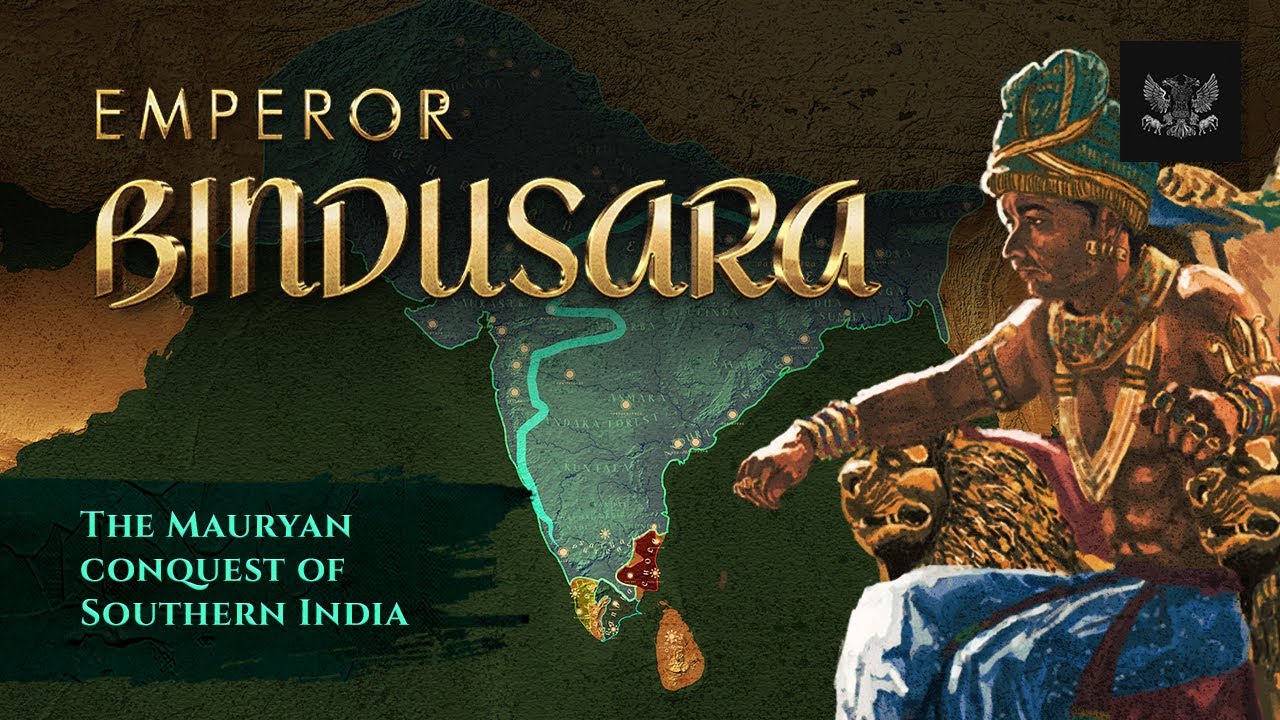
- Diplomatic & Infrastructure Support: State initiatives enhanced transport, particularly river systems, by clearing obstructive forests along river valleys. Furthermore, Mauryan diplomacy, especially under Bindusara and Ashoka, strategically fostered strong trade relations with the Greeks, ensuring external commercial stability.
Urban Economy and Coinage: Monetization and Guild Systems in the Mauryan Era
The flourishing urban life was characterized by specialized craft production and a growing monetized system. This structure reflects a complex relationship between state control and artisan autonomy.
- Artisans and Guilds:Mauryan artisans, including metallurgists, carpenters, potters, weavers, and leatherworkers, organized themselves into influential guilds. While these guilds enjoyed considerable independence in their daily affairs, the state maintained strict control over certain strategic industries, notably armaments and shipbuilding. Interestingly, artisans who provided essential services to the state were granted the significant benefit of being tax-exempt.
- Urban Planning (Durganivesa): Flourishing urban centers were home to merchants, state officials, and traders. Kautilya’sArthashastra details that the state initiated the establishment of new towns through the process of Durganivesa (fort-settlement planning), demonstrating proactive urban management.
- Full Monetization: The most impactful economic development was the widespread use of metallic coinage, which systematically replaced the older, less efficient barter systems. This shift towards a fully monetized economy was solidified by the practice of officials receiving their substantial salaries in cash.
Mauryan Administrative and Economic Breakdown
The following quick reference capsule highlights the core structural tiers, key economic mechanisms, and central goals of the Mauryan state architecture:
| Administrative & Economic Sphere | Governance Mechanism & Features | Core State Objective |
|---|---|---|
| Metropolitan Core (Magadha) | Direct bureaucratic control and direct imposition of pillar edicts. | Centralized authority and imperial command. |
| Strategic Core Areas | Governed by royal princes/officials with partial autonomy. | Regional oversight in strategic zones like Taxila and Ujjain. |
| Peripheral Regions | Minimal political interference; focused extraction of raw materials. | Resource exploitation to sustain imperial wealth. |
| Agrarian Economy | Clearance of virgin land using Shudra settlers and forced labor. | Maximizing agricultural yields and state tax revenue. |
| Trade & Monetization | Network of long-distance highways and metallic cash payments. | Commercial integration and structured state revenue. |
Analyzing the Decline and Enduring Legacy of the Mauryan Empire
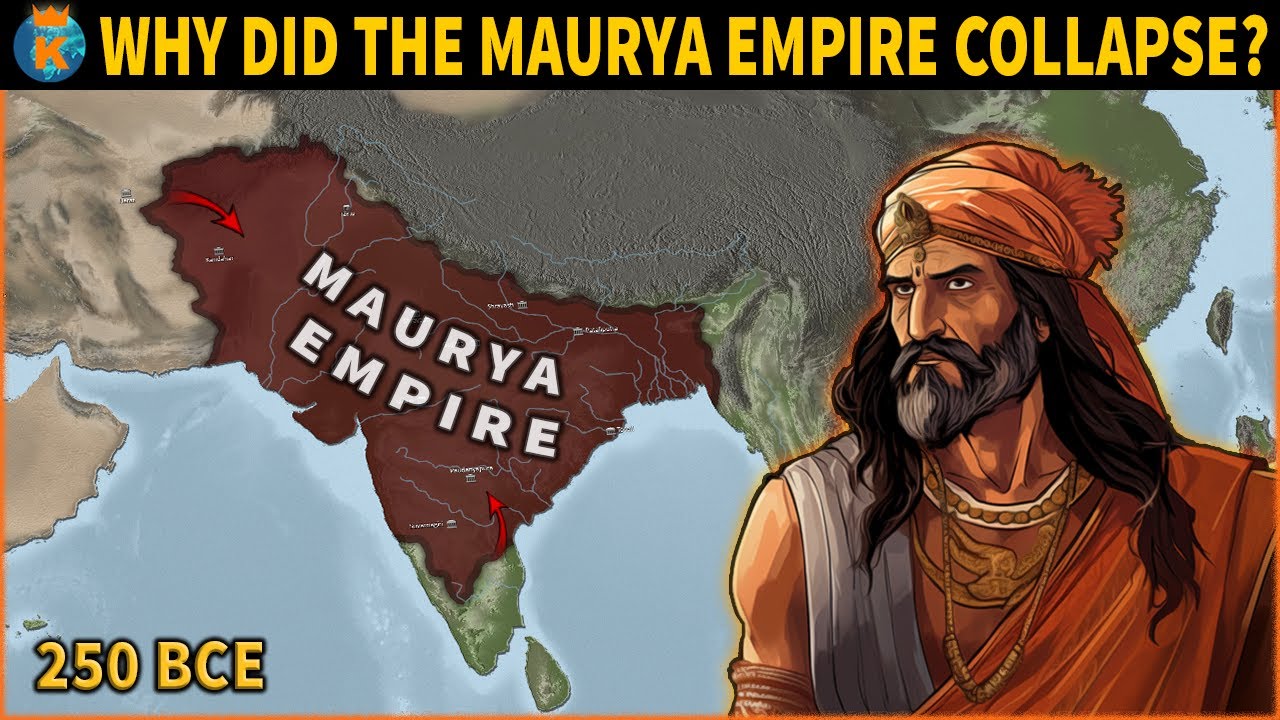
The grand empire began to show signs of critical weakness in the period immediately following the death of Emperor Ashoka. This decline was hastened by internal strife and external pressures.
- (i) Succession Weakness: Later Mauryan rulers held short reigns, leading to political instability, while regional governors gradually asserted their autonomy.
- (ii) Foreign Invasions: External threats, specifically the invasion by the Bactrian Greeks, further exacerbated the process, leading to the severe destabilization of the imperial state.
- (iii) The Collapse in 187 BCE: The formal end came in 187 BCE when Brihadratha, the last Mauryan ruler, was assassinated by his own general, Pushyamitra Shunga, who then established the Shunga dynasty, effectively concluding the Mauryan era.
Summary
The Mauryan Empire (c. 322–187 BCE) transformed ancient India through administrative innovation and economic centralism. Moving beyond rigid centralization, the empire operated across flexible layers: direct rule at the core, managed autonomy in strategic centers, and strategic resource harvesting in peripheral territories. Supported by heavy iron tool use, expanded market centers, artisan guilds, and widespread cash monetization, the state collected vast revenue. Though internal fragmentation and foreign attacks brought down the dynasty in 187 BCE, its administrative model and Ashoka's ethical turn to Dhamma permanently transformed Indian statecraft.
Quick Revision Checkpoints
Essential Facts to Memorize for Examinations:
- (i) Layered Rule: Historian Romila Thapar highlighted the three-tier framework (Metropolitan, Strategic, and Peripheral).
- (ii) Agrarian Expansion: Virgin lands were opened up using state support, Shudra settlers, and Kalinga war captives.
- (iii) Key Trade Arteries: The Dakshinapatha connected Ujjain to Gujarat, while Tamralipti acted as the primary eastern port.
- (iv) End of Dynasty: General Pushyamitra Shunga assassinated Brihadratha in 187 BCE, ending the imperial line.
- Exam Tip: Always distinguish between the administrative styles of different Mauryan zones in exam answers—remember that full central bureaucratic control applied strictly to the Magadhan core, whereas strategic regions enjoyed partial autonomy, and peripheral areas focused solely on resource extraction.
Frequently Asked Questions (FAQ)
Q1: What was the revised historical view of Mauryan administration presented by Romila Thapar?
A1: Historian Romila Thapar demonstrated that the empire was not uniformly centralized everywhere. Instead, it operated through three distinct layers: a central Metropolitan Core, partially autonomous Strategic Core Areas, and resource-focused Peripheral Regions.Q2: How did the Mauryan state actively expand agriculture?
A2: The state encouraged cultivation of virgin lands by settling Shudra settlers with tax concessions, seeds, and livestock, while also utilizing labor from captives taken during campaigns like the Kalinga war.Q3: What brought about the final downfall of the Mauryan dynasty?
A3: Internal instability following Ashoka's death, regional breakaway movements, and Bactrian Greek invasions weakened the state, culminating in 187 BCE when General Pushyamitra Shunga assassinated Brihadratha to establish the Shunga dynasty.