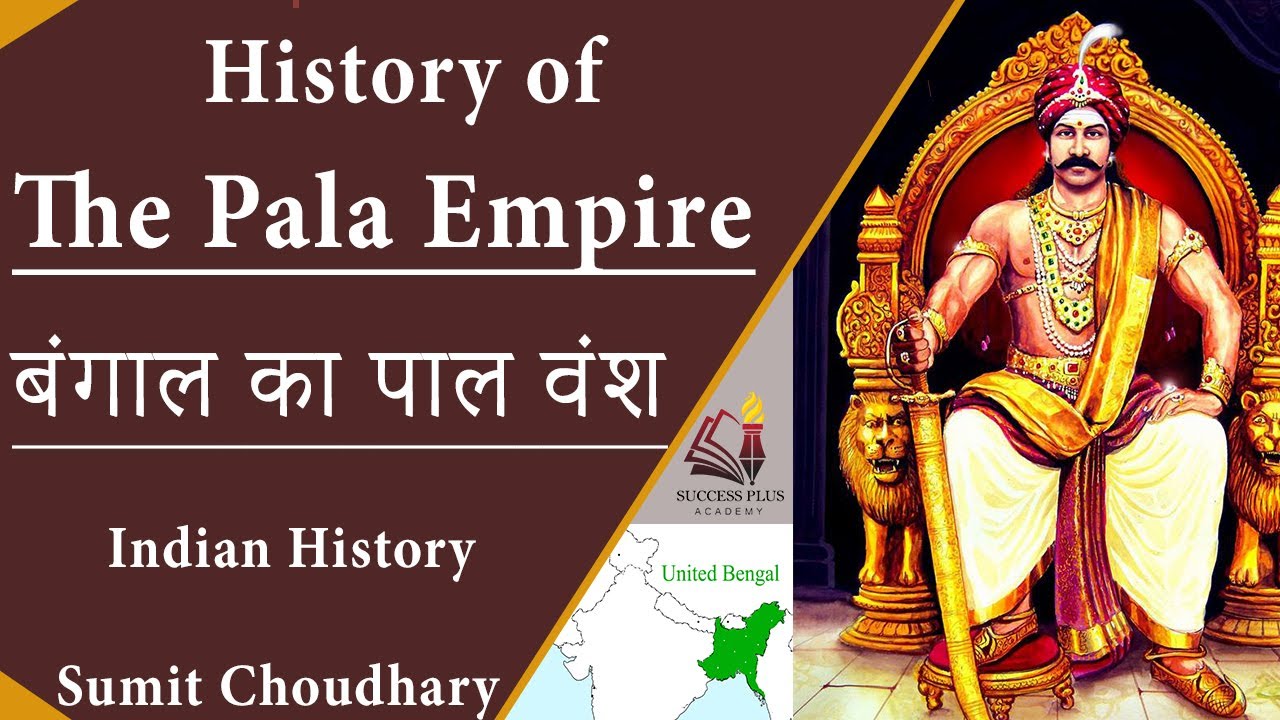
The emergence of the Pala Empire marks a major turning point in the history of medieval India. Following the collapse of Emperor Harsha's empire, northern and eastern India fell into political chaos and instability. During the mid-eighth century, the Pala family established order in Bengal and Bihar, transforming the region into a powerful kingdom. Famous for their support of Mahayana Buddhism, administrative clarity, and long-standing participation in the Tripartite Struggle, the Palas built an influential empire that extended its cultural and diplomatic reach across South and Southeast Asia.
In this chapter, you will understand:
- The origin and historical background of the Pala Dynasty.
- Key rulers including Gopala, Dharmapala, Devapala, and Mahipala I.
- Administrative divisions and governance mechanisms of the empire.
- Patronage of major Buddhist universities, art, and foreign relations.
Why this topic matters: This period is essential for understanding early medieval Indian history, political transitions, regional administrative models, and the international spread of Indian culture and monastic education.
Core Idea: The Pala Dynasty brought political stability to Eastern India following a period of anarchy. Through military strength, administrative organisation, and diplomatic ties, they established a prosperous kingdom while funding renowned educational centers like Vikramashila and Somapura Mahavihara.
Origins and Rise of the Pala Dynasty
The rise of the Pala Dynasty changed Eastern India into a core region for religion, art, and effective governance. The term Pala comes from the Sanskrit word meaning "protector", and it was used by every monarch of this ruling family. Beginning in the , the Palas ended a long period of internal conflict following the fall of Emperor Harsha, successfully securing control over the fertile territories of Bengal and Bihar.
Foundation, Anarchy, and Strategic Importance
The political environment before the Palas was defined by severe instability, which led to a unique solution for choosing a leader and shaped early Pala foreign policy.
- The founding king, Gopala, was chosen by regional leaders to end a chaotic political vacuum known as Matsya Nyaya (the law of the fish, where larger entities devour smaller ones).
The Tripartite Struggle and Asian Outreach
The strategic position of Eastern India involved the Palas in major conflicts while allowing them to build strong international relations.
- The Palas were key participants in the long Tripartite Struggle against the Pratiharas of Western India and the Rashtrakutas of the Deccan for control over the Ganga-Yamuna Doab.
- Through strategic marriages and military strength, Pala rulers maintained a respected kingdom that was widely recognized across Asia for its backing of Buddhist philosophy and scholarship.
Expansion of the Pala Empire: Key Rulers and Zenith of Power
The empire expanded through a sequence of capable rulers who combined military strategy with active support for higher learning, international trade, and monastic architecture.

- Gopala initiated stability and political order after decades of regional division.
Gopala (750–770 CE): Founder, Stabilizer, and Patron of Learning
Gopala laid the political and structural base for the empire. His election helped unify local leaders and brought peace to Bengal.
- Established the Pala Dynasty, creating the first long-lasting unified government in the region.
- Founded the famous Odantapuri Monastery in Bihar, starting a tradition of royal support for academic learning.
- His election marked a rare historical moment where local chieftains voluntarily chose a ruler to restore public order.
Dharmapala (770–810 CE): Imperial Expansion and Major Patronage
Dharmapala expanded Pala influence across northern India, turning the kingdom into an imperial power despite ongoing conflicts with rival dynasties.
- Pushed imperial control into parts of Punjab, Rajasthan, and Madhya Pradesh.
- Took the royal title Maharajadhiraja to signify his dominant political position in North India.
- Founded world-renowned monastic universities including Vikramashila Mahavihara and Somapura Mahavihara.
Devapala (810–850 CE): Diplomacy and Foreign Relations
Devapala expanded the borders further while developing active diplomatic links across Southeast Asia.
- Brought Assam (Kamarupa) under Pala influence and secured northern frontiers.
- Maintained trade and diplomatic ties with kingdoms in maritime Sumatra and Java.
- Supported King Balaputradeva of the Sailendra Dynasty in building a monastery for foreign scholars at Nalanda University.
Mahipala I (988–1038 CE): Restoration and Defense of the Realm
Often called the second founder of the dynasty, Mahipala I restored the kingdom after a period of internal decline.
- Reclaimed lost territories and rebuilt central authority across Bengal and Bihar.
- Repaired and restored sacred structures at Nalanda, Sarnath, and Bodh Gaya.
- Successfully defended his kingdom against the northern expedition led by the Chola monarch Rajendra I.
Administration and Governance: Structure of the Centralized Monarchy
The administrative machinery of the Pala Empire was structured to maintain clear central authority while ensuring efficient governance at local levels.
- Administrative responsibilities were clearly divided from central offices down to rural villages.
Administrative Hierarchy and Local Governance
The realm was split into defined territorial units to streamline tax collection, maintain order, and handle legal matters.
Administrative organization of the Pala realm showing provinces, divisions, and districts. - Provinces were known as Bhuktis, which were divided into Vishayas (divisions), and further split into Mandalas (districts).
- Village units were managed through administrative arrangements like Khandala, Bhaga, and Pattaka for land revenue collection.
- The monarch ruled with assistance from a Prime Minister (Mahamantri) and an active council of ministers.
Quick Revision Capsule: Key Pala Rulers and Achievements
This table summarizes the core contributions, key milestones, and notable achievements of prominent Pala monarchs:
| Ruler | Regain Period | Key Historical Achievements |
|---|---|---|
| Gopala | Elected to end Matsya Nyaya; founded the dynasty; established Odantapuri Monastery. | |
| Dharmapala | Expanded into North India; took title Maharajadhiraja; founded Vikramashila & Somapura Mahaviharas. | |
| Devapala | Extended power to Assam; formed diplomatic ties with Java/Sumatra; patronized Nalanda. | |
| Mahipala I | Restored lost territories; repaired Bodh Gaya & Sarnath; resisted the Chola invasion. | |
| Ramapala | Suppressed the Kaivarta rebellion; briefly restored stability in Bengal before final decline. |
Summary
The Pala Dynasty established political order, religious patronage, and artistic achievement across Eastern India for over four centuries. By replacing period chaos with structured administration, key monarchs created an environment where international trade, diplomatic relations, and Mahayana Buddhist learning flourished. Their architectural and educational legacy, preserved at sites like Vikramashila and Somapura, remains a fundamental chapter in early medieval Indian history.
Quick Revision Notes
Core facts to review for quick examination preparation:
- (i) Gopala was chosen through a consensus process to resolve anarchy in Bengal.
- (ii) The Palas regularly fought the Pratiharas and Rashtrakutas in the Tripartite Struggle for North Indian supremacy.
- (iii) Major universities built or supported include Vikramashila, Somapura, Odantapuri, and Nalanda.
- (iv) Administrative divisions ran hierarchically from Bhukti to Vishaya and Mandala.
- Exam Tip: Remember the order of key rulers (Gopala → Dharmapala → Devapala → Mahipala I) and match each ruler to their specific educational institution (Gopala to Odantapuri, Dharmapala to Vikramashila/Somapura, Devapala to Nalanda's international wing).
Frequently Asked Questions (FAQ)
Q1: What does the term 'Matsya Nyaya' mean in Pala history?
A1: It refers to a period of total anarchy and disorder in Bengal before 750 CE, where stronger local warlords dominated weaker ones until Gopala was chosen to restore rule of law.Q2: What was the Tripartite Struggle and why was it fought?
A2: It was a long-running conflict between the Palas, Gurjara-Pratiharas, and Rashtrakutas for political supremacy and control over the fertile Kannauj region in Northern India.Q3: Which major learning centers were established by the Pala rulers?
A3: Dharmapala founded Vikramashila Mahavihara and Somapura Mahavihara, while Gopala established Odantapuri, and Devapala actively maintained Nalanda University.