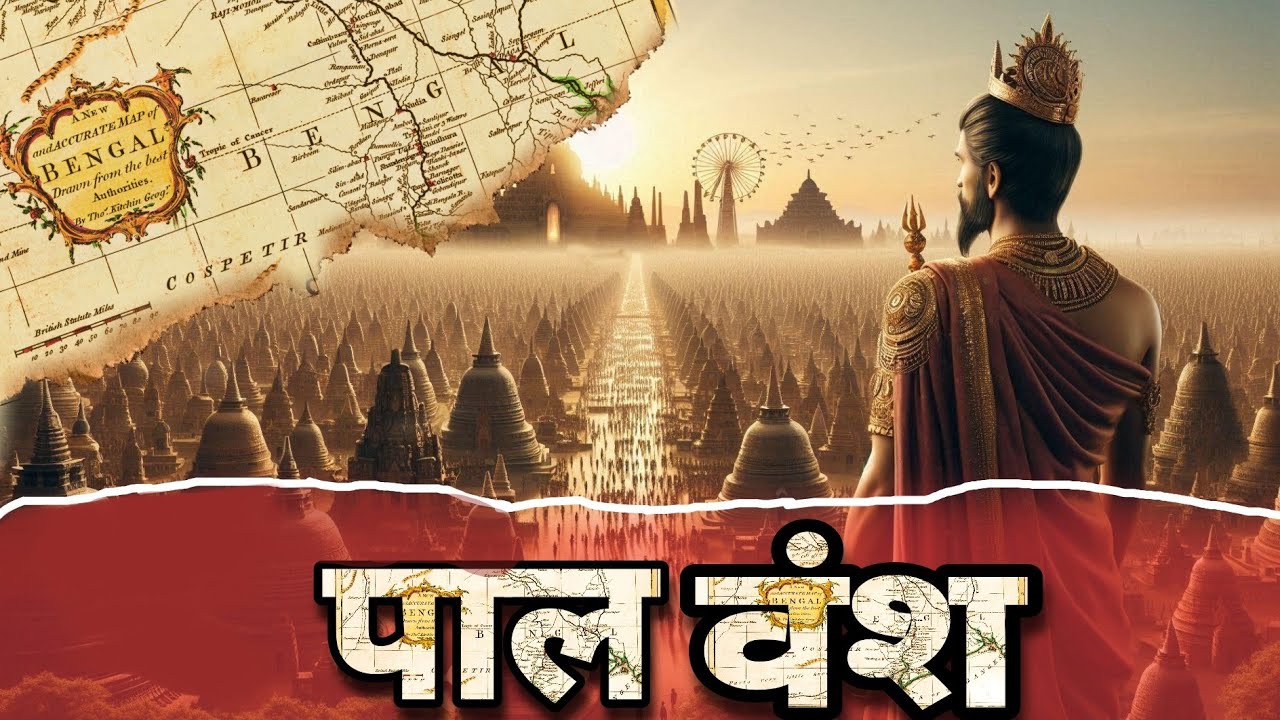
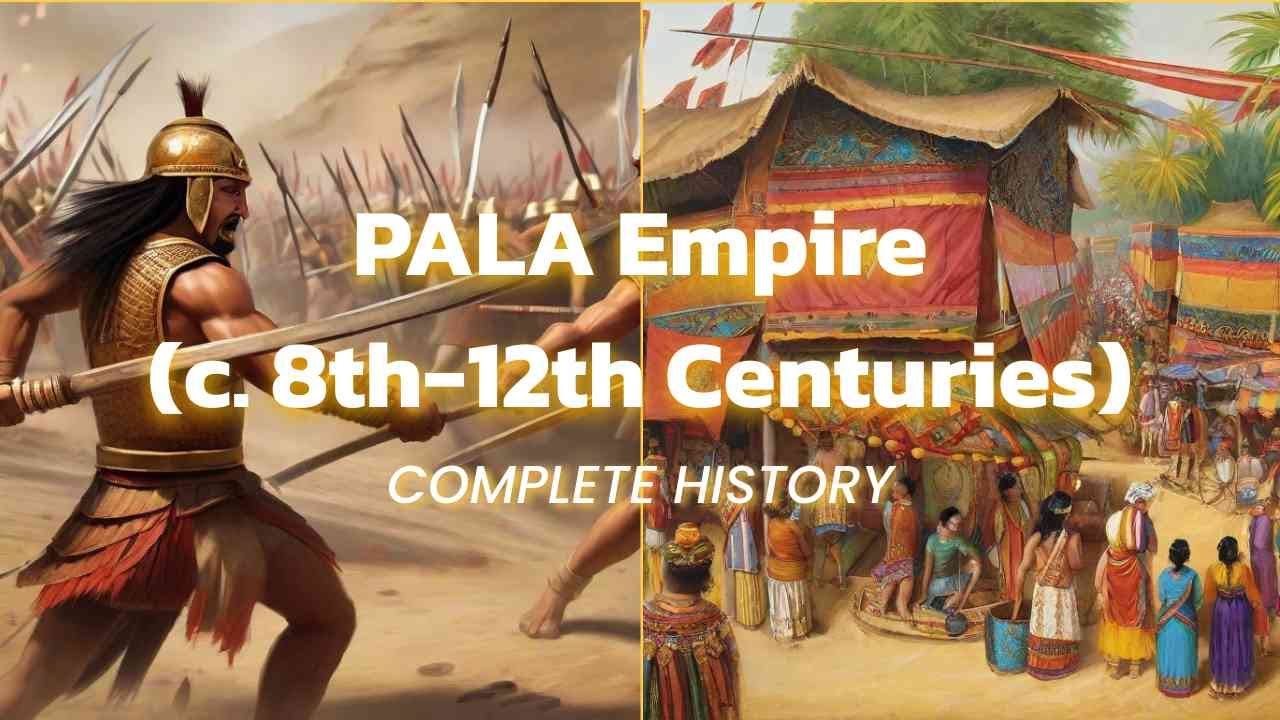
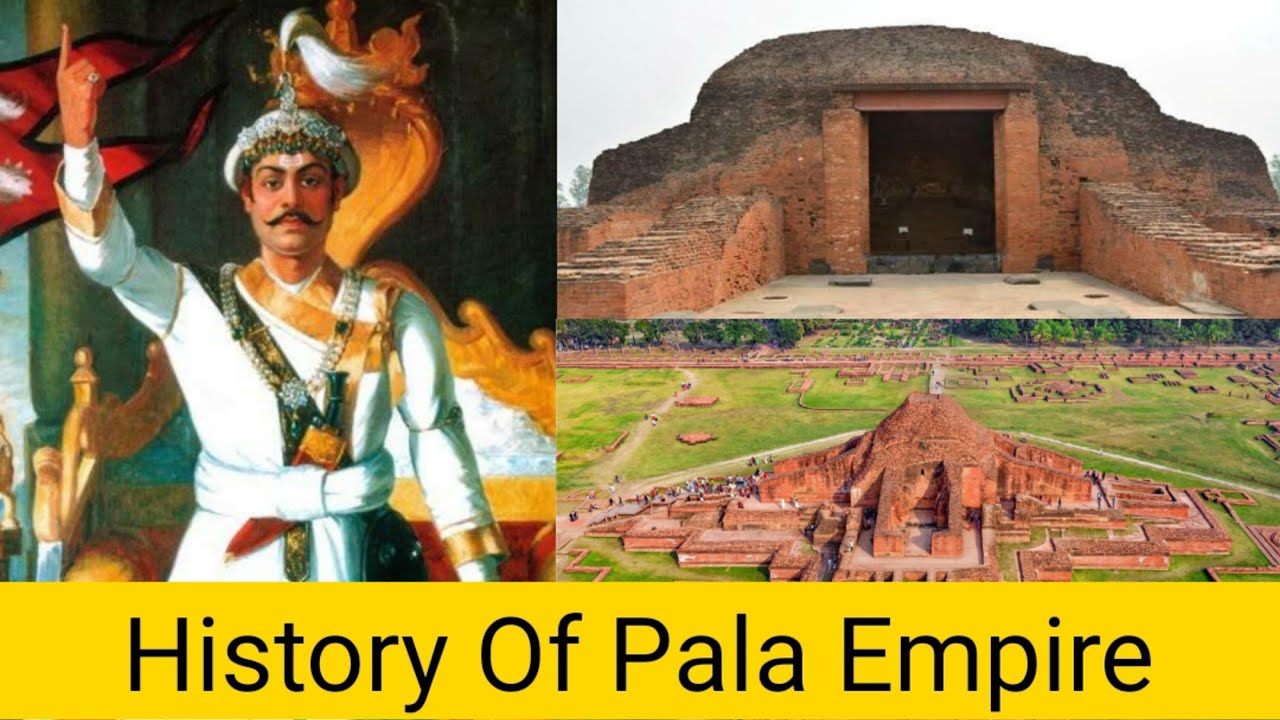
This historical narrative explores the reigns of the most influential rulers of the Pala Dynasty, notably Dharmpala and Devapala, providing an essential resource for students preparing for competitive exams. The content delves into the fierce Tripartite Struggle for Kannauj between the Palas, Pratiharas, and Rashtrakutas, and chronicles the subsequent rise, decline, and temporary restoration of Pala power in Early Medieval India, highlighting critical years and major conflicts across the subcontinent from to .
In this chapter, you will understand:
- The foundation of Pala rule under Gopala and its peak under Dharmpala and Devapala.
- The geopolitical dynamics of the Tripartite Struggle for control over Kannauj.
- The military strategies involving Pratihara and Rashtrakuta interventions in Northern India.
- The temporary revival under Ramapala and the eventual transition to the Sena Dynasty.
Why this topic matters: The study of the Pala Dynasty highlights critical political shifts, trade networks, and religious patronage in early medieval Indian history, serving as a core thematic area for competitive examinations like UPSC and State PCS.
Core Idea: The Palas built an expansive empire across Eastern and Northern India through intense military maneuvering and diplomacy. Despite repeated conflicts with the Pratiharas and Rashtrakutas over the strategic city of Kannauj, their royal patronage fostered administrative stability and cultural achievements until political fragmentation led to their replacement by the Senas.
The History of the Pala Dynasty in Early Medieval India: Victories and Declines (c. 8th-12th Century CE)
A narrative of intense imperial conflict, the Pala Dynasty's history is defined by its pivotal role in the struggle for northern Indian supremacy. The ascendancy of the Palas, beginning with Gopala around , laid the groundwork for a period of remarkable cultural and political influence, which peaked under his immediate successors.
Geographical Reach and Core Territories
The dynasty primarily controlled regions of Bengal and Bihar, but its imperial ambitions frequently brought it into direct confrontation with other dominant powers in northern and central India.
- The reigns of Dharmpala and his son, Devapala, represent the zenith of Pala power, marked by significant territorial expansion and cultural patronage.
Importance of the Gangetic Plains
The political landscape of the Gangetic plains during this era was fragmented, making control over the imperial city of Kannauj synonymous with dominance in northern India.
- Control over Kannauj ensured dominance over rich trade routes across the Gangetic belt.
- Sovereignty over this central region granted royal legitimacy over surrounding vassal kingdoms.
- Aggressive expansionist policies of neighboring kingdoms made lasting territorial holding difficult.
- Frequent military incursions forced the Palas to continuously defend their western boundaries.
Devapala's Reign and Imperial Achievements: Expanding Pala Dominion
Devapala, the valiant son of Dharmpala, presided over the Pala Empire for an impressive span of approximately four decades (), solidifying the structural gains of his predecessors.

Devapala: The Last Great Pala Ruler and His Far-Reaching Fame
Devapala's rule is often cited as the culmination of the Pala imperial project. According to historian R.C. Majumdar, the fame of this monarch transcended the mainland, reaching as far as the distant isles of the Indian Archipelago (Southeast Asia), underscoring the dynasty's widespread reputation.
- He is historically recognized as the last prominent and expansionist king of the Pala dynasty, maintaining vast boundaries against rival states.
Devapala's Restoration of Power and Territorial Expansion
Upon succeeding his father, Devapala focused on reinvigorating the empire's boundaries and restoring its prestige, engaging in vigorous campaigns across the subcontinent.
- His armies achieved decisive victories over the Dravidas of the south, the Gurjaras (Pratiharas), and the nomadic Hunas.
- These relentless campaigns extended Pala dominion from the snows of the Himalayas down to the Vindhyas in central India.
- The empire's reach spanned from the waters of the Bay of Bengal in the east to the shores of the Arabian Sea in the west, illustrating vast imperial control.
- Diplomatic relations were maintained with the Sailendra Dynasty of Java, leading to the establishment of a monastery at Nalanda.
The Tripartite Struggle: The Fierce Contest for Kannauj and Northern Dominance
The reigns of both Dharmpala and Devapala were marked by their participation in the Tripartite Struggle, a century-long contest for the strategic city of Kannauj.
Pratihara Expansion and Initial Clash Near Prayagraj
The Pratiharas, under the dynamic leadership of Vatsaraja, aggressively expanded their control across Rajputana and central India. This westward march of the Palas and the eastward expansion of the Pratiharas inevitably created a major geopolitical clash point.
- Rising tensions led to the first major confrontation near the confluence at Prayagraj (modern-day Allahabad).
Rashtrakuta Involvement and the Beginning of the Struggle
The introduction of the Rashtrakutas from the Deccan Plateau transformed the rivalry into a three-way conflict. King Dhruva, the powerful Rashtrakuta ruler, decisively intervened, altering the balance of power.
- Dhruva defeated both the Pratihara king Vatsaraja and the Pala ruler Dharmpala in the fertile Ganga-Yamuna Doab.
- These engagements marked the formal commencement of the Tripartite Struggle for northern dominance.
- The sudden death of Dhruva and internal strife in the Deccan forced a Rashtrakuta withdrawal, giving the Palas and Pratiharas room to regroup.
- This temporary power vacuum allowed Dharmpala to re-establish his influence over Northern India without immediate southern pressure.
Dharmpala's Imperial Assembly: Asserting Pala Supremacy
Seizing the moment of Rashtrakuta withdrawal, Dharmpala established temporary supremacy over northern India, culminating in a public display of authority at Kannauj.
Artistic representation of King Dharmpala hosting vassal rulers during the Grand Imperial Assembly at Kannauj. - He organized a grand imperial assembly at Kannauj to legitimize and symbolize his paramount position.
- The assembly was attended by numerous vassal kings, who formally acknowledged Dharmpala's suzerainty.
- Pala influence during this period extended across territories including Punjab, Sindhu, Kangra Valley, and Malwa.
Nagabhatta’s Challenge and Dharmpala’s Diplomatic Counter
The Pratiharas re-emerged as a major threat when Nagabhatta II, the ambitious son of Vatsaraja, successfully challenged Pala authority, forcing a strategic response from Dharmpala.
Nagabhatta's Military Triumphs and Pala Setbacks
Nagabhatta II defeated Dharmpala's nominee at Kannauj (Chakrayudha) and gained further victories, shifting the power balance toward the Pratiharas.
- Faced with this setback, Dharmpala opted for a diplomatic-military solution rather than fighting alone.
Govinda III’s Intervention and Restoration of Pala Dominance
Dharmpala sought assistance from the Rashtrakuta monarch, Govinda III, bringing the southern power back into northern politics.
- Govinda III invaded northern India and decisively defeated Nagabhatta II.
- This victory removed the immediate Pratihara threat to the Pala sphere of influence.
- The intervention resulted in the restoration of Dharmpala's dominance over the Gangetic plains and Kannauj.
- This outcome demonstrated how alliances and external interventions reshaped early medieval Indian politics.
The Decline of the Pala Dynasty and the Brief Restoration by Ramapala
After the death of Devapala (), the Pala kingdom entered a long period of decline, marked by internal instability, succession disputes, and external pressure.
Post-Devapala: Internal Weakness and External Invasions
Weak governance after Devapala left the empire vulnerable to external aggressors from all directions.
- The kingdom faced invasions from the Kalachuris, the Candellas of central India, and the Rashtrakutas.
- Continuous invasions eroded central authority and reduced Pala control primarily to parts of Bihar and Bengal.
Mahipala I: A Moment of Stability Against Kamboja and Chola Threats
During the late 10th century, Mahipala I () temporarily stabilized the dynasty's remaining core territories.
- He successfully repelled internal challenges and invasions by the northern Kambojas.
- He defended his territory during the northern expedition of the Chola dynasty under Rajendra Chola I around .
Ramapala’s Restoration: Subduing Rebels and Reasserting Authority
The final significant revival of Pala power occurred under Ramapala (), who sought to recover ancestral territories through military campaigns and alliances.
Ramapala's Conquests and Subjugations
His primary victory was crushing the Kaivarta Rebellion led by Divya in north Bengal (Varendra), which had threatened the heart of the kingdom.
- After securing Varendra, Ramapala extended control over Kamarupa (Assam) and parts of Odisha.
- He founded a new capital city named Ramavati to mark the restoration of royal authority.
- This revival was short-lived, as weak successors like Kumarapala and Madanapala could not sustain control.
- By the mid-12th century (), the Palas were replaced in Bengal by the rising Sena Dynasty.
Pala Dynasty Imperial Timeline & Monarchical Capsule
A structured breakdown of major rulers, key achievements, and decisive events defining the Pala Dynasty:
| Ruler / Event | Key Strategic Developments | Historical Impact & Legacy |
|---|---|---|
| Gopala I () | Elected by local chieftains to end political anarchy (Matsyanyaya). | Founded the Pala Dynasty; established initial stability across Bengal. |
| Dharmpala () | Fought in the Tripartite Struggle; held the Imperial Assembly at Kannauj. | Expanded Pala influence across Northern India; founded Vikramashila Monastery. |
| Devapala () | Campaigns against Hunas, Gurjaras, and Dravidas; established Asian ties. | Marked the peak territorial extent of the Pala Empire from Himalayas to Vindhyas. |
| Mahipala I () | Defended core territories against Kamboja invaders and Chola expansion. | Restored stability and is regarded as the second founder of the Pala Dynasty. |
| Ramapala () | Suppressed the Kaivarta Rebellion; conquered Kamarupa and parts of Odisha. | Achieved the final major resurgence of Pala power before the rise of the Senas. |
Historical Analysis: The Pala Dynasty and Evolving Early Medieval Polity
The history of the Pala Dynasty in Early Medieval India, marked by its intense Tripartite Struggle against the Pratiharas and Rashtrakutas, offers useful insights into the political evolution of the subcontinent. As noted by historian B.D. Chattopadhyay, these complex power struggles and frequent shifts in regional control directly reflect the evolving polity of the period, providing essential context for students of history. The events, from the imperial assembly at Kannauj to the final decline under Madanapala, help explain the administrative, military, and socio-political structures that shaped early medieval India.
Summary
The Pala Dynasty stands as a major power of Early Medieval India, ruling Bengal and Bihar for nearly four centuries. From Gopala's election to the expansive military campaigns of Dharmpala and Devapala, the Palas played a central role in northern Indian politics. Although weakened by internal rebellions and conflicts with the Pratiharas, Rashtrakutas, and Cholas, rulers like Mahipala I and Ramapala demonstrated remarkable resilience. Beyond politics, their enduring patronage of Mahayana Buddhism, universities like Nalanda and Vikramashila, and distinctive art styles left a lasting mark on Asian history.
Quick Revision Points
Key facts to remember for rapid examination review:
- (i) Foundation: Gopala established the dynasty around , ending a period of anarchy known as Matsyanyaya.
- (ii) Tripartite Struggle: Century-long clash between Palas, Pratiharas, and Rashtrakutas for control over Kannauj.
- (iii) Cultural Heritage: Dharmpala founded Vikramashila University, while Devapala granted lands to Nalanda Monastery.
- (iv) Final Phase: Ramapala crushed the Kaivarta Rebellion, but the dynasty ultimately fell to the Sena Dynasty in the 12th century.
- Exam Tip: Focus on the chronology and major alliances during the Tripartite Struggle. Pay special attention to Dharmpala's assembly at Kannauj, Devapala's imperial boundaries, and Ramapala's suppression of the Kaivarta revolt, as these are frequent topics in historical assessment exams.
Frequently Asked Questions (FAQ)
Q1: What was the Tripartite Struggle, and why was Kannauj so important?
A1: The Tripartite Struggle was a series of conflicts involving the Palas, Gurjara-Pratiharas, and Rashtrakutas for control over Kannauj. Situated in the fertile Gangetic plains, Kannauj was a major economic hub and a symbol of imperial authority in northern India.Q2: Who is considered the greatest ruler of the Pala Dynasty?
A2: Devapala (c. 810–850 CE) is widely regarded as the most powerful Pala ruler. He expanded the empire from the Himalayas to the Vindhyas and maintained active diplomatic ties across South and Southeast Asia.Q3: What was the Kaivarta Rebellion?
A3: The Kaivarta Rebellion was an internal uprising in north Bengal (Varendra) led by Divya during the late Pala period. It temporarily displaced Pala authority until Ramapala suppressed the revolt and reclaimed the region.