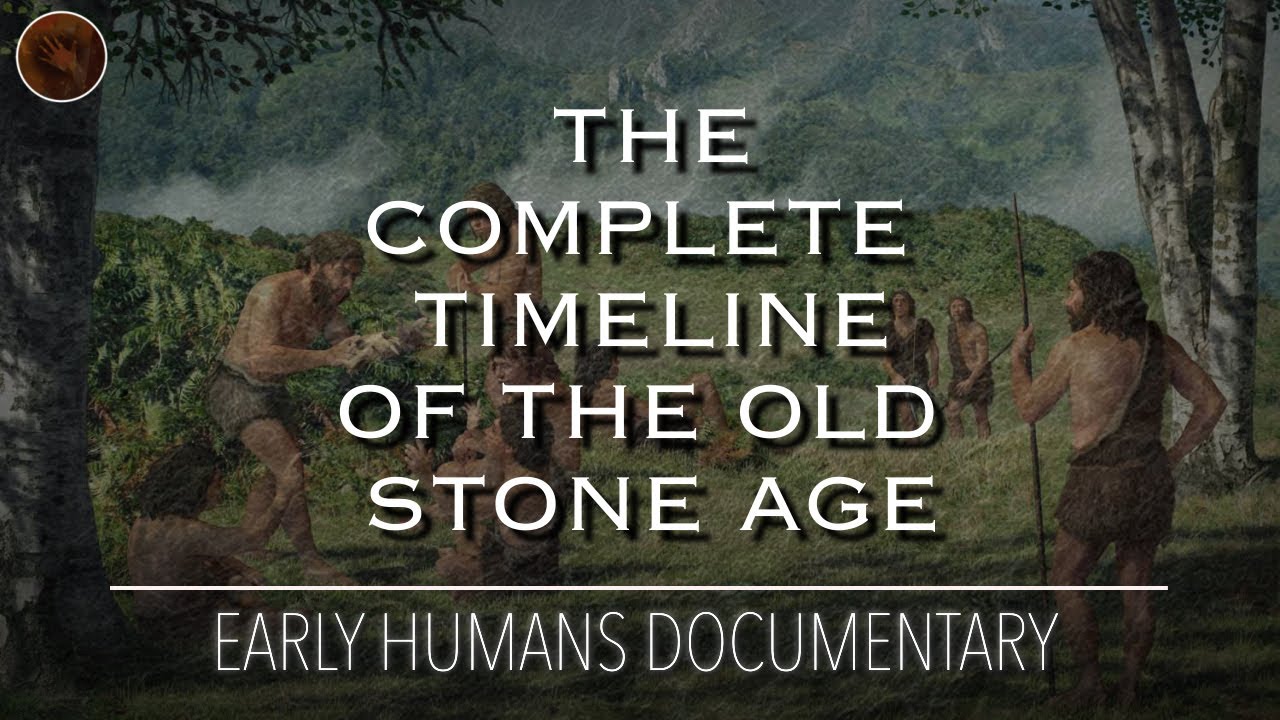
The Paleolithic Age, commonly known as the Old Stone Age, marks the earliest and longest chapter in human history. During this immense span of time, early hominids and humans survived entirely by foraging, hunting, and gathering wild resources across varied landscapes, including key regions like South India and the Soan Valley in present-day Pakistan. Lacking agricultural knowledge or permanent houses, these early groups adapted to harsh climatic shifts by refining raw stone into functional implements. Studying this era is essential for understanding human cognitive growth, environmental adaptation, and the fundamental technological stepping stones that paved the way for modern civilization.
In this chapter, you will understand:
- The definition, global timeframe, and hunter-gatherer lifestyle of the Paleolithic Age.
- The three distinct technological divisions: Lower, Middle, and Upper Paleolithic.
- The specific progression of stone tools from heavy hand-axes to fine blades and burins in India.
- The cultural breakthroughs of early humans, including the controlled use of fire, rock art, and shelter usage.
Why this topic matters: It forms the core foundation of Indian archaeological studies and prehistory, establishing how environmental changes directly shaped early human technology and settlement choices across the subcontinent.
Core Idea: Spanning from roughly to in India, the Paleolithic Era records the gradual evolutionary journey of nomadic humans. Through three major phases, early foragers moved from heavy, unpolished stone choppers to specialized flake tools and bone implements, setting the stage for settled agricultural life.
Paleolithic Age: Phases, Characteristics, and Tools (c. 500,000 B.C. to 8000 B.C.)
A story of human resilience, the Paleolithic Age represents the longest phase of human existence, defined by an absolute reliance on rudimentary, unpolished stone tools for survival. Beginning in India around and lasting until approximately , this vast period witnessed the fundamental steps of human biological and technological evolution. Key evidence has been systematically recovered from major river valleys and cave sites across the subcontinent, offering a clear picture of how early human groups adapted to shifting climates.
Core Features of Prehistoric Survival
Life during the Old Stone Age was built around immediate environmental conditions, forcing human communities to remain continuously mobile.
- (i) The entire era is defined by a subsistence strategy based purely on hunting and gathering, requiring a nomadic lifestyle tied directly to seasonal animal migrations and fruit availability.
- (ii) The main technological feature was the creation of chipped stone implements, leading to the designation of this epoch as the Old Stone Age.
- (iii) Modern interest in the Paleo diet reflects an enduring curiosity about the nutritional habits and physical endurance of these early hunter-gatherers.
The Paleolithic Period: Definition, Timeframe, and Global Divisions
The Paleolithic Period represents the primary stage of human cultural history associated with the creation of the earliest recognized stone tools. Globally, this era long precedes the invention of agriculture, animal rearing, or fixed structural housing, serving as the baseline for human toolmaking traditions across Africa, Europe, and Asia.
Defining the Paleolithic: Timeframe and the Dawn of Tool Construction
The start of the Old Stone Age is marked by the earliest physical evidence of intentional tool fabrication. Recent archaeological finds near Lake Turkana in Kenya date stone tool manufacture back to nearly . This incredible discovery indicates that basic toolmaking predated the emergence of our own genus, Homo, likely originating with earlier hominid species such as Australopithecus.
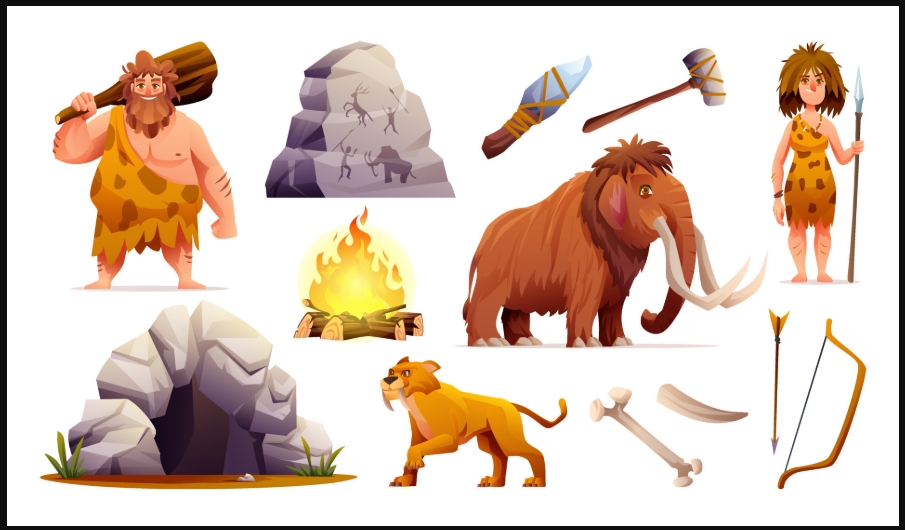
Controlled Use of Fire in the Early Paleolithic Age – A Major Human Evolutionary Breakthrough - (i) The controlled management of fire was a major milestone, offering essential warmth during cold glacial periods, protection against predators, and a way to cook meat.
- (ii) Stone implements dating back shifted scientific understanding regarding which hominid lineages first learned to manipulate physical raw materials.
- (iii) The presence of pre-Homo artifacts demonstrates that spatial awareness and manual dexterity developed far earlier in hominid lineage than previously estimated.
Three Major Divisions of the Paleolithic Era: Technology and Chronology
To better study technological progress, historians and archaeologists divide the overall Paleolithic Era into three consecutive stages based on tool refinement and geological timeframes.
- (a) Lower Paleolithic (2.6 million–200,000 years ago): Characterized by heavy core tools. This includes the Oldowan Stage of simple pebble choppers and the Acheulean Stage, famous for symmetrical hand axes and cleavers found across Africa, Europe, and Asia.
- (b) Middle Paleolithic (250,000–30,000 years ago): Marked by a transition toward smaller flake tools struck from prepared stone cores. This phase saw widespread tool standardization and regular utilization of hearth fires.
- (c) Upper Paleolithic (50,000–10,000 years ago): High innovation featuring specialized long blades, burins, and composite tools made from bone, antler, and ivory, along with a flourish of artistic cave paintings.
Toolmaking Traditions and Innovation Across the Paleolithic
The progression of tool traditions forms the primary timeline of early human development, illustrating how human problem-solving advanced from heavy crushing tools to precise cutting instruments.
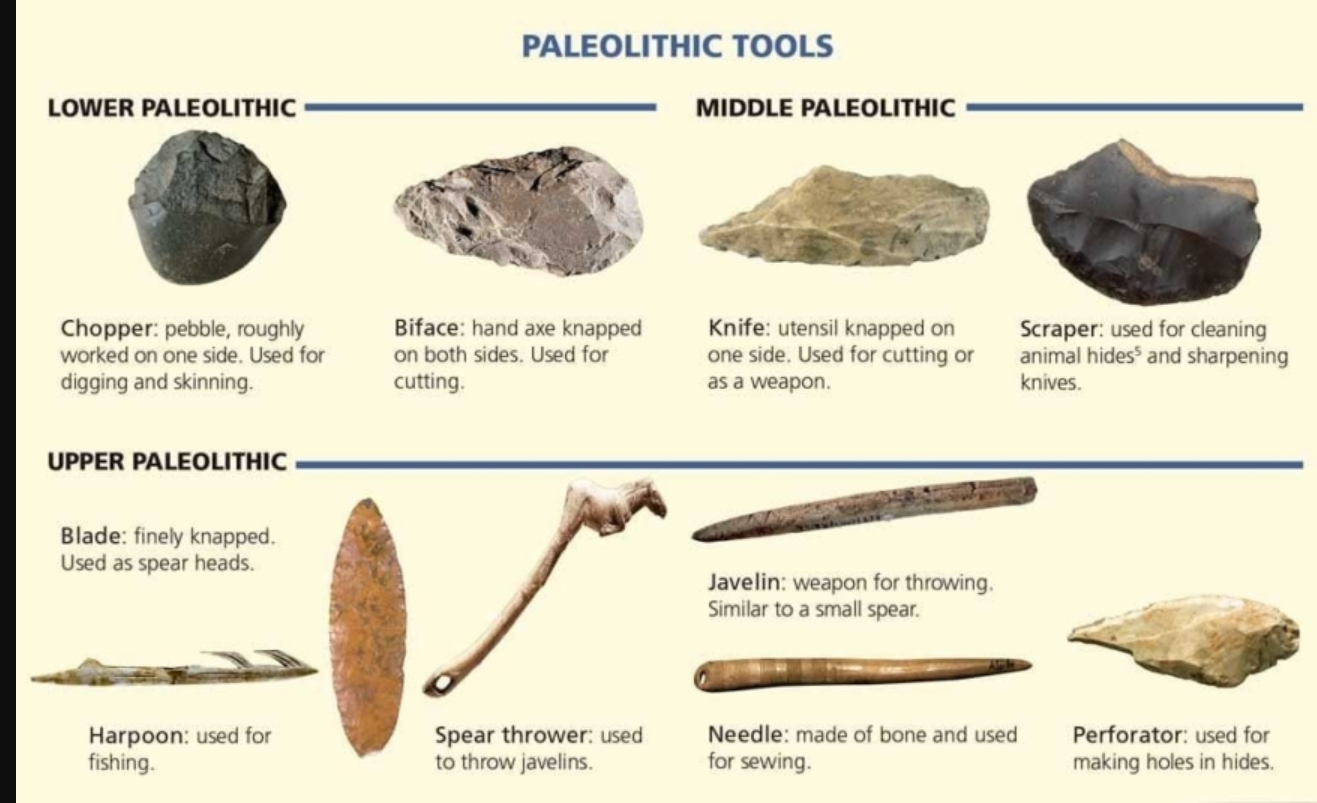
Prehistoric Paleolithic Stone Tools – Early Human Innovation in Ancient India - (i) Lower Paleolithic Tools: Simple pebble choppers and heavy bifacial tools associated with early human ancestors like Homo erectus, designed for heavy butchering and wood cutting.
- (ii) Flake Tools and Mousterian Industry: Refined flake tools characteristic of the Mousterian technique, often linked with Neanderthals, enabling the craft of specialized stone scrapers.
- (iii) Upper Paleolithic Industries: Highly specialized blade and burin industries, seen in European cultural phases like the Perigordian and Magdalenian, representing peak stone-age craftsmanship.
Art and Culture in the Upper Paleolithic Era
Beyond functional tools, the Upper Paleolithic represents the earliest clear emergence of human symbolic expression, abstract thought, and artistic creativity.
- (i) Cave Paintings: World-renowned wall art at sites like Chauvet–Pont d’Arc and Lascaux Grotto feature detailed animal depictions, hinting at ritual practices or hunting ceremonies.
- (ii) Sculptures and Figurines: Small portable art, including carved animal figures and female Venus statues, suggests symbolic beliefs surrounding fertility and group identity.
- (iii) Early Musical Instruments: Ancient flutes crafted from bone and ivory, dating past , show that musical performance was already part of community life.
Early Paleolithic Phase in India: Tools and Climate
In the Indian context, the Lower or Early Paleolithic phase covers the vast majority of the Pleistocene ice age. During this era, human populations navigated changing global weather conditions, producing heavy-duty stone tools suited for clearing forests and processing wild game.
Characteristic Tools of the Early Paleolithic Phase
Early human sites across India reveal a reliance on core tool industries, where large river pebbles were flaked down to create heavy cutting edges.
- (i) Hand-axes and Cleavers: These core tools were essential for digging roots, chopping branches, and cutting through tough hides. Early hand-axe sites linked to Himalayan glaciation sequences provide clear chronological evidence for early human presence.
- (ii) Climatic Context: This phase coincided with harsh Pleistocene cycles. Environments in India turned generally less humid during cold glacial peaks, directly influencing game movement and hunter-gatherer paths.
Middle Paleolithic Phase in India: Flake Industries and Key Sites
Following the early core-tool tradition, the Indian Middle Paleolithic represents a distinct technological move toward lighter, more portable, and specialized stone implements.
Flake Tools and Scraper Technology
The main technological feature of this period was the production of tools made from flakes struck deliberately off prepared stone cores, rather than using the heavy core itself.
- (i) Primary Tools: Specialized scrapers, borers, and points became the standard equipment, ideal for scraping animal hides and dressing wooden shafts.
- (ii) Geographical Distribution: Middle Paleolithic artifacts are widely distributed along major Indian river valleys, with notable site concentrations near the Narmada River and the Tungabhadra River.
Upper Paleolithic Phase in India: Blades, Burins, and Rock Shelters
The final phase of the Old Stone Age in India coincided with the closing stages of the last Ice Age. It brought noticeable improvements in tool craftsmanship alongside shifts in human habitat selection.
Specialized Tools and Shelter Patterns
Tool innovation peaked with long, thin parallel-sided stone blades and chisel-like burins, allowing humans to work bone and horn efficiently.
- (i) Blades and Burins: These delicate tools allowed for fine carving and engraving, leading to multi-part composite tools like spearheads.
- (ii) Habitat Preference: Early humans increasingly sought shelter in natural rock cavities and caves, such as those in central India, indicating longer seasonal stays and better environmental control.
End of the Paleolithic Age: Transition to Mesolithic and Neolithic
The Paleolithic Era came to a close roughly (around in India) with the end of the Pleistocene Ice Age and the start of the warmer Holocene Epoch. This environmental shift prompted significant adaptations in human lifestyle.
The Great Transition to New Stone Ages
Rising global temperatures altered plant and animal distributions, prompting human groups to adjust their survival strategies in two distinct steps.
- (i) Mesolithic Period: The immediate transitional stage characterized by tiny stone tools called microliths and an expanded hunting-gathering base that included intensive fishing and plant gathering.
- (ii) Neolithic Period: The final stage defined by the monumental shift to agriculture, polished stone axes, and animal domestication, bringing an end to the nomadic Paleolithic lifestyle.
Significance of the Paleolithic Age for Students and Indian Prehistory
The Paleolithic Age holds immense historical importance as it documents the initial evidence of human existence across the Indian subcontinent. Studying this progression—from rough pebble choppers to refined blades and burins—helps students track early human innovation, tool development, and environmental adaptation. Mastery of key archaeological sites, tool types, and climatic phases is essential for success in competitive examinations covering Ancient Indian History.
Quick Revision Capsule: Indian Paleolithic Summary
Below is a quick reference table summarizing the key phases, tool types, and cultural features of the Paleolithic Age in India:
| Paleolithic Phase | Key Tool Technology | Core Characteristics & Sites |
|---|---|---|
| Lower Paleolithic | Hand-axes, Cleavers, Pebble Choppers | Heavy core tools, early fire use, sites in Soan Valley and South India. |
| Middle Paleolithic | Flake tools, Scrapers, Borers, Points | Flake-based industry, sites along Narmada and Tungabhadra rivers. |
| Upper Paleolithic | Blades, Burins, Bone Implements | Parallel-sided blades, rock shelter living, early symbolic art expression. |
| Mesolithic (Transition) | Microliths (tiny geometric stones) | Warmer Holocene climate, broader hunting-gathering, specialized archery. |
| Neolithic (Outcome) | Polished Axes, Grindstones | Food production, crop cultivation, animal domestication, settled village life. |
Summary
The Paleolithic Age represents the foundational era of human history in India, spanning from roughly to Early nomadic humans relied completely on gathering wild plants and hunting animals using unpolished stone implements. The era progressed through three distinct phases—Lower, Middle, and Upper Paleolithic—each showing steady improvements in tool manufacturing techniques, from heavy hand-axes to delicate stone blades. The end of the Ice Age brought warmer conditions, leading humans through the Mesolithic transitional phase and eventually into the agricultural revolution of the Neolithic Period.
Quick Revision Checkpoints
Key facts to remember for competitive examinations:
- (i) The Paleolithic Age is the longest human prehistoric period, relying entirely on hunting and gathering.
- (ii) Lower Paleolithic sites are famous for hand-axes and chopper tools, notably in the Soan Valley.
- (iii) Middle Paleolithic culture relies on flake tools and scrapers, prominent in the Narmada Valley.
- (iv) Upper Paleolithic culture introduced blade and burin tools alongside rock shelter habitation.
- Exam Tip: Pay close attention to the technological evolution of tools across the three Paleolithic stages (Core Tools → Flake Tools → Blade Tools) and match them with their key Indian river valley sites like the Soan, Narmada, and Tungabhadra.
Frequently Asked Questions (FAQ)
Q1: What defines the Paleolithic Age in Ancient India?
A1: It is defined by a nomadic lifestyle based on hunting wild animals and gathering wild plants, using unpolished chipped stone tools between andQ2: How do Lower, Middle, and Upper Paleolithic tools differ?
A2: Lower Paleolithic relies on heavy core tools like hand-axes and choppers; Middle Paleolithic uses lighter flake scrapers; and Upper Paleolithic features refined, slender blades and sharp burins.Q3: What caused the transition from the Paleolithic to the Neolithic Age?
A3: Environmental warming at the end of the last Ice Age (~) altered animal and plant life, leading humans through the Mesolithic phase into settled farming during the Neolithic Age.