The Chandella dynasty holds a central position in medieval North Indian history. Rising from the fertile and militarily significant region of Bundelkhand during the 10th century, these rulers transformed from regional subordinates into formidable sovereigns. Their domain spanned critical strongholds such as Khajuraho, Mahoba, and the strategic Kalinjar Fort. Beyond their fierce military resistance against Mahmud of Ghazni and later expansionist armies, the Chandellas left an indelible cultural mark on the Indian subcontinent through their breathtaking temple architecture and artistic patronage. Understanding their trajectory provides valuable insights into post-Pratihara power shifts and the defense of central India.
In this chapter, you will understand:
- The geographical foundation and origin theories of the Chandella lineage.
- Political growth from Gurjara-Pratihara feudatories to independent sovereigns.
- Major military successes under rulers like Yasovarman, Dhanga, and Vidyadhara.
- The architectural, literary, and historical legacy of the dynasty through its decline.
Why this topic matters: This period illustrates how regional dynasties carved out strong political identities during the breakdown of imperial states, blending military resilience with world-renowned artistic achievements.
Core Idea: The Chandellas established a powerful kingdom in Central India centered around Jejakabhukti. Through military strategy, diplomatic coalitions, and cultural patronage, they repelled early foreign invasions and created timeless architectural masterpieces like the Khajuraho temples before eventually succumbing to the Delhi Sultanate.
Chandellas of Bundelkhand: Rise and Resilience (10th to 14th Century)
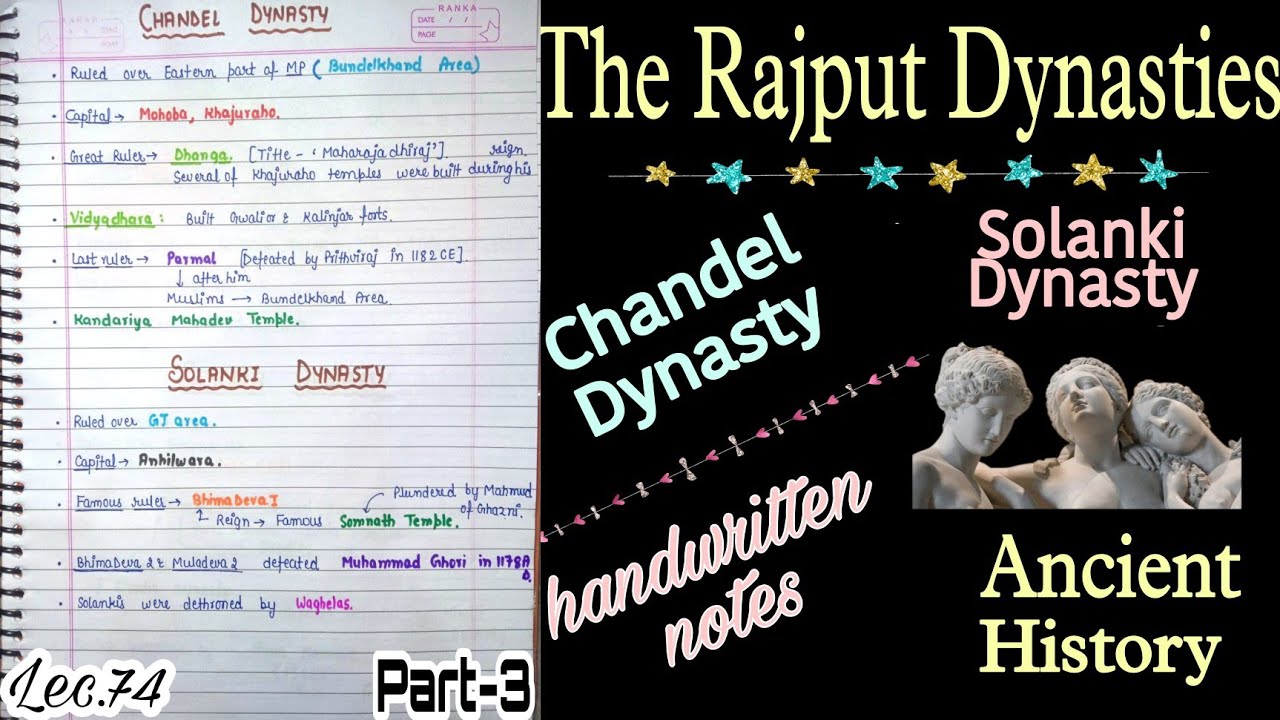
The Chandellas established their central base in Bundelkhand, positioned south of the imperial city of Kanauj. Taking advantage of the weakening imperial networks in Northern India, they built a stable regional power from the onward, making Khajuraho their major cultural center.
During the early , the Chandellas gradually asserted their autonomy from the declining Gurjara-Pratiharas. A major turning point occurred when Vidhyadhara defeated and executed Rajyapala, the last Pratihara ruler of Kanauj, for retreating before Mahmud Ghazni. This act established the Chandellas as the leading defense force in the region. Later, King Kirtivarman successfully turned back a Ghaznavid army advancing from the Punjab, proving the kingdom's tactical strength. Their rule was anchored by vital strongholds including Mahoba, Khajuraho, Ajaigarh, and the famous fortress at Kalinjar, maintaining control well into the early .
- (i) The Chandellas gained significant political traction in the , demonstrating increasing independence from the declining Gurjara-Pratiharas.
- (ii) Notable ruler Vidhyadhara played a crucial role in the political transition by defeating and killing Rajyapala, the last ruler of the Pratihara dynasty of Kanauj, for his failure to resist the invasion of Mahmud Ghazni. This act asserted Chandella dominance as the premier regional power.
- (iii) The dynasty also displayed remarkable resilience, as evidenced by the successful resistance mounted by King Kirtivarman against a formidable Ghaznavid army advancing from the Punjab, underscoring their military capabilities and commitment to defending their territory.
- (iv) The Chandella dominion encompassed critical strategic and cultural centers, including Mahoba, the capital Khajuraho, the fortress of Kalinjar, and Ajaigarh, which remained key strongholds until the early , despite persistent annexation attempts by the Delhi Sultanate.
Origin Theories and Lineage of the Chandella Dynasty
Historians hold differing views on the exact roots of the Chandella dynasty, debating whether their lineage stems from divine myths, tribal roots, or established Rajput clans.
Diverse Historical Accounts of Chandella Ancestry
Dynastic records contain varying narratives designed to validate their social status and political authority within the regional hierarchy.
- (i) Chandravamsi Kshatriyas Claim: Several Chandella inscriptions proudly claim their descent from the moon, thereby identifying themselves as Kshatriyas of Chandravamsi, lending a divine and noble status to their rule.
- (ii) Chandrabardai’s Romanticized Account: The renowned poet Chandrabardai offers a mythological origin, stating that the Chandellas were born from the union of the moon and a Brahmin girl named Hema Vati, further weaving their story into the fabric of Indian folklore.
- (iii) The Gond Chiefs Theory: Historian Prof. V.A. Smith suggested a non-Kshatriya beginning, positing that the early Chandella rulers were originally Gond chiefs who gradually assimilated into the ruling class, having governed the region around modern Chhatarpur in Central India.
- (iv) Asserted Rajput Origin: Conversely, Prof. C.V. Vaidya strongly refuted the Gond chief theory, maintaining that the Chandellas were unequivocally Rajputs of royal lineage, reinforcing their high status within the ruling military aristocracy.
Territorial Expansion, Key Regions, and Political Evolution
Starting as local rulers, the Chandellas strategically expanded their territory across vital strongholds and towns to form a sovereign kingdom.
The Heartland of Jaijakabhukti
The core territory centered around key political and religious strongholds, taking on a distinct regional name that endured for centuries.
- (a) The primary strongholds and centers of power included Khajuraho, Chhatarpur, the fortress of Kalinjar, Mahoba, and Rajgarh, which formed the geographical core of their dominion.
- (b) The entire kingdom earned the designation Jaijaka-bhukti, a name derived from the prominent Chandella ruler Jaya Sakti, highlighting his significant influence during the formative period of their reign.
Transition from Feudatory to Independent Sovereign
The shift from subordinate vassals to fully independent kings reflected broader political changes across North India during this era.
- (i) Initially, the Chandellas served as feudatories (subordinates) to the powerful Gurjara-Pratiharas, acknowledging the latter's suzerainty.
- (ii) The strategically vital Kalinjar Fort was initially under Pratihara control before the Chandellas gradually gained dominance, a major step toward independence.
- (iii) Through astute politics and military assertion, the Chandellas ultimately threw off the shackles of subordination, declaring complete independence and establishing themselves as formidable and authoritative regional rulers.
Key Achievements of Chandella Rulers: Military and Cultural Contributions
The early phase of Chandella rule focused on territorial consolidation, effective leadership transitions, and steady military growth, setting the groundwork for their zenith.

Founder and Consolidators: Chandravarman to Harsha
Early Chandella kings systematically expanded their borders, laying the institutional foundation for the larger empire that followed.
- (i) Chandravarman is credited with the foundation of the Chandella dynasty, beginning the lineage that would rule Bundelkhand for centuries.
- (ii) His son, Nannuka, succeeded him, followed by Vakapati, who significantly extended the Chandella territory through successful military campaigns and strategic annexations.
- (iii) Jaya Sakti, son of Vakapati, ruled with notable valor, and it was during his reign that the Chandella state received the enduring name Jaijakabhukti.
- (iv) Later rulers, including Vijaya Sakti, Rahel, and Harsha, continued to govern; Harsha, in particular, was famed for his bravery and assisted Bhoja Parmara in suppressing a rebellion, with his reign concluding around
Yasovarman's Extensive Military Conquests and Declaration of Independence
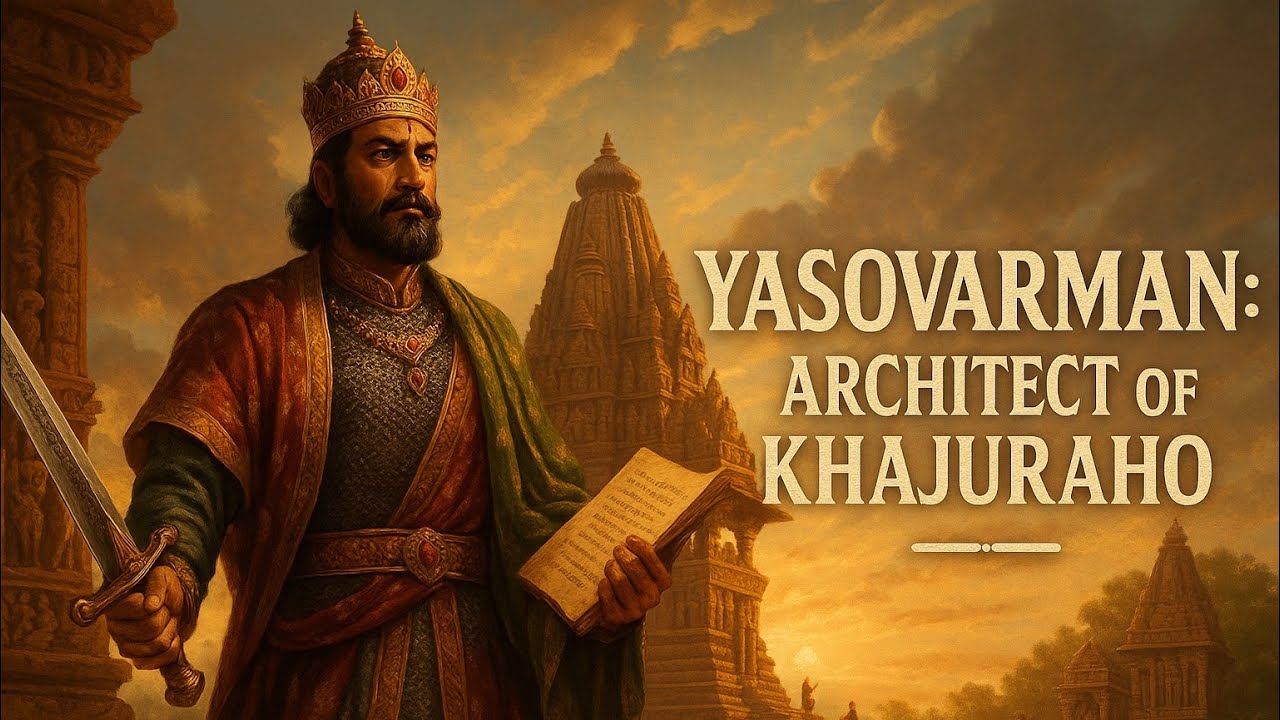
Upon taking the throne, Yasovarman severed ties with former overlords and declared complete independence, expanding Chandella influence across northern regions through vigorous military action.
Victories Over Regional Powers and Territorial Expansion
Yasovarman's field victories against neighboring states allowed the Chandellas to project power far outside their core home territory.
- (i) Eastern Campaigns (Pala and Kosala): He achieved a significant victory over Gopala-II, the contemporary Pala king, thereby asserting his dominance over the key regions of Gauda and Mithila. Furthermore, he launched attacks on the Kosala state, which was internally divided between the Pratihara and Suma dynasties, maximizing his territorial gains.
- (ii) Northern and Western Reach: His influence stretched as far north as Kashmir, and he successfully defeated the ruler of Mithila, securing the entire region under his hegemony.
- (iii) Conquest of Malwa: Yasovarman defeated Siyak, the Paramara ruler of Malwa, who was a feudatory of the Rashtrakutas, thereby bringing the rich Malwa region under Chandella authority.
- (iv) Supremacy over Kuru and Khas: He compelled Chawduraj, the king of the Khas, to accept Chandella supremacy, in addition to defeating the ruler of the Kuru kingdom.
- (v) Acquisition of Kalinjar Fort: The strategic conquest of the formidable Kalinjar Fort significantly enhanced his military reputation and secured a critical defensive and offensive base.
Reflecting his extensive power and successful conquests, Yasovarman proudly assumed the imperial title of Maharajadhiraj, ruling successfully until
Dhanga: The Zenith of Chandella Power and Defense Against Ghazni
Under Dhanga, the kingdom reached its maximum territorial reach while stepping into a leading role in defending regional borders against outer invasions.
Dhanga's Vast Territorial Empire and Conquests
Dhanga's campaigns established a wide realm stretching across central India's major river valleys.
- (a) Boundary Markers: His dominion spanned an impressive geographical area, extending from Bhilsa (Vidisha) in the south to Taunasa (near the Yamuna) in the north, and crucially, from the Yamuna River to the Narmada River.
- (b) Annexation of Gwalior and Kannauj: He successfully annexed the strategically important region of Gwalior. Initially a chief under the Pratiharas, Dhanga boldly overthrew their diminishing authority in the region, formally declaring himself an independent ruler.
- (c) Southern and Eastern Campaigns: Dhanga's military reach was immense, as he defeated the rulers of Kosala, Sinhala, Krath, and Kuntala, leading to a significant expansion of his empire. His campaigns even reached as far as Kanchi and Andhra in the south, reflecting an unprecedented projection of Chandella military might.
Dhanga's Role in Hindu Confederation Against Subuktagin
Dhanga recognized the importance of collective defense when early Turkish raids threatened northern kingdoms.
- (i) He played a critical role in defending Indian territories by joining the confederation of Hindu kings.
- (ii) This coalition supported Jayapala of Bhatinda against the initial waves of external invasion launched by Subuktagin, the father of Mahmud Ghazni.
- (iii) His strategic military interventions and leadership established Dhanga's reputation as a powerful and independent ruler committed to safeguarding the realm.
Dhanga's Cultural Patronage and Khajuraho Architecture
In addition to his political expansion, Dhanga channeled state resources into magnificent temple construction that defined medieval Indian architecture.
Commissioning the Temples at Khajuraho
Dhanga's active patronage led directly to building complex, beautifully carved stone temples at the royal ceremonial site.
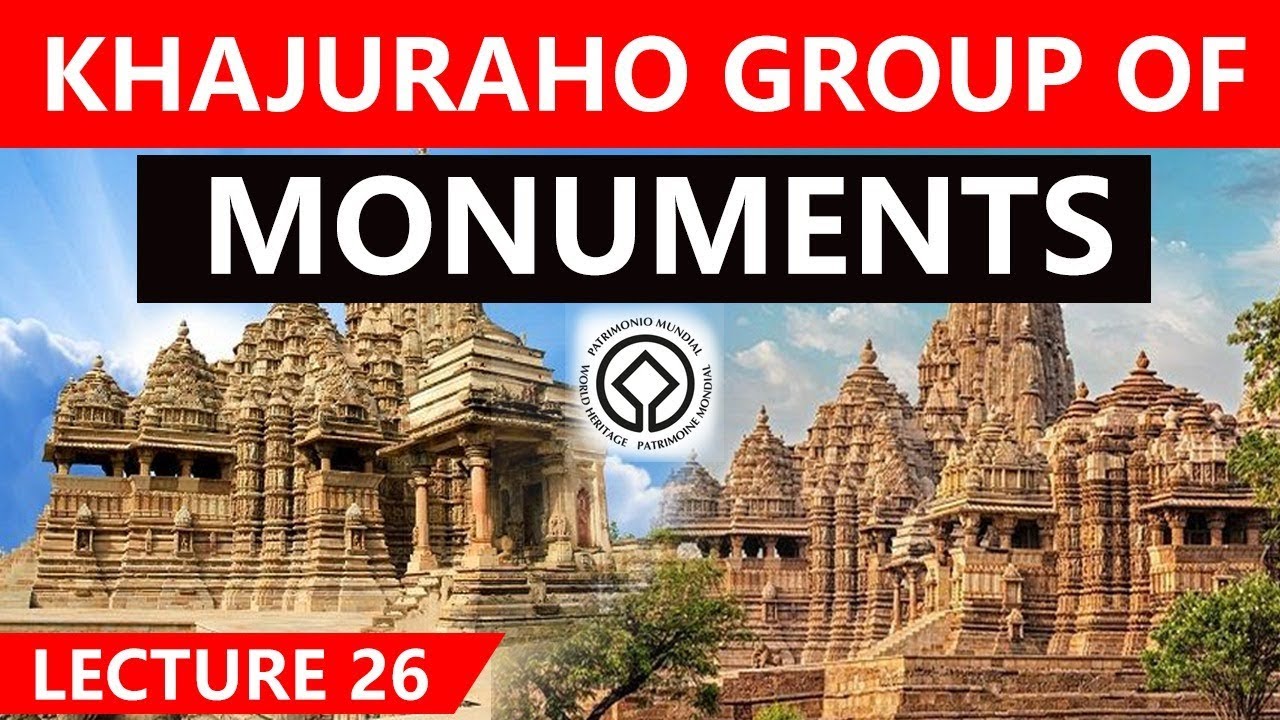
- (i) He commissioned the construction of several magnificent temples, most notably those at Khajuraho.
- (ii) These temples are a powerful showcase of the grandeur and artistic excellence of the Chandella architectural style, which remains a key part of their lasting cultural legacy.
Later Chandella Rulers: Resistance and Final Decline
Subsequent Chandella rulers continued to defend their realm against heavy pressure from Ghaznavid forces, though internal rivalries and persistent external attacks gradually eroded their holdings.
Ganda's Struggles and the Pratihara Vendetta
The turn of the century brought intense military challenges along the northern frontiers.
- (i) Ganda succeeded his father Dhanga in and displayed courage by joining a new confederation of Hindu kings to counter the intensifying Muslim invasions.
- (ii) In a strong political move, he killed Rajpala, the Pratihara ruler, as retribution for his submission to the powerful Ghaznavid ruler Mahmud of Ghazni.
- (iii) However, Ganda's resolve faltered when Mahmud launched a sudden, massive invasion, causing Ganda to flee the battlefield, demonstrating the overwhelming pressure the Chandella kingdom was facing.
- (iv) This continuous pressure from the Ghaznavids severely destabilized the Chandella state until his son, Vidyadhar, succeeded him.
Vidyadhar: The Pinnacle of Rajput Resistance
The reign of Vidyadhar marked a famous high point of military defense, highlighted by his stand against Mahmud of Ghazni and firm leadership over neighboring regional states.
Military Confrontations with Mahmud of Ghazni
Vidyadhar's defense of strategic fortresses earned him a unique place among contemporary North Indian rulers.
- (i) After Trilochanpala’s defeat, Mahmud of Ghazni invaded Vidyadhar’s territories; though Vidyadhar initially escaped, Mahmud was able to plunder parts of the Chandella lands in his absence.
- (ii) A subsequent invasion three years later saw Mahmud target the strategic Kalinjar Fort. Despite a fierce siege and prolonged battle, Mahmudfailed to breach the determined Rajput defense.
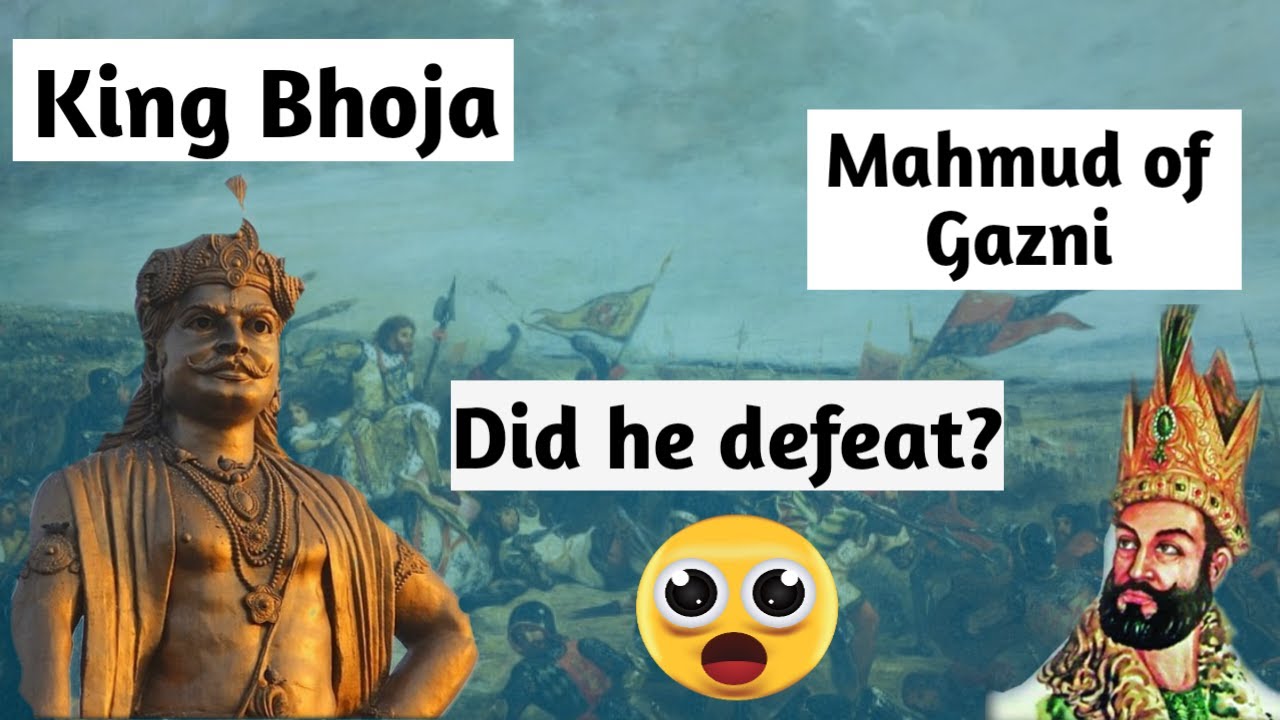
- (iii) The unwavering valor displayed by the Rajputs compelled Mahmud to abandon the siege and seek a peaceful treaty with Vidyadhar, culminating in an exchange of gifts as a symbol of the agreement, a rare military achievement against Mahmud.
Internal Conquests and Assertion of Dominance
Aside from resisting outside forces, Vidyadhar consolidated his authority over rival kingdoms in central India.
- (a) He successfully subdued major regional players, making Bhoja, the king of Malwa, and Gangeyadeva, the king of Kalachuris, subordinate rulers under Chandella authority.
- (b) Furthermore, he successfully diminished the residual power of the Pratiharas, conclusively asserting Chandella dominance over their former territories in the region.
Vidyadhar is rightly celebrated in history not just as an accomplished military leader, but as a potent symbol of Rajput resistance against the tide of foreign invasions.
Vijaipala, Successors, and the Intermediate Period
Following Vidyadhar's death, internal momentum slowed down, ushering in a cycle of fluctuating fortunes against nearby dynasties.
Vijaipala and the Start of Chandella Decline
Taking power in , Vijaipala struggled to hold together the vast empire built by his predecessors.
- (i) He achieved initial successes against the Gahadvalas, a neighboring power.
- (ii) However, a subsequent defeat marked a clear turning point, initiating the process of Chandella decline.
List of Minor Rulers Leading to Madanvarman
A sequence of shorter reigns followed, working to stabilize core territories amidst regional pressure.
- (a) The succession included rulers like Devvarman, Kirtivarman, Sallakshamanvarman, Jayavarman, and Prathvivarman.
- (b) Among these, Madanvarman was a more notable figure, primarily due to his grandson, Parmardi, who would play a crucial, if tragic, role in the final chapter of the Chandella dynasty.
Parmardi: Final Battles and the Fall of Kalinjar Fort
The reign of Parmardi brought the kingdom into direct conflict with two aggressive powers: the Chauhans of Ajmer and the expanding armies of the Delhi Sultanate.
The Legendary Battle Against Prithviraj Chauhan
Clashes between Chandella forces and Chauhan armies became central themes in regional heroic poetry.
- (i) Parmardi succeeded his grandfather Madanvarman in , inheriting a kingdom facing immense pressure from neighboring states.
- (ii) According to the famous text Prithviraj Raso, a significant battle ensued between Prithviraj Chauhan and Parmardi.
- (iii) The legendary Chandella warriors, Alaha and Udal, fought valiantly but were tragically killed in the conflict, though Jai Chand Gahadvala provided support to Parmardi.
Confrontation with Qutub-ud-din Aibak and Final Defeat
The decisive blow came when Sultanate forces mounted an extended siege against the kingdom's central defensive fortress.
The imposing ramparts of Kalinjar Fort, the primary military stronghold of the Chandellas. - (a) In the final years of Parmardi's reign, Qutub-ud-din Aibak launched a severe attack on the Chandella kingdom.
- (b) Despite Parmardi’s determined resistance, the prolonged siege of the mighty Kalinjar Fort resulted in its ultimate capture, critically due to an acute lack of water for the defenders.
- (c) The fall of Kalinjar marked a catastrophic blow, irrevocably diminishing the Chandella power, confining their subsequent rule to a significantly smaller territory and ending their dominance.
Enduring Cultural and Literary Contributions of the Chandellas
Even as their political authority waned, the artistic and literary traditions built under the Chandellas continued to flourish.
Khajuraho Temples: A Testament to Architectural Excellence
The temples built during this era stand among the finest achievements of Nagara-style stone architecture.
- (i) Their most significant legacy is the magnificent temples of Khajuraho, which are recognized globally as a UNESCO World Heritage Site.
- (ii) These temples, characterized by intricate carvings and exquisite sculptures, stand as a timeless testament to the architectural excellence and deep religious devotion fostered during the Chandella era.
Literary Legacy of Chandella Bravery
Tales of Chandella military resistance and individual heroism became deeply ingrained in North Indian folk traditions.
- (a) Literary works, such as Jaganika’s composition Alaha-Udal, immortalized the legendary bravery and martial spirit of the Chandella warriors, particularly Alaha and Udal.
- (b) This poetic work is a significant cultural artifact, continually celebrating the valor and spirit of the Rajputs during the period of Chandella reign and resistance.
Conclusion: Chandellas' Legacy for Indian History Students
The Chandellas of Bundelkhand represent a vital chapter in the history of post-classical India, showcasing the complex interplay between local assertion and external challenges. The dynasty, which flourished with key centers like Khajuraho and the fortress of Kalinjar, rose to prominence under leaders like Vidyadhara and left behind an unmatched cultural legacy in temple architecture. Their successful resistance against the early forces of Mahmud Ghazni and their ultimate fall to Qutub-ud-din Aibak provide critical insights into the political fragmentation and the beginnings of the Delhi Sultanate era. Understanding the Chandella dynasty’s political trajectory and cultural contributions is absolutely essential for students aiming to grasp the dynamics of medieval Rajput kingdoms and their lasting impact on the subcontinent.
Quick Revision Capsule
Key political milestones, leaders, and cultural achievements of the Chandella Dynasty at a glance:
| Ruler / Event | Period / Key Action | Historical Significance |
|---|---|---|
| Chandravarman & Nannuka | Early 9th–10th Century | Founding phase of the Chandella lineage in Bundelkhand. |
| Yasovarman | Rule until | Declared independence from Pratiharas; captured Kalinjar Fort; took title Maharajadhiraj. |
| Dhanga | Late 10th Century | Expanded territory to Yamuna and Narmada rivers; commissioned early Khajuraho temples; joined anti-Ghaznavid alliance. |
| Vidyadhara | Early 11th Century | Pinnacle of Chandella power; successfully resisted siege of Kalinjar by Mahmud of Ghazni. |
| Parmardi | Rule from | Fought Prithviraj Chauhan; lost Kalinjar Fort to Qutub-ud-din Aibak due to water shortage. |
Summary
The Chandella dynasty transformed Bundelkhand into a major center of political authority and artistic creation between the 10th and 14th centuries. Originating as feudatories of the Gurjara-Pratiharas, rulers like Yasovarman and Dhanga gained full sovereignty, extending their influence across central India and defending their realm against foreign incursions. Under Vidyadhara, the dynasty repelled Mahmud of Ghazni's siege of Kalinjar Fort. Although internal conflicts with the Chauhans and the eventual invasion by Qutub-ud-din Aibak weakened their power, their legacy lives on through the UNESCO World Heritage temples of Khajuraho and heroic folk compositions like Alaha-Udal.
Quick Revision Points
Essential facts to review before examinations:
- (i) The Chandella region was historical Jejakabhukti, named after early ruler Jaya Sakti.
- (ii) Major power hubs included Khajuraho (cultural), Mahoba (administrative), and Kalinjar (military).
- (iii) King Vidyadhara was one of the few Indian kings who forced Mahmud of Ghazni to lift a siege and sign a treaty.
- (iv) The fall of Kalinjar Fort to Qutub-ud-din Aibak in the early 13th century marked the end of Chandella regional supremacy.
- Exam Tip: Remember the primary rulers and their specific contributions: Yasovarman (Independence & Kalinjar capture), Dhanga (Khajuraho construction & expansion to Narmada), Vidyadhara (Resistance to Mahmud of Ghazni), and Parmardi (Fall of Kalinjar to Aibak).
Frequently Asked Questions (FAQ)
Q1: What was the historic name of the Chandella kingdom?
A1: The Chandella kingdom was known as Jaijakabhukti (or Jejakabhukti), named after an early prominent ruler named Jaya Sakti.Q2: Which Chandella ruler successfully resisted Mahmud of Ghazni?
A2: King Vidyadhara famously resisted Mahmud of Ghazni’s siege at Kalinjar Fort, forcing the invader to negotiate a peaceful agreement and exchange gifts.Q3: What lead to the eventual downfall of Chandella power at Kalinjar?
A3: During the reign of Parmardi, Qutub-ud-din Aibak laid siege to Kalinjar Fort. The defenders were eventually forced to surrender due to a critical shortage of drinking water inside the fort.