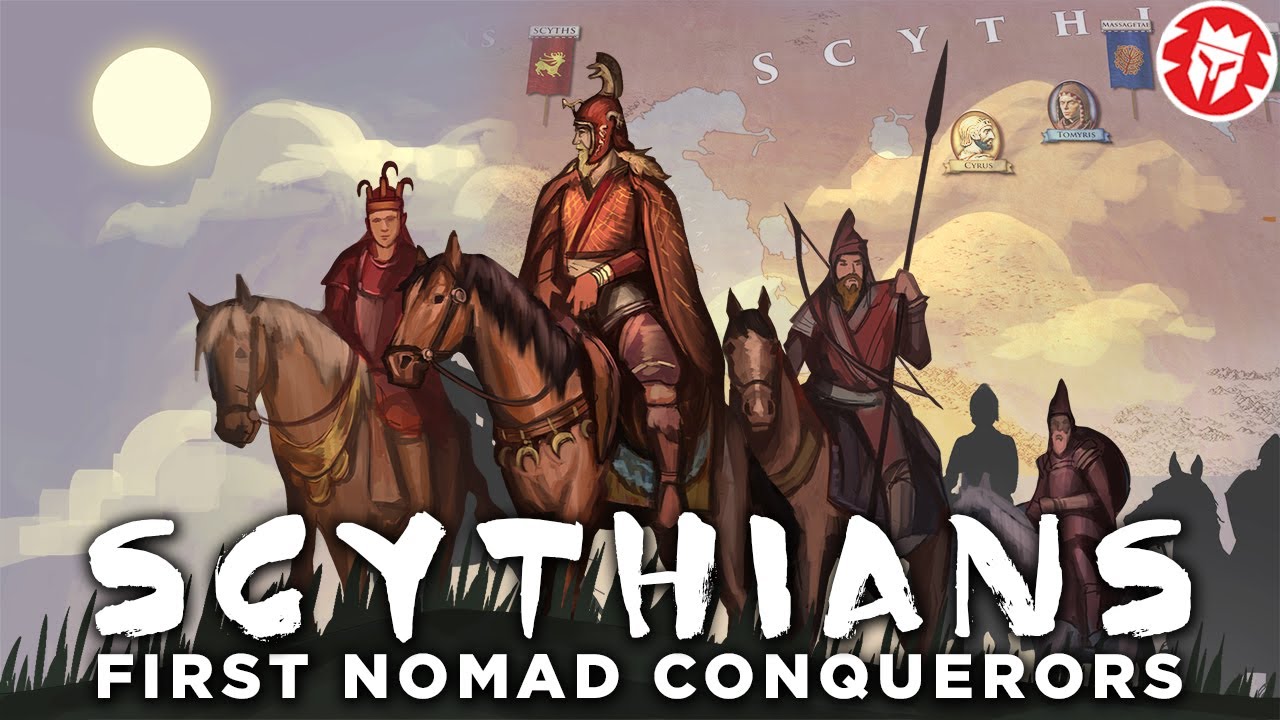
The Indo-Scythians, frequently referred to as the Shakas or Sakas in ancient Indian texts, were powerful pastoral nomadic tribes from Central Asia. Driven westward by geopolitical shifts, they crossed the high passes into the north-western reaches of South Asia. Between the and the , these nomadic horsemen transformed from frontier invaders into settled rulers, reshaping the political map after the fall of the Hellenistic Greek kingdoms. Their reign established vital trade linkages along the Silk Road, introduced sophisticated administrative institutions like the satrapy system, and encouraged deep cultural fusion across religion and art. Understanding their migrations, political branches, and lasting social integrations provides essential historical context for candidates and students studying ancient Indian history and foreign dynastic influences in the subcontinent.
In this chapter, you will understand:
- Central Asian nomadic migrations and the displacement of Bactrian Greeks.
- The administrative satrapy structure and regional branches of Shaka rule.
- Socio-cultural blending, Sanskrit royal epigraphy, and coinage innovations.
- The military interactions with Satavahanas and ultimate political decline.
Why this topic matters: High-frequency examination subject covering central political transitions, administrative innovations, coin study, and socio-cultural integration during the post-Mauryan era in ancient South Asia.
Core Idea: The Shakas migrated from Central Asia into northwest South Asia, filling political voids left by Indo-Greeks. They established five major regional centers, adopted local faiths and languages, pioneered bilingual coinage, and deeply influenced Indian governance before merging into mainstream society.
Indo-Scythians Shakas Migration Culture Rule and Historical Influence
The Shakas were formidable pastoral nomads whose military prowess, trade control, and subsequent settlement reshaped the history of the northwest Indian Subcontinent. These highly skilled horsemen infiltrated and eventually settled in territories previously controlled by Hellenistic Greek kingdoms. These Greek realms had grown vulnerable following the breakup of Alexander the Great's empire, allowing the incoming Shakas to build influential independent states across regional centers.
Origins Migration Patterns and Socio Cultural Contributions of the Shakas
This section explores the origin story of the Shakas, examining the geopolitical pressures that compelled their multi-stage migration, their expansion pathways, and their early steps toward cultural integration within Indian territories.
Background Causes of Migration and Early Settlements
The entry of the Indo-Scythians into South Asia was connected to the collapse of Hellenistic Greek Kingdoms in Bactria and larger nomadic movements across Central Asia.
- (i) Decline of Greek Kingdoms: Weakening Greek authority in Bactria coincided with aggressive nomadic raids, causing political instability across frontier regions.
- (ii) Nomadic Migrations: Pressure from groups such as the Parthians (or Pahlavas) and the Scythians fractured remaining Bactrian control.
- (a) Scytho-Parthian Rule: Joint governance emerged across vast areas of northwest South Asia around the start of the .
- (b) Scythian Origins: The Shakas originally inhabited lands near Lake Issyk-Kul and the Jaxartes River before being pushed westward by the powerful Yueh-chih (Yuezhi) confederation.
- (c) Role of Yueh-chih: Driven from borders near China, the Yueh-chih migrated into Bactria and later established the expansive Kushana Empire.
- (iii) Formation of New Kingdoms: Nomadic leaders integrated with local settled communities to construct durable governance systems.
- (a) They collected tribute from farming populations while preserving their own cavalry mobility and control over trade corridors.
- (b) They preferred exercising political oversight over established agriculturalists over taking up direct farming themselves.
- (iv) Shaka Culture and Society: Rich material culture is evident from archaeological finds.
- (a) Material wealth stands out in elaborate burial goods and specialized horse harness equipment.
- (b) Saddles, bridles, and composite bows gave Shaka mounted archers distinct battle advantages.
- (v) Geography and Trade: Central Asian geography combined pastoral routes with flourishing oasis towns.
- (a) The Shakas acted as key intermediaries along the Silk Road, linking India, China, and Central Asia.
- (vi) Impact on Local Populations: Broad nomadic movements triggered chain-reaction displacements from Eastern Asia to Western South Asia.
- (a) Pushed westward by the Yuezhi, the Shakas moved through Bactria, Parthia, and the Indus Valley, eventually reaching urban centers like Mathura.
Shakas Influence on Indian Polity and Administration
The successive settlements of Parthians, Shakas, and Yuezhi transformed political organization and administrative practices across the subcontinent.
- (i) Trade and Governance: Nomadic rulers secured trade avenues, moving silk and luxury wares westward while shifting from basic tribal rule to structured statecraft.
- (ii) Key Shaka Kings: Early prominent rulers included King Maues (c. ), who consolidated control in Gandhara, and King Azes, traditionally associated with the era beginning in (known as Krita, Malava, or Vikram Samvat). Parthian monarchs like Mithradates II, Vonones, and Gondophares also held sway over western regions.
- (iii) Shaka Administrative Model: Administration borrowed heavily from Achaemenid and Seleucid imperial structures.
- (a) Provincial governors, termed mahakshatrapas (Great Satraps), managed distinct administrative units.
- (b) Local satraps enjoyed autonomy, including the authority to mint regional coins.
- (c) Monarchs adopted imperial titles like Rajadhiraja (King of Kings) to project sovereign power.
Rise of the Kushanas and the Economic Shift
Continued southward advances by the Yuezhi altered regional dynamics, setting the stage for major commercial expansions.
- (i) Unification of Yuezhi tribes under Kujula Kadphises led to expansions into Bactria, Kabul, and Kashmir.
- (a) Under Wema Kadphises, the Kushana Kingdom issued high-purity gold coinage modeled after contemporary Roman minting standards.
- (ii) Political stability along trade routes stimulated economic exchange across India, Central Asia, and the Roman Empire.
- (i) Unification of Yuezhi tribes under Kujula Kadphises led to expansions into Bactria, Kabul, and Kashmir.
Indo-Scythian Rule and Regional Branching in India
Shaka rule in South Asia was not centralized under a single monarch. Instead, it separated into five distinct regional branches, each governing autonomous territories across northern, western, and central zones.
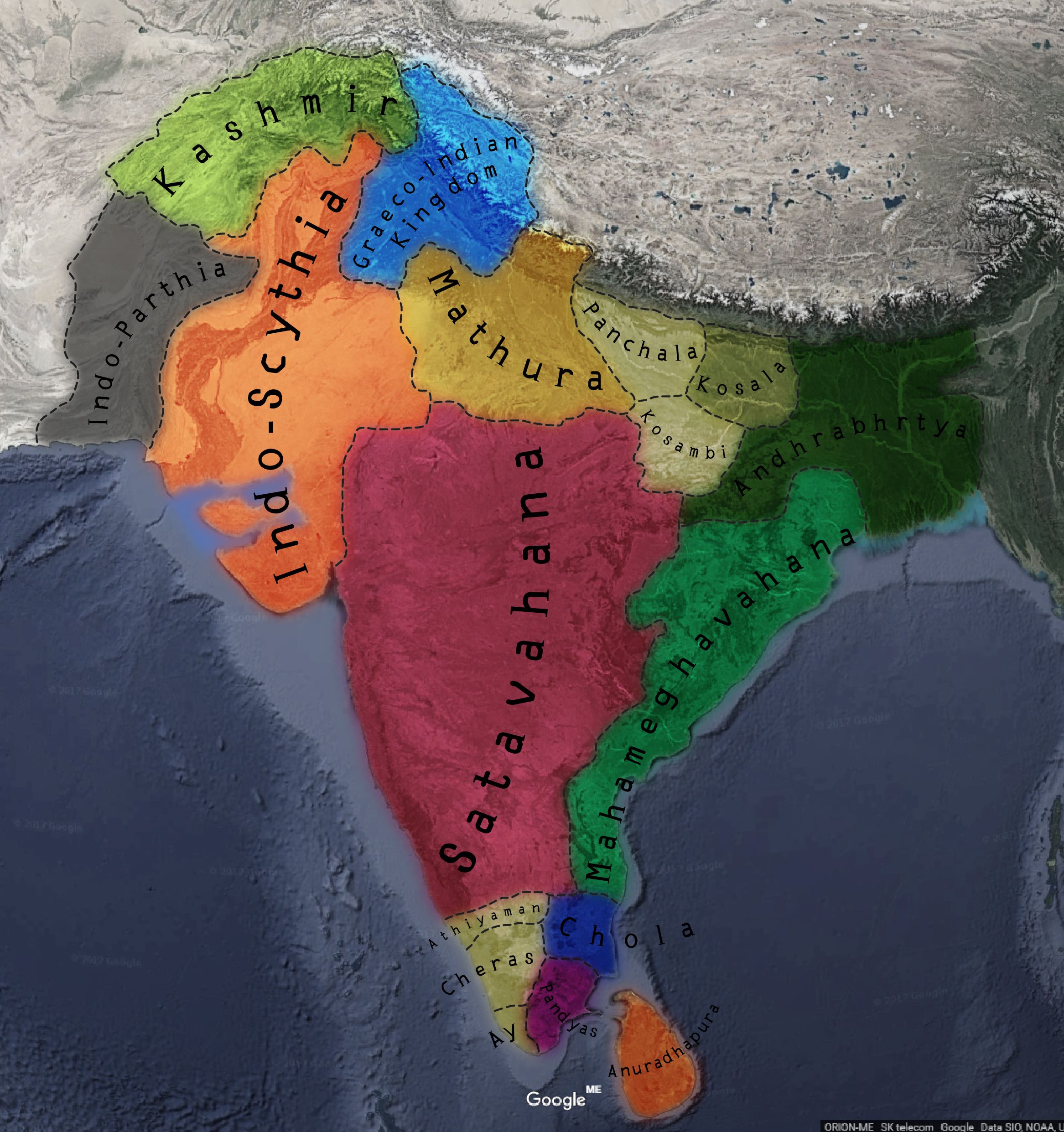
- (i) Afghanistan Branch: The first major seat of power was located in modern-day Afghanistan.
- (ii) Taxila Branch: A second branch governed Taxila, managing critical commercial intersections across Punjab.
- (iii) Mathura Branch: Centered at Mathura, this dynasty held authority over parts of northern India for roughly .
- (iv) Western Satraps (Western India): Operating across Gujarat, Malwa, and Saurashtra, this branch proved the most durable, maintaining authority until the late .
- (v) Upper Deccan Branch: The fifth branch established authority over parts of the northern Deccan plateau.
Historical records identify Maues (also called Moga) as the first major Shaka king to consolidate power in Gandhara, defeating remaining Indo-Greek enclaves and advancing his boundary to the Jhelum River.
The Rule of Rudradaman I and the Vikrama Samvat Era
The Western Satraps reached their political and cultural high point during the reign of Rudradaman I, renowned for military campaigns, public infrastructure restoration, and cultural patronage.
- (i) Territorial Control:Rudradaman I (reigned c. ) expanded his domain by capturing lands from the Satavahanas, including Sindh, Kutch, Gujarat, Konkan, Malwa, and the Narmada Valley.
- (ii) Public Works: He funded the repair of Sudarshana Lake, an ancient Mauryan artificial reservoir located in dry Kathiawar, without burdening citizens with extra taxation.
- (iii) Linguistic Shift: He commissioned the famous Junagadh Rock Inscription, recorded entirely in classical Sanskrit, marking a transition away from Prakrit for official royal decrees.
- (iv) Local Integration: Shaka rulers integrated smoothly into local social structures, facing minimal native resistance.
The Vikramaditya Samvat Era Significance
Local historical traditions commemorate resistance against early Shaka advances, giving rise to persistent calendar systems.
- (a) Legendary Ujjain King: Tradition holds that in , a king of Ujjain drove back Shaka forces and adopted the title Vikramaditya.
- (b) Origin of the Era: This event is linked to the founding of the Vikrama Samvat calendar era.
- (c) Royal Title: The epithet Vikramaditya subsequently became a prestigious title assumed by at least 14 Indian monarchs across later centuries.
Territorial Extent and Strategic Political Alliances
At their largest extent, Indo-Scythian realms spanned the Northwest Frontier, Punjab, Sindh, Kashmir, Uttar Pradesh, Saurashtra, Malwa, and the Konkan coast. To consolidate legitimacy, Shaka elites entered matrimonial alliances with indigenous dynasties, including intermarriages with the Satavahana royal family.
Coinage Artistic Patronage Religion and Ultimate Decline
The cultural legacy of the Indo-Scythians is visible in their minting practices, artistic commissions, support for religious establishments, and eventual absorption into surrounding states.
Advanced Coinage and Bilingual Tradition
Indo-Scythian mints combined Hellenistic techniques with local administrative requirements, generating coins vital for long-distance commerce.
- (i) Artistic Evolution: Early Shaka coins displayed high die-cutting standards, though portrait quality gradually declined toward the late .
- (ii) Bilingual Coinage: Following Indo-Greek models, coins featured Greek inscriptions on the front side and local Kharoshthi or Brahmi scripts on the reverse side, catering to multi-ethnic trading communities.
Artistic Fusion in Gandhara Reliefs
Visual art from the Shaka period shows a blend of Central Asian attire and indigenous religious themes.
- (i) Buner Reliefs: Carvings from the Gandhara region, such as the Buner reliefs, depict Shaka soldiers participating in Buddhist processions.
- (ii) Martial Attire: Figures are shown wearing Central Asian tunics, trousers, and riding boots, carrying straight double-edged swords alongside local artistic motifs.
Patronage and Practice of Buddhism
Shaka monarchs actively patronized Buddhism and local religious institutions to strengthen ties with indigenous subjects.
- (i) Religious Support: Like the Indo-Greeks before them, Shaka rulers donated land and funds to Buddhist monastic orders.
- (ii) Archaeological Evidence: Relic caskets and stone sculptures excavated at the Butkara Stupa in the Swat Valley show Shaka donors in dedicated worship poses.
The Ultimate Political Decline
Centuries of Shaka authority eventually crumbled under military pressure from expanding regional powers.
- (i) Satavahana Conflicts: Decisive victories by Satavahana ruler Gautamiputra Satakarni severely curtailed Western Satrap power in the Deccan.
- (ii) Final Collapse: Following the reign of Azes II (c. ) in the north, Kushana expansion swept away remaining northern Shaka enclaves, while the Gupta Emperor Chandragupta II eliminated the final Western Satrap ruler in western India during the late .
Quick Revision Capsule
Key parameters summarizing the Indo-Scythian historical presence in ancient South Asia:
| Shaka Domain / Aspect | Historical Mechanism & Details | Core Impact & Key Figures |
|---|---|---|
| Origin & Migration | Pushed from Central Asia near Jaxartes River by Yuezhi tribes. | Displaced Indo-Greeks in Bactria and Gandhara. |
| Administrative System | Adopted Persian Achaemenid Satrapy model with semi-autonomous governors. | Led by Mahakshatrapas who held coin-minting rights. |
| Major Branches | Five centers: Afghanistan, Taxila, Mathura, Western Satraps, Upper Deccan. | Western Satraps survived longest until . |
| Key Ruler | Rudradaman I (c. ) ruled Western Satraps. | Repaired Sudarshana Lake; issued Junagadh Sanskrit inscription. |
| Cultural Integration | Bilingual coins (Greek/Kharoshthi), Gandhara art, and patronage of Buddhism. | Seamlessly assimilated into Indian social structures. |
Summary
The Indo-Scythian (Shaka) period represents a major epoch of foreign migration, military realignment, and cultural synthesis in ancient South Asia. Originating as pastoral nomads in Central Asia, the Shakas moved southward under pressure from the Yuezhi, dismantling Indo-Greek strongholds across Bactria and Gandhara. Through five main regional branches, they governed vast territories spanning from Afghanistan to the Western Ghats. Their administration combined Persian satrap structures with local autonomy, while their economy thrived on Silk Road commerce and bilingual coin issues. Rulers like Rudradaman I showcased deep cultural assimilation through classical Sanskrit royal patronage and public works. Though ultimately defeated by the Satavahanas, Kushanas, and Guptas, the Shakas left a lasting impression on Indian calendar systems, art, epigraphy, and governance structures.
Quick Revision Points
Essential facts for fast recall before examinations:
- (i) The Shakas entered South Asia during the following displacement by the Yuezhi.
- (ii) King Maues was the first major Shaka ruler who established dominance over Gandhara.
- (iii) The satrapy administrative system utilized provincial rulers known as Mahakshatrapas.
- (iv) The Junagadh inscription of Rudradaman I is the first long, formal royal inscription in pure Sanskrit.
- Exam Tip: Remember that Rudradaman I belonged to the Western Satraps branch. Pay special attention to his Junagadh inscription (first major Sanskrit inscription) and his repair of Mauryan Sudarshana Lake without levying extra taxes on his subjects, as these details appear frequently in history examinations.
Frequently Asked Questions (FAQ)
Q1: Who were the Shakas and where did they originate?
A1: The Shakas (Indo-Scythians) were pastoral nomadic horsemen originating from Eastern Central Asia near the Jaxartes River and Lake Issyk-Kul. Geopolitical displacement by the Yuezhi pushed them into Bactria and South Asia.Q2: What was the significance of Rudradaman I's Junagadh inscription?
A2: Issued around , it is the earliest major public royal inscription written in classical Sanskrit rather than Prakrit, recording military victories and the restoration of Sudarshana Lake.Q3: How was the Shaka administrative system structured?
A3: It operated on a decentralized satrapy model inspired by Persian systems, where regional governors called Mahakshatrapas and Kshatrapas exercised local authority, including coin production.