Night Maintenance Block
The platform is regenerating assets and updating core item pools to align with your daily schedule.
Maintenance Window: 23:45 - 03:45
Rest up. We go live again at exactly 04:00 AM.
The Indo-Scythians (Shakas) were influential nomadic groups who undertook a vast migration from Central Asia into the north-western regions of South Asia, profoundly impacting the political and cultural landscape between the 2nd century BCE and 4th century CE. Their establishment of powerful kingdoms, notable for their distinct cultural integration, extensive trade networks, and structured governance systems, makes them an absolutely crucial and high-yield topic for students preparing for competitive history exams.
These highly skilled horsemen infiltrated and eventually settled in the territories previously controlled by the Hellenistic Greek kingdoms, which had been weakened following the dissolution of Alexander the Great's vast empire, thereby establishing significant and influential independent states that radically impacted the existing local societies.
This section delves into the foundational context of the Sakas, detailing the intricate historical forces that compelled their extensive migration, outlining the patterns of their movement, and analyzing their early cultural blending and significant influence on the Indian soil.
The saga of the Indo-Scythian arrival is deeply intertwined with the decline of the previously dominant Hellenistic Greek Kingdoms in Bactria and the subsequent large-scale nomadic movements catalyzed by geopolitical pressures in Central Asia.
The sequential arrival and settlement of the Parthians, Shakas, and the Yueh-chih marked a transformative era in the histories of both the Indian Subcontinent and China, introducing new administrative and political systems.
The powerful expansion of the Yueh-chih group ultimately served as a catalyst that drove the Shakas further south, paving the way for one of the most significant empires of the era.
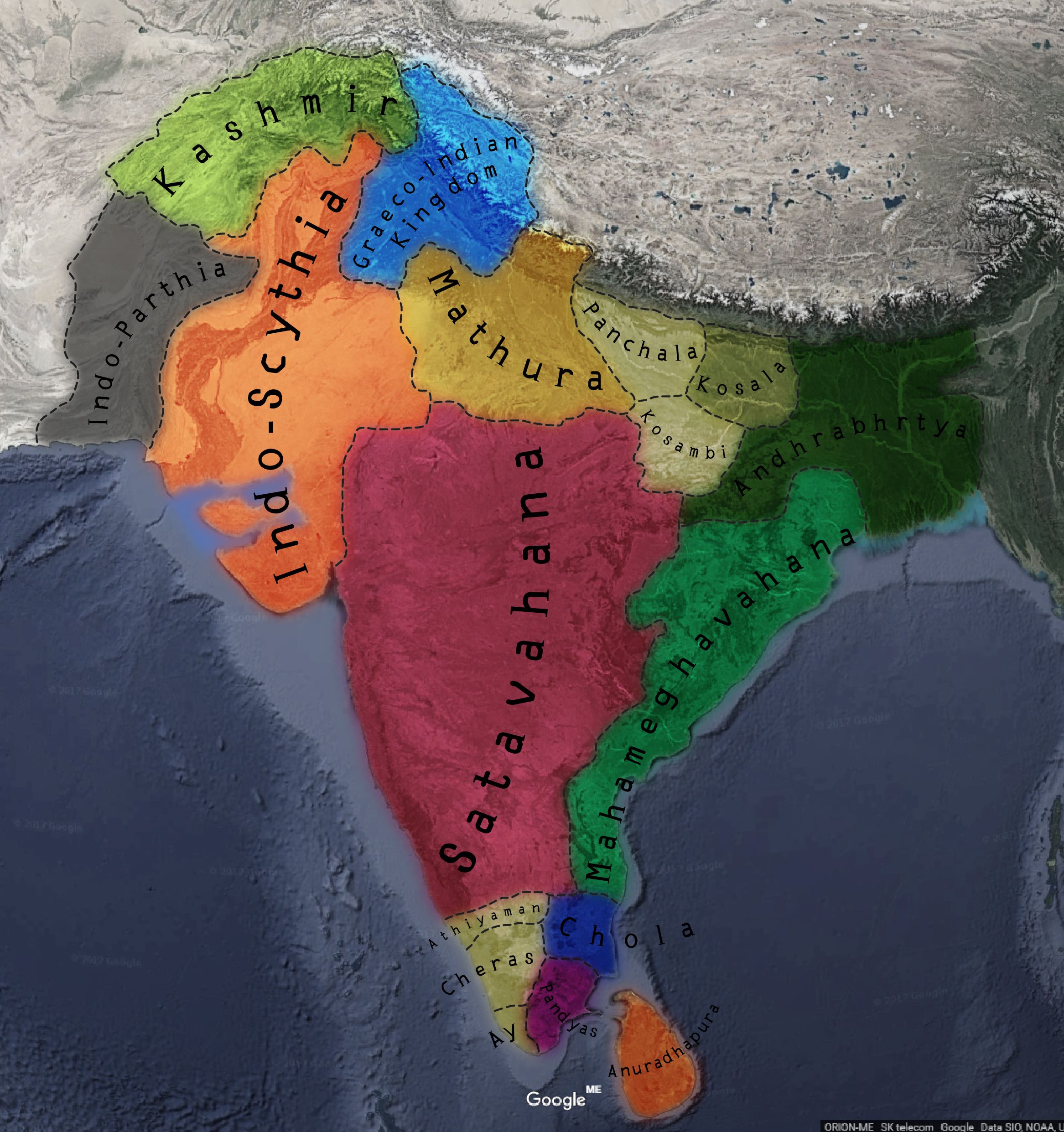
The migration and settlement were not monolithic; the Saka presence in India eventually fragmented into at least five major autonomous branches, each establishing powerful regional authority across the subcontinent's northwest and western regions.

The recorded First Saka King who firmly consolidated power was Maues, also known as Moga, who successfully established his control over Gandhara and managed to defeat the remaining Indo-Greeks, extending his authority up to the crucial Jhelum River.
The Western Satrap branch saw its zenith under the reign of Rudradaman I, a king celebrated for his extensive military conquests, public works, and the shift in official administrative language.
At their peak, the Indo-Scythians controlled a vast geographical expanse and solidified their position through strategic political marriages with powerful local dynasties.
The cultural imprint of the Indo-Scythians is vividly reflected in their economic practices, patronage of art, religious affiliations, and the historical circumstances surrounding their eventual political dissolution.
The Indo-Scythian coinage represents a key fusion of Hellenistic and Indian artistic traditions, essential for their expansive trade and administrative needs.
The art patronized by the Shakas showcases a unique cultural amalgamation, blending their Central Asian heritage with the religious iconography of the Indian subcontinent.
The Indo-Scythian rulers strategically adopted and patronized Buddhism, following the precedent set by the earlier Indo-Greeks, a move critical for securing domestic legitimacy.
The centuries-long rule of the Indo-Scythians eventually succumbed to renewed pressures from powerful indigenous and invading forces.
The Indo-Scythians (Shakas) played an absolutely pivotal and transformative role in shaping the political and cultural geography of northwest India. Their journey, characterized by massive migration, extensive trade networks, unique cultural blending, sophisticated governance systems, and innovative military strategies, left an indelible mark. Key rulers, from Maues to Rudradaman I, their distinctive coinage, their active patronage of art and Buddhism, and their eventual decline against figures like the Satavahanas, are all foundational elements. Understanding the nuances of the Shaka period is critically vital for students and candidates preparing for competitive history exams as it represents a crucial phase of transition and foreign integration in Ancient Indian History.
Please login to comment and rate.
No comments yet. Be the first!
We are Committed to deliver a hassle free digital experience for all our learners and we will be grateful if you could take a moment to provide a “Google Review“ about your experience with us. it will help us to futher enhance our services for you in the future. Your support helps us grow!
Write ReviewThe platform is regenerating assets and updating core item pools to align with your daily schedule.
Maintenance Window: 23:45 - 03:45
Rest up. We go live again at exactly 04:00 AM.