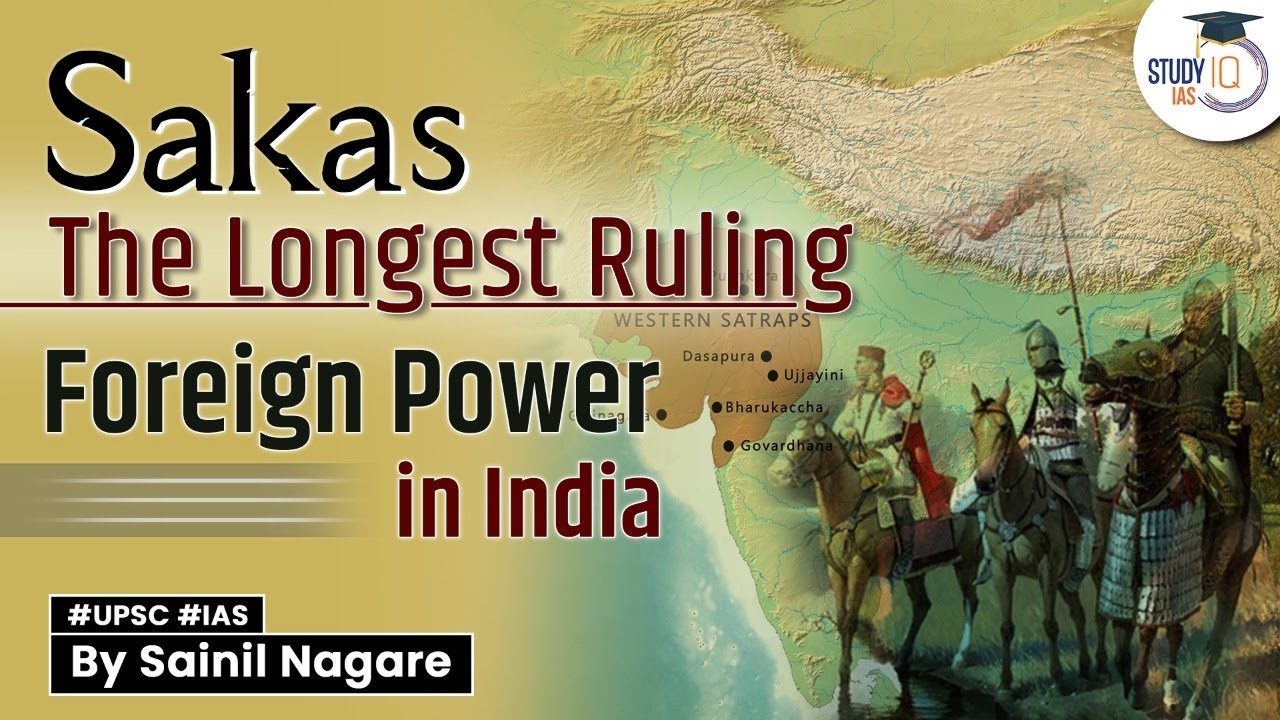
The story of the Saka-Kshatrapas in Western India is essential for understanding post-MauryanIndian history. This content explores the rise and fall of the Kshaharata and Kardamaka dynasties, foreign rulers who became deeply Indianized. Their extensive influence across Gujarat, Saurashtra, and Malwa, especially under the powerful Nahapana, marked a critical period of trade and territorial conflict, making this topic vital for students preparing for competitive examinations.
In this chapter, you will understand:
- The origins and political setup of the Saka-Kshatrapas in Western India.
- The emergence of the Kshaharata dynasty under Bhumaka and Aghudaka.
- The extensive reign, titles, and territorial reach of King Nahapana.
- The fierce Saka-Satavahana power struggle and its ultimate outcome.
Why this topic matters: It highlights how migratory foreign ruling groups integrated into local administration, transformed trade routes, and reshaped ancient Indian geopolitical dynamics.
Core Idea: Following the decline of the Mauryan Empire, Scythian-Parthian origin governors established local autonomy in Western India. The Kshaharata dynasty, led by Nahapana, controlled key maritime trade centers until their clash with Satavahana ruler Gautamiputra Satakarni reshaped the political map.
The Saka-Kshatrapas in Western India: Rise of Prominent Dynasties (2nd Century CE)
Following the decline of the great Mauryan Empire, the Saka-Kshatrapas established themselves as powerful regional governors in Western India. These rulers, initially known as Kshatrapas (a term meaning 'viceroys' or 'subordinate governors'), operated under the broader influence of the Scythian-Parthian political structure.
Foundations of Western Satrap Governance
The establishment of regional governor networks created a durable political system that lasted for centuries across crucial coastal and inland commercial belts.
- (i) The Kshatrapas played a significant role, particularly during the , governing crucial areas of Gujarat, Saurashtra, and Malwa.
Division of Ruling Houses
Strategic rivalries and geographic expansion led to the separation of the Western Kshatrapas into two main branches.
- (ii) The control of these western trade routes and prosperous regions was contested, leading to the rise of two distinct and important ruling families among the Western Kshatrapas: the Kshaharatas and the Kardamakas.
- (iii) The establishment of these two houses shaped the political map of the region for nearly four centuries, engaging in continuous conflict with the indigenous Satavahana dynasty of the Deccan.
The Kshaharata Dynasty: Founders and Early Rulers (Bhumaka and Nahapana)
The Kshaharata family represents the earlier and perhaps the more transient phase of Saka rule in Western India, paving the way for the later Kardamakas.

- The Kshaharata family laid the initial groundwork for Scythian administrative dominance over maritime and inland trade tracks.
Early Lineage and Key Pioneers
Coinage and epigraphic records show how early monarchs secured their hold over key strategic points in central and western territories.
Bhumaka: The First Documented Kshaharata Ruler
Bhumaka holds the distinction of being the first known and documented ruler of the Kshaharata lineage. His political allegiance is generally believed to have been towards the powerful Kushana ruler Kanishka, indicating a potential connection to the northern empires.
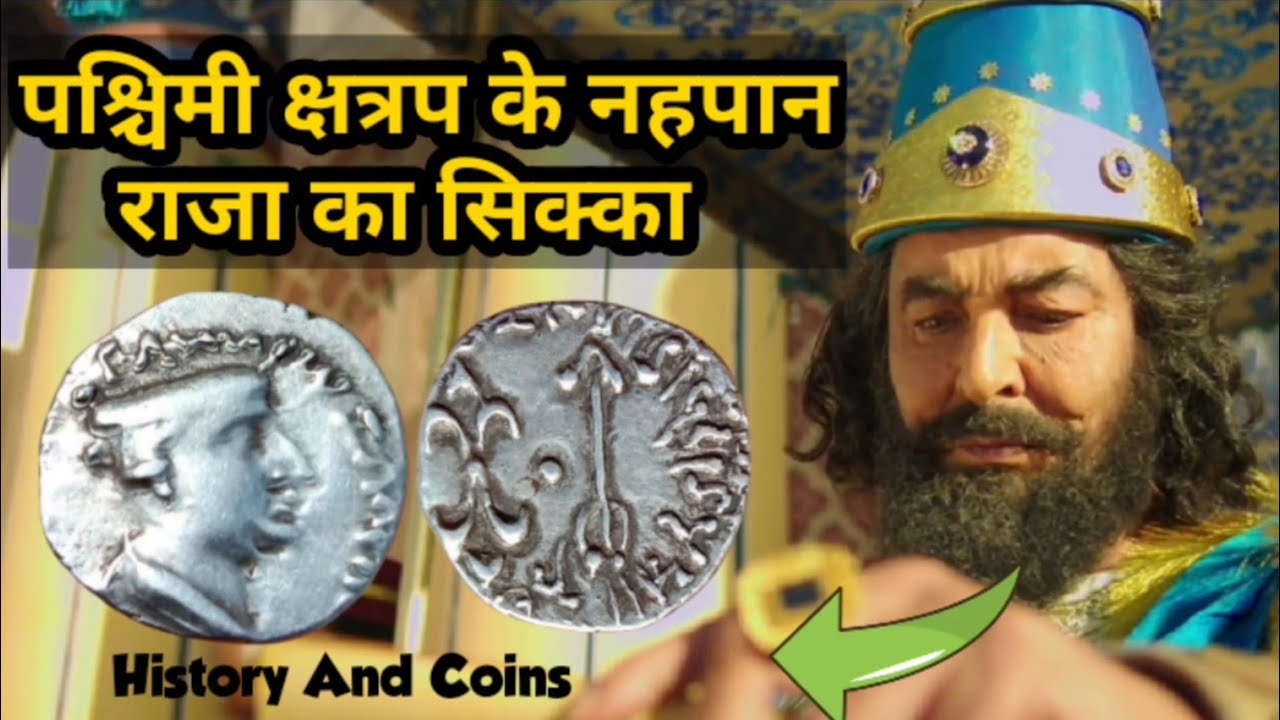
- (i) The evidence of his reign comes primarily from his extensive coinage, which are crucial historical artifacts bearing legends in both the Brahmi and Kharosthi scripts.
- (ii) These coins, which map his dominion, have been strategically recovered from regions encompassing coastal Gujarat, Malwa, and the Ajmer area, highlighting his control over key trade points.
- (iii) The stylistic and contextual similarity between his coins and those of his successor suggests a direct lineage, confirming his role as the dynastic progenitor before the rise of Nahapana.
New Discoveries: Aghudaka (Abhedaka) and the Kshaharata Lineage
While the history of the Kshaharata family traditionally centered on Bhumaka and Nahapana, recent archaeological findings have illuminated another ruler, Aghudaka (sometimes referred to as Abhedaka).
- (a) This ruler’s existence is confirmed through inscriptions on coins, offering a richer and more complete picture of the early Kshaharata succession and regional presence.
- (b) Such discoveries underscore the continuous process of historical authentication and detail the initial consolidation of Saka power in Western India.
Nahapana: The Great Kshaharata King, Territorial Expansion, and Defeat
Nahapana stands out as the most dominant and well-recorded figure of the Kshaharata dynasty, whose reign was characterized by massive territorial expansion and a final, defining conflict with the Satavahanas.
- His political governance combined military conquest with strong administrative patronage over urban trade centers.
Pillars of Nahapana's Authority
From literary mentions in international navigation records to local donor inscriptions, Nahapana left an extensive historical footprint.
Nahapana's Prominence and Documentary Evidence
The reign of Nahapana is remarkably well-documented, not only through his own extensive coinage but also via detailed inscriptions which provide a glimpse into the administration and societal patronage of the era.
- (i) Numerous inscriptions meticulously record the generous endowments and benefactions made by his son-in-law, Usavadata, who was a key figure, as well as by his trusted minister, Ayama, highlighting the dynasty's support for local institutions.
- (ii) International trade accounts, notably the ancient Greek text the Periplus of the Erythraean Sea, refer to him as Nambanus, cementing his presence in global commerce narratives.
- (iii) Adding to the historical record, Jain texts of the time also acknowledge his sovereignty, calling him King Naravahana, showing his deep integration into Indian cultural and religious narratives.
Evolution of Royal Titles: From Kshatrapa to Rajan
Nahapana's titulature reflects his growing political power and ambition, showcasing a decisive shift from subordinate status towards complete independence and sovereignty during his rule.
- (a) Initially, he modestly adopted the title Kshatrapa, acknowledging his role as a governor under a larger power structure.
- (b) However, later inscriptions boldly reflect him taking on the exalted titles of Mahakshatrapa (Great Satrap) and even Rajan (King), a clear assertion of independent, sovereign rule.
- (c) His coins, discovered across Rajasthan (Ajmer) and Maharashtra (Nasik), served as a crucial medium to broadcast his shifting status and expanded authority across a vast territory.
Nahapana's Kingdom: Expansion and Strategic Capital
The Kshaharata kingdom reached its zenith of territorial extent under Nahapana, covering key regions essential for both agriculture and the lucrative western coastal trade, indicating a strategically brilliant rule.
- Territorial Extent: His vast dominion stretched across Malwa, Gujarat, Saurashtra, Northern Maharashtra, and included crucial areas of Rajasthan and the Lower Indus Valley.
- Strategic Capital: His principal seat of governance was established at Minnagara, a strategically positioned city located midway between the major urban and trade centers of Ujjain and Broach (Bharuch), possibly identified today with Doha.
Saka-Satavahana Conflict: The End of Kshaharata Rule
The history of Western India during this period is dominated by the constant and fierce Saka-Satavahana conflict, primarily driven by the imperative to control the lucrative western coastal trade routes.
- Control over critical ports like Sopara and Bharuch triggered prolonged military campaigns between northern satraps and southern rulers.
Dynamics of the Territorial Conflict
Initial Kshaharata expansions were eventually met by a powerful Satavahana military resurgence under Gautamiputra Satakarni.
Nahapana's Territorial Gains at Satavahana Expense
Nahapana's aggressive territorial expansion was directly achieved at the cost of the powerful Satavahana dynasty, the dominant power of the Deccan region.
- (i) The presence of Nahapana's records in important locations like Nasik, Karle, and Junnar unequivocally confirms his successful occupation of territories that were previously under Satavahana control.
- (ii) The Nasik inscription specifically lists his administrative control over crucial cities, solidifying his regional dominance: Bhrigukachchha (Broach), Dasapura (Mandasore), Surparaka (Sopara), and Govardhana (Nasik).
The Clash with Gautamiputra Satakarni
The story of Nahapana's reign ultimately concludes with a dramatic and decisive confrontation, marking a major turning point in the history of Western India.
- (a) The Kshaharata rule was decisively terminated when Nahapana was defeated and killed in battle by the mighty Satavahana ruler, Gautamiputra Satakarni.
- (b) This pivotal victory allowed Gautamiputra Satakarni to successfully reclaim much of the vast territory that had been lost to the Kshaharata lineage, re-establishing Satavahana supremacy.
Quick Revision Capsule: Western Kshatrapas Overview
A structured quick-reference breakdown of key rulers, geographical domains, and historical milestones:
| Ruler / Dynasty | Geographical Domain | Key Historical Significance |
|---|---|---|
| Bhumaka (Kshaharata) | Gujarat, Malwa, Ajmer region | First documented ruler; issued bilingual coins in Brahmi and Kharosthi. |
| Aghudaka / Abhedaka | Western India regional tracks | Recently discovered through coin inscriptions, clarifying early succession. |
| Nahapana (Kshaharata) | Malwa, Gujarat, Northern Maharashtra, Rajasthan | zenith of Kshaharata rule; capital at Minnagara; referenced in Periplus. |
| Usavadata | Govardhana (Nasik), coastal sites | Son-in-law of Nahapana; recorded vast public and religious endowments. |
| Kardamaka Dynasty | Malwa, Ujjain, Gujarat | Succeeded the Kshaharatas under Chashtana and Rudradaman I. |
Summary
The Western Kshatrapas played a pivotal role in bridging foreign Scythian-Parthian governance with native Indian traditions. By securing trade centers across Gujarat, Malwa, and Northern Maharashtra, the Kshaharata rulers like Bhumaka and Nahapana dominated crucial trade networks. Though Nahapana expanded his title to Rajan, his reign ended abruptly with his defeat by Gautamiputra Satakarni, clearing the path for the later Kardamaka dynasty under Chashtana.
Quick Revision Points
Essential facts to review before examinations:
- (i) Kshatrapa originally meant viceroy or governor under the broader Scythian-Kushana political network.
- (ii) Bhumaka's coins featured both Brahmi and Kharosthi scripts, confirming northern cultural links.
- (iii) Nahapana was known as Nambanus in the Periplus of the Erythraean Sea and Naravahana in Jain texts.
- (iv) The Jogalthambi coin hoard famously contains thousands of Nahapana's silver coins overstruck by Gautamiputra Satakarni.
- Exam Tip: Pay special attention to the bilingual coin scripts of Bhumaka, the geographic location of Minnagara, and the Jogalthambi coin hoard, as these are frequently tested in competitive history exams.
Frequently Asked Questions (FAQ)
Q1: What does the title 'Kshatrapa' signify?
A1: The title originates from the Old Persian 'Xsathrapavan', meaning provincial governor or viceroy. In Western India, it denoted regional rulers who initially acknowledged foreign suzerainty before claiming independent royal titles.Q2: How do we know about the defeat of Nahapana by Gautamiputra Satakarni?
A2: Epigraphic evidence from the Nasik cave inscriptions of Gautami Balasri details Gautamiputra's triumphs, supported physically by the Jogalthambi hoard where thousands of Nahapana's coins were re-stamped by the Satavahana king.Q3: What was the strategic importance of Minnagara?
A3: Minnagara served as the principal political center for Nahapana, located strategically between inland trading hubs like Ujjain and major sea ports like Broach (Bharuch).