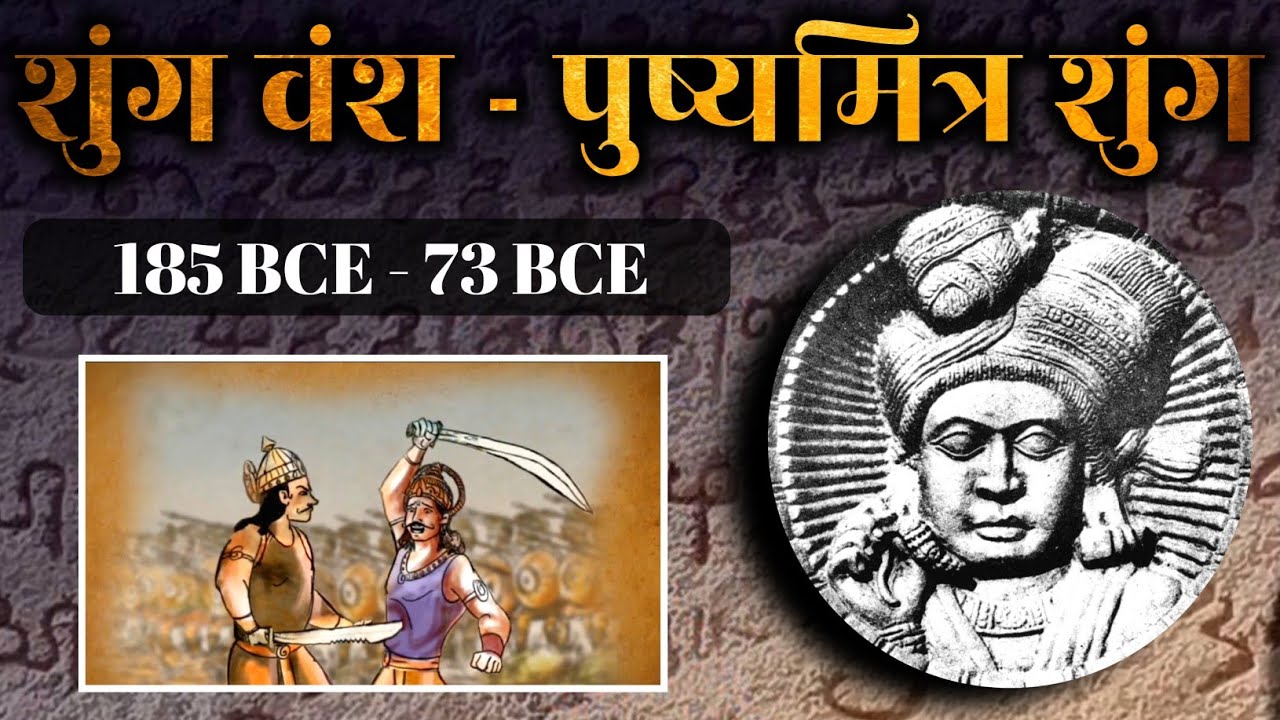
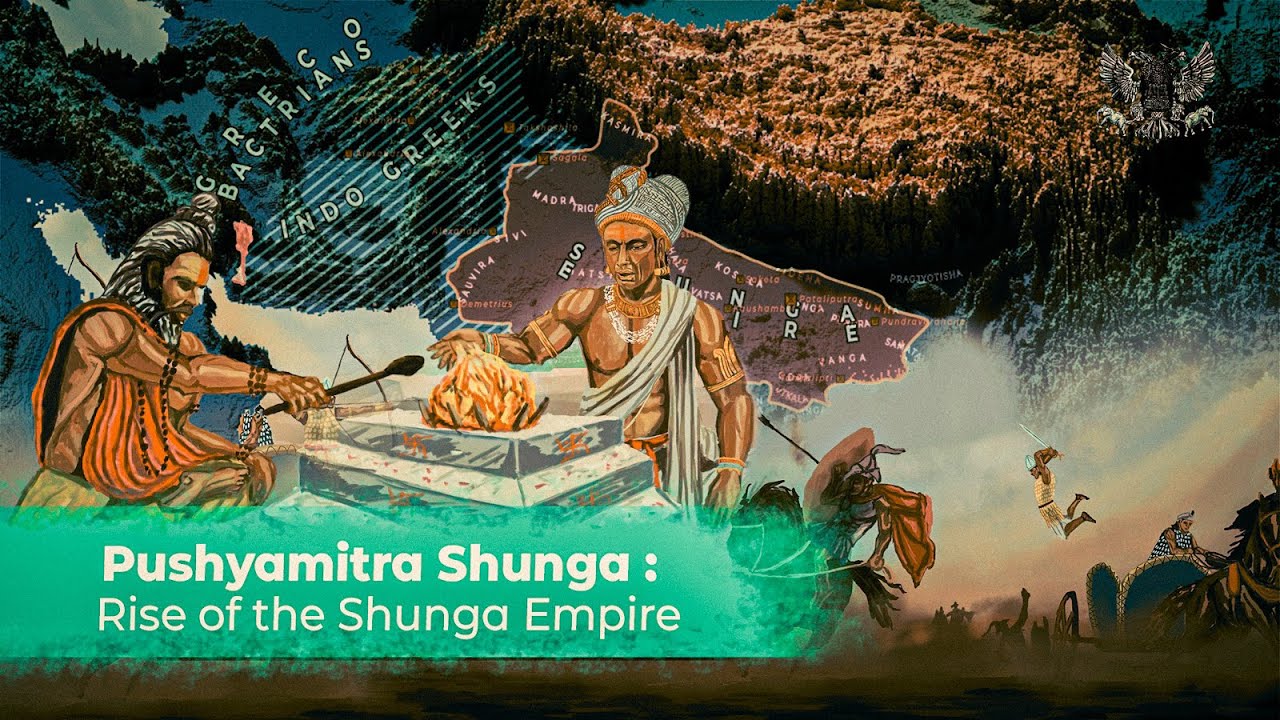
The rise of the Sunga Dynasty marked a pivotal turn in ancient Indian history following the fall of the Mauryan Empire. Beginning around , this era saw the re-emergence of traditional Brahmanical practices, major battles against invading Indo-Greeks known as Yavanas, and a remarkable flourishing of indigenous art and architecture across central India.
In this chapter, you will understand:
- How Pushyamitra Sunga established the dynasty through a military coup.
- The administrative framework and territorial reach of the Sunga state.
- The military defense of Madhyadesha against Yavana incursions.
- The artistic achievements seen at Bharhut, Sanchi, and Bodhgaya.
Why this topic matters: It bridges the gap between the imperial Mauryans and the classical regional powers, showing how political changes reshaped religion, art, and governance in ancient India.
Core Idea: Founded by Pushyamitra around , the Sunga Dynasty reinstated Vedic traditions, defended the core plains against foreign invaders, and nurtured a vibrant artistic movement that permanently shaped Buddhist monument architecture over its rule.
Ascension of Pushyamitra Sunga: Overthrow of the Mauryan Empire c. 180 BCE
The foundation of the Sunga line emerged from a sudden internal political collapse inside the Mauryan capital.
The Fall of Brihadratha
Around , the last Mauryan ruler, Brihadratha, was killed during a military parade by his own commander-in-chief, Pushyamitra Sunga. This political takeover is supported by historical references in the court literature of Banabhatta.
- The coup ended Mauryan rule and initiated the post-Mauryan era in Magadha.
Capital and Historical Records
The new ruling house kept its primary political center at Pataliputra.
- Records of this power shift appear in both the Puranas and Harshacharita.
- This transition marked a shift from state-sponsored Buddhism back toward traditional Vedic rites.
- Regional administrative seats were strengthened to secure border zones.
- Local governors were given military powers to suppress internal rebellions.
The Brahmana Origin and Lineage of the Sungas
Ancient texts consistently record the Sunga family as belonging to the brahmana social class, shaping the cultural direction of their administration.

- Vedic texts like the Brihadaranyaka Upanishad mention early scholars like Sungiputra, proving their historical presence in intellectual circles.
Gotra Lineage and Dynastic Duration
Grammatical and ritualistic texts provide key details regarding the lineage and timeline of the dynasty.
- The ancient grammarian Panini connects the Sunga family with the Bharadvaja gotra.
- Other texts like the Baudhayana Srauta Sutra and Malavikagnimitra reference connection to the Baimbika Kashyapa line.
- Despite these varying accounts, primary sources agree that the dynasty belonged to the brahmana varna.
- Puranic texts state that the Sungas ruled for a total of .
Territorial Extent and Administrative Structure
The core territory of the Sungas covered vital river valleys, relying on a system of central ministers and royal viceroys.
- The realm extended over the middle Ganga plain, upper Ganga valley, and eastern Malwa, reaching areas like Sakala in Punjab according to text sources.
Provincial Governance and Inscriptions
Administrative duties were divided among members of the royal family to maintain control over strategic provinces.

Administrative centers and provincial seats under Sunga administration - Inscriptions at Bharhut explicitly mention the phrase Suganam raje, confirming their administrative reach.
- Central governance relied on a ministerial council known as the mantriparishad.
- Royal princes served as provincial governors, such as Agnimitra at Vidisha.
- The Ayodhya inscription of Dhanadeva links regional governors directly to Pushyamitra's royal house.
Quick Revision Capsule
Key highlights of the Sunga Dynasty at a glance:
| Aspect | Historical Detail | Key Significance |
|---|---|---|
| Founder | Pushyamitra Sunga () | Overthrew Brihadratha, ending the Mauryan Empire. |
| Duration | (c. – ) | Maintained stability in Magadha and central India. |
| Capital Centers | Pataliputra and Vidisha | Served as primary administrative and viceregal seats. |
| Major Conflict | Defense against Yavana forces | Secured Madhyadesha at Saketa and the Sindhu river. |
| Art Legacy | Bharhut, Sanchi, Bodhgaya | Expanded stone railings, gateways, and relief art. |
Conflict with the Yavanas and Religious Policies
Pushyamitra’s reign was defined by strong defense measures against military movements from the north-west and a distinct shift in state religious patronage.
- Patanjali notes in the Mahabhasya that Yavana armies marched into inner regions, besieging towns like Saketa and Madhyamika.
Military Defeats and Ritual Revival
Pushyamitra's grandson Vasumitra defeated a Yavana force along the banks of the Sindhu river, securing the protection of the royal horse during an Ashvamedha yajna.
- The Ayodhya inscription notes that Pushyamitra performed two Ashvamedha sacrifices to celebrate military success.
- While texts like the Divyavadana allege persecution of monks, physical evidence proves Buddhist sites flourished through active stone additions at Bharhut and Sanchi.
- Sculptural art from this era introduced continuous linear rhythms, depicting natural motifs alongside Buddhist narrative scenes.
- The line ended around when the last ruler, Devabhuti, was overthrown by his minister Vasudeva, founder of the Kanva dynasty.
Summary
The Sunga Dynasty governed Magadha and central India for following the Mauryan fall. Under founder Pushyamitra Sunga, the state successfully defended its core territories against foreign Yavana invasions and revived traditional Vedic rituals like the Ashvamedha sacrifice. Despite later textual claims of opposition to other faiths, physical archaeological records prove that Buddhist monuments like Bharhut and Sanchi underwent major structural additions during this era. The dynasty brought a distinct, expressive style to stone sculpture before falling to the Kanvas around .
Quick Revision Notes
Essential facts for fast review:
- (i) Established around by Pushyamitra Sunga after assassinating Brihadratha.
- (ii) Epigraphic evidence from Ayodhya confirms Pushyamitra performed two horse sacrifices.
- (iii) Prince Vasumitra defended the realm by defeating Yavana forces near the Sindhu river.
- (iv) The dynasty ended around when Devabhuti was replaced by his minister Vasudeva Kanva.
- Exam Tip: Remember the distinction between Mauryan court art and Sunga popular art: Sunga art featured stone railings, gateways, and rich linear reliefs executed by artisan guilds rather than monolithic polished pillars.
Frequently Asked Questions (FAQ)
Q1: Who was the founder of the Sunga Dynasty?
A1: The dynasty was founded by Pushyamitra Sunga, the former commander-in-chief of the Mauryan army, around .Q2: What major military conflicts occurred during the Sunga period?
A2: The Sungas fought off Yavana (Indo-Greek) incursions into central regions like Saketa and Madhyamika, with Vasumitra securing a key victory near the Sindhu river.Q3: What was the contribution of the Sunga era to Indian art?
A3: The period saw major stone additions, carved gateways, and relief railings added to Buddhist stupas at Bharhut, Bodhgaya, and Sanchi.