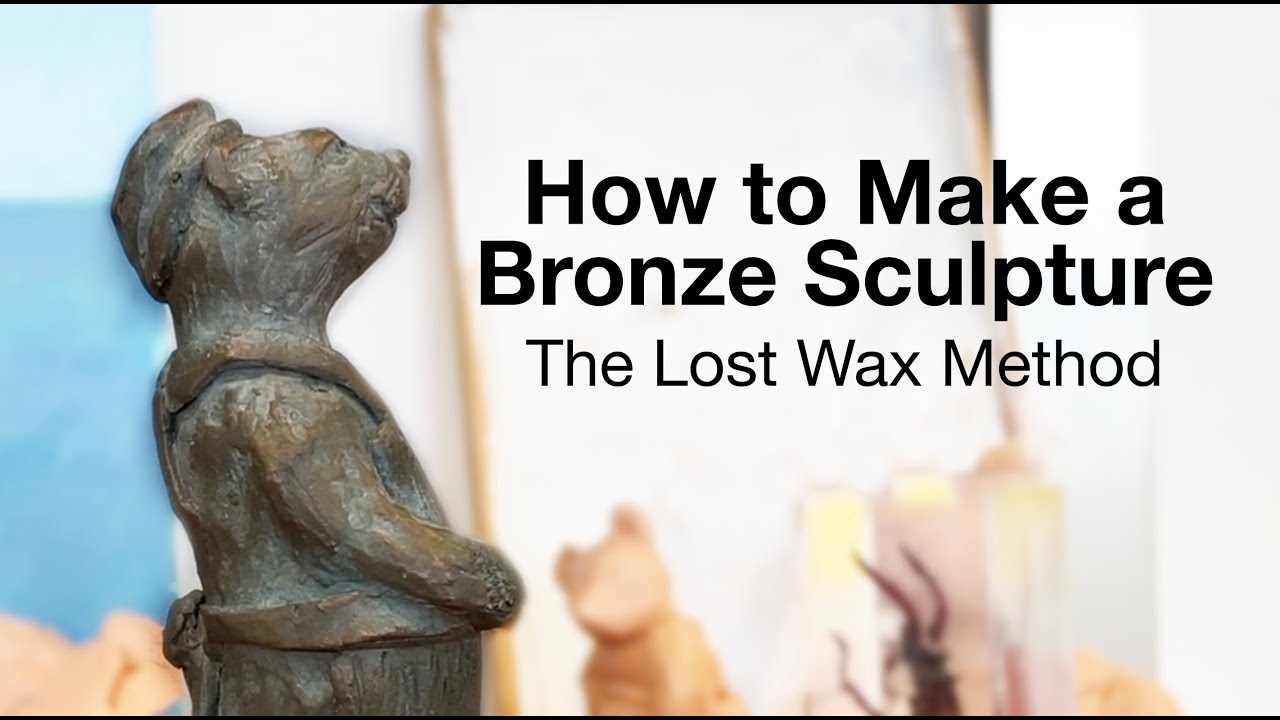
The history of sculpture making in South India demonstrates the region's rich artistic tradition during the rule of the Pallava, Chola, and Vijayanagar dynasties. Crafted using the ancient lost-wax technique, these sacred bronzes showcase refined artistry, religious iconography, and distinct regional styles. Understanding these forms is essential for students studying Indian art and culture preparing for competitive examinations.
🎯 In this chapter, you will understand:
- The development of metal casting from the Pallava to the Vijayanagar period.
- The technical processes and religious uses of portable processional icons (Utsava Murti).
- The visual symbolism and dynamic posture of the Chola period Nataraja bronze.
- The emergence of royal portraiture in bronze art during the Vijayanagar era.
💡 Why this topic matters: South Indian bronzes reflect a masterclass in metal craft and iconographic symbolism, forming a major component of the Indian heritage syllabus.
🧠 Core Idea: Metallurgical craftsmanship evolved from subtle, graceful early icons into expressive cosmic forms and lifelike royal portraits across five centuries.
Evolution of South Indian Bronze Sculpture: Pallava, Chola, and Vijayanagar Eras
The South Indian metal casting tradition presents a continuous record of technical and artistic development over several centuries. The shift from simple early forms to detailed dynamic poses and realistic portraits reflects changing artistic goals and patron interests for art history enthusiasts.
- (i) Metal artisans refined the cire perdue (lost-wax) process across South India to produce durable, highly detailed figures suitable for continuous handling.
- (ii) Royal patronage encouraged distinctive stylistic choices that expressed both imperial authority and religious devotion.
- (iii) Sculptures mainly served practical temple functions, acting as portable processional deities (Utsava Murti) carried during community celebrations.
Pallava Period Bronze Mastery: Establishing the Early Icons
During the Pallava period (from to ), sculptors established the foundational aesthetic rules for South Indian bronzes, emphasizing balanced, serene figures of Shiva.
Early Pallava Shiva Icons and Iconography
An metal figure of Shiva illustrates early Pallava skill, highlighting clean lines and calm visual balance.
- (i) The figure often sits in the relaxed ardhaparyanka asana pose, with one leg hanging naturally while the other rests flat on the base.
- (ii) In one key bronze representation, the figure captures an important narrative moment:
- (a) Shiva's right hand forms the achamana mudra, showing the moment he prepares to drink the poison (Halahala) from the churning of the cosmic ocean (Samudra Manthan).
- (b) These early works show a quiet dignity rather than the intense motion seen in later periods.
Chola Period: The Pinnacle of South Indian Bronze Art
The Chola period (from to ) represents the high point of South Indian metal sculpture, known for its fine surface detailing and expressive movement.
Shiva as Nataraja: The Cosmic Dancer and Icon of Bliss
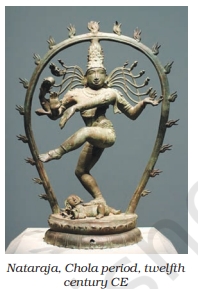
Chola metalworkers perfected the image of Shiva as the Nataraja, creating an iconic form recognized worldwide for its balanced geometry.
- (i) Workshops in the Thanjavur region led this movement, creating varied designs for Shiva iconography.
- (ii) The figure symbolizes cosmic creation, preservation, and renewal within a single integrated composition.
Diverse Shaivite Icons and Narrative Sculptures
Beyond the cosmic dance, Chola sculptors produced varied figures of Shiva and Parvati based on classical stories.
- (a) Kalyanasundara Murti (Marriage Form): Depicts the divine marriage ceremony (Panigrahana).
- (i) Shiva reaches out his right hand to take Parvati's hand.
- (ii) Parvati stands beside him with a slight forward step and a quiet expression.
- (b) Ardhanarisvara Murti: Combines male and female elements in one figure to represent the complete union of Shiva and Parvati, balancing masculine (Purusha) and feminine (Prakriti) principles.
- (c) Standalone Parvati Figures: Figures of Parvati stand independently, modeled in the classic triple-bend pose (tribhanga) to convey natural grace.
- (a) Kalyanasundara Murti (Marriage Form): Depicts the divine marriage ceremony (Panigrahana).
Vijayanagar Period: Flourishing of Royal Portrait Sculpture
The Vijayanagar Empire (from to ) introduced realistic human features into bronze work, especially during the .
Life-size Bronze Portraits of Royalty in Tirupati
Sculptors in Andhra Pradesh cast full-sized portraits of royal patrons to record their gifts and religious service.
- (i) Full-length bronze figures were placed inside the temple grounds at Tirupati.
- (ii) Notable examples show King Krishnadevaraya accompanied by Queen Tirumalamba and Queen Chinnadevi.
- (iii) Artisans combined realistic facial features with standardized royal proportions.
- (iv) Figures were cast to express both physical presence and formal dignity.
- (v) Each figure joins its hands in the prayer posture (namaskara mudra) toward the shrine.
⚡ Quick Revision Capsule: South Indian Bronze Eras Comparison
The following table summarizes the key features, prominent figures, and artistic developments across the three major ruling periods:
| Era & Time Period | Key Styles & Postures | Notable Iconographic Examples |
|---|---|---|
| Pallava Period (–) | Quiet rest, subtle forms, seated in ardhaparyanka asana | Shiva icon with achamana mudra |
| Chola Period (–) | Dynamic balance, triple bend (tribhanga), refined details | Nataraja, Kalyanasundara Murti, Ardhanarisvara |
| Vijayanagar Period (–) | Realism in portraits, tall figures, namaskara mudra | Portrait of King Krishnadevaraya and queens at Tirupati |
Nataraja Sculpture: Analysis and Profound Symbolism
The Chola Nataraja serves as both a central artwork and a visual summary of Shaivite ideas regarding Hindu cosmology.
Shiva's Role and the Cosmic Dance
The figure of Shiva as the Cosmic Dancer (Nataraja) illustrates the ongoing processes of creation, maintenance, and return.
Chola Period Nataraja - The iconic posture embodies the Ananda Tandava (Dance of Bliss), demonstrating the cycle of existence and the suppression of ignorance. - (i) The active movement represents the continuous underlying energy of the physical world.
- (ii) The dance signifies overcoming personal ignorance to achieve clear understanding.
Symbolism of the Posture and Limbs
Every position in Nataraja's dance of bliss (Ananda Tandava) communicates a specific instruction regarding life purpose (dharma) and liberation (moksha).
- (a) Right Leg: Stands down on the figure of Apasmara, showing the suppression of ignorance and self-centeredness.
- (b) Left Leg: Raised across the body in the bhujangatrasita stance, showing freedom from the veil of illusion (maya).
Gesture, Attributes, and Iconography
The four arms hold sacred objects and show precise hand gestures (mudras):
- (i) Main Right Hand: Shows the gesture of protection (abhaya hasta), offering reassurance to the viewer.
- (ii) Upper Right Hand: Holds a small drum (damaru), whose sound marks the beginning of creation and the count of time.
- (iii) Upper Left Hand: Holds a flame, representing destruction, change, and the end of a cosmic age (Pralaya).
- (iv) Main Left Hand: Extends across the chest in the dola hasta gesture, pointing toward the raised foot to direct attention to safety.
Additional Elements and Cosmic Energy
Secondary elements complete the composition, highlighting the energy of the event.
- (i) Garland of Flames (Jvala Mala): A ring of fire surrounds the figure, showing the fiery cosmic energy that surrounds the universe.
- (ii) Hair Locks: Strands of hair spread out horizontally on both sides, indicating rapid motion and focused spiritual force.
📝 Summary
The practice of sculpture making in South India across the Pallava, Chola, and Vijayanagar periods demonstrates consistent craftsmanship and deep cultural meaning. From early quiet poses to the balanced movement of the Chola Nataraja and the detailed portraiture of King Krishnadevaraya, this artistic lineage remains a fundamental chapter in Indian Art and Culture.
🚀 Quick Revision Points
Essential facts to review before examinations:
- (i) Pallava bronzes feature calm seated poses such as the ardhaparyanka asana.
- (ii) The lost-wax process (cire perdue) allowed detailed casting for processional metal images (Utsava Murti).
- (iii) The Chola Nataraja holds a drum (damaru) for creation and a flame for destruction.
- (iv) Vijayanagar metalwork introduced accurate facial features for royal portraiture at Tirupati.
- 💡 Exam Tip: Pay attention to the hand gestures (mudras) and symbols held in the four hands of the Nataraja figure during exams.
❓ Frequently Asked Questions (FAQ)
Q1: What is the lost-wax technique used in South Indian bronze casting?
A1: It is an ancient metal-casting method where a wax model is coated with clay, melted out to leave a hollow mold, and replaced with molten metal to form a solid bronze figure.Q2: What does the dwarf under Shiva's foot represent in the Nataraja bronze?
A2: The dwarf figure, named Apasmara, represents spiritual ignorance and ego, which Shiva suppresses to help devotees reach clarity.Q3: How do Vijayanagar bronzes differ from earlier Chola bronzes?
A3: Vijayanagar bronzes placed greater focus on royal portraits with individual facial traits in a namaskara mudra, while Chola bronzes focused mainly on idealized divine figures and dynamic movement.