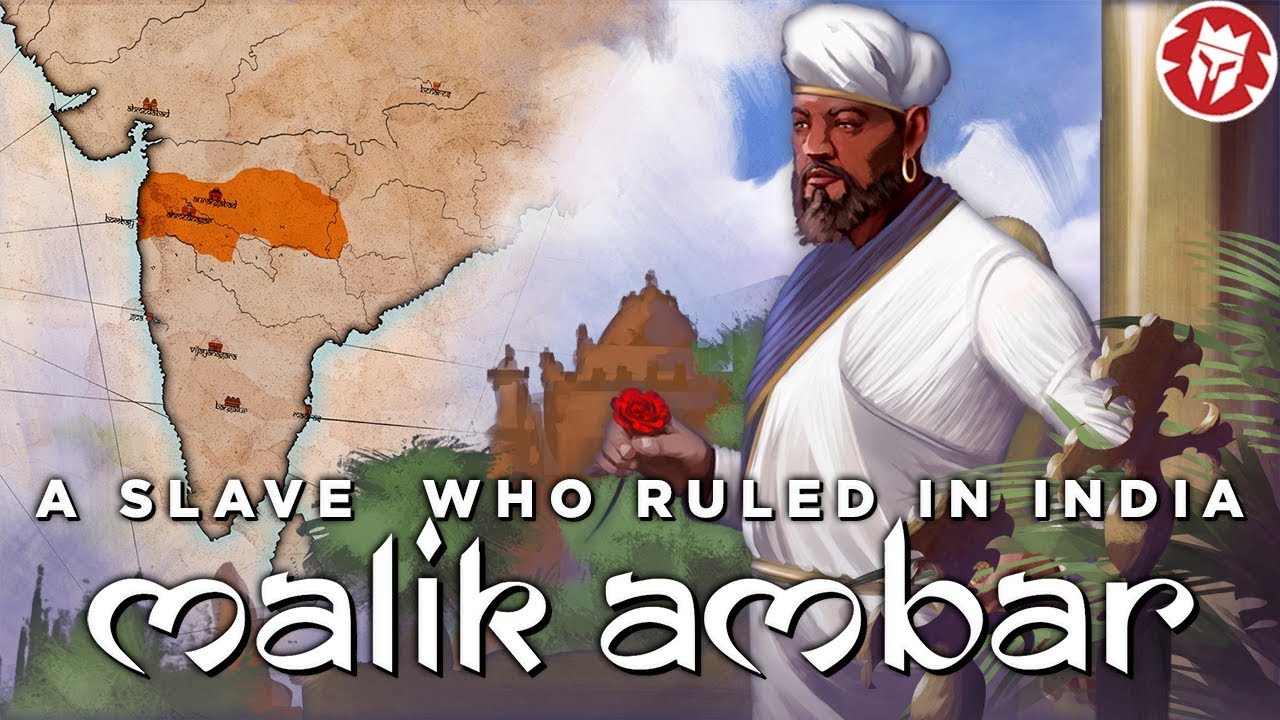
The story of Malik Ambar, an enslaved man who rose to become the ruler and protector of the Nizam Shahi kingdom of Ahmadnagar, is a major chapter in Indian history. Between and , he built smart political alliances with Bijapur, Golconda, and the Marathas while implementing key administrative reforms to hold back Mughal imperial power. His story remains vital for students learning about Indian history for their competitive examinations.
🎯 In this chapter, you will understand:
- How Malik Ambar rose from servitude to become the Peshwa of Ahmadnagar.
- The military tactics and early Maratha guerrilla warfare used against Mughal forces.
- The political battles between Malik Ambar and Mughal emperors Jahangir and Shah Jahan.
- The land tax reforms based on the Zabti system that stabilized the state income.
💡 Why this topic matters: It highlights how regional kingdoms in the Deccan stopped the mighty Mughal army from expanding south for over two decades.
🧠 Core Idea: Strong leadership, clever guerrilla tactics, and fair land revenue systems can help a smaller state resist a much larger empire.
📌 Malik Ambar’s Fierce Resistance to Mughal Imperial Expansion in the Deccan (1600–1626)
After the first attack on Ahmadnagar, Malik Ambar became the main leader fighting against Mughal growth in the Deccan region.
Many expected the Ahmadnagar Sultanate to collapse after its early loss, but Malik Ambar saved the state using smart battle plans and regional partnerships.
- (i) He started life as a slave but rose through the ranks while working under the minister Changez Khan before taking charge of the Deccan defense.
- (ii) Although he worked for the Bijapur Sultanate for a short time, Malik Ambar returned to Ahmadnagar when it mattered most to stop the Mughals.
- (iii) He took full control of leadership after the death of Queen Chand Bibi, filling the gap in power.
📌 Establishing Murtaza Nizam Shah II and the Ascent of Malik Ambar
To give his government legal backing, Malik Ambar placed Murtaza Nizam Shah II on the throne as the official king, which brought stability to the Ahmadnagar Sultanate.

Malik Ambar’s Role as Peshwa and Military Genius
As the primary leader or Peshwa, Malik Ambar ran the army and government to hold off Mughal power.
- (i) Taking the position of Peshwa made him the real ruler in charge of military and state affairs for the Nizam Shahi dynasty.
- (ii) He recruited and trained Maratha light cavalry in fast, flexible guerrilla tactics (known as Bargir-giri), which frustrated the heavy Mughal horsemen.
- (iii) When Emperor Akbar died in , Ambar took advantage of the confusion to drive Mughal troops out of Berar, Balaghat, and Ahmadnagar city.
Strategic Alliances with Deccani Sultanates
Malik Ambar worked with neighbor states to build a united front against the enemy.
- (a) He joined hands with Bijapur to pool troops and money against Mughal forces.
- (b) Even the top Mughal general, Khan-i-Khanan, had to make temporary peace terms with Malik Ambar after losing early battles.
📌 Political Consolidation and Renewed Mughal-Deccan Conflict
Ambar's successes caused the Mughals to send larger armies back into the Deccan region to regain lost ground.
Early Conflicts and Mughal Reverses
During the early , Ambar's clever military steps forced Mughal commanders into embarrassing retreats.
- (i) By , Ambar forced the Mughal general Khan-i-Khanan to pull his troops out of the heart of Ahmadnagar territory.
- (ii) A later attack led by Prince Parvez failed completely, forcing the Mughals to sign a treaty on Ambar's terms.
- (iii) However, these quick victories created tension between Ambar and his local allies, which the Mughals later used to divide them.
Major Mughal Victory in 1616 and Jahangir's Strategy
The Mughal Empire, under Emperor Jahangir, gathered a large force that gave Ambar a temporary defeat.
Depiction of 17th-century warfare in the rugged terrain of the Deccan. - (a) In , a massive Mughal army defeated the combined forces of Ahmadnagar, Bijapur, and Golconda.
- (b) After this win, Emperor Jahangir chose to secure the land he won rather than trying to conquer the entire South at once.
📌 Malik Ambar’s Continued Resistance and Final Decline
Even after heavy losses, Malik Ambar kept fighting against Mughal pressure until his final years.
Final Years of Resistance and Death
The final decade of Ambar's life saw a back-and-forth struggle of temporary truces and renewed fights.
- (i) He signed a peace treaty with the Mughals in but started fighting again soon after to protect his state.
- (ii) He suffered another big loss in , losing key lands to Mughal control.
- (iii) Rivalries between Deccan rulers made it hard to keep a united army together.
- (iv) Malik Ambar passed away in , ending an important period of organized Deccan resistance.
📌 Malik Ambar’s Revolutionary Administrative and Land Reforms
Besides his military work, Malik Ambar built a strong land revenue system that helped his people and government.
Land Revenue and Governance Reforms
His economic plans brought fair taxes and regular income to the state budget.
- (i) He introduced a land measurement system based on the famous Zabti model created by Raja Todar Mal.
- (ii) This system fixed farm taxes based on real crop output, giving stability to farmers and steady revenue to the state.
- (iii) He recovered lost land while Prince Khurram (later Emperor Shah Jahan) was rebelling against his father Jahangir.
- (iv) A few years after Ambar died, the weakened Ahmadnagar Sultanate was finally annexed by Emperor Shah Jahan.
⚡ Quick Revision Capsule: Malik Ambar's Administration & Battles
Here is a summary of the key facts, dates, and achievements of Malik Ambar's rule:
| Key Aspect | Details & Impact | Historical Significance |
|---|---|---|
| Role & Title | Served as Peshwa (Prime Minister) and regent of Ahmadnagar. | Held real political power while keeping Murtaza Nizam Shah II as king. |
| Military Tactics | Trained Maratha light cavalry in guerrilla warfare (Bargir-giri). | Neutralized the heavy Mughal army's numerical advantage. |
| Land Reforms | Adapted Raja Todar Mal'sZabti land assessment system. | Created fair land taxes based on actual harvest yield. |
| Major Battles | Won early battles (), suffered setbacks in and . | Delayed Mughal control over the Deccan plateau for 26 years. |
| Death & Legacy | Passed away in . | Set the foundation for future regional resistance by the Marathas. |
📝 Summary
Between and , Malik Ambar led the defense of the Nizam Shahi kingdom against the Mughal Empire. Through guerrilla tactics, partnerships with Bijapur and Golconda, and fair land tax rules, he kept imperial armies at bay. His military methods paved the way for the later rise of the Marathas under Shivaji.
🚀 Quick Revision Points
Essential facts to review before examinations:
- (i) Malik Ambar was a former slave who became the Peshwa of Ahmadnagar.
- (ii) He used Maratha troops to execute successful guerrilla attacks on Mughal forces.
- (iii) He brought the Zabti land revenue system to the Deccan region.
- (iv) He successfully delayed full Mughal conquest of the Deccan until his death in .
- 💡 Exam Tip: Remember that Malik Ambar introduced Todar Mal's revenue reforms in the Deccan and laid the groundwork for Maratha guerrilla tactics.
❓ Frequently Asked Questions (FAQ)
Q1: Who was Malik Ambar?
A1: He was a former slave from Ethiopia who rose to become the Peshwa (Prime Minister) and regent of the Ahmadnagar Sultanate.Q2: What military tactic did Malik Ambar use against the Mughals?
A2: He used guerrilla warfare (Bargir-giri) using fast-moving Maratha light cavalry troops.Q3: What land reforms did Malik Ambar introduce?
A3: He adapted the Zabti tax system created by Raja Todar Mal, measuring land and taxing farmers based on real crop output.