Between and , Turkish invasions changed the political roadmap of medieval India through strategic campaigns led by leaders like Mahmud Ghazni and Muhammad Ghori.
🎯 In this chapter, you will understand:
- The military raids of Mahmud Ghazni and their economic effects.
- The political landscape of northern India before the Turkish conquests.
- The strategic battles of Muhammad Ghori, including the turning point at Tarain.
- The expansion into the Ganga Valley and the establishment of the Delhi Sultanate.
💡 Why this topic matters: This period marks the transition from regional kingdom rule to centralized Sultanate governance in medieval northern India.
🧠 Core Idea: Early raids focused on wealth acquisition, while later campaigns established permanent political control and state institutions.
Mahmud Ghazni’s Seventeen Invasions in India: Motives, Targets, and Enduring Impact (1000–1027 CE)
Campaigns led by Mahmud Ghazni aimed primarily at gathering resources and money for his empire in Central Asia. However, the high frequency and large scale of these attacks exposed the political and financial vulnerabilities of North India.
Ghaznivid Dynasty: The Rise to Power and Mahmud Ghazni's Ascension
The Ghaznivid rule started in Ghazni, a key trade city located between Persia and India. The early expansionist aims of its leaders set the stage for upcoming military actions inside India.
- (i) A Turkic slave commander named Alptigin founded the independent Ghaznivid kingdom in .
- (ii) Expansion and Consolidation: The successor Subuktigin expanded the influence of this growing realm, moving closer to the borders of India.
- (iii) The Rise of the Warrior:Mahmud took power after defeating his brother, Ismail, in . He secured his position and became known historically as Mahmud Ghazni.
The Fragmented Political Condition of India Preceding Mahmud's Attacks
Before the raids began, northern India suffered from a lack of unity, which made it easier for foreign forces to achieve their military goals.
- (a) Divided Northern States: North India was split among many separate, competing kingdoms. The Hindushahi kingdom held critical border locations where the invaders first entered.
- (b) Independent Regional Powers: Regional domains in Bengal, Gujarat, Malwa, and Bundhelkhand operated on their own, as did the large kingdoms in South India.
- (c) The Catalyst for Invasion: Because these regional leaders failed to create a combined defense force, foreign invaders achieved long-lasting military success.
Mahmud Ghazni’s Invasions: Dual Motivation of Wealth and Religious Zeal
Calculated attacks by Mahmud were driven by the need to fund his large armies and the desire for religious prestige in foreign territories, earning him titles like idol-breaker.
- (i) Key Motivations: His actions aimed to secure practical resources to sustain his central empire while building a powerful religious reputation.
- (ii) Iconic Target and Destruction: He repeatedly attacked the Hindushahi kingdom and targeted the Somnath temple in , where he broke the sacred Linga to demonstrate his authority.
- (iii) Vast Territorial Reach: Although direct governance in India was mainly limited to Punjab, the overall empire stretched from Punjab to the Caspian Sea, and from Samarkand down toward Gujarat.
Mahmud Ghazni: Conclusion and Lingering Legacy
Although territorial holdings inside India remained temporary, the repeated attacks permanently changed the political future of the region.
- (i) Political Map Alteration: Seventeen separate incursions altered North India's political structure by weakening strong border states.
- (ii) Paving the Turkish Path: These raids revealed both the wealth and military gaps of local kingdoms, opening routes for future rulers.
- (iii) A Complex Historical Figure: In Central Asia, he was viewed as a strong military strategist and a backer of literature and arts who supported scholars like Firdausi.
Muhammad Ghori’s Strategic Invasions and the Establishment of the Delhi Sultanate (1175–1206 CE)
Unlike Mahmud Ghazni, Muhammad Ghori focused on building a lasting state. He expanded his influence by defeating Rajput leaders and setting up the base for the Delhi Sultanate.

Political Condition of India During Ghori’s Entry: The Rajput Fragmentation
India remained politically divided decades after earlier raids, creating clear opportunities for a leader seeking permanent control.
- (i) Continued Fragmentation: The political landscape remained divided, which allowed local leaders to rule independently without central coordination.
- (ii) Rajput Dominance and Conflict: North India was largely governed by rival Rajput royal houses whose internal rivalries prevented a organized joint defense.
- (iii) Southern Independence: Meanwhile, kingdoms in the southern regions maintained separate administration, largely unaffected by northern struggles.
Muhammad Ghori’s Major Invasions: Key Battles and Strategic Defeats
Ghori used a step-by-step approach by securing western entry points before moving against northern power centers.
- (a) Initial Successes: His campaign began by taking control of Multan and Uch in to establish reliable access routes.
- (b) Early Setback: His move toward Gujarat was stopped at Anhilwara in after a defeat by the Solanki ruler, Mularaja II.
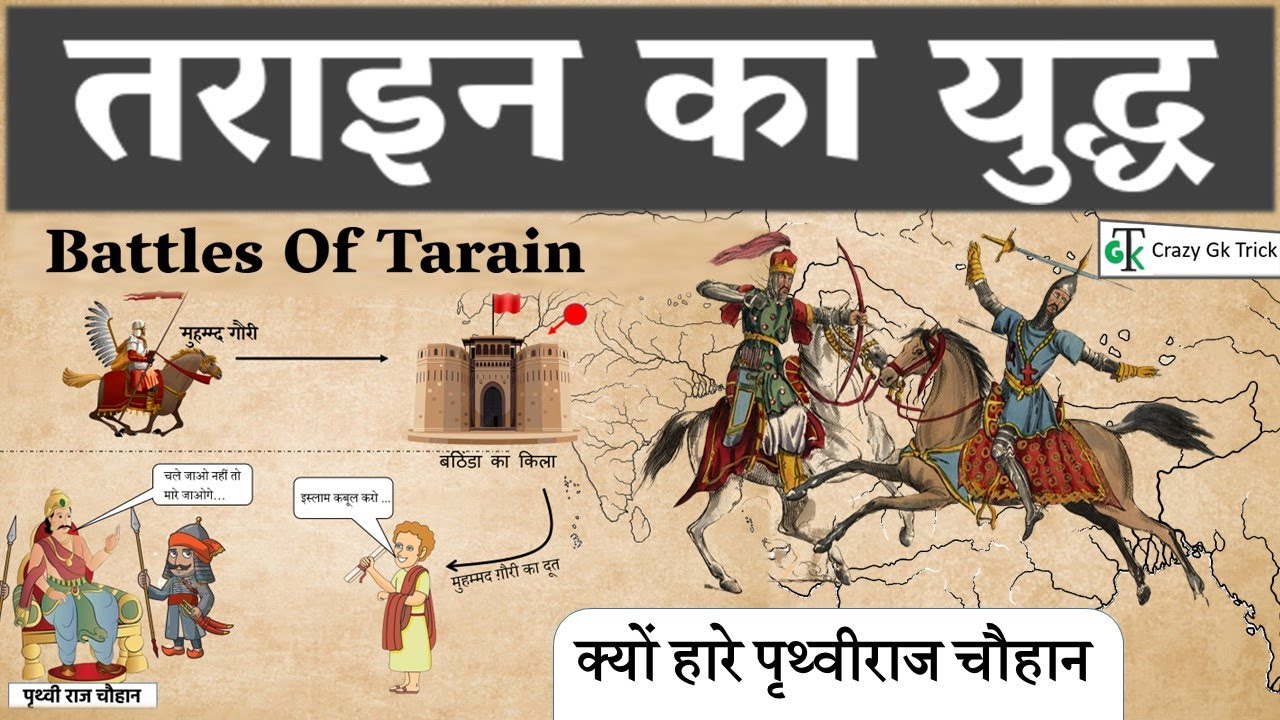
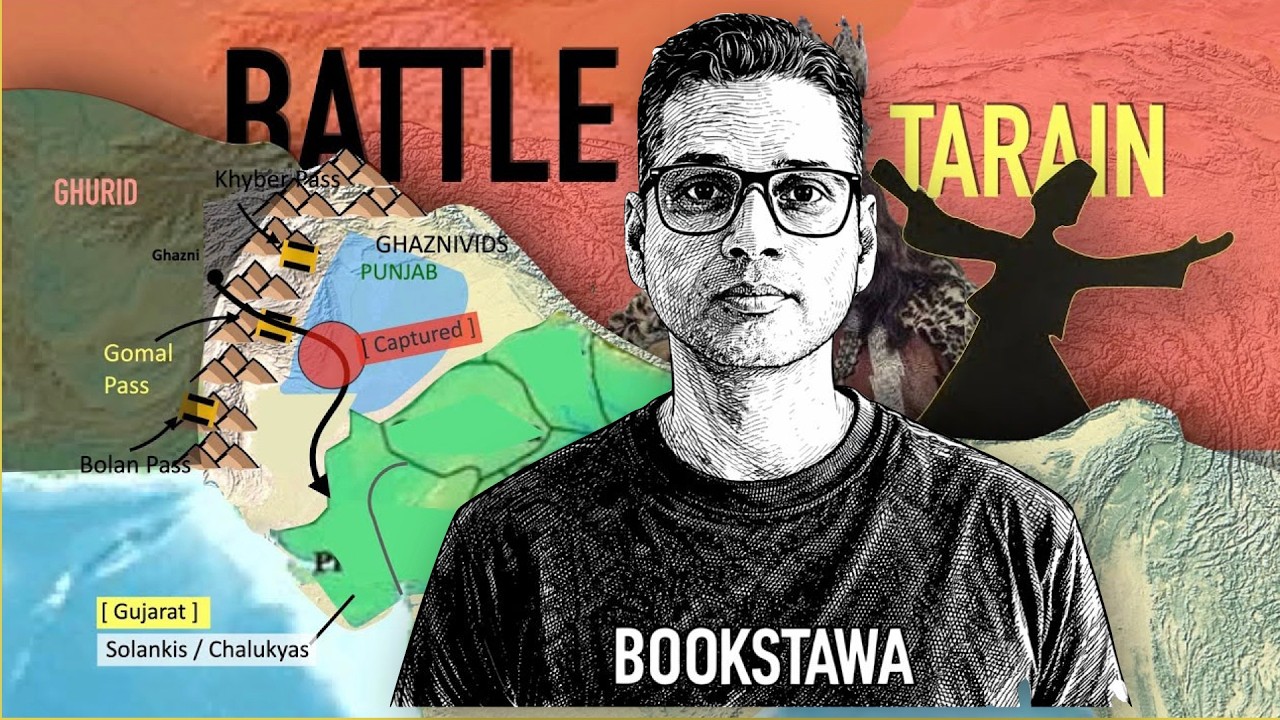
- (c) The Decisive Battles of Tarain: After losing the first Battle of Tarain in , he returned in to defeat Prithviraj Chauhan in the second battle.
The Battle of Tarain (1191 & 1192): The Turning Point for Turkish Rule
The two engagements near Tarain (modern-day Taraori) served as decisive military moments that established northern Turkish power.
First Battle of Tarain (1191): The Rajput Assertion and Ghurid Setback
The first battle saw a combined Rajput force under Prithviraj Chauhan push back the invading armies.
- (i) The Initial Conflict: Fighting began over the strategic town of Tabarhinda (modern Bhatinda), resulting in a victory for local forces.
- (ii) Ghurid Retreat: The invading forces retreated after their leader was injured and helped off the field by a young Khalji rider.
- (iii) A Missed Opportunity: Winning forces did not clear remaining garrisons from Punjab, which left the frontier open for a return attempt.
Second Battle of Tarain (1192): Ghori's Victory and the Turkish Ascendancy
The second battle featured clear tactical planning that reversed the prior year's outcome and reshaped regional administration.
- (i) The Forces Assembled:Muhammad Ghori returned with a disciplined force of nearly 120,000 soldiers to face a larger local army.
- (ii) Decisive Outcome: Strategic movements led to the defeat of Prithviraj Chauhan and the capture of key surrounding regional forts.
- (iii) The Delhi Gateway: This outcome opened direct pathways into Delhi and the fertile plains along the Ganges.
Conquest and Expansion Beyond Tarain: Securing the Heartland
Victory at Tarain was followed by rapid troop movements into agricultural centers across northern areas.
Depiction of cavalry formations used during late 12th-century campaigns. - Expansion: Armies pushed outward toward Bihar and Bengal to broaden their regional reach.
- Securing Cities: Control was established over Banaras, securing an important administrative and religious hub.
- Dominant Foundation: These military victories created an organized foundation for long-term governance.
⚡ Quick Revision Capsule: Key Battles and Invasions (1000–1206 CE)
A structured comparison of the main military campaigns and administrative developments during this era.
| Ruler / Event | Key Target / Region | Historical Impact |
|---|---|---|
| Mahmud Ghazni | Hindushahi Realm, Somnath () | Acquired vast wealth; exposed regional military weaknesses. |
| Battle of Anhilwara () | Gujarat (Mularaja II) | Temporary setback for Muhammad Ghori's early southern strategy. |
| First Battle of Tarain () | Tabarhinda / Punjab Border | Defeat of Ghurid army by Prithviraj Chauhan. |
| Second Battle of Tarain () | Taraori / Delhi Gateway | Decisive victory for Ghori; opened North India to Sultanate rule. |
| Eastern Expansion | Bihar and Bengal | Led by generals like Bakhtiyar Khalji to extend central control. |
Turkish Conquest of the Ganga Valley: The Subjugation of Bihar and Bengal
Following victories in the north, armies directed their efforts toward the fertile Ganga Valley to expand their territory and political control.
The Gahadavala Challenge: The Kingdom of Kanauj
The Gahadavala kingdom occupied valuable land along the river plains and formed a primary barrier to further eastern movement.
- (i) Kanauj as the Obstacle: The realm of Kanauj, ruled by Jaichandra, stood as a major independent kingdom in the central plains.
- (ii) Doab's Strategic Value: Taking control of the rich Ganga-Yamuna doab region was essential for securing regular agricultural revenue.
Qutbuddin Aibak’s Strategic Moves and Eastern Campaigns
As a key general, Qutbuddin Aibak managed local administration and oversaw campaigns into eastern districts.
- (i) Consolidation of Power:Aibak organized military bases in India while main forces returned westward.
- (ii) Upper Doab Capture: He established authority over the upper river lands with minimal local resistance.
- (iii) Eastern Conquests: Forces under commanders like Bakhtiyar Khalji expanded authority into Bihar and areas of Bengal.
📝 Summary
Between and , northern India shifted from a group of independent kingdoms to a unified system under the Delhi Sultanate. Early resource raids under Mahmud Ghazni exposed regional vulnerabilities. Later campaigns led by Muhammad Ghori transformed military victories at Tarain into a central government managed by leaders like Qutbuddin Aibak.
🚀 Quick Revision Points
Essential facts to review before examinations:
- (i) Mahmud Ghazni conducted 17 invasions primarily focused on acquiring wealth between and .
- (ii) The second Battle of Tarain in served as a major turning point for northern rule.
- (iii) The Ganga-Yamuna doab provided crucial agricultural resources for the expanding administration.
- (iv) Qutbuddin Aibak established the foundation of the Delhi Sultanate in .
- 💡 Exam Tip: Focus on comparing Mahmud Ghazni's economic motives with Muhammad Ghori's political goals, especially regarding the strategic outcomes of the Battles of Tarain.
❓ Frequently Asked Questions (FAQ)
Q1: What was the main difference between Mahmud Ghazni's and Muhammad Ghori's invasions?
A1: Mahmud Ghazni focused on gathering wealth and resources to support his Central Asian empire, whereas Muhammad Ghori sought to establish permanent political rule in India.Q2: Why was the Second Battle of Tarain significant?
A2: Fought in , it resulted in the defeat of Prithviraj Chauhan and opened northern India to centralized Turkish rule.Q3: Who founded the Delhi Sultanate after Ghori's death?
A3: Qutbuddin Aibak, Ghori's general, formally established the Delhi Sultanate in .