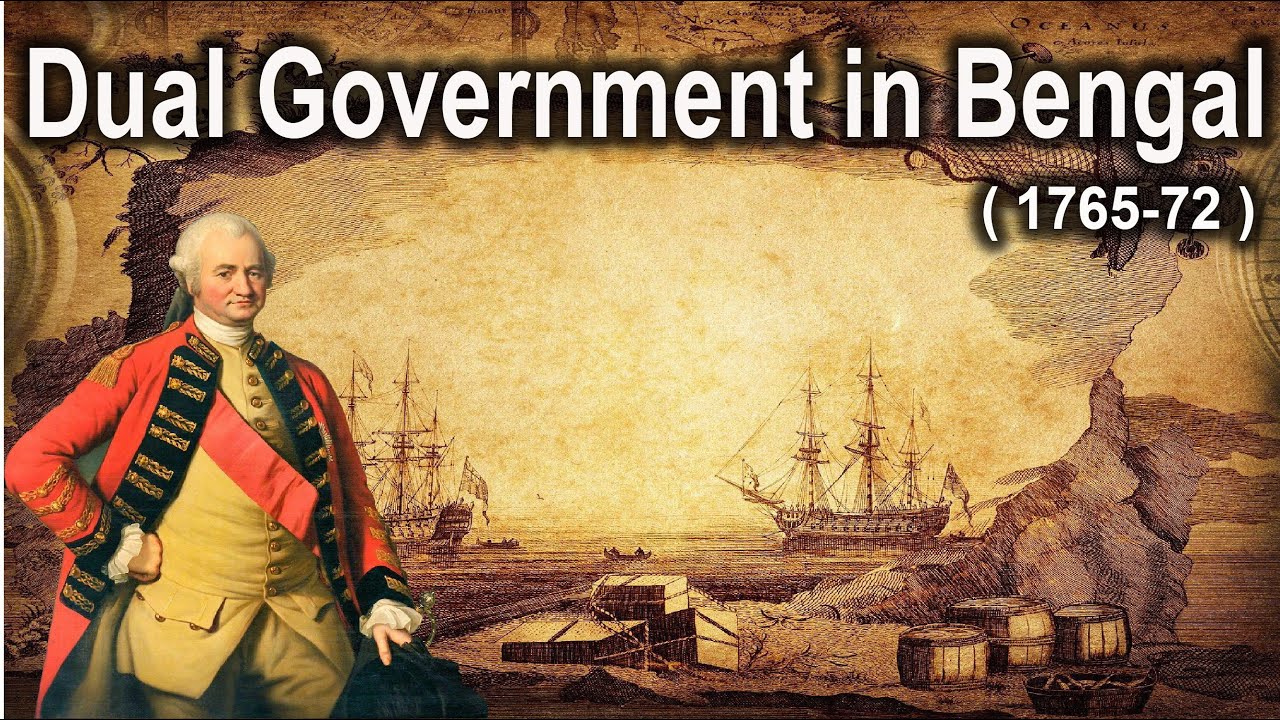
The aftermath of the Battle of Buxar in led to a huge change in Bengal's governance and set the stage for British colonial expansion. This major moment brought in the infamous dual system of administration, a system where the East India Company collected vast tax revenues and held military power while leaving the burdens of daily management to local rulers. Understanding this system is essential for students preparing for history and governance exams, as it shows the strategy used by the British to establish effective political control in India.
🎯 In this chapter, you will understand:
- How the British gained financial and administrative power in Bengal after .
- The division between Diwani (tax revenue) and Nizamat (law and order) duties.
- Why keeping a puppet Nawab benefited the East India Company.
- The economic hardship caused by the dual system and its abolition in .
💡 Why this topic matters: It explains how a commercial trading company transformed into a ruling political power in India without taking direct responsibility for the people it ruled.
🧠 Core Idea: The Dual System gave the East India Company power and wealth without any responsibility, while leaving the Nawab with responsibility but no money or army.
📌 British Acquisition of Political and Financial Control in Bengal: The Dual System of Governance (1765–1772)
The East India Company secured its role as the real ruling power in Bengal, Bihar, and Orissa right after winning the decisive Battle of Buxar in .
This military victory against the joined armies of the Nawab of Bengal and the Mughal Emperor turned the Company from a trading group into the actual ruler of Bengal, turning the local Nawab into a ruler in name only.
- (i) The Company became the top authority in Bengal, hiding its rule behind the weak presence of the Nawab.
- (ii) The creator of this setup was Robert Clive, who started the dual system of governance (also called Dyarchy) to split formal power between the strong Company and the ceremonial Nawab.
- (iii) The system split administrative power into two main parts—the diwani (right to collect revenue) and the nizamat (courts, police, and military power)—putting both under the direct or indirect control of the Company, giving it power without responsibility.
🏛️ Mechanism of East India Company's Control Over Diwani (Revenue) and Nizamat (Law and Order) Functions
The Company used a planned strategy to grab financial and administrative control while keeping the appearance of local Indian rule to avoid governance problems.

The Dual Acquisition and Management of Diwani and Nizamat
Setting up dual governance was a smart legal move, getting financial and administrative rights from two different authorities to make the Company's rule official.
- (i) The Diwani Rights—the power to collect taxes across Bengal—were officially given by the Mughal Emperor Shah Alam II through the Treaty of Allahabad in 1765. The Company used this power by choosing trusted Indian officials called deputy diwans.
- (ii) The Nizamat Rights—the duty to run law, order, courts, and the military—remained with the Nawab on paper, but the Company controlled this indirectly by naming the deputy subahdar (or nazim), who depended fully on British support and money.
💼 Strategic Advantages of the Dual System for the East India Company's Interests
The dual governance model gave major advantages to the Company, allowing it to collect the wealth of Bengal without taking on the daily work or duties of governance.
The Role of the Puppet Nawab as a Political Shield for Financial Exploitation
By keeping the Nawab as the visible ruler, the Company shielded itself from local and international complaints while strengthening its financial control over the region.
- (i) The Nawab appeared to be the ruler of Bengal to the public and foreign powers, but all actual economic and military power belonged to the Company.
- (ii) Even though the Nawab was supposed to maintain peace and order and give justice, he had no funds and depended completely on the Company for money and army support, making him powerless.
👥 Implementation of Company's Administration Through Trusted Deputy Diwans and Nazims
To handle tax collection and governance without using British staff directly, the Company appointed trusted Indian officials to run daily operations.
Appointment of Key Deputy Diwans and Nazims in Bengal and Bihar
Selecting these key Indian officers helped ensure local tax collection remained high across the key Diwani lands.
Administrative Division of Bengal and Bihar under Deputy Diwans - Bengal Collections:Mohammad Reza Khan was put in charge of tax collections in Bengal.
- Bihar Collections:Raja Sitab Roy was placed in charge of tax collections in Bihar.
- Combined Control:Mohammad Reza Khan was also given the role of deputy nazim for Bengal, combining police, judicial, and financial duties under one official trusted by the Company.
⚡ Quick Revision Capsule: Dual System of Governance (1765–1772)
A simple overview of how administrative duties were divided under the Dual System in Bengal:
| Feature / Power | Diwani Rights | Nizamat Rights |
|---|---|---|
| Core Responsibility | Collection of tax revenue and civil justice | Law and order, criminal justice, and defense |
| Source of Authority | Granted by Mughal Emperor Shah Alam II () | Held nominally by the Nawab of Bengal |
| Real Controlling Entity | East India Company (via Deputy Diwans) | East India Company (via Deputy Nazims) |
| Key Officials Appointed | Mohammad Reza Khan (Bengal) & Raja Sitab Roy (Bihar) | Mohammad Reza Khan (Deputy Nazim) |
| Abolition Year & Leader | Abolished in by Warren Hastings | Brought under direct British administration in |
⚠️ Disastrous Consequences of the Dual System for the People of Bengal
While the system was very profitable for the Company, it ruined local governance and destroyed the welfare of the people, breaking down traditional administrative systems.
Impact of Unaccountable Governance on Public Welfare and Efficiency
Splitting power from responsibility created a complete breakdown in governance, as neither side cared for the basic needs of the people, leading to widespread suffering and severe economic harm.
- (i) The lack of accountability led to high taxes, harsh collection methods, and economic collapse for the hardworking people of Bengal.
- (ii) The system was broken at its core because the Company held all the money and power without responsibility, while the Nawab had all the duties but no funds or army to carry them out.
- (iii) Seeing the terrible collapse and failure of this model, the new Governor of Bengal, Warren Hastings, ended the dual system in and took over direct rule.
📝 Summary
The years after the Battle of Buxar in saw the East India Company build firm financial and political control over Bengal using the dual system of administration from . This arrangement gave the Company wealth and authority without direct public duties, while causing severe hardship for local residents. The end of this system by Warren Hastings in marked the start of direct British rule in India, making it a critical topic for students studying history.
🚀 Quick Revision Points
Essential facts to review before examinations:
- (i) Battle of Buxar () made the East India Company the primary ruler in Bengal.
- (ii) Dual System was created by Robert Clive in .
- (iii) Diwani (tax collection) was given by Mughal Emperor Shah Alam II via the Treaty of Allahabad.
- (iv) Warren Hastings abolished the Dual System in to start direct British administration.
- 💡 Exam Tip: Remember the core weakness of the Dual System for exam questions: "Power without responsibility for the East India Company, and responsibility without power for the Nawab."
❓ Frequently Asked Questions (FAQ)
Q1: Who introduced the Dual System of Governance in Bengal and when?
A1: Robert Clive introduced the Dual System in after the British won the Battle of Buxar.Q2: What was the main difference between Diwani and Nizamat rights?
A2: Diwani meant the right to collect tax revenue and manage civil justice, while Nizamat meant managing law, order, police, and criminal justice.Q3: Why was the Dual System abolished in 1772?
A3: Warren Hastings abolished it in because the system caused administrative failure, severe tax oppression, and economic ruin in Bengal.