The growth of administrative services in British India shows how governance moved step by step from the commercial management of the East India Company to a formal state structure, finally leading to changes that set up the modern Indian Civil Services. This study guide looks closely at main acts, commissions, and official rules, showing how they affected Indian students learning about history and public administration across the region.
🎯 In this chapter, you will understand:
- How company traders gradually changed into public administrators.
- Key administrative changes brought by early Governors-General like Lord Cornwallis and Lord Wellesley.
- The shift from political recommendations to open competitive exams starting with the Charter Act of 1853.
- The path toward hiring more Indian officers and the final setup of Public Service Commissions up to .
💡 Why this topic matters: It explains the historical origins of modern bureaucratic frameworks, recruitment exams, and public service structures used in India today.
🧠 Core Idea: British civil service changes transformed a private trading company into a centralized state machine, initially keeping control in European hands before gradually opening entry to Indians.
📜 Early Evolution of Civil Services in British India: Historical Overview and Key Administrative Reforms (1786–1935)
The beginning of public administration under British rule started as a practical business need, slowly changing into an organized system to govern large territories across India. Understanding how this administrative framework began under the East India Company shows how early trading operations shifted focus toward state governance, laying down the path for the Indian Civil Services (ICS).
- (i) Early arrangements separated staff handling trade, army, and naval tasks, showing that civil servants mainly acted as managers for company business.
- (ii) As the company gained more land and political power, it needed an organized governance wing, leading to steps that changed commercial employees into regular public administrators.
- (iii) The initial setup took heavy inspiration from England, but administrators adapted it over time to handle the complex governance needs of the Indian subcontinent.
⚖️ Foundational Reforms and the Shift from Patronage to Open Competition (1786–1853)
Moving from job appointments based on personal contacts to a system built on merit and open testing was a major turning point, driven by the need for an efficient, reliable administrative system for the growing empire.

Introduction to Civil Services under East India Company: From Commercial to Administrative Authority
At first, employees managed trade transactions for the East India Company (EIC). Over time, their work expanded to cover court decisions and tax collection, marking a broader shift toward general administrative work.
- (i) Early work focused purely on company profits, but taking over new lands turned these employees into practical rulers.
- (ii) Early divisions created a clear order of rank, separating civil officers from military or naval staff, even though all reported to the EIC.
- (iii) This early framework laid the groundwork for the three service groups that later formed the ICS: Covenanted, Uncovenanted, and Statutory.
Lord Cornwallis’ Reforms (1786–1793): Professionalization and Anti-Corruption Measures
Lord Cornwallis organized the civil services systematically. He introduced key changes to stop widespread corruption, build clean management practices, and set clear standards for official behavior.
- (a) He gave officers much higher pay so they would not need to run private businesses or engage in illegal trading.
- (b) He set strict rules against private trade or taking money and gifts, along with clear punishments for anyone breaking these rules.
- (c) He established regular job promotions based on length of service and good work, ensuring steady career growth and reducing unfair appointments.
Wellesley’s Contribution (1798–1805): Institutionalizing Training and Education
Lord Wellesley saw that new officers needed solid education and local cultural understanding, so he built training centers to prepare recruits for governance challenges.
- (i) He set up Fort William College in Calcutta in to teach new recruits local languages, laws, and customs upon arrival.
- (ii) Company directors in England opposed this center, replacing it with the East India College at Haileybury, England, in .
- (iii) The Haileybury center required recruits to complete of special preparation in England before starting administrative work across India.
Charter Act of 1853 and Subsequent Reforms: The End of Patronage
The Charter Act of 1853 brought a major change by ending job appointments through personal contacts and starting competitive open tests for the Indian Civil Service (ICS), though early setups still favored European applicants.
- (a) The Act established open competitive tests for hiring, ending the power of company directors to handpick employees directly.
- (b) Even though the earlier Charter Act 1833 allowed open entry in theory, actual entry remained out of reach for Indians due to exam locations and cultural hurdles.
- (c) After the revolt of , the Proclamation of 1858 stated the British Crown's intent to include Indians in higher administrative offices, though real progress came slowly.
Indian Civil Service Act, 1861: A Milestone and the First Indian Success
The Indian Civil Service Act, 1861 created the legal base for the Covenanted Civil Service. However, rules like compulsory tests in England and strict age limits continued to benefit British candidates.
- (i) Entry tests took place only in England, using the English language and classical subjects, creating huge travel and study hurdles for Indian students.
- (ii) Authorities lowered maximum entry ages step by step (down to at one point) to favor candidates educated in the United Kingdom.
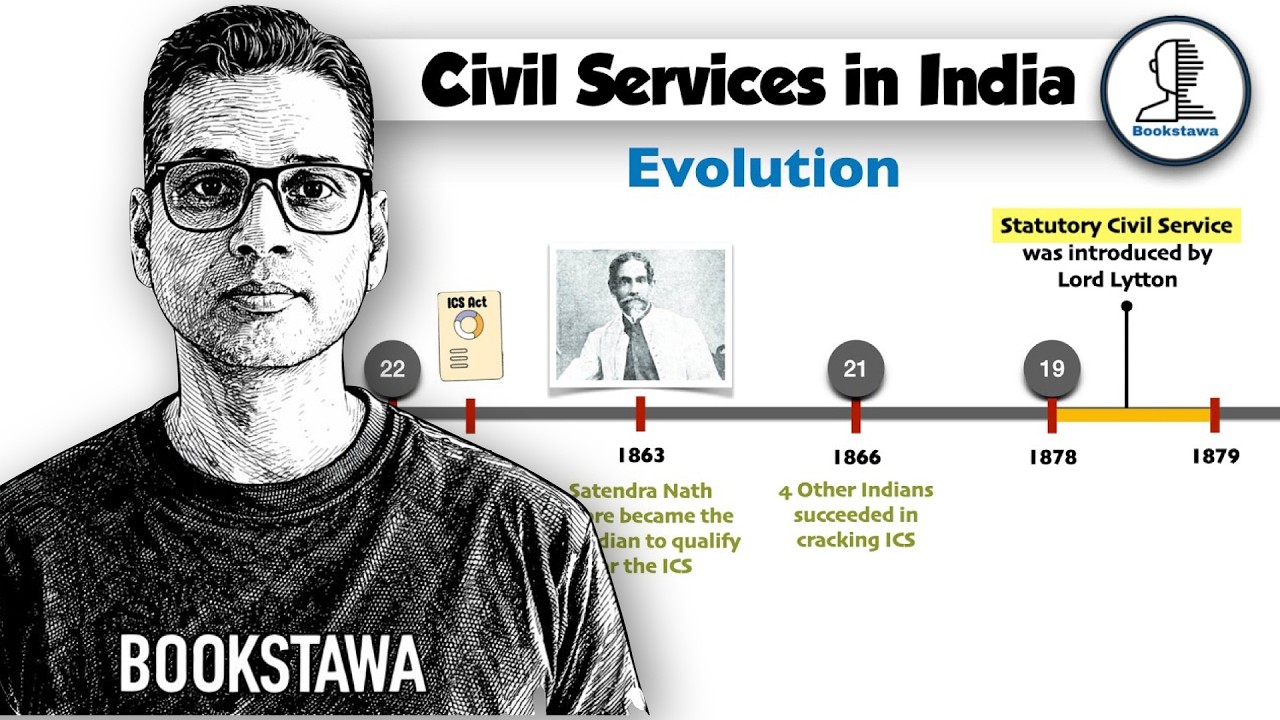
- (iii) A major historic moment came when Satyendra Nath Tagore passed the exam in , becoming the first Indian officer in the ICS.
🏛️ Indianisation Efforts and Further Reforms of the Civil Service (1878–1935)
Growing political pressure from national freedom movements and rising administrative needs forced authorities to increase Indian participation through various committees, though real policy power stayed mostly with British leadership.
Statutory Civil Service (1878–79): A Failed Attempt at Inclusion
To address low representation, authorities set up the Statutory Civil Service to nominate Indians for a small share of top posts, but design flaws led to its quick closure.
- (a) The plan set aside one-sixth of top covenanted positions for Indians, who were nominated by local governments based on social standing and merit.
- (b) Critics noted that nominations hurt merit-based selection, and nominated candidates missed out on formal civil service training.
- (c) Due to administrative problems and lack of public trust, officials closed this failed system, turning attention to the Aitchison Committee.
Congress Demands and Aitchison Committee (1886): Classification and Age Limits
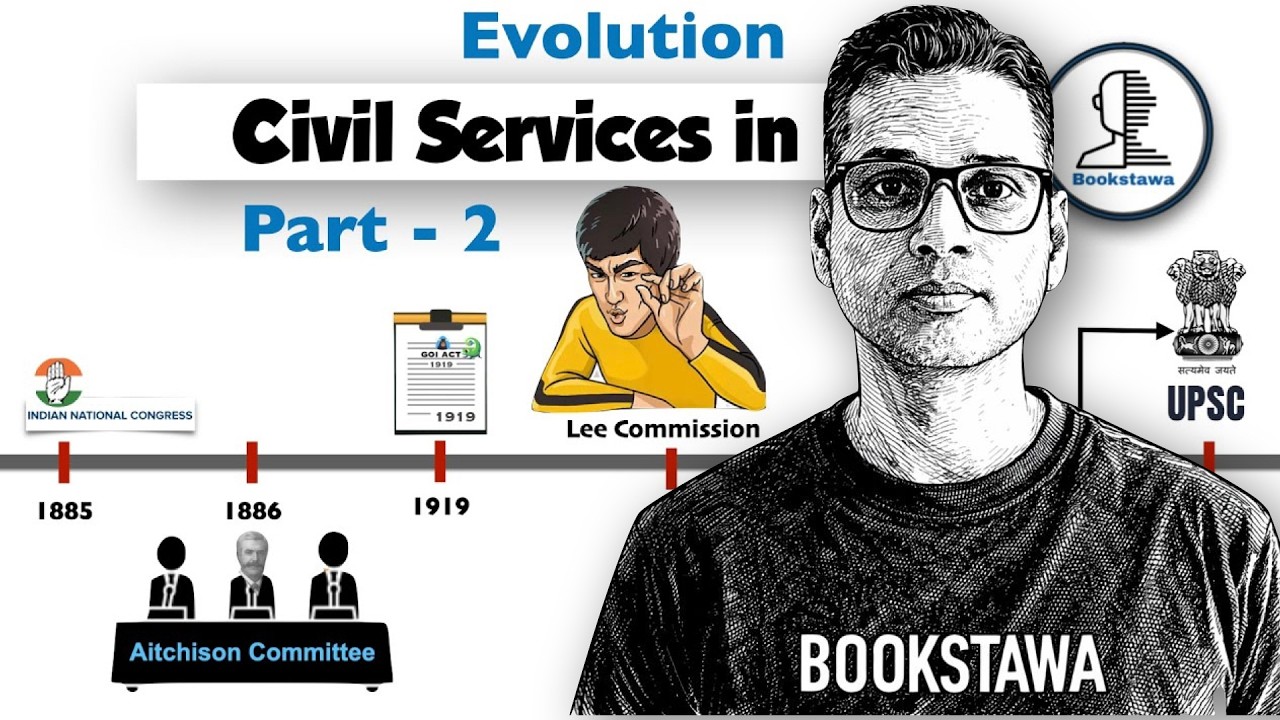
Demands from the Indian National Congress pushed for civil service reforms. This led to the Aitchison Committee, which reorganized the services into clearer divisions and reviewed exam age rules.
Classification of public services into Imperial, Provincial, and Subordinate tiers. - Congress Demands: Leaders asked for higher candidate age limits and demanded holding simultaneous tests in India and Britain at the same time.
- Aitchison Committee: Led by Sir Charles Aitchison, the panel removed the old covenanted and uncovenanted labels, creating three clear groups: Imperial, Provincial, and Subordinate services.
- Age Rules: The panel raised the upper age limit for tests, but rejected simultaneous exams in India, even after a parliamentary vote supported the idea in .
Montford Reforms and ICS Reforms (1919): Accelerating Indian Recruitment
The Montagu-Chelmsford Reforms, written into the Government of India Act, 1919, took a clear step forward by stating that hiring more Indian officers was necessary for self-governance.
- (a) The official policy declared that employing more Indian officers was vital to match plans for representative government.
- (b) The panel finally accepted the long-standing demand to hold entrance exams in India and England at the same time.
- (c) The reforms set annual targets for hiring, ensuring a steady increase of Indian officers in higher administrative ranks.
Lee Commission (1924) and Its Impact: Parity Goals and Institutional Structure
The Lee Commission (Royal Commission on the Superior Civil Services) reviewed hiring progress and recommended structural changes that led directly to setting up the modern Public Service Commission.
- (i) The panel recommended that the British Secretary of State keep hiring for main all-India services managed by the central government.
- (ii) For provincial departments, recruitment authority moved to local governments, giving them independent hiring control.
- (iii) The commission set a clear goal to reach equal numbers of European and Indian officers in the ICS within .
- (iv) Crucially, the panel asked for the immediate setup of a Public Service Commission, which officially formed in .
Government of India Act, 1935: Civil Service Structure Reforms and Institutionalizing Federalism
The Government of India Act, 1935 formally structured independent hiring commissions across central and state levels, establishing the framework used until independence.
- (a) The law established a Federal Public Service Commission alongside state-level Provincial Public Service Commissions.
- (b) Despite these new bodies, top executive and policy-making decisions stayed controlled by British officials.
- (c) Higher numbers of Indian officers entered the service, but main policy choices remained restricted.
Evaluation of British Civil Service Reforms: Exclusion, Barriers, and Legacy
Civil service reforms in British India built organized administrative structures while keeping system-wide barriers in place that limited Indian officers from holding top policy-making positions.
- (i) Systemic Exclusion:Indian officers were largely kept out of key policy roles, which remained reserved for European officials.
- (ii) Entrance Challenges: Exams held only in London, heavy focus on classical subjects, and low age limits created major entry hurdles for Indian students.
- (iii) Concentration of Power: Key posts over finance and security stayed in British hands, ensuring overall control remained firmly in London.
⚡ Quick Revision Capsule: Key Administrative Milestones
This table summarizes key civil service changes, official acts, and administrative milestones from to .
| Year / Act | Key Reform / Event | Administrative Impact |
|---|---|---|
| – | Reforms by Lord Cornwallis | Raised salaries, banned private trade, and stopped corrupt practices. |
| / | Fort William & Haileybury College | Set up mandatory training for new civil service recruits. |
| Charter Act of 1853 | Ended personal nominations and started open competitive exams. | |
| First Indian Success | Satyendra Nath Tagore became the first Indian to pass the ICS exam. | |
| Government of India Act, 1919 | Approved simultaneous exams in India and Britain. | |
| Public Service Commission | Set up the first central hiring body based on Lee Commission advice. | |
| Government of India Act, 1935 | Established Federal and Provincial Public Service Commissions. |
📝 Summary
The civil service system in British India grew from company trading roots into an organized government structure. Anti-corruption measures under Lord Cornwallis and competitive exams under the Charter Act of 1853 built a professional cadre. Later policies like the Indian Civil Service Act 1861, Montford Reforms, Lee Commission, and the Government of India Act, 1935 increased Indian participation. However, top decision-making power stayed in British hands until independence. This history forms the foundation of modern public administration in India today.
🚀 Quick Revision Points
Essential facts to review before examinations:
- (i) Lord Cornwallis professionalized administrative work by raising salaries and banning private business activities.
- (ii) The Charter Act of 1853 introduced open competitive entry exams for the ICS.
- (iii) Satyendra Nath Tagore became the first Indian officer to enter the civil service in .
- (iv) The Lee Commission in recommended forming an independent Public Service Commission, which started in .
- 💡 Exam Tip: Remember the timeline of major acts: (Open Competition), (ICS Act), (Simultaneous Exams), and (Public Service Commission).
❓ Frequently Asked Questions (FAQ)
Q1: Who organized the civil services in British India?
A1: Lord Cornwallis organized the civil services through anti-corruption rules, higher pay, and merit-based promotions between and .Q2: When did open competitive exams begin for the ICS?
A2: Open competitive exams began under the Charter Act of 1853, replacing the old system of personal nominations by company directors.Q3: When was the first Public Service Commission established in India?
A3: The first Public Service Commission was set up in following recommendations from the Lee Commission.