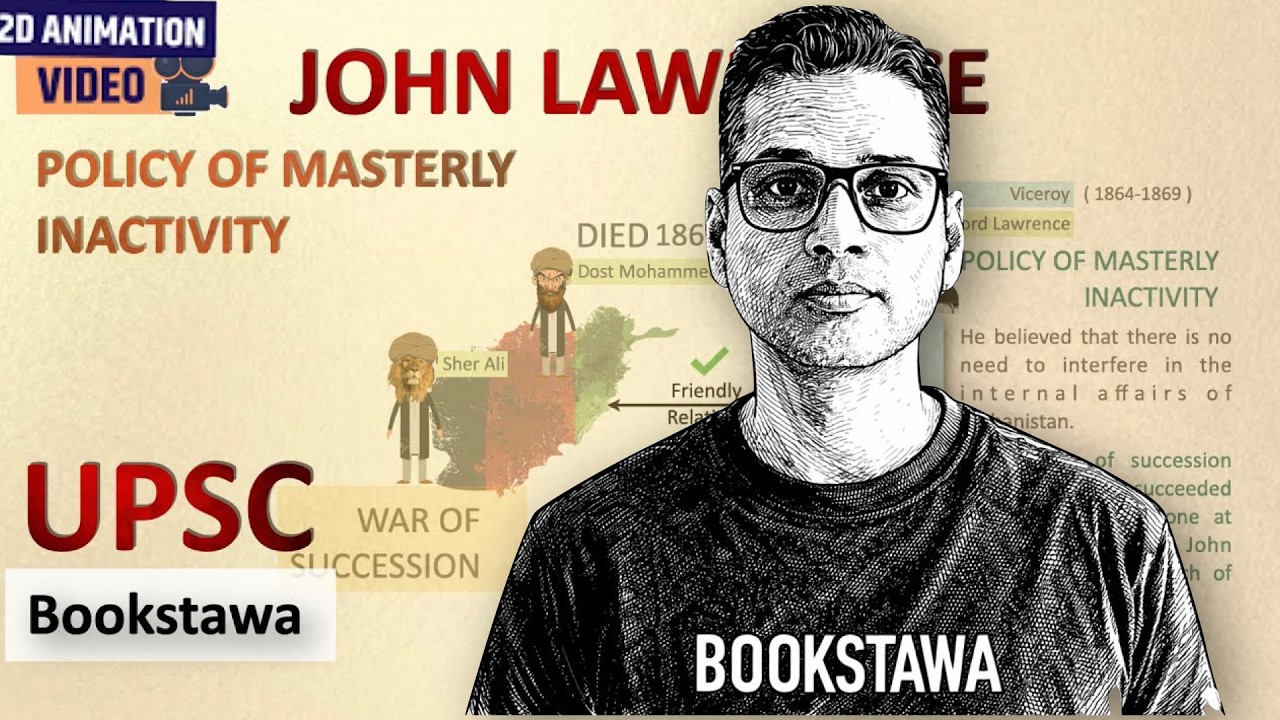
The government of Lord John Lawrence () was a major turning point in British India's foreign policy because it introduced the policy of masterly inactivity. This careful British strategy toward Afghanistan came directly from the costly lessons learned during the First Afghan War. It focused on non-interference and sensible diplomacy rather than military invasion. This topic is essential for students preparing for history and political science exams as it explains a key period in nineteenth-century imperial strategy.
🎯 In this chapter, you will understand:
- The main goals of John Lawrence's foreign policy regarding Afghanistan.
- How the failure of the First Afghan War shaped British non-intervention strategies.
- The specific conditions required for applying masterly inactivity along the border.
- The lasting historical significance of establishing a buffer state in Central Asia.
💡 Why this topic matters: It highlights how real-world mistakes changed imperial strategies from aggressive war to cautious diplomacy.
🧠 Core Idea: Avoid risky foreign wars in Afghanistan while keeping the borders safe and preventing outside powers like Russia from gaining influence.
John Lawrence's Policy of Masterly Inactivity: British Strategy towards Afghanistan (1864–1869)
Lawrence's work focused on bringing peace to the northwestern border by not interfering in Afghan affairs, respecting the independent nature of the Afghan people after earlier British mistakes.
The situation in Central Asia called for a careful plan instead of the forward expansion policy used earlier. The main goal was to protect India's borders without spending money or taking big risks in Afghanistan's rough mountains.
- (i) The policy of masterly inactivity was basically a strategy of watching Afghan internal events patiently from a safe distance and stepping in only if an enemy power threatened the area.
- (ii) This marked a fundamental shift in British thinking, moving away from forced control toward frontier consolidation and financial prudence.
- (iii) The long-term goal was protecting British India's imperial interests against expanding Russian influence, a competition known as The Great Game.
Rationale and Origins: Learning from the First Afghan War Failures
The reason behind this cautious approach was the painful memory of the First Afghan War, which showed how hard it was to control the independent Afghan tribes.

Direct Response to the Humiliating First Afghan War (1838–42)
The heavy retreat from Kabul and the massive British and Indian losses during the First Afghan War () were the main reasons for Lawrence’s policy shift. The human and financial costs were simply too high to repeat.
- (i) The policy was created to avoid repeating past mistakes, focusing on reducing political complications and saving money and lives.
- (ii) Lawrence chose to work with the changing reality of Afghan domestic politics instead of forcing a chosen ruler onto the Afghan people.
Core Principles of Non-Intervention and Pragmatic Diplomacy
The main ideas of masterly inactivity rested on two points: respecting Afghan sovereignty and choosing peaceful solutions for border issues.
- (a) It accepted Afghanistan’s naturally independent spirit, recognizing that long-term military control over the country was impossible.
- (b) Lawrence systematically chose diplomacy, patient talks, and financial support over unpredictable military actions.
Non-Interference in the Succession Struggle after Dost Mohammed's Death
A major test for this policy came when the Afghan ruler Dost Mohammed Khan died in , causing a civil war among his sons for control of the throne.
- (i) Lord Lawrence refused to interfere in the Afghan succession struggle or pick a favorite leader early on.
- (ii) This self-restraint made masterly inactivity the official British foreign policy in the region.
Conditions for Implementation and Cultivating Relations with Sher Ali
Even though the policy recommended minimal interference, it did not mean total isolation. It was applied under specific conditions to protect India's northwestern frontier.
Key Conditions for Applying Masterly Inactivity
Lawrence made sure British patience depended on clear strategic limits that Afghanistan could not cross.
- (i) A main requirement was keeping total peace along the sensitive frontier regions of India.
- (ii) The policy aimed to stop any Afghan group from asking for or accepting foreign help—especially from Russia—so The Great Game stayed outside Afghanistan.
Cultivating Diplomatic Ties with Sher Ali after Consolidation
When Sher Ali Khan won the succession struggle and secured his position as ruler, Lawrence adapted by using a supportive diplomatic approach.
- (a) This shift recognized new facts on the ground and aimed to build friendly ties with the accepted Afghan ruler.
- (b) By recognizing the active ruler and offering light assistance without demanding political control, Britain built a stable buffer state, which was the core goal of masterly inactivity.
⚡ Quick Revision Capsule: Masterly Inactivity Policy
A clear summary of the core pillars, timeline, and goals of British foreign strategy during John Lawrence's term:
| Aspect | Details & Strategy | Key Outcome |
|---|---|---|
| Primary Leader | Lord John Lawrence () | Established a cautious, non-interventionist foreign policy. |
| Main Reason | Heavy military and financial losses in the First Afghan War (). | Shifted focus from military conquest to frontier consolidation. |
| Core Approach | Avoid interfering in internal conflicts like the succession struggle after Dost Mohammed's death (). | Prevented unnecessary spending and kept British troops out of volatile tribal areas. |
| Strategic Goal | Prevent Afghan leaders from forming alliances with Russia during The Great Game. | Turned Afghanistan into a peaceful buffer state protecting India's borders. |
| Final Relationship | Recognized Sher Ali Khan once he won full control over Afghanistan. | Created friendly ties through financial support without demanding direct political control. |
📝 Summary
The policy of masterly inactivity () stands as a famous example of practical diplomacy in British history. It successfully balanced imperial security with respect for Afghan independence, keeping the British Indian government out of unnecessary foreign wars for years. For students studying nineteenth-century history, this policy provides a clear contrast to aggressive territorial growth. Even though later leaders abandoned it for the forward policy, it worked well by preventing conflict and allowing Britain to strengthen its position in India while keeping peace along the northwestern frontier.
🚀 Quick Revision Points
Essential facts to review before examinations:
- (i) Masterly inactivity was introduced by Lord John Lawrence during his rule from .
- (ii) The policy was a direct reaction to the disastrous losses of the First Afghan War.
- (iii) Its main goal was protecting borders and practicing financial care instead of starting risky wars.
- (iv) Britain recognized Sher Ali Khan as ruler to build a buffer state against Russian expansion in The Great Game.
- 💡 Exam Tip: Remember that masterly inactivity was not total neglect; it was a deliberate strategy of non-interference combined with watchful waiting along the border.
❓ Frequently Asked Questions (FAQ)
Q1: What was the policy of masterly inactivity?
A1: It was a cautious British foreign policy created by Lord John Lawrence that focused on non-interference in Afghan affairs and border defense.Q2: What caused the British to adopt masterly inactivity?
A2: The major cause was the heavy losses in lives and money during the First Afghan War ().Q3: How did John Lawrence handle the Afghan succession war after 1863?
A3: He refused to interfere in the internal struggle between Dost Mohammed's sons, waiting until Sher Ali Khan won full control before building official relations.