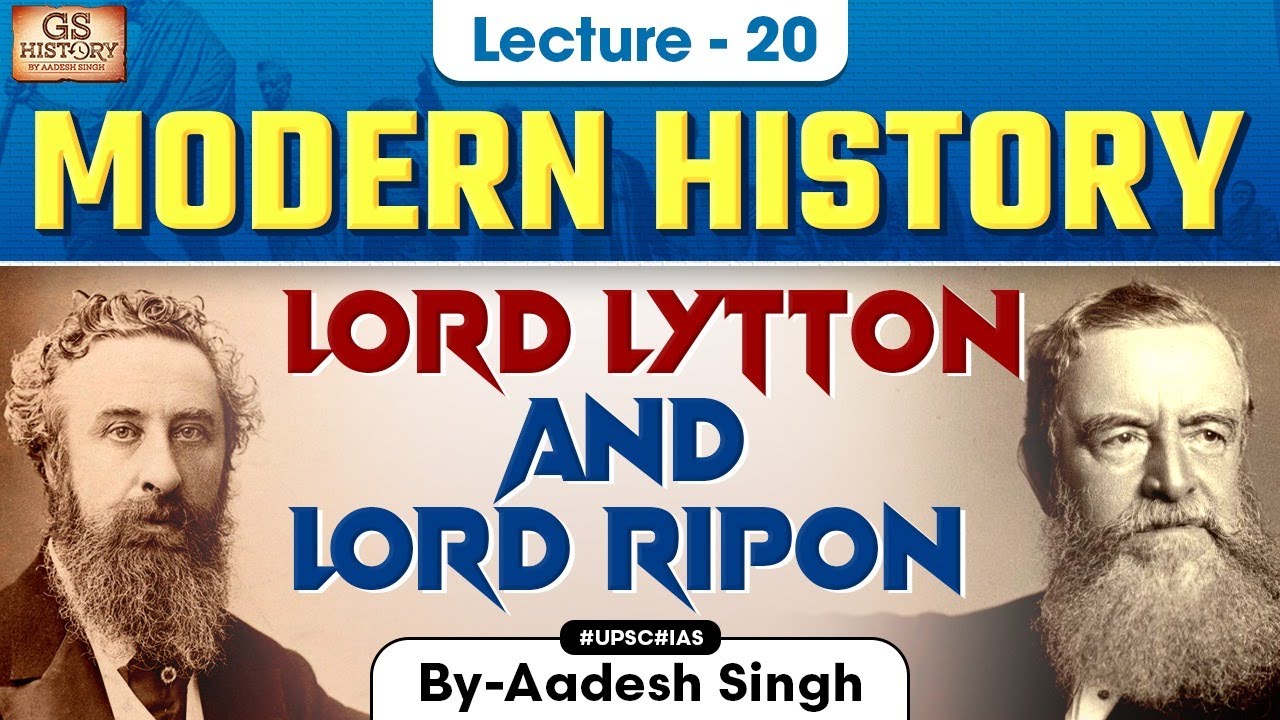
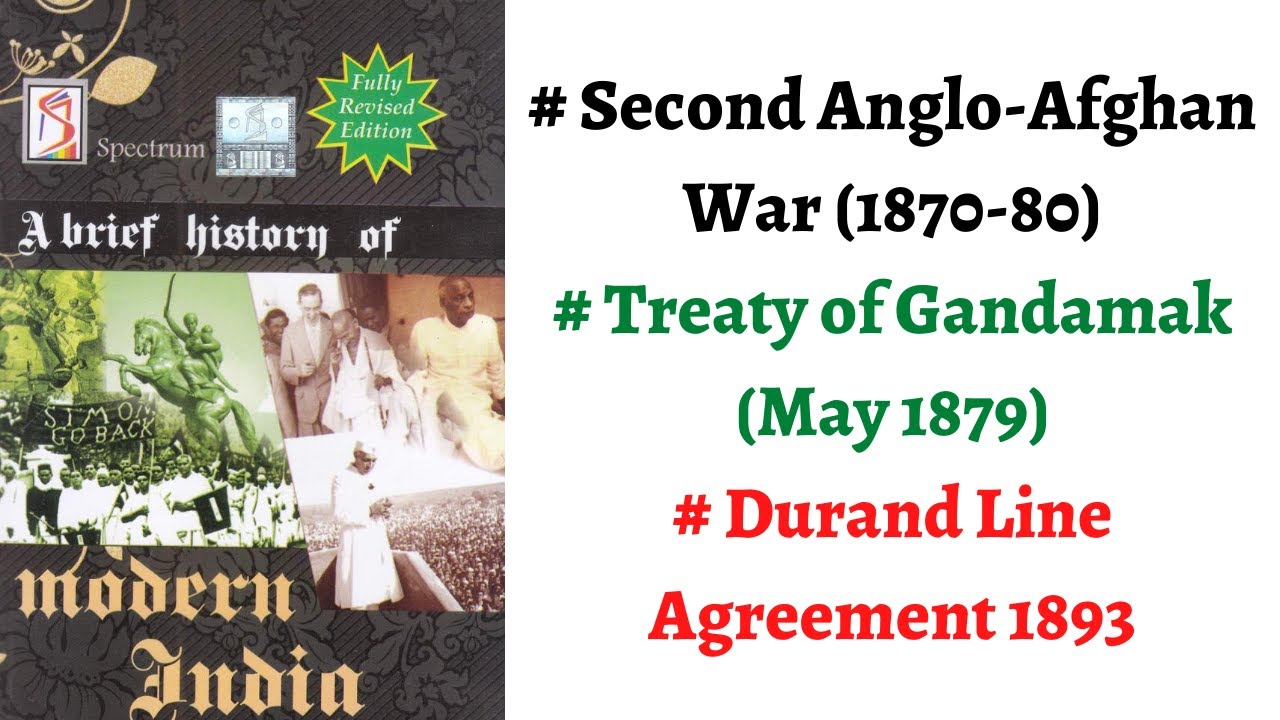
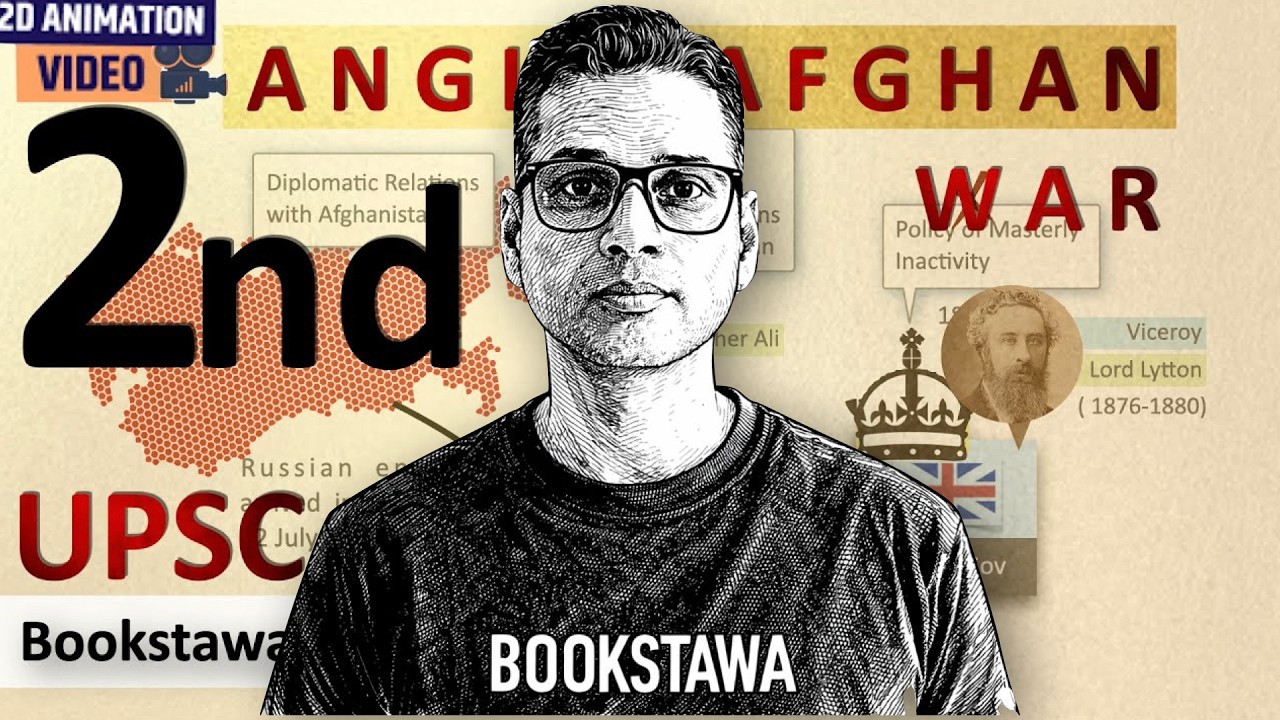
The strategic shift known as the Policy of Proud Reserve, created by Lord Lytton during his time as Viceroy of India starting in , changed British foreign policy in South Asia. This aggressive approach led directly to the Second Anglo-Afghan War and the Treaty of Gandamak in , changing political relations with Afghanistan. These actions helped lead to Afghanistan becoming fully independent in . Learning about these events, including ideas like buffer states and the Great Game, is important for students studying modern history and foreign relations.
🎯 In this chapter, you will understand:
- The shift from cautious policy to the aggressive Policy of Proud Reserve under Lord Lytton.
- The causes, events, and results of the Second Anglo-Afghan War (1878–1880).
- The main points and effects of the Treaty of Gandamak signed in May 1879.
- How Afghanistan gained full sovereignty in 1921 after years of foreign influence.
💡 Why this topic matters: It explains how colonial border strategies shaped modern nation boundaries and international relations in Central and South Asia.
🧠 Core Idea: Britain used strong diplomatic pressure and military force to control Afghan foreign policy and create a secure boundary against Russian expansion.
📌 Lytton and the Policy of Proud Reserve: Colonial Frontier Strategy in Afghanistan (1876–1921)
Lord Lytton's arrival as Viceroy ended the older, cautious foreign policy and replaced it with an active, direct approach called proud reserve. His appointment showed that leaders in London wanted to secure the north-western border because of their rivalry with Imperial Russia.
- (i) Lord Lytton, chosen by the Conservative government of Prime Minister Benjamin Disraeli, became Viceroy of India in during the rivalry between Britain and Russia known as the Great Game.
- (ii) He started the foreign policy of proud reserve (also called the Forward Policy) to actively secure border areas and protect British India from Russian expansion.
- (iii) This policy focused on making clear agreements with Afghanistan so it would stay a neutral buffer state under British influence.
📌 The Second Anglo-Afghan War: Lytton's Aggressive Intervention (1878–1880)
The aggressive demands of the proud reserve approach caused conflict when the ruler of Afghanistan, Amir Sher Ali Khan, tried to keep his country independent and neutral.

Causes and Initiation of Hostilities (1878)
The war started because Lord Lytton believed the Amir was turning toward Russia, which threatened the security of British India.
- (i) Even though Amir Sher Ali Khan tried to balance relations, Lord Lytton offered a tough agreement to bring Afghanistan under British control.
- (ii) The main disagreement happened when Sher Ali refused to allow a permanent British representative in Kabul, even though he had recently hosted a Russian envoy.
- (iii) After the Russian envoy left, Lord Lytton sent an ultimatum and ordered an invasion of Afghanistan in , forcing Sher Ali to flee before his death soon after.
The Treaty of Gandamak and Subsequent Political Turmoil (May 1879)
This treaty was signed with Sher Ali's son, Mohammad Yakub Khan. It met British goals at first, but soon caused more fighting and changes in British plans.
- (i) The main rule of the Treaty of Gandamak forced the Amir to run all Afghan foreign policy only with advice from the British Government of India.
- (ii) The treaty also required a permanent British Resident with military backing to stay in Kabul to oversee affairs.
- (iii) In return, Britain promised to protect Afghanistan from foreign enemies and gave the Amir an annual payment.
- (iv) Local anger over the treaty forced Mohammad Yakub Khan to step down, and revolts led to the death of the British Resident, forcing British troops to retake Kabul and Kandahar.
- (v) The new Amir, Abdur Rahman Khan, and the new Viceroy, Lord Ripon, adjusted the plan by keeping Afghanistan as a single, subsidized buffer state instead of breaking it apart.
📌 Towards Independence: Afghanistan's Sovereignty Recognition (1921)
Even with earlier restrictions, growing national pride and global events helped Afghanistan regain complete control over its foreign affairs.
The Final Push for Sovereignty
Major world events gave Afghan leaders the opportunity to challenge British control successfully.
Treaty documentation marking Afghanistan's full sovereignty recognition in 1921. - (i) The end of World War I and the Russian Revolution in weakened Britain's global position and encouraged Afghan leaders to demand full freedom in foreign affairs.
- (ii) After Habibullah Khan (who ruled from ) was killed in , Amir Amanullah Khan took power and declared war on Britain, starting the Third Anglo-Afghan War.
- (iii) The short war ended with the Treaty of Rawalpindi and the final treaty in , which officially recognized Afghanistan as a fully independent nation, ending the era of the proud reserve policy.
⚡ Quick Revision Capsule: British Policy in Afghanistan (1876–1921)
This table summarizes key events, leaders, and policies shaping British-Afghan relations over this historic period.
| Time Period | Key Leader / Event | Policy / Result |
|---|---|---|
| Lord Lytton | Started the active Policy of Proud Reserve to counter Russia. | |
| Amir Sher Ali Khan | Second Anglo-Afghan War broke out over foreign diplomatic missions. | |
| Mohammad Yakub Khan | Signed the Treaty of Gandamak, giving control of foreign relations to Britain. | |
| Lord Ripon & Abdur Rahman Khan | Restored Afghanistan as a unified, subsidized buffer state. | |
| Amir Amanullah Khan | Signed a peace treaty gaining full recognition of independence in all foreign affairs. |
📝 Summary
The aggressive proud reserve policy created by Lord Lytton and the Second Anglo-Afghan War changed how Britain managed its northern borders in India. Although agreements like the Treaty of Gandamak briefly gave Britain control over Afghan foreign affairs, strong resistance from the Afghan people and changing world events eventually led Afghanistan to secure full independence in . These events remain key study topics for understanding colonial history and border security.
🚀 Quick Revision Points
Essential facts to review before examinations:
- (i) Policy of Proud Reserve: Introduced by Lord Lytton in to actively secure British influence in Afghanistan.
- (ii) Second Anglo-Afghan War (): Caused by disputes over British and Russian diplomatic visits to Kabul.
- (iii) Treaty of Gandamak (): Gave Britain control over Afghan foreign policy and placed a British Resident in Kabul.
- (iv) Full Sovereignty (): Ended British diplomatic control and established Afghanistan as an independent nation.
- 💡 Exam Tip: Focus on the cause-and-effect relationship between the Policy of Proud Reserve, the Treaty of Gandamak, and how changing global dynamics in 1917–1921 led to full Afghan sovereignty.
❓ Frequently Asked Questions (FAQ)
Q1: What was the primary goal of Lord Lytton's Policy of Proud Reserve?
A1: Its main goal was to actively secure British influence over Afghanistan to protect British India from Russian expansion during the Great Game.Q2: What was the significance of the Treaty of Gandamak?
A2: Signed in , it placed Afghan foreign policy under the control of the British Government of India and required a British Resident in Kabul.Q3: How did Afghanistan gain full independence in foreign affairs in 1921?
A3: Following the Third Anglo-Afghan War led by Amir Amanullah Khan and shifts in global power after World War I, Britain signed a peace agreement in recognizing full Afghan sovereignty.