The Battle of Plassey fought in was a major turning point in Indian history that laid the core foundation for British colonial rule. This topic explains the initial tensions, the secret plans made behind closed doors, the battle itself, and its long-term impact for students and candidates preparing for competitive examinations.
🎯 In this chapter, you will understand:
- How trade misuse led to friction between Nawab Siraj-ud-Daula and the British East India Company.
- The events surrounding the capture of Fort William and the Black Hole incident in .
- The secret alliance between Robert Clive and key officials in the Nawab's court.
- How British power expanded across Bengal through puppet rulers and economic control.
💡 Why this topic matters: Plassey changed the British East India Company from simple traders into ruling landowners, shaping the political map of India for nearly two centuries.
🧠 Core Idea: Internal betrayal inside the Nawab's court combined with calculated British diplomacy allowed a smaller European force to take control of Bengal's rich revenues.
The Initial Conflict: Seizure of Calcutta and the Black Hole Tragedy ()
Rising economic rivalry and illegal commercial practices caused heavy friction between the independent ruler of Bengal, Nawab Siraj-ud-Daula, and the British East India Company.
The relationship was built on deep mistrust. The Company regularly misused commercial passes called Dastaks originally granted by the declining Mughal Empire, which hurt state revenues and challenged local rule.
- (i) Background issues: British traders exploited tax loopholes, creating anger among state officials who saw public money slipping away and local power being ignored.
- (ii) Unapproved military building: The British began to rebuild and strengthen defenses at Calcutta without asking permission, which the Nawab treated as an open challenge to his authority.
- (iii) Protection of political rivals: The Company gave shelter to Krishna Das, son of senior official Raj Ballabh. This convinced Siraj-ud-Daula that the British were helping his political enemies, while the British feared losing trade rights or seeing the Nawab join hands with the French.
Nawab Captures Fort William and the Controversial Black Hole Event
When warnings were ignored, Siraj-ud-Daula marched his troops to capture the main British post at Calcutta in .
- (i) Taking Fort William: The Nawab's forces quickly took over the English stronghold at Calcutta, showing state authority and kicking off direct military action.
- (ii) The Black Hole story: British reports claimed that after the fort fell, were locked inside a tiny, airless room overnight, leading to from heat and suffocation.
- (iii) Historical debate: While the British used this event as a powerful story to gather support back home, modern historians continue to debate the actual number of people held and killed.
The Battle of Plassey () and the Cynical Conspiracy of Betrayal
The arrival of Robert Clive with naval and army troops from Madras turned the tables through both battlefield preparation and secret deals within the Nawab's inner circle.

Clive's Arrival and the Secret Pact with Bengal Officials
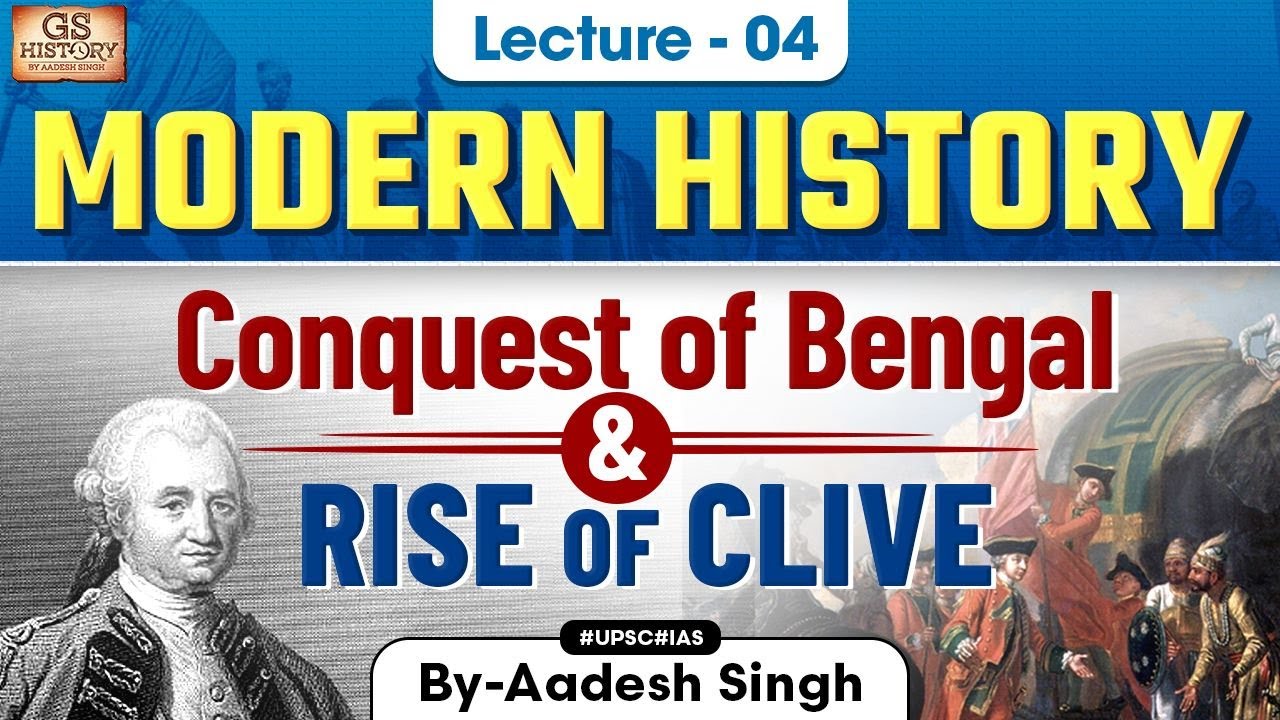
Robert Clive retook Calcutta and carefully targeted powerful figures inside the Nawab's administration who were unhappy with Siraj-ud-Daula.
- (i) Military support: Clive brought trained troops and strong leadership to match the larger army of Bengal.
- (ii) The main conspirators: Clive formed a secret plan with several key officials:
- Mir Jafar: The chief army commander (Mir Bakshi).
- Rai Durlabh: A senior military leader with significant troop numbers.
- Jagat Seth: The richest banker in Bengal.
- Omichand (Amichand): A wealthy merchant intermediary.
- (iii) The agreed deal: In exchange for keeping his soldiers out of action, Mir Jafar was promised the throne as the new ruler of Bengal, fixing the result before fighting began.
The Battle Details, Siraj-ud-Daula's Defeat, and Execution
The armies met at Plassey on . Treason among senior commanders left the Nawab's main force useless on the field.
- (i) Numbers versus betrayal: Even though the Nawab brought around , key divisions under Mir Jafar and Rai Durlabh stood still and refused to fight.
- (ii) Brave loyalists: A small group led by commanders Mir Madan and Mohan Lal fought hard, but were overwhelmed after Mir Madan fell in battle.
- (iii) Outcome: Siraj-ud-Daula fled the field but was caught and executed by Miran, son of Mir Jafar, securing the throne for the new puppet ruler.
Profound Significance of the Battle of Plassey: Political and Economic Impact
Plassey was less of a open military victory and more of a successful political coup that gave the British East India Company complete access to Bengal's political and wealth structures.
Political and Economic Concessions Under the Puppet Nawab Mir Jafar
The new ruler, Mir Jafar, depended entirely on British support and was forced to grant wide political and financial demands.
Robert Clive meeting Mir Jafar to seal political arrangements in Bengal. - Puppet rule:Mir Jafar took the throne as Nawab, but actual decision-making power stayed with Robert Clive.
- Cash payouts: The British collected vast sums as compensation and gifts, filling Company coffers to fund future military campaigns across India.
- Land revenue rights: The Company won zamindari rights over 24 districts (24 Parganas) of Bengal, securing direct tax collection.
- Removal of French rivals: French commercial and military presence in Bengal was completely wiped out.
- Political oversight: The British won the right to place a permanent political officer (Resident) at the Nawab's court for close monitoring.
The Subsequent Revolts and the Treaty of 1760 with Mir Kasim
When Mir Jafar failed to pay the escalating money demands, the British replaced him with his son-in-law, Mir Kasim.
- (i) Dutch defeat: In , Mir Jafar tried to work secretly with the Dutch, but British forces defeated them at the Battle of Bedara.
- (ii) Money struggles: Mir Jafar ran out of treasury funds and fell behind on payments to the Company.
- (iii) Treaty of 1760: British Governor Vansittart forced a agreement to place Mir Kasim on the throne:
- District transfers: Mir Kasim ceded the rich districts of Burdwan, Midnapur, and Chittagong to the Company.
- Trade shares: The Company gained a 50% share in the lucrative chunam (limestone) trade of Sylhet, plus for southern military campaigns.
- Alliance terms: The Nawab and Company agreed to consider each other's enemies as shared enemies.
- (iv) Pensions: Mir Jafar resigned from office and received a annual state pension.
Mir Kasim's Administrative Reforms and Challenge to British Authority
Unlike Mir Jafar, Mir Kasim tried to rebuild state strength and rule independently.
- (i) Capital shift: He moved his administrative capital from Murshidabad to Munger in Bihar to stay away from British pressure in Calcutta.
- (ii) Administrative cleanup: He hired loyal officials and reorganized state accounting to boost tax collections.
- (iii) Army modernization: He modernized infantry units and artillery production at Munger to build a disciplined military force capable of standing up to British demands.
⚡ Quick Revision Capsule: Battle of Plassey Key Details
A quick comparison of key figures, dates, treaties, and political changes related to Plassey ():
| Category | Key Details & Historical Figures | Core Outcome & Impact |
|---|---|---|
| Battle Date & Place | at Plassey (Palashi) near Bhagirathi River | British East India Company forces defeat Nawab Siraj-ud-Daula |
| British Leadership | Robert Clive (Military Commander) | Secured control over Bengal through tactical deals and bribery |
| Key Conspirators | Mir Jafar (Mir Bakshi), Rai Durlabh, Jagat Seth, Omichand | Main army divisions stood down, fixing the battle outcome beforehand |
| Loyal Commanders | Mir Madan and Mohan Lal | Fought bravely for the Nawab until Mir Madan fell in action |
| Treaties & Deals | Treaty of 1760 signed with Mir Kasim | Ceded Burdwan, Midnapur, Chittagong, and 50% chunam trade in Sylhet |
📝 Summary
The Battle of Plassey in turned a foreign merchant firm into a major territorial ruler in India. Driven by trade misuse (Dastaks), unapproved military works, and court betrayals, the confrontation ended independent rule in Bengal and opened the door to the Battle of Buxar in .
🚀 Quick Revision Points
Essential facts to review before examinations:
- (i) Trade permit misuse (Dastaks) and fortifications at Calcutta triggered friction in .
- (ii) Fort William was taken by Siraj-ud-Daula in , leading to the debated Black Hole Tragedy.
- (iii) Robert Clive formed a secret deal with Mir Jafar, Jagat Seth, Rai Durlabh, and Omichand.
- (iv) Mir Jafar became Nawab, granting the British tax rights over 24 districts and placing a Resident at court.
- 💡 Exam Tip: Questions frequently ask about the financial concessions gained after (zamindari rights of 24 Parganas) versus those gained under the Treaty of 1760 with Mir Kasim (Burdwan, Midnapur, and Chittagong). Keep these district names distinct!
❓ Frequently Asked Questions (FAQ)
Q1: What were Dastaks and how did they cause conflict?
A1: Dastaks were trade passes granted by Mughal rulers that allowed tax-free trade for Company goods. Company officials illegally used them for personal private trade, depriving the Nawab's treasury of revenue.Q2: Why is the Battle of Plassey called a political coup rather than a military fight?
A2: The fight was decided before it started because chief commander Mir Jafar and Rai Durlabh agreed not to send their troops into battle following a secret pact with Robert Clive.Q3: What key administrative changes did Mir Kasim make at Munger?
A3: Mir Kasim moved his capital from Murshidabad to Munger to avoid British interference, reorganized state finances, and modernised his infantry and artillery forces.