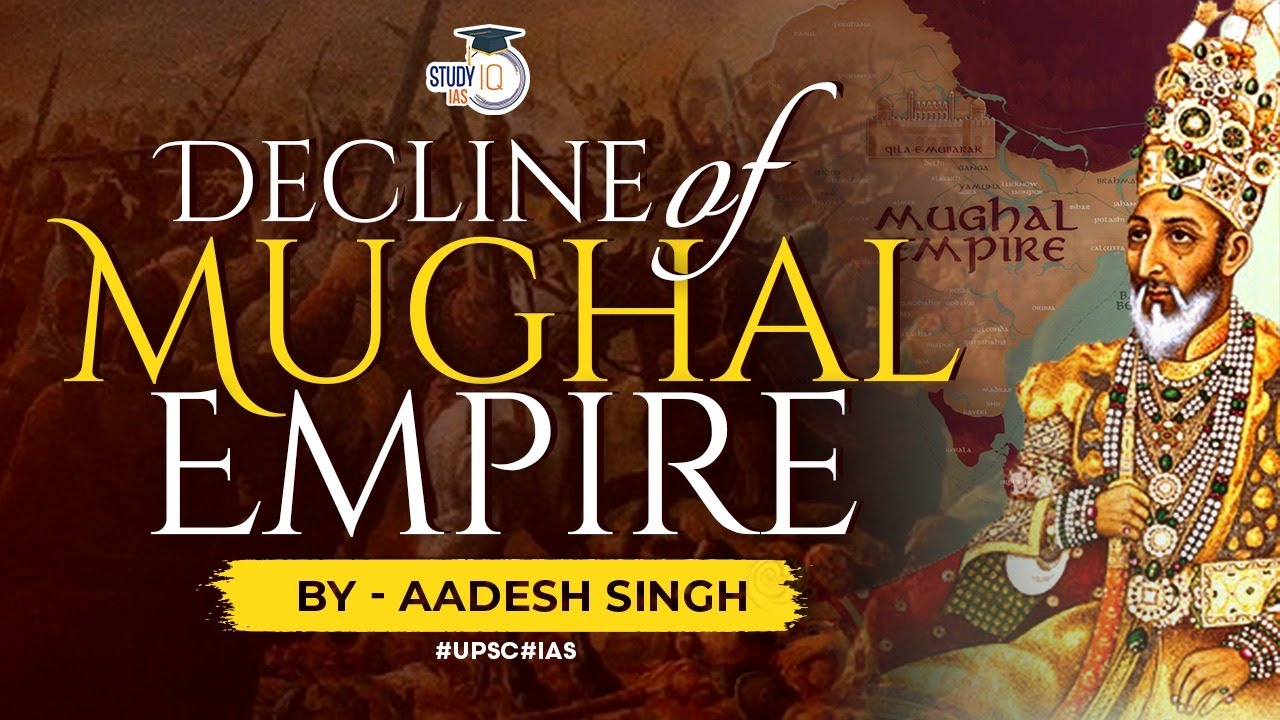
The fall of the Mughal Empire happened because of outside invasions, inner political weakness, and the rise of local ruling states. From the until the fall of Bahadur Shah II in , the empire faced foreign attacks, poor leadership, and independent kingdoms. Learning about these events helps history students see how this decline opened the door for British rule in India.
🎯 In this chapter, you will understand:
- How foreign invasions by Nadir Shah and Ahmad Shah Abdali destroyed imperial strength.
- Why the plains of Panipat served as the battleground for empire-defining wars.
- How weak leadership and political interference by noble groups weakened central rule.
- How regional powers divided the empire into autonomous, independent, and rebel states.
💡 Why this topic matters: This transition era explains the shift from medieval imperial rule to regional state power and eventual British colonization in India.
🧠 Core Idea: Severe internal administrative weakness combined with catastrophic foreign invasions fragmented the empire and allowed new regional powers to take control.
Major Challenges and Decline of the Mughal Empire: Invasions, Weak Rulers, and Rise of New States in the 18th Century
Devastating foreign attacks sped up the collapse of the Mughal state by showing its deep administrative flaws.
The vast empire was strong under rulers like Akbar and Aurangzeb, but it started falling apart soon after Aurangzeb’s death in . This period saw failing imperial leadership and violent attacks by outsiders, which changed the politics of the region completely.
- (i) The old administrative systems were too centralized and strict, making them unable to handle economic stress or local protests.
- (ii) Problems grew worse due to a crisis in the Jagirdari system and costly wars that emptied the treasury and angered key nobles.
- (iii) Internal confusion made the empire an easy target for local rulers and foreign invaders seeking power and wealth.
External Challenges to the Mughal Empire: Devastating Invasions from the North-West
Brutal attacks from beyond the Indus River directly caused the empire's downfall by taking vast wealth and destroying the military authority of the court.

Nadir Shah’s Invasion (1738–39): The Looting of the Imperial Capital
The attack led by Nadir Shah, ruler of Persia, marked a major turning point that showed the complete weakness of the Mughal military.
- (i) Military Defeat:Nadir Shah marched through Lahore, broke through Mughal defenses, and defeated the imperial army at the Battle of Karnal in .
- (ii) Systematic Plunder: He entered Delhi and looted its treasures, taking the famous Peacock Throne (Takht-i-Taus) and the Kohinoor diamond.
- (iii) Strategic Consequence: This attack showed everyone that the traditional invasion routes west of the Indus River were undefended, proving the central power was gone.
Ahmad Shah Abdali’s Repeated Invasions and the End of Maratha Ambition
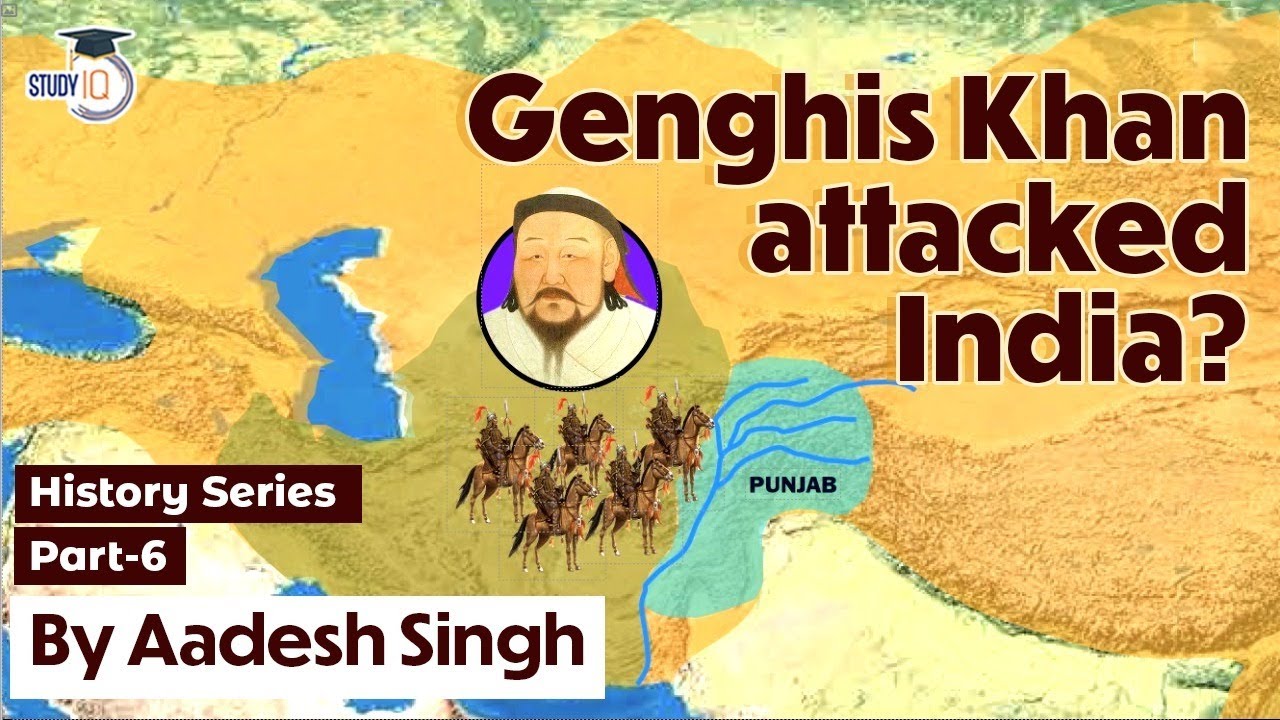
Ahmad Shah Abdali (also called Durrani) invaded repeatedly after Nadir Shah left, stopping any recovery and changing the struggle for control in North India.
- (i) Devastation Cycle:Abdali led several invasions between and , looting fertile regions and forcing payments from the weak government.
- (ii) The Third Battle of Panipat (1761): His major victory over the Maratha Confederacy in the Third Battle of Panipat ended Maratha hopes of building an all-India empire.
- (iii) Destabilization: These attacks weakened Mughal rule further and prevented local powers from uniting, creating perfect conditions for the British East India Company to take over.
Why Panipat Became the Battleground of Empire-Defining Wars: A Strategic Analysis
The flat fields of Panipat near Delhi served as the primary battleground where wars decided the fate of North Indian empires three times across two centuries.
The Three Historical Battles at Panipat and Their Legacy
Every major battle fought at Panipat brought a big shift in political power in India.
- (i) First Battle of Panipat ():Babur defeated Ibrahim Lodi, founding the Mughal Empire.
- (ii) Second Battle of Panipat ():Akbar defeated Hemu, securing early Mughal hold over North India.
- (iii) Third Battle of Panipat ():Ahmad Shah Abdali defeated the Marathas, stopping their rise and opening paths for European expansion.
Geopolitical and Logistical Factors Making Panipat Strategic
Panipat was chosen for these battles repeatedly due to clear geographic and military reasons.
Strategic geographical location of Panipat near Delhi. - Proximity to Delhi: Controlling this area was essential for anyone wanting to capture the capital city.
- Flat Terrain: The open fields were suitable for large military movements, cavalry charges, and artillery weapons.
- Logistical Support: The location had good water sources and easy connection to main travel lines for supplying troops.
Internal Challenges: The Reign of Weak Successors and the Rise of Kingmakers
After Aurangzeb, a series of weak rulers took the throne. Powerful noble groups controlled these emperors, eroding central power from within.
Bahadur Shah I and the Early 18th Century Succession Crisis
Frequent changes in emperors made the central government unstable during the early decades of the century.
- (i) Bahadur Shah I (): Took power after a war of succession. He tried peaceful policies with the Marathas and Rajputs but could not stop regional revolts.
- (ii) Jahandar Shah (): Controlled by nobleman Zulfiqar Khan, demonstrating how emperors lost personal power. He removed the Jaziya tax to gain broader support.
Farrukhsiyar and the Reign of the Sayyid Brothers (Kingmakers)
The control of the Sayyid Brothers (Hussain Ali Khan and Abdullah Khan) showed that main authority had shifted away from the emperor.
- (i) Imperial Puppet:Farrukhsiyar () became ruler with the help of the Sayyid Brothers, known in history as the Kingmakers.
- (ii) British Favor: He granted important farmans (royal orders) to the British East India Company in , expanding their trade rights in Bengal.
- (iii) Political Repercussions: His removal by the Sayyid Brothers proved that nobles held actual power over the throne.
The Later Mughals: Submission and Final End
Later emperors lost military control and slowly became dependents of growing regional and foreign powers.
- (i) Shah Alam II (): Signed the Treaty of Allahabad in after losing to the British, giving them Diwani rights (tax collection rights) over Bengal, Bihar, and Odisha.
- (ii) Bahadur Shah II (): The last ruler, living on a British pension. After the Revolt of 1857, he was exiled to Rangoon, ending the Mughal dynasty.
⚡ Quick Revision Capsule: 18th Century Regional States
Overview of how the Mughal Empire divided into different categories of local power in the 18th century:
| State Category | Key Regions | Notable Rulers / Features |
|---|---|---|
| Successor States | Awadh, Bengal, Hyderabad | Founded by former governors like Saadat Ali Khan, Murshid Quli Khan, and Nizam-ul-Mulk; kept nominal loyalty to Delhi. |
| Independent Kingdoms | Mysore, Rajputana | Maintained total independence; Mysore grew strong under Haidar Ali and Tipu Sultan. |
| Rebel States | Marathas, Sikhs, Jats | Fought against central rule; Marathas sought broad power while Sikhs formed Misls in Punjab. |
Emergence of New States and Regional Powers: The Fragmentation of Empire
Political weakness and loss of wealth allowed local leaders to break away, splitting the empire into three main groups of states.
Successor States: The Autonomous Provinces
These were former Mughal provinces where governors (Subahdars) took real control while showing formal respect to Delhi.
- Awadh: Governed by Saadat Ali Khan.
- Bengal: Governed by Murshid Quli Khan.
- Hyderabad: Established by Nizam-ul-Mulk Asaf Jah.
Independent Kingdoms and Established Autonomy
These states maintained independence and rejected imperial authority completely.
- Rajputana: Kingdoms like Amber and Mewar confirmed their complete independence.
- Mysore: Became a major power in Southern India under Haidar Ali and Tipu Sultan.
Rebel States: The Aggressive Challengers to Supremacy
These groups opposed Mughal rule directly and created strong military states.
- The Marathas: Expanded control across large regions aiming for broad Indian influence until .
- The Sikhs: Organized into military groups called Misls across Punjab.
- The Jats: Established control around Mathura and Bharatpur near the capital.
📝 Summary
The downfall of the Mughal Empire was driven by external attacks by Nadir Shah and Ahmad Shah Abdali alongside severe internal problems after Aurangzeb. The breaking up of central power into local states prevented any single Indian ruler from stopping the growth of the British East India Company. Learning this progression from the to explains how British colonial rule was built in India.
🚀 Quick Revision Points
Essential facts to review before examinations:
- (i) Nadir Shah took the Peacock Throne and Kohinoor diamond in .
- (ii) The Third Battle of Panipat in checked Maratha expansion in North India.
- (iii) Farrukhsiyar granted critical trading privileges to the British in .
- (iv) The Treaty of Allahabad () gave Diwani rights to the British East India Company.
- 💡 Exam Tip: Remember the three types of 18th-century states—Successor (Awadh, Bengal, Hyderabad), Independent (Mysore, Rajputs), and Rebel (Marathas, Sikhs, Jats)—for analytical history questions.
❓ Frequently Asked Questions (FAQ)
Q1: What were the major external invasions that weakened the Mughals?
A1: Invasions by Nadir Shah of Persia () and repeated attacks by Ahmad Shah Abdali () destroyed imperial wealth and power.Q2: What are Diwani rights?
A2: Diwani rights refer to the legal authority to collect land revenue and administer civil justice, granted to the British in .Q3: Who were the Sayyid Brothers in Mughal history?
A3: Hussain Ali Khan and Abdullah Khan were powerful nobles known as 'Kingmakers' because they controlled who took the imperial throne during the .