The early English presence in India and their conflicts with the established Portuguese during the mark an important chapter in modern Indian history. From the arrival of Captain William Hawkins at Surat in to the big battle at Hooghly in , these key events show the bitter fight for control over sea trade. Learning about these events is very helpful for civil service aspirants preparing for competitive exams like UPSC, as they explain early European rivalries and the clever actions of early Mughal diplomacy.
🎯 In this chapter, you will understand:
- How English traders first entered Mughal ports despite heavy Portuguese resistance.
- The role of naval battles like Swally in changing the Mughal Emperor's outlook toward foreign powers.
- Why the Mughals took strict military action against Portuguese settlements in Bengal.
- The broader impact of these conflicts on the rise of British trade influence in India.
💡 Why this topic matters: This period marks the exact shift where the Portuguese lost their monopoly on Indian sea trade, opening doors for the British East India Company.
🧠 Core Idea: Foreign trading groups competed fiercely for trade permits, but the Mughal Empire maintained full control and responded strongly whenever imperial laws or trade routes were threatened.
Initial Encounters of the English and Portuguese in India: The Shifting Sands of Mughal Trade (1608–1632)
The arrival of the English under Captain Hawkins brought a new trade rival against the Portuguese monopoly, immediately catching the attention of the Mughal Empire. The early days of English trade were marked by friction with Portuguese ships, forcing the English to navigate complex court diplomacy in Agra.
The English commercial entry began with an expedition in , when the ship Hector, commanded by William Hawkins, docked at the major trade port of Surat.
- (i) The background was the combined effort of English traders, leading to the famous voyage of .
- (ii) Hawkins carried a official letter from King James I of England addressed to Emperor Jahangir, asking for permissions to setup regular trade.
- (iii) Despite opposition from the Portuguese, Hawkins was welcomed warmly by Emperor Jahangir when he reached the court in .
- (iv) Why this context matters: Hawkins was fluent in Turki—a language Emperor Jahangir spoke well—allowing them to talk directly without court translators.
- (v) Impressed by this, Jahangir gave Hawkins an official rank as a mansabdar of 400, though the regular salary for this title was never actually paid.
- (vi) To build closer links, Hawkins married the daughter of Mubarak Shah, an Armenian Christian lady, showing how personal relationships played a role in early diplomatic ties.

Portuguese and English Rivalry in Mughal India: Diplomacy, Deception, and Decisive Naval Clashes
The established Portuguese authority opposed giving trade permissions to the new English company. This competition quickly grew from arguments at court to open fights at sea, changing how the Mughal rulers viewed English traders.
William Hawkins' Diplomatic Failure and Portuguese Obstruction at Court
The good welcome given to Hawkins soon faded under strong Portuguese pressure and court politics, showing how fragile early English success was.
- (i) The trade rights granted to the English upset the Portuguese, who considered the Mughal coastline as their private trading zone.
- (ii) The Portuguese used their navy to block English ships from reaching vital ports like Surat, hurting early English trade attempts.
- (iii) Unable to overcome Portuguese pressure at court, Hawkins lost the Emperor’s favor and left the Mughal capital in without a permanent trade permit.
Naval Conflict and English Victory: The Triumph at Swally (1612)
The naval fight that followed proved to be a major turning point. The English showed their strong sea power, which improved their image among Mughal officers.
- (a) The main battle took place in , when English ships Dragon and Osiander, led by Captain Best, fought a Portuguese fleet near Surat at Swally.
- (b) Decisive Outcome: The English ships defeated the Portuguese fleet, an event that surprised and impressed Emperor Jahangir and his regional governors.
- (c) This victory confirmed Mughal concerns about Portuguese misbehavior at sea, opening the door for better relations with the English.
Impact of the Battle of Swally (1612) on Mughal Policy
- (i) Trade Rights Granted: Following this battle, Jahangir issued a permission letter allowing the English to establish a permanent factory at Surat in .
- (ii) Diplomatic Precedent: The outcome proved to the Mughal court that European trading groups needed strong naval forces to secure trading rights.
Conflict and Capture of Hooghly (1632): Mughal Assertion of Power in Bengal
The Portuguese base at Hooghly had operated independently in Bengal for many years. However, it became the target of a strict Mughal military action due to dishonest trade actions and involvement in human trafficking.
Portuguese Monopoly and Exploitation in Bengal
Although they had settled with imperial approval, the Portuguese went beyond their limits, creating an unfair monopoly that hurt local traders.
- (i) The Portuguese had been living in Hooghly since under a royal decree (farman) meant purely for trade.
- (ii) They slowly shifted trade away from the old port of Satgaon to their own town, taking over profits from key items like salt and tobacco.
- (iii) They also started collecting their own tax duties, acting like local rulers and directly challenging Mughal authority.
Slave Trade: A Major Catalyst for Mughal Anger
The worst offense was Portuguese participation in the illegal slave trade, which forced Emperor Shah Jahan to send in the army.
- Cruel Practices: The Portuguese captured and kidnapped local Hindu and Muslim children from surrounding villages in Bengal to sell them.
- Imperial Outrage: The final incident happened when they captured two servant girls belonging to Mumtaz Mahal, the wife of Emperor Shah Jahan.
- Trigger for War: This personal insult made the Emperor order an immediate military strike to clear out the Portuguese forces from Bengal.
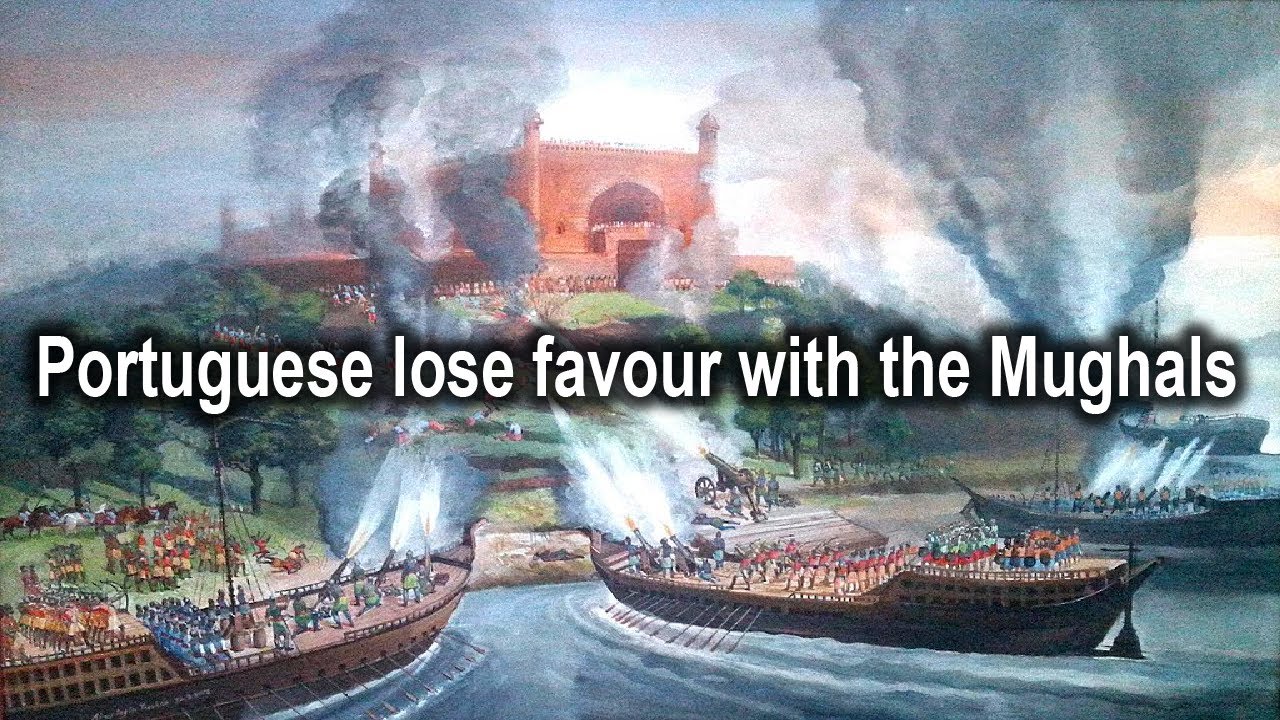
The Siege and Decisive Capture of Hooghly (1632)
The military action against Hooghly was swift and strong, showing everyone that foreign merchants had to follow Mughal rule.
- Siege Commences: The attack on Hooghly began on , led by Qasim Khan, the Mughal Governor of Bengal under orders from Shah Jahan.
- Mughal Victory: After a three-month siege, the Portuguese were defeated. Many lost their lives or ships as they tried to escape by water.
- Aftermath and Punishment: Over 400 Portuguese captives were taken to the capital at Agra, where they were given strict choices between conversion or prison, proving imperial supremacy.
⚡ Quick Revision Capsule: Early European Competitions in India
A quick comparison of key events, actors, and outcomes during the early 17th century rivalry:
| Year / Period | Key Event / Location | Core Outcome & Historical Impact |
|---|---|---|
| – | Hawkins Mission at Surat & Agra | Received rank of 400 mansabdar; failed to secure permanent permit due to Portuguese pressure. |
| Battle of Swally (Surat) | Captain Best defeated Portuguese fleet; Emperor Jahangir granted English factory rights at Surat. | |
| – | Portuguese Base at Hooghly | Monopolized salt/tobacco trade, diverted duties from Satgaon, and engaged in illegal slave trade. |
| Siege of Hooghly | Governor Qasim Khan defeated Portuguese under orders from Emperor Shah Jahan. |
📝 Summary
The period between and highlights the rise of English trade power following the Battle of Swally in , alongside the decline of Portuguese influence in Mughal India after the Siege of Hooghly in . These events reflect shifting European rivalries and demonstrate how Mughal rulers asserted firm authority over foreign merchants operating along Indian coasts.
🚀 Quick Revision Points
Essential facts to review before examinations:
- (i) Captain William Hawkins arrived on the ship Hector at Surat in .
- (ii) The Battle of Swally () established English naval supremacy over the Portuguese near Gujarat.
- (iii) Emperor Jahangir granted permission for the first permanent English factory at Surat in .
- (iv) Emperor Shah Jahan directed Qasim Khan to crush the Portuguese settlement at Hooghly in .
- 💡 Exam Tip: Remember that Mughal rulers welcomed foreign merchants for trade benefits but never tolerated unauthorized tax collection or threats to local security.
❓ Frequently Asked Questions (FAQ)
Q1: Why was Captain Hawkins able to communicate easily with Emperor Jahangir?
A1: Hawkins was fluent in Turki, which allowed him to converse directly with Jahangir without court translators.Q2: What was the main cause of the Mughal attack on Hooghly in 1632?
A2: The attack was caused by Portuguese trade monopoly abuses, illegal tax collection, and their involvement in the slave trade, including kidnapping palace servants.Q3: What was the historical importance of the Battle of Swally in 1612?
A3: It broke the belief that the Portuguese navy was unbeatable and convinced Emperor Jahangir to grant trade permissions to the British East India Company.