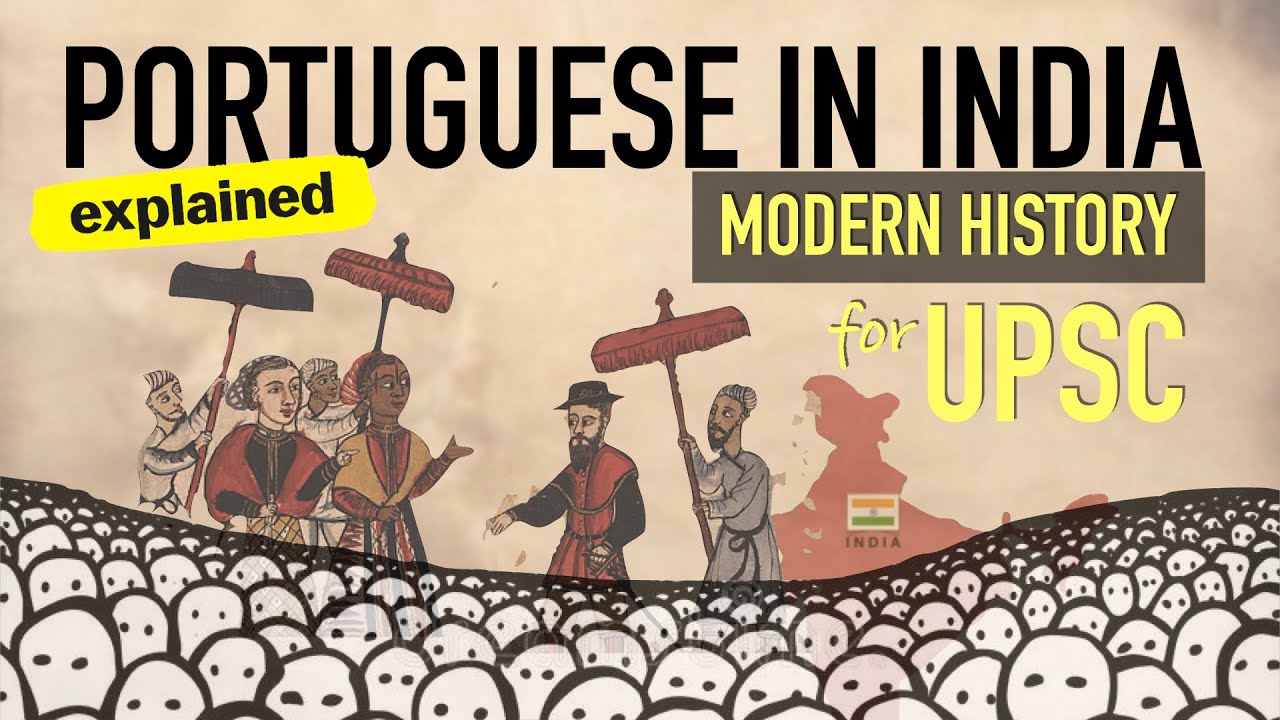
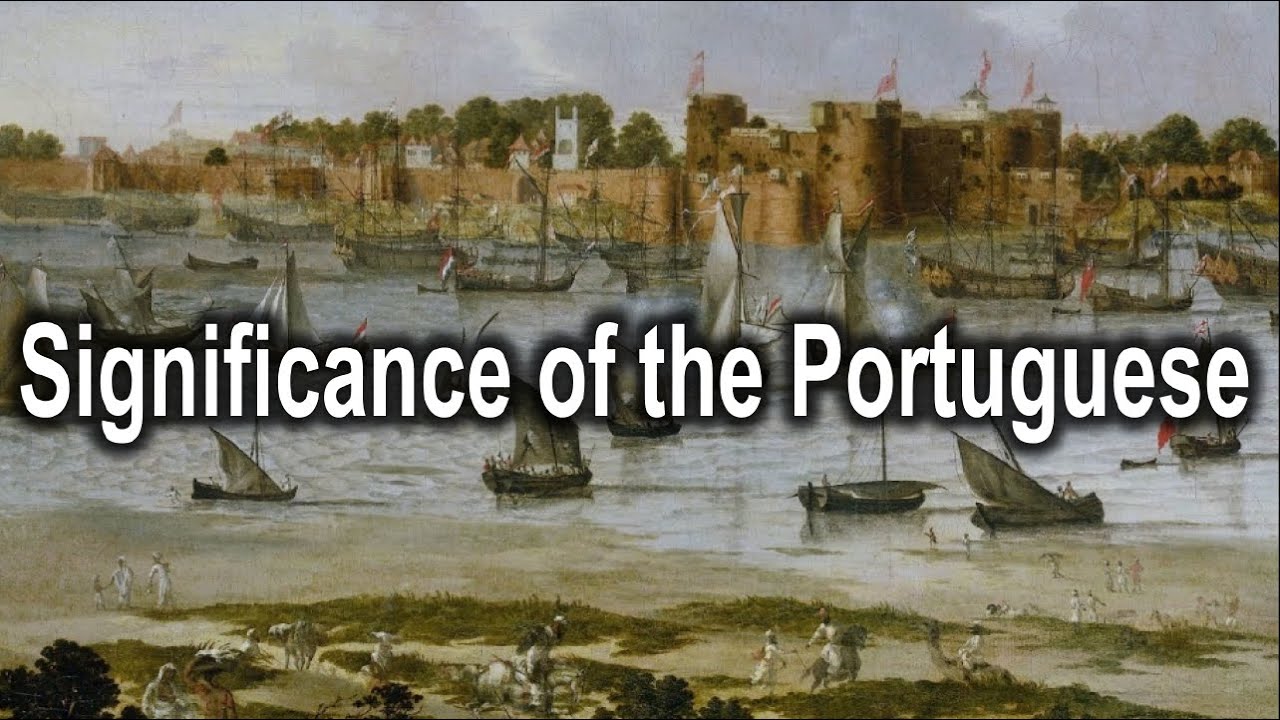
The Portuguese contributions to India marked the foundational beginning of the European colonial era in the subcontinent, introducing naval power, military innovations, and new trading systems that deeply influenced subsequent Indian polities like the Mughals and Marathas. Simultaneously, their missionaries profoundly shaped art, architecture, and culture, making these developments vital for students and competitive exams focusing on early military modernization and cultural exchanges.
🎯 In this chapter, you will understand:
- How ship-based cannons and naval monopoly systems established Portuguese dominance in the Indian Ocean.
- The role of Spanish military drills and infantry training in creating the first Indian sepoys.
- Key advancements in shipbuilding, dockyards, and maritime mapping introduced from Europe.
- The fusion of European and local craftsmanship seen in Goan Baroque architecture and decorative arts.
💡 Why this topic matters: It marks the historical turning point where sea power became the decisive factor in Indian commerce and territorial politics.
🧠 Core Idea: The Portuguese combined naval artillery warfare with missionary patronages to leave a lasting impact on Indian military tactics and cultural architecture.
Portuguese Contributions to India: Military, Cultural, and Naval Significance (16th–17th Century)
The arrival of the Portuguese in India fundamentally shifted the geopolitical landscape, introducing European naval dominance and initiating centuries of intense cultural and military exchanges.
The journey of Vasco da Gama in opened a direct sea route, bypassing traditional overland trade routes. This allowed the Portuguese to bring advanced technology, new military strategies, and distinct artistic traditions that quickly reshaped both Indian armies and cultural expression.
- (i) The Portuguese were the first foreign power to establish a lasting presence in India from the sea, ending the old trade monopoly of Arab and local merchants while establishing early European naval control.
- (ii) Their main military contribution was introducing effective ship-based cannon warfare and enforcing strict trade controls through the Cartaz system, which forced all merchant ships in the Indian Ocean to buy official permits.
- (iii) The resulting impact was a broad mix of military, maritime, and cultural changes that laid the ground rules for all future European powers in India.
Military and Naval Contributions of the Portuguese: Reshaping Indian Warfare and Maritime Strategy
The Portuguese military advancements, particularly in naval technology and infantry training, were revolutionary for India, establishing critical precedents that were later adopted by both indigenous and subsequent European powers.

Naval Power, Artillery, and Securing Indian Ocean Supremacy
Portuguese dominance relied completely on their strong navy, making them the first Europeans to control trade routes by firing cannons directly from their ships.
- (i) They pioneered using large ships armed with multiple cannons, turning ordinary merchant ships into mobile floating forts that could dominate the Indian Ocean and force others to obey their rules.
- (ii) Their battlefield advantage came from a combination of personal body armour, accurate hand-held matchlocks, and powerful ship-mounted guns, giving them a clear tactical edge over traditional forces.
- (iii) Importantly, how they organized and used heavy cannons influenced the Mughal field artillery setup and their battle tactics, even shaping the idea of artillery of the stirrup—light cannons that moved alongside cavalry units.
Military Drills, Infantry Training, and the Genesis of the Sepoys
Beyond their navy, the Portuguese brought organized European-style soldier training to India, an idea that local rulers quickly noticed and copied.
- (a) The Portuguese systematically trained their foot soldiers using the strict Spanish military model during the , setting new standards for army discipline and battlefield formations.
- (b) This system of well-drilled infantry was soon adopted by major Indian powers, including the French, the English, the Marathas under rulers like Shivaji, and later the Sikhs under Ranjit Singh.
- (c) This practice led directly to recruiting local Indian soldiers who were trained in European tactics, known as sepoys, who became the main force for later colonial armies.
Shipbuilding Techniques and Maritime Engineering Influence
Portuguese skill in building ships introduced strong structural designs that Indian shipbuilders began copying to make their own vessels stronger and safer.
- (i) They built heavy multi-decked ships like Carracks (Nao) and Galleons, which were engineered to survive severe ocean storms and withstand enemy attacks much better than lighter local boats.
- (ii) They introduced raised structural platforms at the front (castled prow) and back (stern) of their ships, which served as defensive fighting posts during sea battles.
- (iii) Seeing how useful these features were, Indian shipbuilders in port cities like Diu, Daman, and Goa quickly adopted these European designs for local ship production.
Naval Organisation, Logistics, and Maritime Mapping Systems
Their smooth administration and well-planned support systems helped them run a massive sea empire through clever management of resources and navigational knowledge.
- (a) They built strong supply bases, including official royal arsenals for manufacturing weapons and central dockyards for building and repairing ships.
- (b) They ran formal programs to train skilled sea pilots and recorded accurate maritime mapping charts, giving them a big advantage over traders with less organized navigational tools.
- (c) Additionally, they used their single, centrally managed state naval forces—supported directly by the King—to easily control smaller, scattered private merchant fleets.
Cultural and Artistic Contributions of the Portuguese: Impact on Art, Architecture, and Religion
The Portuguese presence, particularly in their main administrative center of Goa, resulted in a vibrant period of cultural fusion and artistic patronage, leaving indelible marks on Indian art, architecture, and religious practice.
Missionary Role, Patronage, and the Introduction of European Arts
Catholic missionaries who came with the Portuguese worked as religious leaders while also acting as key supporters and teachers of European art styles.
- (i) Missionaries built local centers that served as places of worship and training workshops where local artists and craftsmen learned new techniques.
- (ii) This encouragement created a lively local art movement, commissioning Indian painters, detailed wood carvers, and skilled stone sculptors to create artwork for regional churches.
- (iii) These efforts successfully blended European art formats and classical music styles with local talent, producing a unique Indo-Portuguese style.
Crafts, Architecture, and the Goan Baroque Style
The profits gained from sea trade helped fund a major artistic growth in Goa, known for intricate decorative designs and high-quality craftsmanship.
- (a) This era brought a big expansion in professional silversmith and goldsmith work, combining European patterns with the delicate skill of Indian metalworkers.
- (b) Popular craft styles included fine wire mesh filigree work, leaf-patterned foliage designs, and decorative metal items set with precious jewels.
- (c) Their longest-lasting influence remains in Goan Church architecture. While outer church walls and basic architectural plans were plain, the insides were filled with ornate woodwork, carved golden altarpieces, and dramatic religious sculptures in the popular European Baroque style.
Prominent Examples of Indo-Portuguese Architecture in Goa
These historic buildings clearly show how European and Indian artistic styles merged under Portuguese rule.
- (i) The Basilica of Bom Jesus: Famous for holding the sacred remains of St. Francis Xavier, serving as a landmark example of Baroque architecture.
- (ii) The Se Cathedral: One of the largest churches in Asia, combining classic Portuguese-Gothic and Tuscan design elements.
⚡ Quick Revision Capsule: Portuguese Contributions to India
A structured breakdown of core Portuguese military, naval, architectural, and administrative developments in India.
| Domain | Key Innovations & Concepts | Impact on Indian History |
|---|---|---|
| Naval Warfare | Ship-based cannons, Cartaz system trade passes | Ended Arab trade monopoly and established European sea supremacy in the Indian Ocean. |
| Military Organization | Spanish infantry drills, recruitment of trained sepoys | Influenced Mughal artillery tactics and served as a model for Maratha, French, and British forces. |
| Shipbuilding | Multi-decked Carracks and Galleons, raised castled prows | Upgraded Indian ship construction in Diu, Daman, and Goa for better ocean durability. |
| Logistics & Mapping | Royal arsenals, state dockyards, pilot training, mapping | Created centralized military management that easily controlled private trading fleets. |
| Architecture & Arts | Goan Baroque style, metal filigree, religious carvings | Built famous structures like The Basilica of Bom Jesus and created unique Indo-Portuguese visual arts. |
📝 Summary
The Portuguese in India delivered a decisive blow to old trade paradigms, introducing foundational elements of naval power, effective artillery, innovative shipbuilding, and modern infantry drills. Starting with Vasco da Gama's arrival in and extending through the , these changes influenced regional powers like the Mughals and Marathas while setting up templates used by the English and French. Their parallel legacy brought vibrant patronage of art, architecture, and crafts to Goa. Understanding both their military innovation and cultural synthesis—alongside periods of religious persecution—is essential for grasping the beginning of European rule in India.
🚀 Quick Revision Points
Essential facts to review before examinations:
- (i) Vasco da Gama arrived in , introducing ship cannons and the permit-based Cartaz system.
- (ii) Portuguese infantry training copied the Spanish model in the , introducing drilled sepoys to India.
- (iii) Indian shipyards in Daman and Diu adopted heavy multi-deck designs based on European Galleons.
- (iv) Goan Baroque architecture flourished with ornate church interiors, seen in The Basilica of Bom Jesus.
- 💡 Exam Tip: Focus on how the Cartaz system established sea dominance and how Spanish infantry drills led to the origin of sepoys across Indian armies.
❓ Frequently Asked Questions (FAQ)
Q1: What was the primary naval strategy used by the Portuguese to control Indian Ocean trade?
A1: They used ship-mounted heavy cannons alongside the Cartaz system, requiring all merchant vessels to buy permits or face capture.Q2: How did the Portuguese influence the concept of Indian sepoys?
A2: By introducing structured infantry drills based on the Spanish army model during the , they proved the value of disciplined local infantry, a method later adopted by the Marathas, French, and British.Q3: What are the primary architectural characteristics of the Goan Baroque style?
A3: It features simple outer buildings paired with rich interior woodwork, golden altarpieces, and detailed sculptures, as seen in The Basilica of Bom Jesus.