The Ajivika philosophy was a major school of thought in ancient India that came about alongside Buddhism and Jainism, growing rapidly during the Mauryan period. Its central focus on complete fate and destiny, known as Niyati, shaped its views on life, choices, and self-denial. This makes it an important topic for students studying Indian history, philosophy, and religion for exams.
🎯 In this chapter, you will understand:
- The historical rise of the Ajivika sect during the Mauryan era.
- The core idea of fatalism (Niyati) and how it differed from karma.
- The daily habits, strict rules, and lifestyle of Ajivika followers.
- Why the Ajivika tradition slowly faded away over time.
💡 Why this topic matters: It helps us see how ancient Indian thinkers questioned traditional rituals and developed unique ideas about human life and fate.
🧠 Core Idea: Everything in life is already decided by fate (Niyati), meaning human effort cannot change what is meant to happen.
Significance of Ajivika Philosophy in Ancient Indian Thought ( – )
The Ajivika school played a vital role in shaping early Indian thought by challenging traditional views and offering a unique perspective on life and destiny.
Historical Context of the Ajivika Sect
The Ajivikas started around the same time as early Buddhism and Jainism. They received strong support from rulers during the Mauryan period, especially under Emperor Bindusara. Their teaching revolved around niyati (pre-fixed destiny), stating that human choices do not alter the end result. Emperor Ashoka also supported Ajivika practices before he converted to Buddhism.
- (i) Emerged alongside other major religious movements in ancient India.
- (ii) Gained royal backing, which helped their ideas spread widely.
Core Beliefs and Principles of Ajivika Philosophy
The Ajivika philosophy stood out because it focused on strict destiny, tiny natural particles, and disciplined living while turning away from priest-led rituals and standard Upanishadic ideas.
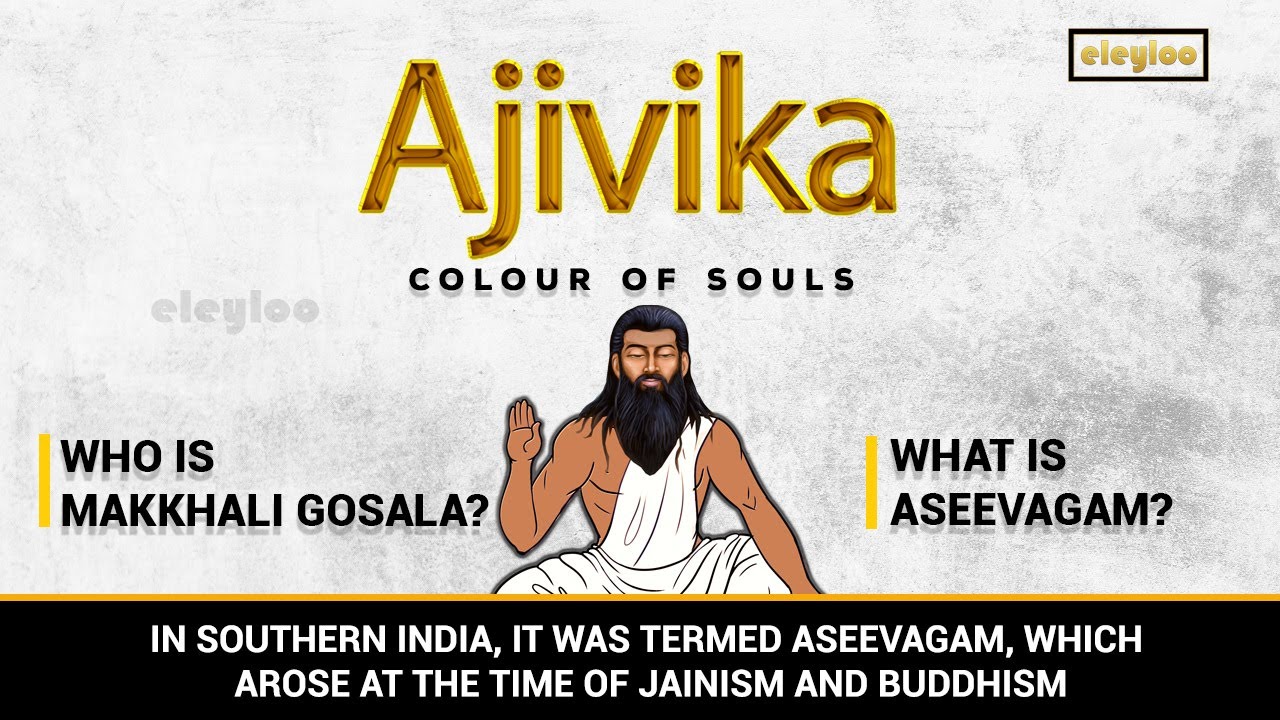
- (a) Founder:Makkhali Goshala established the group in the . Alongside Buddha and Mahavira, he taught a practical, simple way of life that turned away from traditional animal sacrifices.
- (b) Fatalism (Niyati): Everything is pre-planned; personal choice is not real. They believed destiny guides birth, rebirth, and final spiritual freedom (moksha).
- (c) Atomism: The physical world is made of basic, unbroken atoms. Their mixing, guided by natural forces, builds everything around us.
- (d) Theism: They did not believe in a creator God. They agreed that the soul (Atman) exists, but argued that its path toward nirvana is already set.
Ethical Teachings and Practices of the Ajivikas
Even though they believed human effort could not change fate, Ajivika followers lived very simple and strict lives. Their rules focused on non-violence (Ahimsa), eating plant-based foods, and leaving behind worldly items, sharing common ground with other ancient Indian searchers of truth. However, because they believed destiny ruled all, personal moral choices took a back seat to what was already written.

- They followed strict self-denial and lived simple lives in shelters and caves.
Decline of the Ajivika Tradition
After the Mauryan period ended in the , the popularity of the Ajivikas began to drop. By the Shunga era, they had turned into a small group, and during the age of the Guptas, their teachings had almost fully disappeared. The text Sarva-Darshana-Sangraha does not mention them, showing they were no longer part of active philosophical discussions in India.
- (i) Support from royal courts began to decrease over time.
- (ii) Competing ideas offered more hope by letting people shape their own future.
- (iii) The teachings gradually faded until the group completely dissolved.
- (iv) Historical texts from later periods stopped recording their practices.
Exercises for Students
Review these questions and answers to test your understanding of the chapter.
- Check your basic knowledge of the main ideas.
Practice Questions & Answers
Use these key points to prepare for your exams:
Comparing key views on karma and destiny in early Indian traditions - Question 1: What are the main teachings of the Ajivika philosophy?
- Answer 1: The primary idea is total fate or Niyati. Every event and action is pre-set, which directly opposes the idea of karma and personal choice taught in Buddhism and Jainism.
- Question 2: How is Ajivika different from Jainism and Buddhism?
- Answer 2: While Jainism and Buddhism teach that personal actions (karma) bring spiritual progress, Ajivikas rejected this, saying destiny alone controls outcomes. They also did not follow a creator God or moral rules based on karma.
⚡ Quick Revision Capsule: Key Facets of Ajivika Philosophy
This table summarizes the core features of the Ajivika tradition for quick review.
| Feature | Details | Exam Notes |
|---|---|---|
| Founder | Makkhali Goshala | Taught during the |
| Core Principle | Fatalism (Niyati) | Rejects free will and karma |
| Worldview | Atomism and Material existence | World made of indivisible elements |
| Royal Support | Mauryan Dynasty (Bindusara, Ashoka) | Supported prior to Ashoka's Buddhist shift |
| Key Reference | Mentioned in historical records; missing in Sarva-Darshana-Sangraha | Faded out by the |
📝 Summary
The Ajivika sect forms a distinctive chapter in early Indian thought, highlighting fixed fate (Niyati), elemental atoms, and a simple life. Founded by Makkhali Goshala in the , it gained support during the Mauryan period, influencing leaders like Emperor Ashoka. Its eventual end around the Gupta era highlights how early Indian philosophical views evolved over time. Refer to historical texts such as Sarva-Darshana-Sangraha for classical comparisons of Indian thought.
🚀 Quick Revision Points
Essential facts to review before examinations:
- (i) Founded by Makkhali Goshala in the .
- (ii) Core doctrine centers on Niyati (complete destiny/fatalism).
- (iii) Rejected the concept of karma changing one's future.
- (iv) Omitted from later works like Sarva-Darshana-Sangraha.
- 💡 Exam Tip: Remember that Ajivikas completely denied the power of karma, which sets them apart from both Buddhists and Jains.
❓ Frequently Asked Questions (FAQ)
Q1: What is the main idea of the Ajivika school?
A1: The main idea is Niyati (fate), which states that all life events and outcomes are completely pre-determined.Q2: Who started the Ajivika movement?
A2: It was founded by Makkhali Goshala in the .Q3: Why did the Ajivikas disappear?
A3: They lost royal backing after the Mauryan period and could not compete with Buddhism and Jainism, which gave people a direct sense of control over their spiritual paths.