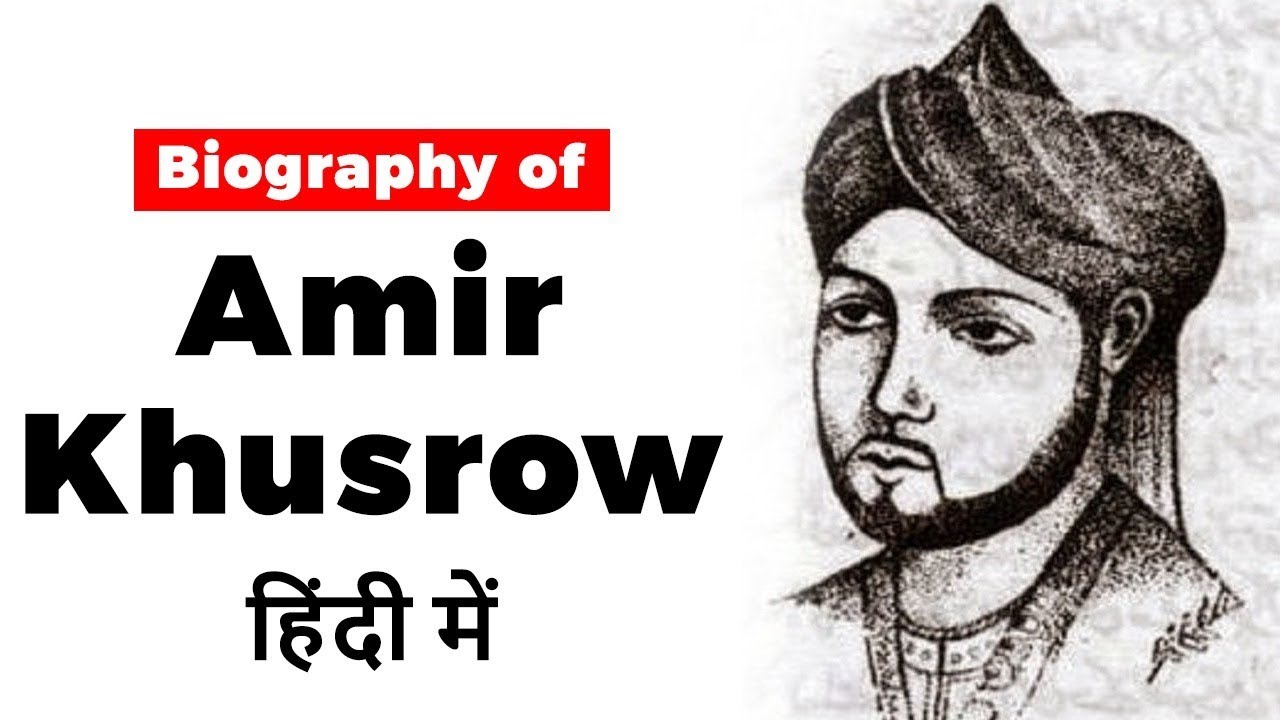
Amir Khusrau (), celebrated as the Parrot of India, was a multilingual poet, musical innovator, and a devoted Sufi disciple of Nizamuddin Auliya. Renowned for creating Qawwali and the sitar, his contributions to Indian classical music and Urdu literature hold immense importance for students and competitive exam preparation. His legacy bridges Persian, Hindi, Arabic, and Turkish traditions, making him one of the most influential cultural figures of medieval India.
🎯 In this chapter, you will understand:
- The early life and influences that shaped Khusrau.
- His immense contribution to poetry and linguistics.
- His revolutionary innovations in Indian music.
- His lasting impact on South Asian cultural heritage.
💡 Why this topic matters: Understanding Khusrau helps grasp the synthesis of diverse cultural and musical traditions that define modern Indian arts.
🧠 Core Idea: He was a genius who seamlessly blended different languages and musical styles into a unified cultural expression.
Life, Literary Contributions, and Musical Legacy of Amir Khusrau ( – )
Amir Khusrau’s life and works shaped the cultural fabric of medieval India.
Born in to Amir Saif ud-Din and Bibi Daulatnaz, Khusrau grew up in a scholarly environment where he mastered Persian, Arabic, Turkish, and Hindi. Under the guidance of Sufi saint Nizamuddin Auliya, he became both a poet and a mystic, contributing to literature, music, and Sufism.
- (i) Childhood enriched by linguistic and intellectual exposure.
- (ii) Mentorship under Nizamuddin Auliya shaped his spirituality.
- (iii) Early brilliance led to mastery of multiple languages.
Literary Contributions and Multilingual Genius
Khusrau was a versatile poet writing in Persian, Hindi, Arabic, and Turkish. His works combined romantic poetry, Sufi philosophy, and folk traditions, influencing the rise of Urdu literature.

Major Works and Literary Themes
His poetry spans themes of divine love, romantic epics, and mysticism. Famous works include Tuhfat-us-Sighr, Khusrau and Shirin, and Laila Majnun.
- (i) Blended Persian sophistication with Indian folk elements.
- (ii) Introduced riddles and playful verses in folk tradition.
- (iii) Helped develop Hindavi, a precursor to modern Urdu.
Multilingual Genius and Cultural Fusion
Khusrau’s mastery of diverse dialects enabled him to reach many people, bridging Hindu-Muslim traditions and fostering unity.
- (i) Pioneered linguistic fusion in poetry.
- (ii) Strengthened the foundation of the Urdu language.
- (iii) Promoted intercultural literary exchanges in medieval India.
Musical Innovations
Amir Khusrau revolutionized Indian music by blending many regional styles, creating forms that are still important in Hindustani classical music today.
Creation of Qawwali
He is hailed as the founder of Qawwali, which is devotional Sufi music known for soulful harmonies and spiritual expression.
Invention of the Sitar
His musical genius extended to instruments, where he is credited with creating the sitar, blending Persian and Indian traditions.
The Sitar, a lasting legacy of Khusrau's musical innovation. Birth of the Tarana
The Tarana uses rhythmic syllables and sounds to create abstract and powerful musical expression.
Introduction of Khayal
Khayal is a form emphasizing emotional depth and improvisation in Indian ragas.
⚡ Quick Revision Capsule: Contributions
A quick summary of Khusrau’s major artistic and literary innovations.
| Innovation | Category | Significance |
|---|---|---|
| Qawwali | Music | Sufi devotional practice |
| Sitar | Instrument | Cultural fusion instrument |
| Tarana | Music | Improvisational vocal style |
| Khayal | Music | Emotional depth in ragas |
| Urdu Roots | Literature | Hindavi development |
📝 Summary
Amir Khusrau () was a poet, Sufi, and musician who changed the face of Indian classical music and Urdu literature. Through his invention of the sitar and his mastery of many languages, he created a bridge between Persian and Indian traditions that still exists today.
🚀 Quick Revision Points
- (i) Known as the Parrot of India.
- (ii) Founder of Qawwali.
- (iii) A central figure in Sufism in India.
- (iv) His works are documented in various literary texts.
- 💡 Exam Tip: Remember his titles (Parrot of India) and his specific musical inventions (Sitar, Qawwali, Tarana) as these are frequently asked in exams.
❓ Frequently Asked Questions (FAQ)
Q1: Why is he called the Parrot of India?
A1: He was given this title due to his sweet voice, poetic genius, and ability to speak and write in multiple languages fluently.Q2: How did he influence Urdu literature?
A2: By using Hindavi, a mix of Persian and local Indian dialects, he helped lay the foundation for what would become modern Urdu.Q3: What was the role of Nizamuddin Auliya in his life?
A3: As his spiritual mentor, Auliya deeply influenced Khusrau’s mysticism and poetic themes.