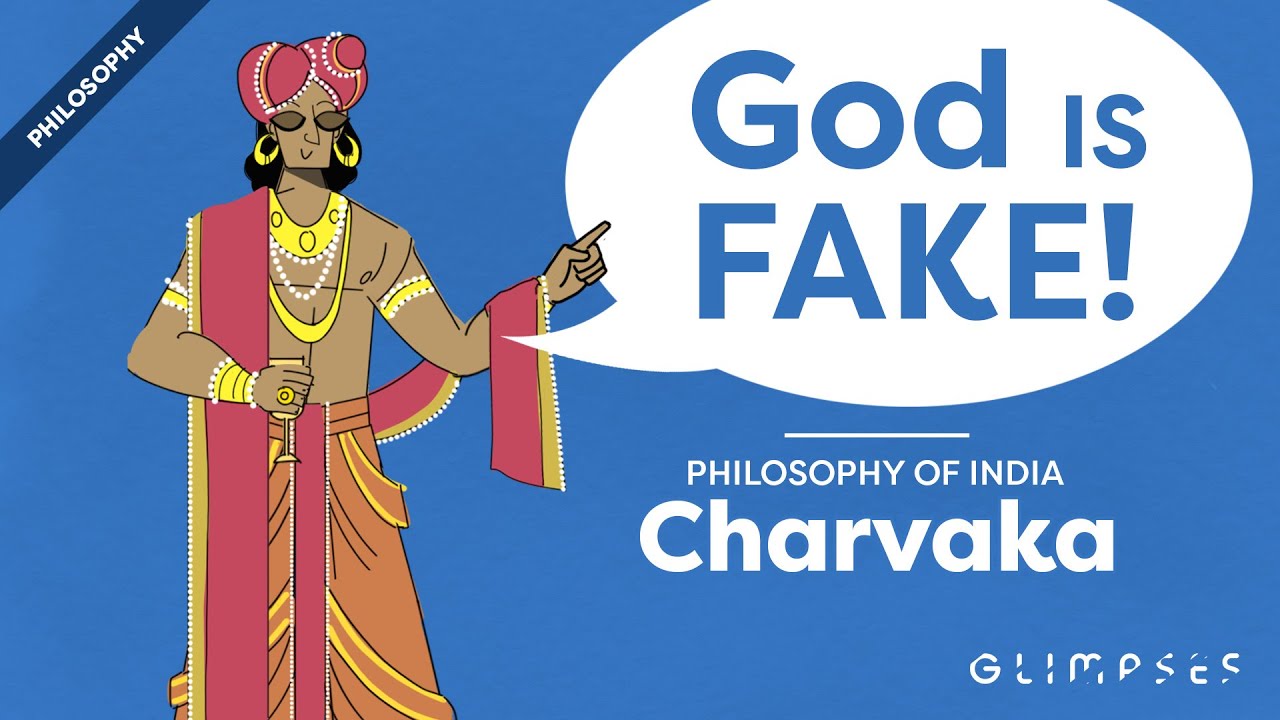
The Charvaka materialistic philosophy, emerging around , stands as one of the earliest Indian schools of thought rejecting religion, rituals, and supernaturalism. It emphasized direct perception as the only source of valid knowledge, denied the existence of an afterlife, and prioritized pleasure over pain. This philosophy holds high relevance for students preparing for UPSC, UGC NET, and history exams because it represents a rationalist counter-tradition in ancient Indian philosophy.
🎯 In this chapter, you will understand:
- The origins and historical rise of materialism in ancient India.
- The core epistemology, metaphysics, and ethics of Charvaka.
- How Charvaka thought influenced both Indian and Western philosophies.
- The main causes that led to the decline of the Charvaka school.
💡 Why this topic matters: It highlights the rich diversity of ancient Indian thought, showing that rationalism and scientific inquiry existed alongside religious traditions.
🧠 Core Idea: Knowledge comes only from direct sensory experience, and life should focus on practical living in the real world.
Materialistic Philosophy of Charvaka – History, Core Principles, and Influence
Charvaka marked the rise of materialism in ancient India by rejecting Vedic authority and religious orthodoxy.
This atheistic philosophy strongly opposed the dominance of Brahmanical traditions and instead promoted a worldview based on empiricism and practical living. Its core idea was that only what is experienced through senses is true, making it a pioneering form of scientific reasoning in ancient India.
- (i) Focused on perception-based truth rather than faith or rituals.
- (ii) Rejected Vedic sacrifices, Karma theory, and Moksha.
- (iii) Upheld pleasure (sukha) as life’s highest goal and considered pain (dukkha) the only evil.
Historical Background of Charvaka Philosophy
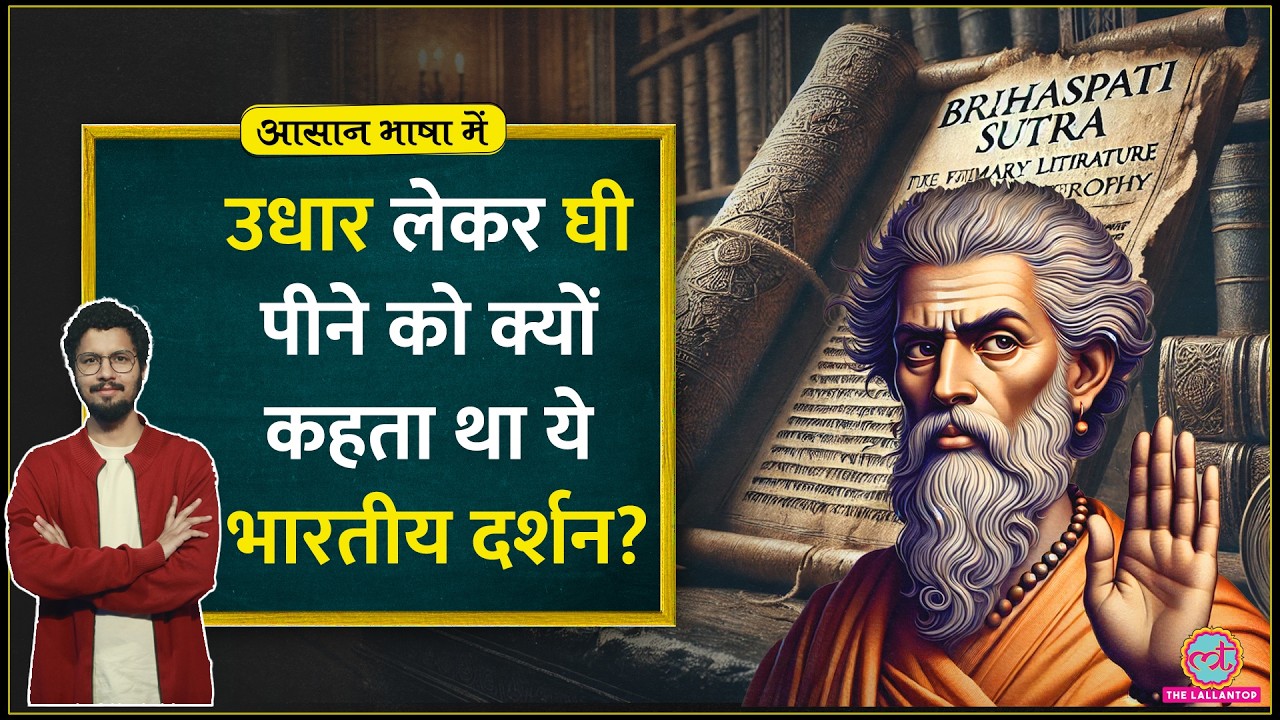
The Charvaka school developed as a radical opposition to the Vedic tradition, gaining recognition as Lokayata or the "philosophy of the people." It drew from the teachings of Bṛhaspati and became popular among those critical of ritualism and religious exploitation.

Origins of Charvaka Philosophy
The roots of Charvaka thought trace back to , a period when multiple heterodox schools like Buddhism and Jainism challenged Vedic orthodoxy. Unlike others, Charvaka went further by completely rejecting all forms of spiritual liberation and afterlife concepts.
- (i) Emerged as part of the Shad-darshanas (six schools), but stood out as non-theistic.
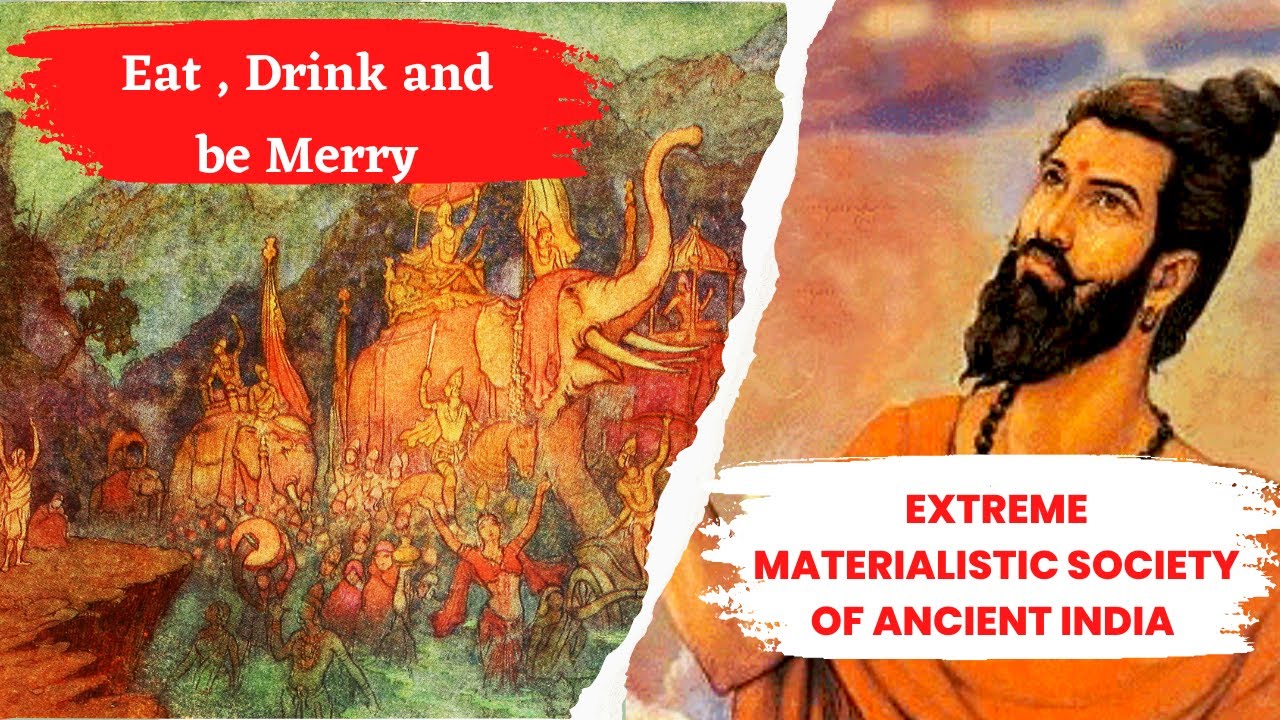
- (ii) The word "Charvaka" is linked to Bṛhaspati or to "eating and drinking," reflecting its pleasure-centric outlook.
- (iii) Its popular name Lokayata suggests a philosophy rooted in everyday life and common people.
Texts and Teachings of Charvaka
The original Bṛhaspati Sutra is lost, and much of Charvaka is known through secondary sources like Buddhist, Hindu, and Jain texts. Despite biased portrayals, its emphasis on direct perception became foundational for empirical inquiry and rational philosophy.
- (a) Advocated Pratyaksha (perception) as the only valid pramāṇa (means of knowledge).
- (b) Criticized inference (anumana) as unreliable.
- (c) Viewed religion as a tool for social control rather than truth.
Core Principles of Charvaka Philosophy
The Charvaka doctrines emphasize materialism, pleasure, and skepticism of metaphysics. These principles reflect its practical, people-centered outlook.
Epistemology – Theory of Knowledge
Charvaka epistemology was strictly limited to perception (Pratyaksha). This rejection of inference and testimony made it a radical form of empiricism.
- (i) Only what can be seen or experienced is valid.
- (ii) Denied invisible entities like soul, God, karma.
- (iii) Prioritized observation and direct experience over speculation.
Metaphysics and Materialism
Charvaka metaphysics rejected all spiritual realms, holding that the universe is made of four Mahabhutas – earth, water, fire, and air. Consciousness itself was explained as a byproduct of material combinations.
The four basic material elements: Earth, Water, Fire, and Air - Mahabhutas: Earth, water, fire, and air form all matter, excluding ether/space (Akasha).
- Atman (Soul): Viewed not as an independent eternal entity, but purely as a biological function of the living body.
- Moksha (Liberation): Dismissed as a illusion; death is the final end of all existence.
- Cosmology: Dismissed heaven, hell, and rebirth as baseless myths created by priests.
Ethics and Hedonism
The Charvaka ethics centered on hedonism, where pleasure is the ultimate good. Pain was avoided, and morality was judged by its effect on happiness rather than divine command.
- (i) Life’s goal is maximizing pleasure.
- (ii) Religion and morality are human constructs, not divine truths.
- (iii) Encouraged practical living and enjoyment in this life.
Influence on Later Philosophies
Although Charvaka philosophy eventually declined, it influenced both Indian and Western thought. Its rationalism inspired scientific inquiry, while its ethics anticipated Western hedonism and utilitarianism.
- (i) Comparable to Epicurus in Greece and Aristippus’s hedonism.
- (ii) Foreshadowed David Hume and John Stuart Mill in empiricism and utilitarianism.
- (iii) Encouraged empirical research and questioning of religious dogmas.
Decline of the Charvaka School
The decline of Charvaka resulted from multiple factors including absence of texts, hostile portrayals, and lack of institutional support.
Loss of Texts
The Bṛhaspati Sutra and other original works were lost over time, leaving only scattered references in critical opponent sources.
Hostile Portrayals by Rivals
Buddhist, Hindu, and Jain scholars often depicted Charvaka thinkers as extreme hedonists to discredit their philosophy.
Social and Political Marginalization
By rejecting priests, rituals, and divine law, Charvakas alienated themselves from mainstream social structures.
Lack of Patronage
Unlike Buddhism and Jainism, Charvaka never secured royal or institutional backing, leading to its gradual disappearance.
⚡ Quick Revision Capsule: Charvaka Materialism Overview
A quick summary table comparing key concepts of the Charvaka school:
| Dimension | Charvaka Perspective | Key Significance |
|---|---|---|
| Epistemology | Accepts only Pratyaksha (direct perception) | Rejects unprovable inference or testimony |
| Metaphysics | Recognizes 4 Mahabhutas (earth, water, fire, air) | Rejects space (Akasha), God, and soul |
| Ethics | Hedonism (seeking pleasure, avoiding pain) | Prioritizes human happiness in the present life |
| Afterlife & Rebirth | Completely denied | Death is considered the complete end of consciousness |
| Primary Texts | Lost Bṛhaspati Sutra (known via secondary works) | Reconstructed mainly from rival critiques |
📝 Summary
In conclusion, the Charvaka materialist philosophy of remains significant as India’s earliest rationalist tradition. Its focus on direct perception, materialism, and pleasure shaped intellectual debates in both Eastern and Western philosophy. For students, it is vital for understanding Indian philosophical diversity, exam preparation, and the roots of scientific and empirical thought.
🚀 Quick Revision Points
Essential facts to review before examinations:
- (i) Emerged around as an orthodox-challenging heterodox school (Lokayata).
- (ii) Accepted only direct sensory experience (Pratyaksha) as true knowledge.
- (iii) Held that the world consists only of four basic elements (Mahabhutas).
- (iv) Main ideas survive mainly through secondary citations in rival philosophical texts like Sarva-Darsana-Samgraha.
- 💡 Exam Tip: Remember that Charvaka accepts only one valid pramāṇa (Pratyaksha), unlike other schools which accept inference (Anumana) or verbal testimony (Shabda).
❓ Frequently Asked Questions (FAQ)
Q1: What is the main means of knowledge in Charvaka philosophy?
A1: The main and only valid means of knowledge is Pratyaksha (direct perception).Q2: What is Lokayata?
A2: Lokayata is another popular name for Charvaka, meaning the philosophy of the common people.Q3: Why did the Charvaka school decline over time?
A3: It declined mainly because its primary texts like the Bṛhaspati Sutra were lost, rival schools painted it negatively, and it lacked royal patronage.