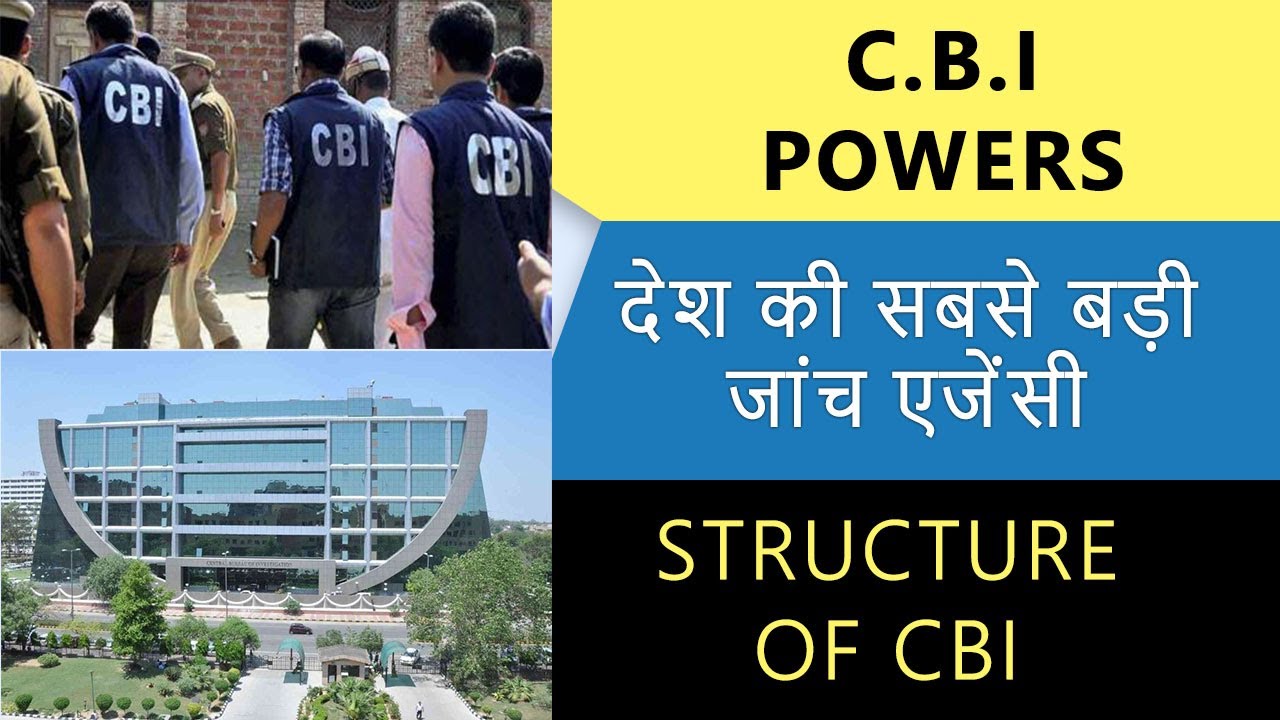
This detailed overview explores the Functions of the Central Bureau of Investigation in India, highlighting the Delhi Special Police Establishment Act, 1946 and the landmark Supreme Court ruling of . Understanding these investigative powers and the role of the CBI Academy is essential for students preparing for competitive examinations regarding Indian polity and governance.
🎯 In this chapter, you will understand:
- The key responsibilities and functions of the Central Bureau of Investigation (CBI).
- How the legal power and reach of the CBI are divided between central and state rules.
- Why the Supreme Court cancelled the rule that protected top officers from quick investigation in .
- How officers are trained at the CBI Academy in Ghaziabad to do their jobs honestly and carefully.
💡 Why this topic matters: The CBI is India's top agency for catching dishonest officials and solving major crimes. Learning how it works helps us understand how law, fairness, and justice protect our country.
🧠 Core Idea: No officer is above the law. The CBI works across India under specific laws to investigate bribery, large money crimes, and serious illegal activities, while keeping all citizens equal under Article 14 of the Constitution.
Functions of the Central Bureau of Investigation (CBI) in India and Federal Investigative Mandates
As the premier federal investigation agency of the nation, the CBI operates with a multifaceted mandate to maintain legal integrity across the country. The story of the CBI is one of evolving authority, where it acts as the primary shield against systemic malpractice. From its inception, it has been tasked with safeguarding the administrative machinery of the Central Government through rigorous oversight and specialized investigative techniques. It makes sure that government workers follow the rules and do not misuse their power for personal gain.
- (i) The agency is primarily responsible for probing intricate cases involving corruption, bribery, and misconduct that may arise among Central Government employees, ensuring accountability at the highest levels.
- (ii) It plays a critical role in policing fiscal and economic laws, including complex violations related to customs, income tax, excise duties, and foreign exchange regulations, typically intervening at the request of the specific department involved.
- (iii) The agency is entrusted with serious crimes with national and international implications, specifically those orchestrated by organized criminal syndicates that threaten national security.
- (iv) A key administrative function involves the coordination of activities between various state police forces and multiple anti-corruption bodies to ensure a unified front against crime.
- (v) Upon the formal request of a state government, the CBI can step in to investigate cases of public significance that require a higher level of expertise or perceived impartiality.
- (vi) It serves as a central repository for criminal intelligence, maintaining meticulous crime records and sharing vital data across various law enforcement agencies.
The Multidisciplinary Scope and Jurisdictional Reach of the CBI
The CBI is not limited to a single type of crime but functions as a versatile investigative body capable of tackling diverse legal challenges. Because different crimes require different ways of solving them, the agency splits its workload into dedicated departments so that specialists can focus on financial frauds, major violent crimes, or government corruption cases separately.

Diversified Investigative Verticals
While the agency is widely recognized for its anti-corruption work within the Central Government and Union Territories, its reach extends into the realm of conventional crimes under specific legal circumstances.
- (i) The CBI routinely investigates high-profile cases of murder, rape, and kidnapping when such matters are referred by state governments.
- (ii) The Supreme Court or High Courts may also order the CBI to take over specific investigations to ensure justice is served without local bias.
- (iii) It serves as the official National Central Bureau for Interpol in India, managing the flow of international law enforcement cooperation.
Evolution of Investigative Independence: The Prior Permission Clause
A significant chapter in the CBI’s history involves the legal battle over its independence from executive interference regarding high-ranking officials. For many years, investigators had to pause their work if a case led them to senior leaders in the central government. This created a situation where high-ranking officers received extra protection compared to junior workers.
The Landmark Supreme Court Ruling of 2014
For years, Section 6A of the Delhi Special Police Establishment Act acted as a barrier, requiring the CBI to seek prior approval from the Central Government before investigating officers of the rank of Joint Secretary and above.
Constitutional Invalidity of Section 6A
On , the Supreme Court declared this provision unconstitutional, ruling that it violated Article 14 of the Constitution. The court argued that corruption is the nation’s enemy and that every corrupt public servant must be treated equally regardless of their rank or status.
- (i) On , the judges decided that asking for permission before probing high officers broke the fundamental right to equality.
- (ii) The ruling ensured that law enforcement could act against all public servants with the exact same standards of accountability.
Upholding the Prevention of Corruption Act
The Bench noted that shielding senior officials obstructed the core objectives of the Prevention of Corruption Act, 1988. The Chief Justice of India (CJI) emphasized that status should never be a shield for the corrupt, as such protections only serve to hide the truth.
- (i) The Bench noted that shielding senior officials obstructed the core objectives of the Prevention of Corruption Act, 1988.
- (ii) The Chief Justice of India (CJI) emphasized that status should never be a shield for the corrupt, as such protections only serve to hide the truth.
⚡ Quick Revision Capsule: Central Bureau of Investigation (CBI)
This quick reference guide summarizes the essential features, laws, court rulings, and training hubs related to the CBI for rapid review.
| Aspect | Key Detail / Legal Provision | Main Purpose or Significance |
|---|---|---|
| Primary Law | Delhi Special Police Establishment Act, 1946 | Grants the CBI its core legal powers and police authority across Union Territories. |
| Key Ruling | Supreme Court Judgment of | Cancelled Section 6A so senior officers (Joint Secretary and above) can be probed without prior government approval. |
| Constitutional Basis | Article 14 (Right to Equality) | Guarantees that corrupt officials are treated equally under the law, regardless of their position. |
| Global Role | National Central Bureau for Interpol in India | Coordinates with foreign police forces to track international criminals and shared crime intelligence. |
| Training Hub | CBI Academy in Ghaziabad, Uttar Pradesh (Established ) | Trains new officers and in-service personnel in modern crime solving, laws, and professional ethics. |
📝 Summary
The Central Bureau of Investigation stands as a cornerstone of the Indian justice system, ensuring that corruption and organized crime are met with professional resistance. Since its early days under the Delhi Special Police Establishment Act, 1946 up to the landmark ruling in , the agency has steadily evolved. By removing the legal shields for senior officials and standardizing training through the CBI Academy, the agency has solidified its role in upholding Article 14. For students, mastering these details is vital for understanding the Delhi Special Police Establishment Act and the evolving dynamics of federal investigation in India.
🚀 Quick Revision Points
Essential facts to review before examinations:
- (i) The CBI operates primarily under the legal mandate of the Delhi Special Police Establishment Act, 1946.
- (ii) Main focus areas include probing bribery, financial frauds, and large multi-state or international criminal syndicates.
- (iii) The Supreme Court judgment removed Section 6A, making prior permission unnecessary for investigating top officials under Article 14.
- (iv) State police forces handle local issues, whereas the Special Police Establishment (SPE) handles central government and public sector cases.
- 💡 Exam Tip: Always remember that the CBI is not a constitutional body; it derives its investigative powers from the Delhi Special Police Establishment Act, 1946. For questions on governance, highlight the impact of the Supreme Court ruling on Article 14 equality!
❓ Frequently Asked Questions (FAQ)
Q1: What is the primary law that gives power to the CBI?
A1: The CBI gets its police powers from the Delhi Special Police Establishment Act, 1946.Q2: Can the CBI investigate a crime inside a state without its permission?
A2: Generally, the CBI needs consent from the state government or an order from the Supreme Court or High Court to investigate within a state's territory.Q3: Why was Section 6A struck down by the Supreme Court in 2014?
A3: The Supreme Court struck down Section 6A because requiring prior permission to investigate senior officers violated Article 14, which guarantees that all citizens and officials are equal before the law.