This comprehensive study guide explores the vital mechanisms of inter-state comity within the Indian federal system, focusing on how peaceful coordination and legal rules help solve inter-state water disputes under Article 262 of the Constitution. Students preparing for UPSC and competitive examinations will find this breakdown of the River Boards Act, 1956 and various water tribunals essential for understanding Centre-State relations and cooperative federalism in India.
🎯 In this chapter, you will understand:
- How inter-state comity helps smooth out relations between individual states in India.
- The special power granted to Parliament under Article 262 to handle shared river water issues.
- The purpose and structure of the River Boards Act, 1956 and the Inter-State Water Disputes Act, 1956.
- Why specialized judicial tribunals are created instead of using standard court trials for river water sharing.
💡 Why this topic matters: In a large country like India, rivers flow across state borders. When multiple states need the same water for drinking, farming, and electricity, friendly cooperation (comity) and clear legal rules are essential to keep peace and ensure fair sharing.
🧠 Core Idea: The Constitution gives Parliament the power to set up independent courts called tribunals to resolve river water conflicts fairly, preventing regular courts from delaying decisions on essential public resources.
1. Inter-State Comity in India: Federal Coordination and Water Dispute Resolution
The smooth working of the Indian federal system depends on a careful balance between sharing authority and working together. Success in a diverse nation like India relies not only on the vertical relationship between the central government (Centre) and individual states, but also on strong horizontal bonds between the states themselves. To build teamwork and friendship, the Constitution includes special tools to encourage inter-state comity (which means mutual respect and helpfulness between states) and solve disagreements before they cause harm.
Key constitutional pillars that promote harmony and cooperation among states include:
- (i) A structured legal decision-making process for solving inter-state water disputes.
- (ii) Special teamwork groups set up through the creation of inter-state councils.
- (iii) An official rule requiring all states to recognize each other's public acts, records, and judicial proceedings.
- (iv) Legal protection guaranteeing the freedom of inter-state trade, commerce, and intercourse across state lines.
- (v) The active role of Parliament in forming zonal councils to boost regional collaboration and teamwork.
2. The Framework of Inter-State Water Disputes and Constitutional Mandates
Water is essential for human life, growing crops, and industrial production. Because rivers flow naturally across political borders without stopping, water frequently becomes a cause of disagreement between neighboring states. To handle this delicate issue, Article 262 of the Constitution establishes a distinct legal path specifically designed for managing river sharing.

2.1 Constitutional Authority under Article 262
The Constitution recognizes that water disagreements need a unique, thoughtful method rather than ordinary courtroom battles. Therefore, it gives Parliament complete authority to regulate and manage how waters from inter-state rivers and river valleys are used, shared, and controlled.
- (i) Legislative Power:Parliament has the official authority to pass laws to settle disputes concerning any shared inter-state river or river valley.
- (ii) Exclusion of Jurisdiction: Remarkably, Parliament can also pass laws stating that neither the Supreme Court nor any lower court has the right to interfere with or decide these specific river disputes.
2.2 Key Parliamentary Legislations for Water Management
Putting this constitutional power into action, Parliament passed two crucial laws in to guide water governance and resolve conflicts effectively.
The River Boards Act, 1956
This law concentrates on planning ahead so that rivers are well-managed before severe arguments occur.
- (i) This Act allows for the creation of advisory river boards focused on the management and development of inter-state rivers and valleys.
- (ii) These boards are set up by the Central government when requested by state governments to give expert advice, technical guidance, and planning support.
The Inter-State Water Disputes Act, 1956
This law comes into effect when direct talks between states fail and a formal judgment is necessary.
- (i) This Act allows the Central government to set up temporary, specialized courts called ad hoc tribunals to investigate and resolve disputes between states.
- (ii) The official decision given by a tribunal carries complete legal authority and is final and binding on all participating states.
- (iii) To keep decisions focused and avoid endless court appeals, the law explicitly stops the Supreme Court and other standard courts from taking over disputes sent to these tribunals.
2.3 Rationale for Specialized Water Tribunals
Choosing to bypass standard lawsuits in the Supreme Court was a intentional decision based on protecting the general public interest rather than sticking to strict, rigid legal rules of property ownership.
- (i) Public Interest vs. Private Property: Normal court laws designed for private property ownership are not suitable for deciding how millions of citizens share a flowing natural resource.
- (ii) Equitable Use: Specialized tribunals bring together engineers, scientists, and legal experts who are far better equipped to analyze complex technical data, rainfall patterns, and socioeconomic needs for equitable water resource usage.
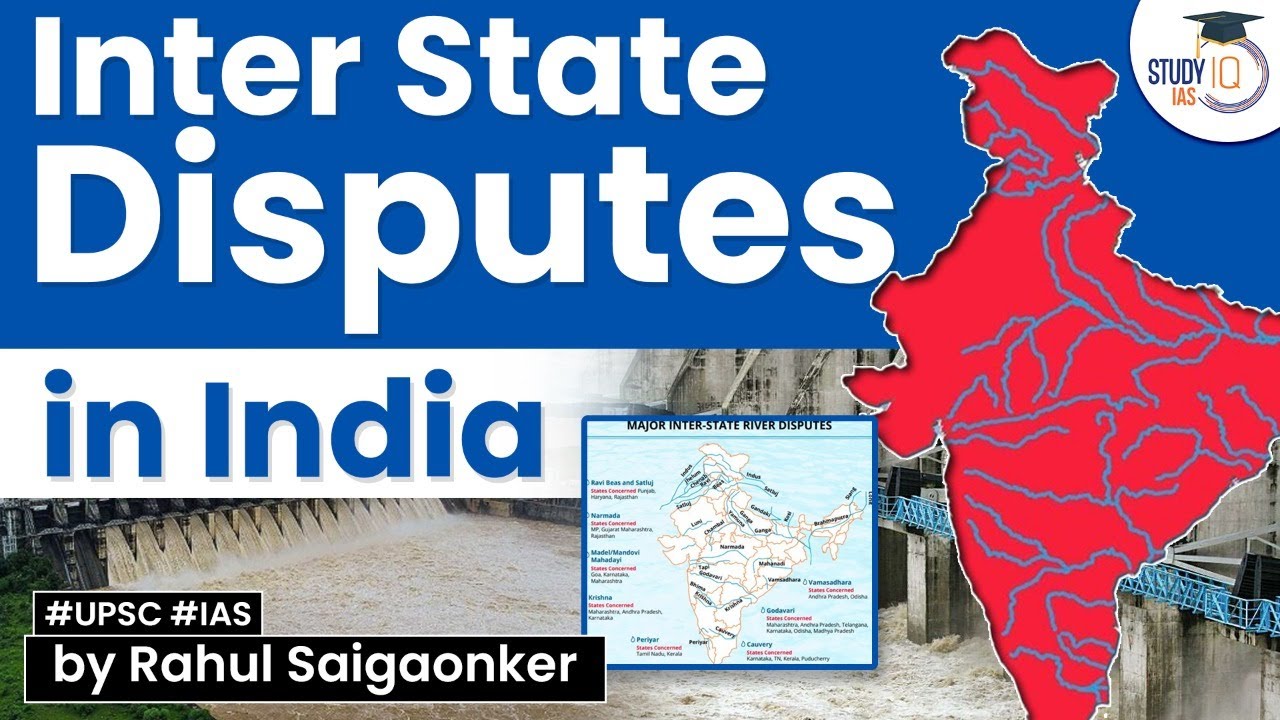
2.4 Major Inter-State Water Dispute Tribunals Established (As of 2016)
Over several decades, the Central government has used its constitutional authority to create multiple tribunals to settle competing river claims between various states across India.
- Krishna Water Disputes:
- (i) First Krishna Water Disputes Tribunal (): Formed to resolve disputes among the states of Maharashtra, Karnataka, and Andhra Pradesh.
- (ii) Second Krishna Water Disputes Tribunal (): Formed to re-assess water sharing needs among Maharashtra, Karnataka, and Andhra Pradesh.
- Godavari & Narmada Disputes ():
- (a) Godavari Tribunal: Handled complex claims across Maharashtra, Karnataka, Andhra Pradesh, Madhya Pradesh, and Odisha.
- (b) Narmada Tribunal: Settled water sharing and dam benefits for Rajasthan, Gujarat, Madhya Pradesh, and Maharashtra.
- Northern and Southern River Conflicts:
- (i) Ravi and Beas Tribunal (): Created to address water distribution among Punjab, Haryana, and Rajasthan.
- (ii) Cauvery Water Disputes Tribunal (): Set up to address a historical dispute involving Karnataka, Kerala, Tamil Nadu, and the Union Territory of Puducherry.
- (iii) Vansadhara Tribunal (): Established to manage arguments between Odisha and Andhra Pradesh.
- (iv) Mahadayi Tribunal (): Created to address water sharing among Goa, Karnataka, and Maharashtra.
- Krishna Water Disputes:
⚡ Quick Revision Capsule: Key Inter-State Water Tribunals Summary
This quick revision table organizes the landmark water dispute tribunals constituted under the Inter-State Water Disputes Act, 1956 for rapid exam preparation.
| Tribunal Name & Year | Rivers Involved | Participating States / UTs |
|---|---|---|
| First Krishna Tribunal () | Krishna River | Maharashtra, Karnataka, Andhra Pradesh |
| Godavari Tribunal () | Godavari River | Maharashtra, Karnataka, Andhra Pradesh, Madhya Pradesh, Odisha |
| Narmada Tribunal () | Narmada River | Rajasthan, Gujarat, Madhya Pradesh, Maharashtra |
| Ravi & Beas Tribunal () | Ravi and Beas Rivers | Punjab, Haryana, Rajasthan |
| Cauvery Tribunal () | Cauvery River | Karnataka, Kerala, Tamil Nadu, Puducherry |
| Mahadayi Tribunal () | Mahadayi (Mandovi) River | Goa, Karnataka, Maharashtra |
📝 Summary
Understanding the statutory and constitutional mechanisms of inter-state comity and the distinct role played by Article 262 is essential for every student of Indian Polity. By resolving inter-state water disputes through expert tribunals rather than long, traditional courtroom litigation, India works to secure the equitable distribution of vital natural resources while maintaining harmony across its federal system, as established through the landmark laws enacted in .
🚀 Quick Revision Points
Essential facts to review before examinations:
- (i) Article 262 gives Parliament exclusive power to pass laws regarding disputes over inter-state rivers and river valleys.
- (ii) Parliament can legally exclude the Supreme Court and all lower courts from hearing river water disputes sent to specialized tribunals.
- (iii) The River Boards Act, 1956 creates advisory bodies for proactive river development and management.
- (iv) Decisions handed down by an ad hoc tribunal under the Inter-State Water Disputes Act, 1956 are final and binding on all participating states.
- 💡 Exam Tip: Always remember that while Article 131 gives the Supreme Court original jurisdiction over general disputes between states, Article 262 specifically empowers Parliament to carve out an exception for inter-state water disputes!
❓ Frequently Asked Questions (FAQ)
Q1: What does inter-state comity mean in the context of Indian federalism?
A1: Inter-state comity refers to the principle of mutual respect, recognition, and friendly cooperation between different states within India, ensuring that public acts, records, trade, and resource sharing run smoothly across state borders.Q2: Can the Supreme Court directly decide an inter-state river water dispute?
A2: Normally no. Under Article 262(2), Parliament has enacted laws excluding the jurisdiction of the Supreme Court and other courts over water disputes that are formally referred to an ad hoc tribunal.Q3: What is the main difference between the River Boards Act and the Inter-State Water Disputes Act of 1956?
A3: The River Boards Act, 1956 focuses on preventive planning, coordination, and advisory management of river valleys, whereas the Inter-State Water Disputes Act, 1956 focuses on setting up legal tribunals to render binding decisions when formal conflicts break out between states.