Explore the transformative journey of urban local governance through this detailed guide on the 74th Constitutional Amendment Act of , a cornerstone for civil services students and law aspirants. This chapter explains how Part IX-A redefined the municipal administration framework in India. It shows how constitutional mandates gave towns and cities a organised system of urban self-government, helping citizens take part in decisions that affect their daily lives.
🎯 In this chapter, you will understand:
- How the 74th Constitutional Amendment Act gave constitutional status to municipalities.
- The meaning and importance of Part IX-A, Articles 243P to 243ZG, and the Twelfth Schedule.
- The three main types of urban local bodies and their different roles.
- How elections, reservations, ward committees, tenure, and disqualifications make urban governance democratic and inclusive.
💡 Why this topic matters: Urban local bodies manage many services that people use every day, such as local planning, sanitation, roads, water supply, and public health. The 74th Amendment made these bodies part of the Constitution, so urban self-government is not only an administrative arrangement but also a constitutional responsibility of the states.
🧠 Core Idea: The 74th Amendment brought municipalities into the constitutional structure of India. It aimed to make city and town governance more democratic, stable, inclusive, and capable of supporting socio-economic development.
The Municipalities – 74th Constitutional Amendment Act and Urban Local Bodies
The dawn of a new era in Indian democracy began when the 74th Amendment Act formally wove urban local bodies into the constitutional fabric of the nation. Before this reform, municipalities largely depended on ordinary state laws. After the amendment, they received a clear constitutional foundation, which made their existence and democratic functioning much stronger.
By inserting Part IX-A into the Constitution of India, titled “The Municipalities”, the legislature provided a robust legal shield to urban governance, spanning from Article 243P to 243ZG. This was not merely a legal change but a visionary shift to ensure that cities and towns could function as autonomous units of self-rule. In simple words, the amendment recognised that people living in urban areas also need elected local institutions to solve local problems and plan for local development.
- (i) The Act famously introduced the Twelfth Schedule, a comprehensive list that enlists 18 functional responsibilities of municipalities, primarily dealt with under the provisions of Article 243-W. These responsibilities help municipalities focus on important urban needs such as planning, public services, and development.
- (ii) It conferred a vital constitutional status on municipalities, making it a mandatory obligation for state governments to establish and maintain these bodies in accordance with the Constitutional provisions. This means municipalities are no longer optional bodies that a state may create or ignore as it wishes.
- (iii) The primary Objective of this historic reform was to strengthen and revitalise urban governance, effectively transforming municipalities into potent local self-government units capable of driving socio-economic development. The idea was to bring government closer to the people and allow local representatives to respond quickly to local needs.
Salient Features and Structural Framework of the Act
The 74th Amendment laid down a uniform blueprint for urban bodies across the country, ensuring that the diversity of urban areas—from growing towns to massive metropolises—was addressed through a structured classification system. This structure helps states organise local government according to the size, population, and developmental stage of each urban area.

The Three Categories of Municipalities
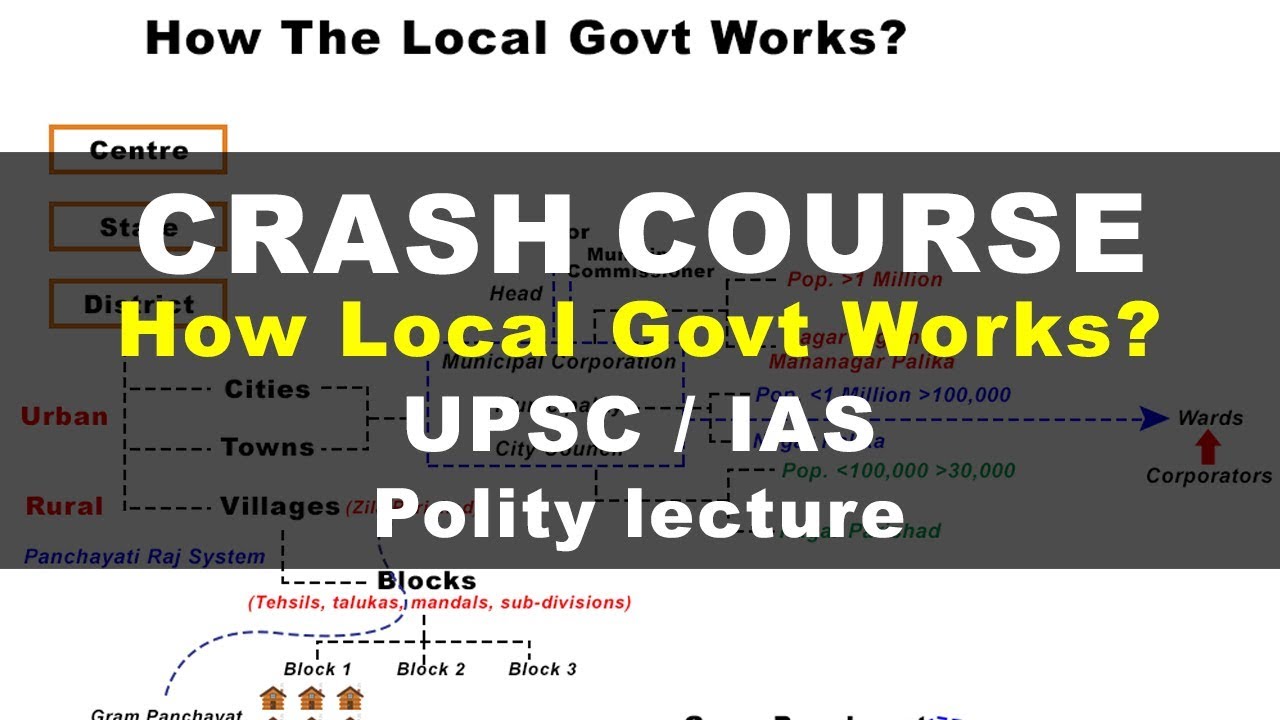
Recognizing that urban needs vary by size and economic transition, the Act mandated three distinct types of urban local bodies based on the nature of the area. This classification is useful because a small town, a rapidly developing area, and a large metropolitan city do not face exactly the same administrative challenges.
- (i) Nagar Panchayat – Specifically designed for transitional areas that are currently shifting from a rural setup to an urban landscape. Such areas may be gaining urban characteristics, but they may still need support during this change.
- (ii) Municipal Council – Established to manage smaller urban areas where the administrative needs are localized. These bodies handle the everyday civic needs of towns and smaller cities.
- (iii) Municipal Corporation – Reserved for the management of larger urban areas or “Metros” with complex infrastructure and high population density. Large cities require bigger administrative systems because they have more people, services, and development needs.
Composition and Representation in Municipal Bodies
The democratic essence of the Municipalities is captured in its composition, where the voice of the urban electorate is directly heard through the ballot box. Direct election ensures that local people choose the members who will represent their wards and raise their concerns in the municipality.
- (i) Every member of a municipality is directly elected by the people from specific territorial constituencies known as wards. A ward is a smaller division of a city or town, making representation more local and accessible.
- (ii)
Powers of the State Legislature regarding Composition
The state legislature has been given the power to decide several details about who can be part of a municipality and how its members are chosen. These powers allow each state to adjust the structure of municipalities according to its own administrative needs, while still following the constitutional framework.
- (a) The state legislature determines the specific method of electing the chairperson of the municipality. This decides how the leading office of the municipal body is filled.
- (b) It provides for the representation of persons with expertise in municipal administration, though these experts do not possess voting rights in municipal meetings. Their role is to bring specialised knowledge, not to vote on decisions.
- (c) It grants representation to Lok Sabha and State Legislative Assembly members whose constituencies encompass the municipal area. This links municipal governance with elected representatives at the national and state levels.
- (d) It includes Rajya Sabha and State Legislative Council members who are registered as electors within the municipal boundaries. This ensures that members connected to the area can also participate in municipal representation.
- (e) It regulates the chairpersons of various committees, excluding the specialized ward committees. This provision helps organise the working of different municipal committees.
The Institution of Ward Committees
To ensure that governance remains close to the doorstep of the citizen, the Act introduced Ward Committees as a secondary tier of urban administration. These committees are meant to make local administration more accessible, especially in bigger cities where a single municipal body may find it difficult to understand every neighbourhood’s needs.
- (i) Any municipality with a population of 3 lakh or more is constitutionally required to establish these ward committees. This requirement applies to larger urban bodies where local participation is especially important.
- (ii) The state legislature holds the authority to decide the composition, territorial jurisdiction, and seat allocation for these committees. In other words, the state decides who will be in the committee, which areas it will cover, and how seats will be distributed.
- (iii) Beyond ward committees, the state legislature may also permit the creation of additional committees to handle specific administrative tasks. These committees can help municipalities manage particular subjects or local needs more effectively.
Reservation of Seats for Inclusive Governance
In a bid to ensure social justice and gender equality, the 74th Amendment carved out specific reservation policies for the marginalized sections of society. These provisions aim to make municipal bodies more representative of the people they serve, so that different groups have a voice in local decision-making.
- (i) Mandatory Reservations: Seats must be reserved for Scheduled Castes (SCs) and Scheduled Tribes (STs) in strict proportion to their population in the municipal area. This ensures representation according to the actual social composition of the local population.
- (ii) Gender Empowerment:Women are guaranteed at least one-third of total seats, a figure that includes the seats already reserved for women belonging to the SC/ST categories. This provision supports greater participation of women in urban governance.
- (iii)
State Discretionary Reservations
Apart from the mandatory reservations, the Constitution also allows state legislatures to make additional provisions. This flexibility lets states respond to local social conditions and extend representation where they consider it necessary.
- (a) The state legislature may further reserve the offices of chairpersons for SCs, STs, and women. This can help ensure that reserved representation is not limited only to ordinary member seats.
- (b) It also has the power to reserve seats or offices for members of the Backward Classes if deemed necessary. This discretionary power gives states room to promote wider social inclusion.
Duration and Life Cycle of Municipalities
The Act provides a fixed tenure to ensure stability while maintaining mechanisms for fresh democratic mandates in case of failure. A fixed term helps municipal bodies plan and work steadily, while election rules ensure that people can choose a new body when needed.
- (i) Every municipality is granted a five-year tenure from the date of its first meeting. This means the five-year period begins when the newly elected body meets for the first time.
- (ii) However, a body may be dissolved before completion of its full term according to legal procedures. Dissolution means that the existing municipality stops functioning before its natural five-year period ends.
- (iii)
Election Timelines Post-Dissolution
The Act sets clear time rules so that urban residents are not left without an elected municipality for too long. These rules balance the need for fresh elections with practical administrative situations.
- (a) Elections must be conducted before the five-year period expires. This ensures that a new elected body is ready before the old term ends.
- (b) In case of early dissolution, fresh elections must happen within six months. This prevents a long gap in democratic local government.
- (c) A reconstituted municipality after early dissolution continues only for the remaining term of the original body; it does not start a new five-year cycle. This rule keeps the original electoral calendar intact.
- (d) If the remaining term is less than six months, a formal re-election is not mandatory for that short window. This avoids holding elections for a very short remaining period.
Criteria for Disqualifications
To maintain the integrity of urban local self-government, the Act specifies clear grounds on which a member can be barred from holding office. These rules help ensure that people who become municipal members meet proper legal standards and do not face unresolved disqualification issues.
- (i) Ineligibility arises if a person is disqualified under any law governing elections to the state legislature or any specific law enacted by the state legislature. Thus, certain disqualifications that apply in state elections can also affect eligibility for municipal membership.
- (ii) Age Qualification: Importantly, no individual can be disqualified for being below 25 years of age, provided they have attained the age of 21 years. This means a person aged 21 or above cannot be disqualified merely because they are younger than 25.
- (iii) All disputes regarding such disqualifications are settled by an authority specified by the state legislature. This provides a formal process for resolving questions about whether a member is eligible or disqualified.
⚡ Quick Revision Capsule: 74th Constitutional Amendment Act
This quick revision table brings together the most important points of the 74th Constitutional Amendment Act. It is especially useful before examinations because it helps you recall the main provisions in a short time.
| Provision | What It Means | Key Point |
|---|---|---|
| Part IX-A | A new part of the Constitution titled “The Municipalities”. | Covers Articles 243P to 243ZG. |
| Twelfth Schedule | Contains the functional responsibilities of municipalities under Article 243-W. | Lists 18 functions. |
| Types of Municipalities | Nagar Panchayats, Municipal Councils, and Municipal Corporations. | They serve transitional, smaller urban, and larger urban areas respectively. |
| Ward Committees | Local committees created for closer citizen-level administration. | Mandatory for municipalities with a population of 3 lakh or more. |
| Reservation of Seats | SCs and STs receive reservation in proportion to population; women receive at least one-third of seats. | States may also reserve chairperson offices and seats for Backward Classes. |
| Duration | A municipality normally has a five-year term from its first meeting. | If dissolved early, fresh elections must be held within six months. |
Summary and Significance of the 74th Amendment
The 74th Constitutional Amendment Act is a vital chapter for students of Indian polity as it transformed “The Municipalities” from mere administrative appendages into constitutional entities. By defining Part IX-A and the Twelfth Schedule, the Act ensured that urban governance remains democratic, inclusive, and accountable. Understanding these reforms is essential for grasping the decentralization of power in modern India.
🚀 Quick Revision Points
Essential facts to review before examinations:
- (i) The 74th Constitutional Amendment Act added Part IX-A, titled “The Municipalities,” to the Constitution.
- (ii) Part IX-A contains Articles 243P to 243ZG and gives constitutional status to municipalities.
- (iii) The Twelfth Schedule contains 18 functional responsibilities of municipalities and is connected with Article 243-W.
- (iv) The three types of urban local bodies are Nagar Panchayats, Municipal Councils, and Municipal Corporations.
- (v) Municipal members are directly elected from wards, and ward committees are compulsory for municipalities with a population of 3 lakh or more.
- (vi) Seats are reserved for SCs and STs in proportion to their population, while women must receive at least one-third of the total seats.
- (vii) A municipality has a five-year term; after early dissolution, elections must be held within six months.
- (viii) A person aged 21 or above cannot be disqualified only for being below 25 years of age.
- 💡 Exam Tip: Remember the numerical facts carefully: 18 functions in the Twelfth Schedule, 3 lakh population for compulsory ward committees, one-third reservation for women, five-year municipal tenure, and six months for elections after early dissolution.
❓ Frequently Asked Questions (FAQ)
Q1: What did the 74th Constitutional Amendment Act add to the Constitution?
A1: It added Part IX-A, titled “The Municipalities,” covering Articles 243P to 243ZG, and also added the Twelfth Schedule containing 18 functional responsibilities of municipalities.Q2: What are the three types of municipalities created under the Act?
A2: The three types are Nagar Panchayats for transitional areas, Municipal Councils for smaller urban areas, and Municipal Corporations for larger urban areas or Metros.Q3: Why are ward committees important in urban governance?
A3: Ward committees bring administration closer to citizens in larger municipalities. Any municipality with a population of 3 lakh or more must establish them, and the state legislature decides their composition, territorial jurisdiction, and seat allocation.