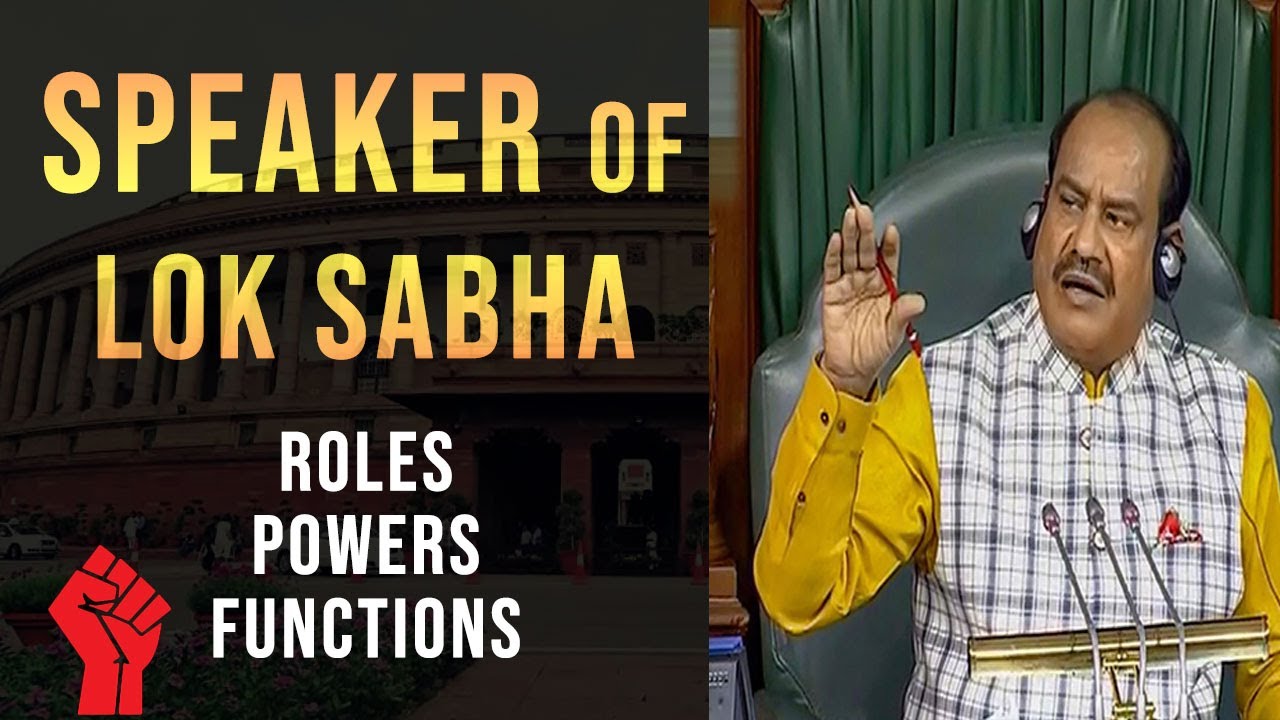
Explore the vital Role and Responsibilities of the Deputy Speaker within the Indian Parliamentary system, focusing on the historical legacy of the Government of India Act of 1919 up to modern constitutional mandates. In India's democratic system, the lawmaking body in the capital city has two main houses. The lower house, called the Lok Sabha or the House of the People, relies heavily on strong administrative leaders to make sure daily meetings run peacefully. While the Speaker is the primary leader of the House, the Deputy Speaker acts as the essential second-in-command who steps up whenever needed. Since , this role has helped balance power and guide lawmakers through debates, voting, and passed bills. This comprehensive guide serves as an essential resource for students and competitive exam aspirants seeking to master the Lok Sabha administrative framework.
🎯 In this chapter, you will understand:
- How the Deputy Speaker of the Lok Sabha is chosen and elected by fellow members of Parliament.
- The special powers, voting rights, and independent status given to the Deputy Speaker.
- The rules regarding term limits, voluntary resignation, and formal removal processes.
- The historical evolution of this parliamentary office from British colonial reforms in to independent India.
💡 Why this topic matters: Parliament cannot function without continuous leadership. Knowing how the Deputy Speaker is appointed and works helps us understand how Indian democracy maintains fairness, order, and stability even when the primary Speaker is absent.
🧠 Core Idea: The Deputy Speaker is an independent constitutional authority directly answerable to the Lok Sabha, working as the main officer to guide debates, lead committees, and represent opposition voices in parliamentary democracy.
Comprehensive Guide to the Role and Responsibilities of the Deputy Speaker (1921–Present)
The administrative backbone of the Lower House begins with the election and institutional standing of the Deputy Speaker. In the grand theater of Indian democracy, the Deputy Speaker is a pivotal figure elected by the Lok Sabha directly from its own membership. This democratic process ensures that the individual chosen possesses the confidence of the House, mirroring the prestige of the Speaker themselves. Just like a class chooses its own monitor, the members of Parliament vote to pick one person among themselves to hold this high seat. The election happens as soon as possible after the main Speaker is picked, creating a smooth transition of duties. If the Deputy Speaker ever leaves the post early, Parliament quickly holds another vote so that the position never stays empty for long.
- (i) The narrative of their tenure begins strictly after the Speaker has been successfully elected, ensuring a clear hierarchy of transition.
- (ii) The specific date for this democratic exercise is determined by the Speaker, who sets the stage for their colleague's appointment.
- (iii) In the event of a sudden vacancy, the Lok Sabha acts swiftly to elect a new member, ensuring the continuity of parliamentary oversight.
The Tenure and Term of Office for the Deputy Speaker
Understanding the duration and the specific legal triggers for the vacation of this high office is crucial for students of Indian polity. Generally, once a person becomes the Deputy Speaker, they stay in office for as long as that current Lok Sabha exists, which is usually up to a five-year period. However, their term can end earlier under three specific legal scenarios established by the Constitution of India.

Criteria for Vacating the Office
The Deputy Speaker typically remains in power for the entire life of the Lok Sabha, yet this journey can be cut short by three distinct legal avenues. First, if they lose their seat as a Member of Parliament, they automatically lose this special position. Second, they can choose to quit by writing an official letter to the Speaker. Third, the other members of Parliament can vote to remove them if a majority agrees, provided they give a formal heads-up notice two weeks in advance.
- (i) Membership Status: If the individual ceases to be a member of the Lok Sabha for any reason, their claim to the office expires immediately.
- (ii) Voluntary Resignation: The official may step down by submitting a formal, written resignation addressed specifically to the Speaker.
- (iii) Removal Process: A powerful check and balance exists where they can be removed by a resolution passed by a majority of all the then members of the House, provided a has been served.
The Dynamic Duties and Powers of the Deputy Speaker
The Deputy Speaker is not merely a backup but a powerful constitutional entity with specific mandates and privileges. They do not sit around waiting for orders; instead, they hold official powers that take effect the moment they sit in the main presiding chair. When guiding the House, their decisions carry the same full legal weight as the Speaker's decisions, keeping debates orderly, enforcing speaking time limits, and maintaining good discipline among politicians.
Assuming the Mantle of the Presiding Officer
When the Speaker is unable to perform their duties, the Deputy Speaker steps into a role of immense authority, wielding all the powers inherent to the chair. They step in when the Speaker's office becomes empty, when the Speaker is absent due to illness or travel, or when both the Lok Sabha and the Rajya Sabha meet together in a special joint sitting.
- (i) Vacant Office: In instances where the office of the Speaker is physically vacant, the Deputy Speaker performs all official functions.
- (ii) Absence from Proceedings: During the temporary absence of the Speaker from the House, the Deputy takes the lead in maintaining order and decorum.
- (iii) Joint Sittings: A unique responsibility arises during the joint sittings of both Houses; if the Speaker is absent, the Deputy Speaker presides over the unified legislative body.
Institutional Independence and Unique Privileges
One of the most significant legal distinctions is that the Deputy Speaker is not subordinate to the Speaker; they are an independent officer directly accountable to the Lok Sabha. They do not report to the Speaker as a boss. Instead, both officers answer directly to Parliament itself.
(i) The Automatic Chairman Privilege
A special privilege dictates that whenever the Deputy Speaker is appointed as a member of a parliamentary committee, they automatically ascend to the position of its Chairman without needing any extra vote.
(ii) Voting Rights and Neutrality
When leading a discussion from the main chair, the Deputy Speaker must stay completely neutral and cannot vote like a normal member. However, if a vote ends in an exact tie, they use a special casting vote to break the deadlock. If a motion is brought to remove them from office, they cannot preside, but they can sit in the House and speak to defend themselves. When the regular Speaker is present and presiding, the Deputy Speaker acts just like any other ordinary MP, taking part in discussions and voting freely.
- (a) While presiding, they maintain a neutral stance and cannot vote in the first instance; however, they hold the power of a casting vote in the case of a tie.
- (b) They are barred from presiding during a resolution for their own removal, though they retain the right to be present and speak.
- (c) When the Speaker is in the chair, the Deputy Speaker reverts to the status of a regular member, participating in debates and voting on all matters.
Financial Stability and Evolving Political Practices
The position is safeguarded by financial independence and governed by evolving democratic traditions. To prevent government leaders or political parties from unfairly influencing the Deputy Speaker using money, the law ensures their pay and perks are completely protected. Their salary is decided directly by Parliament and drawn from a secured government account so that no annual political vote can reduce it or hold it back.
Salary, Allowances, and the Consolidated Fund
To ensure impartiality, the Parliament determines the salary and allowances of the Deputy Speaker, which are charged to the Consolidated Fund of India, meaning they are not subject to an annual vote in Parliament.
The Evolution of Political Conventions
The history of the Lok Sabha shows a shift from partisan appointments to a more inclusive democratic tradition regarding the "Second-in-Command." Over the decades, an unwritten democratic rule developed to keep Parliament fair to everyone.
- (i) Pre-11th Lok Sabha: Up until the 10th Lok Sabha, both the Speaker and Deputy Speaker typically hailed from the ruling party.
- (ii) Modern Practice: Since the 11th Lok Sabha, a consensus has emerged where the Speaker is chosen from the ruling alliance, while the post of Deputy Speaker is traditionally allotted to the Main Opposition Party.
The Historical Journey: From 1921 to the Constitution
The roots of these offices trace back over a century to the British colonial era and the initial steps toward Indian self-governance. Before Indians won full independence, British rules gradually introduced legislative assemblies where elected members could talk about public issues. This long historical evolution laid the brick-by-brick groundwork for modern parliamentary procedures.
Origins under the Government of India Act 1919
The roles of Speaker and Deputy Speaker first emerged in as a direct result of the Montague-Chelmsford Reforms under the Government of India Act of 1919, although the nomenclature was initially different. Back then, the officers were called the President and Deputy President, replacing the British Governor-General who previously led council meetings.
- (i) Original Titles: In the early days, the Speaker was known as the President, and the Deputy Speaker was the Deputy President.
- (ii) Pre-1921 Era: Before these reforms, it was the Governor-General of India who presided over the meetings of the Central Legislative Council.
- (iii) Pioneering Figures: The first Speaker appointed was Frederick Whyte, while the first Deputy Speaker was the venerable Sachidanand Sinha.
Rise of Indian Leadership and the 1935 Transition
The transition toward full Indian oversight saw milestones in the and that defined the modern office. Indian leaders slowly took over these key chairs, demonstrating remarkable skill in handling legislative debates during colonial rule.
Historical Evolution of Parliamentary Leadership (1921–1952) - First Indian Speaker: In , Vithalbhai J. Patel made history by becoming the first elected Indian Speaker of the Central Legislative Assembly.
- Name Change in 1935: The Government of India Act of 1935 officially changed the nomenclature to the modern terms of Speaker and Deputy Speaker.
- Leaders of Independent India:G.V. Mavalankar and Ananthasayanam Ayyangar hold the distinction of being the first Speaker and Deputy Speaker of the Lok Sabha in independent India.
- Continuous Service: Notably, G.V. Mavalankar served a continuous term from , bridging the gap between the Constituent Assembly (Legislative) and the first formal Parliament.
⚡ Quick Revision Capsule: Deputy Speaker Framework
This table summarizes all core facts about the Deputy Speaker of the Lok Sabha for fast student review.
| Key Aspect | Constitutional Provision / Detail | Significance |
|---|---|---|
| Election | Elected by Lok Sabha members on a date set by the Speaker | Ensures the officer holds the trust of the House |
| Subordination | Not subordinate to the Speaker; directly answerable to Lok Sabha | Guarantees independent constitutional standing |
| Voting Right | No initial vote while presiding; holds a casting vote in a tie | Maintains strict neutrality during debates |
| Salary Source | Charged on the Consolidated Fund of India | Protects financial stability from annual political votes |
| Historical Origins | Established in via Government of India Act 1919 | Marks the start of formal parliamentary administration in India |
📝 Summary
The Deputy Speaker remains a cornerstone of Parliamentary Democracy, ensuring that the Lok Sabha functions seamlessly even in the absence of the Speaker. From its origins in to the modern convention of Opposition leadership in the role, this office embodies the balance of power. For students, mastering the duties, powers, and historical milestones of this position as recorded in landmark acts like the Government of India Act of 1919 and Government of India Act of 1935 is essential for understanding the operational integrity of the Indian state.
🚀 Quick Revision Points
Essential facts to review before examinations:
- (i) The Deputy Speaker is elected directly by the members of the Lok Sabha right after the Speaker takes office.
- (ii) The Deputy Speaker is completely independent and is not a subordinate officer under the Speaker.
- (iii) Joining any parliamentary committee automatically makes the Deputy Speaker its Chairman.
- (iv) The office originated under the Government of India Act of 1919 in , where Sachidanand Sinha served as the first Deputy President.
- 💡 Exam Tip: Always remember that the Deputy Speaker does NOT report to the Speaker! They are directly answerable to the Lok Sabha. Also, remember that since the 11th Lok Sabha, this position traditionally goes to the main opposition party.
❓ Frequently Asked Questions (FAQ)
Q1: Who determines the date of election for the Deputy Speaker?
A1: The election date for the Deputy Speaker is determined specifically by the Speaker of the Lok Sabha.Q2: Can the Deputy Speaker vote on ordinary bills while presiding over the House?
A2: No, while presiding, they must remain neutral and cannot vote in the first instance. They can only exercise a casting vote to break an equal tie.Q3: Who were the first Speaker and Deputy Speaker of independent India's Lok Sabha?
A3: As recorded in historical archives like Parliamentary Records, G.V. Mavalankar served as the first Speaker and Ananthasayanam Ayyangar served as the first Deputy Speaker of the Lok Sabha.