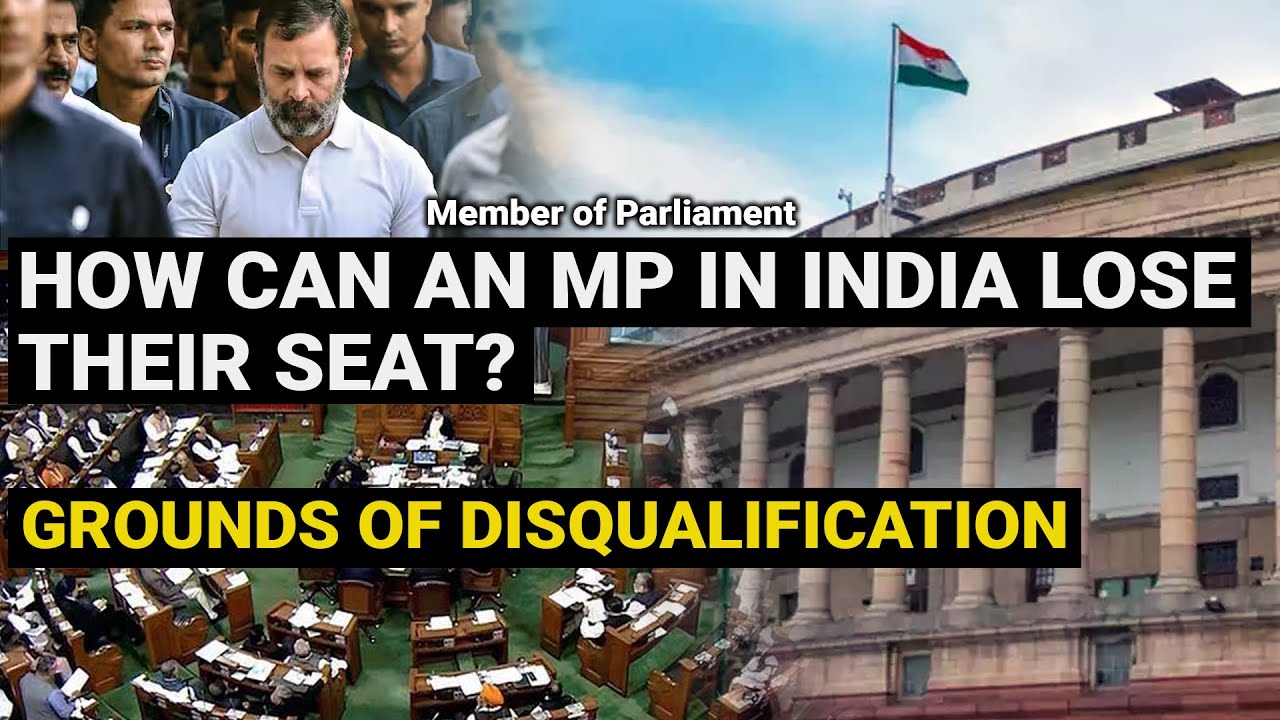
Explore the comprehensive legal criteria and constitutional mandates governing the Membership of Parliament, focusing on the Representation of the People Act, 1951 and the Tenth Schedule. This detailed study guide is designed for students and exam aspirants to help them understand how democratic representation is kept strong through strict qualifications, disqualifications, and seat-vacating rules inside the Indian lawmaking system.
🎯 In this chapter, you will understand:
- The essential constitutional and statutory eligibility criteria required to become a Member of Parliament (MP).
- The grounds for disqualification under the Constitution and the Representation of the People Act, 1951.
- How political stability is safeguarded through the Anti-Defection rules in the Tenth Schedule.
- The official procedures for vacating seats, taking the mandatory oath, and receiving salaries or benefits.
💡 Why this topic matters: Indian democracy relies on the legal standing and honesty of its lawmakers. Clear rules ensure that only qualified individuals make decisions for the nation and remain accountable to the citizens.
🧠 Core Idea: Becoming and remaining a Member of Parliament requires meeting clear baseline requirements of age and citizenship, avoiding unethical conflicts of interest or criminal records, and staying loyal to the public mandate.
Membership of Parliament: Eligibility, Qualifications, and Legal Mandates
The entire foundation of Indian democracy rests upon the moral character, overall ability, and legal standing of its elected lawmakers. To safeguard the holiness and dignity of the lawmaking process, the Constitution of India together with several parliamentary laws creates a strong step-by-step framework for entering and remaining in the Sansad (the Parliament of India). This journey begins when a candidate meets fundamental eligibility checks and continues as they follow ethical, legal, and political rules throughout their entire term of office.
- (i) Entry into the highest legislative body requires fulfilling both constitutional baseline requirements and statutory laws created by Parliament.
- (ii) The entire election and qualification process ensures that leaders remain completely loyal to the sovereignty and integrity of India.
- (iii) Key legal safety nets, including anti-defection rules under the Tenth Schedule, prevent political cheating and protect government stability.
Qualifications for Membership of Parliament
The legal eligibility of any person who wants to run for a parliamentary seat is shaped by a mix of primary constitutional rules and extra guidelines made by Parliament over time.

Constitutional Requirements for Election
The Constitution acts as the main rulebook to decide who can dream of becoming a lawmaker in India. It lays down basic mandatory conditions regarding citizenship and minimum age, making sure that only responsible citizens with proper life maturity hold legislative power.
- (i) The candidate must be a official citizen of India to ensure true loyalty to the nation.
- (ii) A formal oath or affirmation must be taken before an officer authorized by the Election Commission of India, where the candidate promises allegiance to the Constitution and vows to uphold the sovereignty and integrity of India.
- (iii) Age limits are strictly set: a candidate must be at least 30 years old for the Rajya Sabha (Upper House) and at least 25 years old for the Lok Sabha (Lower House).
- (iv) The individual must satisfy any extra criteria specifically created by Parliament through legislative acts.
Statutory Qualifications under the Representation of the People Act, 1951
Going beyond basic age and citizenship requirements, the Representation of the People Act, 1951 adds important layers of administrative checks and social eligibility to the election process.
- (i) Elector Registration: The candidate must be officially registered as a voter in any parliamentary constituency in India.
Historical Evolution of Residency Rules: In earlier times, a person running for a Rajya Sabha seat had to be registered as a voter in the exact state they wanted to represent. However, Parliament removed this local residency requirement in to allow expert leaders to represent states more broadly. Later, the Supreme Court of India fully supported and upheld this decision in a famous landmark ruling in .
- (ii) Reserved Constituencies: If a person wants to contest a seat specifically reserved for Scheduled Castes (SC) or Scheduled Tribes (ST), they must legally belong to those communities. However, members of these reserved categories are always free to contest general unreserved seats as well.
- (i) Elector Registration: The candidate must be officially registered as a voter in any parliamentary constituency in India.
Grounds for Disqualification of Members
Even if a candidate gets elected, they can be stopped from entering Parliament or forced to give up their seat if they cross clear legal boundaries or commit wrongdoing.
Constitutional Grounds for Disqualification
The Constitution details several specific situations where a leader is considered unfit to serve as a trustworthy representative of the people.
- (i) Holding an office of profit under the central or state government, unless that position is an official Minister role or is explicitly allowed by parliamentary law.
- (ii) Being officially declared of unsound mind by a recognized legal court.
- (iii) Being an undischarged insolvent, which means the person has unpaid bankruptcy debts that damage their financial integrity.
- (iv) Voluntarily giving up Indian citizenship to acquire foreign citizenship or showing formal loyalty to a foreign nation.
- (v) Facing any other disqualification set down by a new law passed by Parliament.
Disqualifications under the Representation of the People Act, 1951
The Representation of the People Act, 1951 focuses heavily on checking criminal backgrounds, corruption, and social misconduct, helping keep lawbreaking influences out of the national legislature.
- (i) Being found guilty of specific election-related crimes or using corrupt practices during campaigning.
- (ii) Being sentenced to jail for two years or more for an offence (Note: being held under temporary preventive detention does not count as a disqualification).
- (iii) Failing to submit an accurate record of election campaign expenses within the legally allowed time limit.
- (iv) Having a personal business interest or financial contract with government services or works.
- (v) Serving as a top manager or director in a business company where the government owns at least a 25% share.
- (vi) Being fired from a government job earlier due to corruption or disloyalty to the country.
- (vii) Being convicted by a court for spreading hatred between different social groups or accepting bribes.
- (viii) Facing legal punishment for supporting or practicing harmful social evils like untouchability, dowry, or sati.
Authority for Final Decisions
The President of India holds the official power to decide whether an elected member must be disqualified under these constitutional or statutory grounds. However, this power is protected from personal bias through strict rules:
- (i) The President must first ask for the formal legal opinion of the Election Commission of India.
- (ii) The President is legally bound to follow that exact opinion without changing it.
Disqualification on Grounds of Defection
To keep governments stable and stop politician dishonesty, Parliament added the Tenth Schedule to the Constitution. This law stops elected representatives from suddenly switching political parties after winning an election just for personal gain.
Criteria for Defection
An elected member loses their parliamentary seat if their actions betray the trust of the political party and voters who chose them.
- (i) Voluntarily resigning or leaving the political party that sponsored them during the election.
- (ii) Voting against or choosing not to vote against official party orders (called a party whip) without getting permission beforehand.
- (iii) An independent winner joining any political party after winning the election.
- (iv) A specially nominated member joining a political party after have passed from the day they took their seat.
The Adjudicating Authority for Defection
Unlike standard disqualifications handled by the President, decisions regarding party defection are handled directly inside Parliament.
- (i) The presiding officer—the Speaker in the Lok Sabha or the Chairman in the Rajya Sabha—makes the official decision.
- (ii) Following a famous decision by the Supreme Court of India, these decisions can be checked by judges through judicial review to prevent unfair or political treatment.
Procedures for Vacating of Seats
A parliamentary seat can become empty due to official legal restrictions, voluntary personal decisions, or continuous neglect of member duties.
Prohibition of Double Membership
To ensure focused leadership and prevent unfair double voting, a single person is not allowed to hold multiple legislative seats at the same time.
Rules for Conflicts between the Two Houses:
- (a) If a person gets elected to both the Lok Sabha and the Rajya Sabha, they must inform officials within which house they wish to serve in. If they stay silent, their seat in the Rajya Sabha automatically becomes empty.
- (b) If an existing member of one House gets elected to the second House, their original seat in the first House becomes vacant right away.
- (c) If a candidate wins two separate seats in the exact same House, they must pick one seat; otherwise, both seats become empty.
- (ii) Parliament versus State Legislature: No person can be an MP (Member of Parliament) and an MLA (Member of Legislative Assembly) at the same time. If a person does not resign from their state assembly seat within , their seat in Parliament is lost automatically.
Resignation, Absence, and Legal Annulment
A seat in Parliament can also become vacant through a member's own choice, missing work for too long, or legal disqualifications.
- (i) Resignation: An MP can resign at any time by sending a written letter to the Speaker or Chairman. The presiding officer can reject the resignation if they suspect the member was forced or threatened into resigning.
- (ii) Absence: If an MP stays absent from all official meetings for in a row without formal permission, the House can vote to declare their seat empty (periods when the House is officially paused or closed for long holidays are not counted in these 60 days).
- (iii) Other Legal Causes:
- (a) A state High Court can cancel an election result due to illegal practices, though the member can appeal the decision to the Supreme Court.
- (b) The House can vote to expel a member for serious bad behavior.
- (c) A member gets elected as the President of India or Vice-President of India.
- (d) A member gets appointed as a State Governor.
Oath, Salaries, and Administrative Benefits
Once an individual is officially elected to Parliament, formal constitutional steps and official financial support begin to help them carry out their duties easily.
The Mandatory Oath or Affirmation
Before taking a seat or taking part in parliamentary work, every newly elected representative must perform an essential duty by taking a formal oath before the President of India or an officer appointed by the President.
- (i) Promising true faith and allegiance to the Constitution of India.
- (ii) Promising to uphold and defend the ultimate sovereignty and unity of the nation.
- (iii) Promising to perform all lawmaking duties honestly and faithfully.
- (iv) Penalties for Ignoring the Oath: If a person sits or votes in Parliament without taking this official oath, they must pay a strict fine of ₹500 per day and are not allowed to enjoy any official parliamentary privileges or protections.
Salaries, Allowances, and Pensions
Parliament decides the official pay and financial support for its members so that leaders can work without financial worries or stress.
- (i) Historical Law: Parliament created the Salaries, Allowances, and Pension of Members of Parliament Act in to manage payments systematically.
- (ii) Important Revisions in : Parliament increased monthly base salaries to ₹50,000, along with substantial increases in daily working allowances, local office fees, and constituency support funds.
- (iii) Extra Benefits: MPs are given government housing, free monthly travel passes, medical care for their families, pension plans, and loan advances for buying vehicles.
- (iv) Salaries for Officers of Parliament: Top presiding leaders like the Speaker and Chairman receive special salaries that come directly from the Consolidated Fund of India.
- (a) The Chairman of Rajya Sabha receives a base salary of ₹1.25 lakh per month.
- (b) The Speaker of Lok Sabha receives an extra sumptuary allowance of ₹2,000 per month, equal to what Cabinet Ministers receive.
⚡ Quick Revision Capsule: Membership of Parliament
This quick comparison table summarizes the critical constitutional rules, legal requirements, key age limits, and decision-making bodies for MPs in India:
| Feature / Topic | Key Mandate / Legal Rule | Deciding Authority / Source |
|---|---|---|
| Minimum Age Limit | 25 years for Lok Sabha; 30 years for Rajya Sabha | Article 84 of the Constitution of India |
| Standard Disqualifications | Holding an office of profit, unsound mind, bankruptcy, or criminal jail sentences over 2 years | Decided by the President of India following mandatory advice from the Election Commission |
| Anti-Defection Rules | Leaving party voluntarily, breaking party voting directions, or independent candidate joining a party | Decided by the Speaker of Lok Sabha or Chairman of Rajya Sabha under the Tenth Schedule |
| Penalty for No Oath | A fine of ₹500 per day for sitting or voting in Parliament without taking the mandatory oath | Enforced under Article 104 of the Constitution of India |
| Unexplained Absence Limit | Continuous unexplained absence from meetings for 60 days leads to seat vacancy | Declared directly by the respective House of Parliament |
📝 Summary
The rules governing the Membership of Parliament form a strong system of clear qualifications and disqualifications set up under the Constitution of India and the Representation of the People Act, 1951. Learning these fundamental rules, including anti-defection safeguards under the Tenth Schedule and official procedures for vacating seats, helps students understand how high legal standards and accountability protect national leadership. These democratic measures ensure that the Sovereignty and Integrity of India stay protected through honest governance.
🚀 Quick Revision Points
Essential facts to review before examinations:
- (i) An MP candidate must be an Indian citizen and registered voter, aged at least 25 years for Lok Sabha or 30 years for Rajya Sabha.
- (ii) Holding an office of profit or receiving a jail sentence of 2 years or more leads to disqualification under statutory laws.
- (iii) Switching parties after winning an election violates the Tenth Schedule and causes loss of the parliamentary seat.
- (iv) Double membership in both Houses of Parliament or in a State Assembly is strictly forbidden under the Constitution.
- 💡 Exam Tip: Remember the distinction between deciding authorities: standard constitutional disqualifications are decided by the President of India on advice from the Election Commission, whereas anti-defection cases under the Tenth Schedule are decided solely by the presiding officers (Speaker or Chairman).
❓ Frequently Asked Questions (FAQ)
Q1: What is the minimum age required to become a Member of Parliament in India?
A1: A candidate must be at least 25 years old to be elected to the Lok Sabha and at least 30 years old to be elected to the Rajya Sabha.Q2: Who makes the final decision on standard disqualifications of an MP?
A2: The President of India makes the final decision on standard disqualifications, but the President is legally required to obtain and follow the official advice of the Election Commission of India.Q3: What happens if an MP is absent from Parliament for 60 days without permission?
A3: If an MP stays continuously absent from all meetings for 60 days without formal permission, the House can vote to declare their seat empty under the provisions of the Constitution of India.