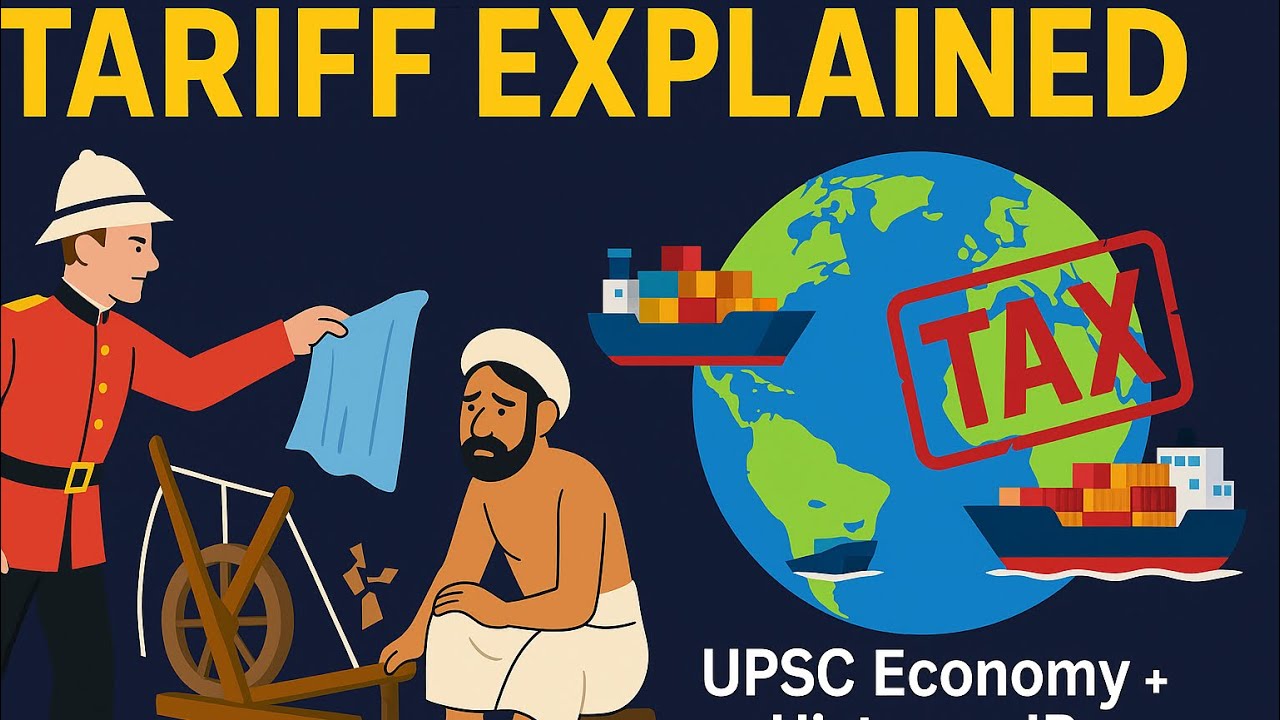
The concept of tariffs plays a pivotal role in international trade, directly influencing both government revenue and domestic economic protection. Understanding the functions of tariffs and their various types, such as ad valorem and specific tariffs, is essential for students preparing for economics and trade exams. This overview explains how tariffs operate within the WTO framework and details their core significance in trade policy and economic planning.
Functions of Tariffs in International Trade
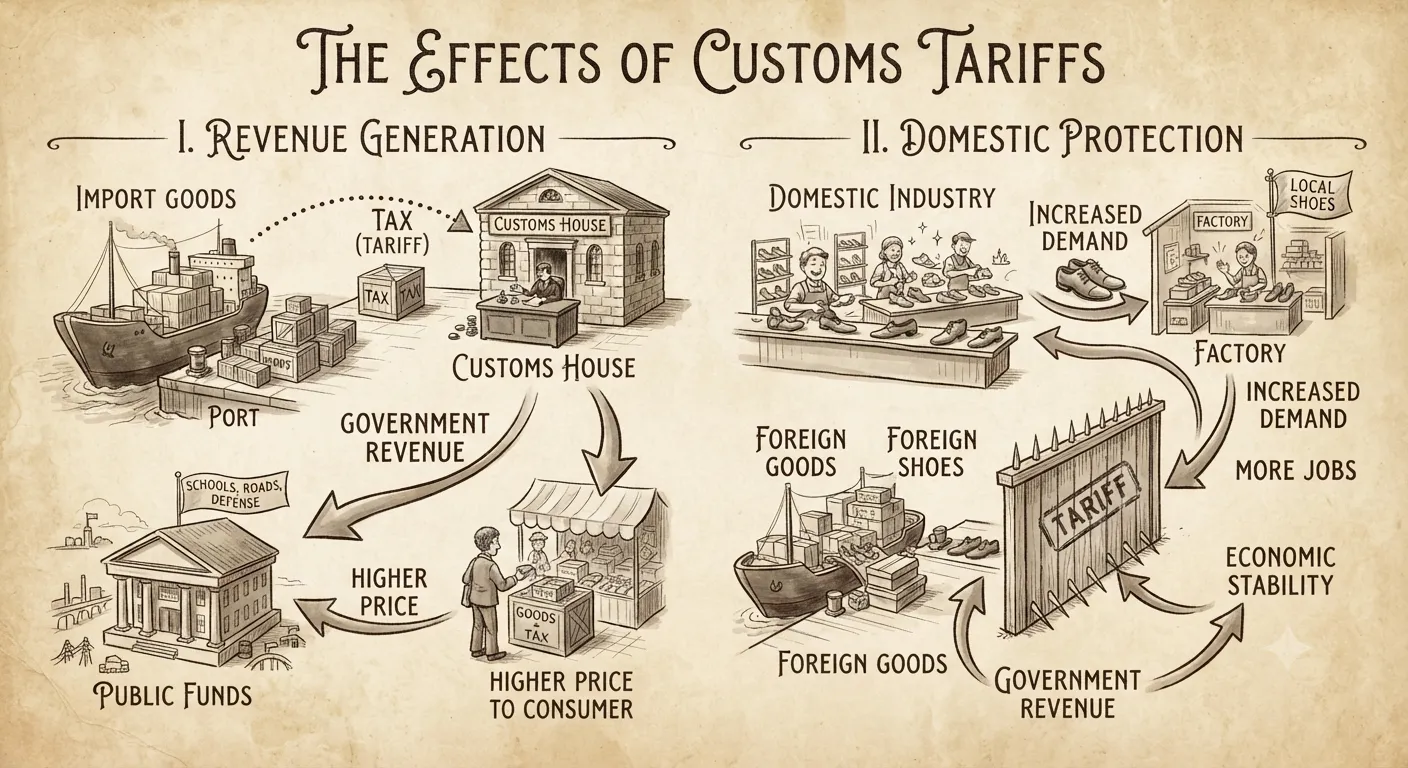
Tariffs serve multiple essential roles in shaping a nation's economy and trade policy. Far from being simple taxes, they are strategic tools used to guide industrial growth, manage consumption patterns, and balance international relations.
- Core Roles in Economic Policy
At their core, tariffs are designed to satisfy both fiscal and protective economic goals by regulating how foreign goods enter the domestic market.
- (i) They provide a steady, reliable source of revenue for the government treasury.
- (ii) They protect domestic products from foreign competition by making imported goods more expensive for consumers.
- (iii) They act as key instruments of development policy by discouraging non-priority imports like luxury items, while simultaneously promoting priority imports such as essential industrial equipment and capital goods.
Types of Tariffs and Their Mechanisms
Governments levy tariffs in different ways depending on their specific trade policy goals and the physical nature of the imported product. The two primary methods rely either on value assessment or physical units.
- Breaking Down the Levy Systems
Understanding how a tariff is calculated clarifies its underlying impact on market prices and revenue trends.
Ad Valorem Tariff
This is the most common type of tariff where the customs duty is calculated as a fixed percentage of the product's price. For instance, a 15 percent tariff means the government charges 15% of the total value of the imported good. This stands as the standard method strongly endorsed by the WTO.
- (i) It dynamically reflects the shifting market value of the product.
- (ii) It is easy to administer and adjusts automatically according to international price changes.
- (iii) It ensures consistent, proportional revenue collection for the government.
Specific Tariff
In this alternative system, the tariff is applied as a fixed amount per unit of the product, regardless of its underlying price—such as charging Rupees 10 per kilogram. Although less common globally than ad valorem duties, it remains an effective way to target specific goods for regulatory or protective purposes.
- (a) It provides absolute predictability in revenue based strictly on specific physical quantities.
- (b) It can be deployed strategically to influence import volume and buyer behavior.
- (c) It has historically been less favored in major international trade agreements due to its rigid nature.
WTO Standards, Bound Tariffs, and Negotiations
International trade isn't a free-for-all; it operates under a strict architecture of global rules. The World Trade Organization regulates how high a nation can push its protective walls while facilitating continuous multilateral dialogue.
- The Global Trade Architecture
A look at global standards reveals how different economies utilize tariff structures to meet their unique developmental needs.
Tariff Reductions and Global Standards
Over successive GATT-WTO rounds, tariffs have generally decreased worldwide, promoting freer trade across borders. Developed countries typically maintain very low average tariffs (hovering around 4%), while developing nations maintain an average of 27% due to pressing economic and protective needs.
- Developed countries: Maintain low tariffs overall but strategically retain high duties on specific goods that are heavily exported by developing countries.
- Developing countries: Use tariffs as foundational revenue sources and as tools to closely manage scarce foreign exchange reserves.
- Trade policy balancing: Implementing high tariffs on luxury imports while keeping low tariffs on essential industrial materials.
Bound Tariffs and Multilateral Negotiations
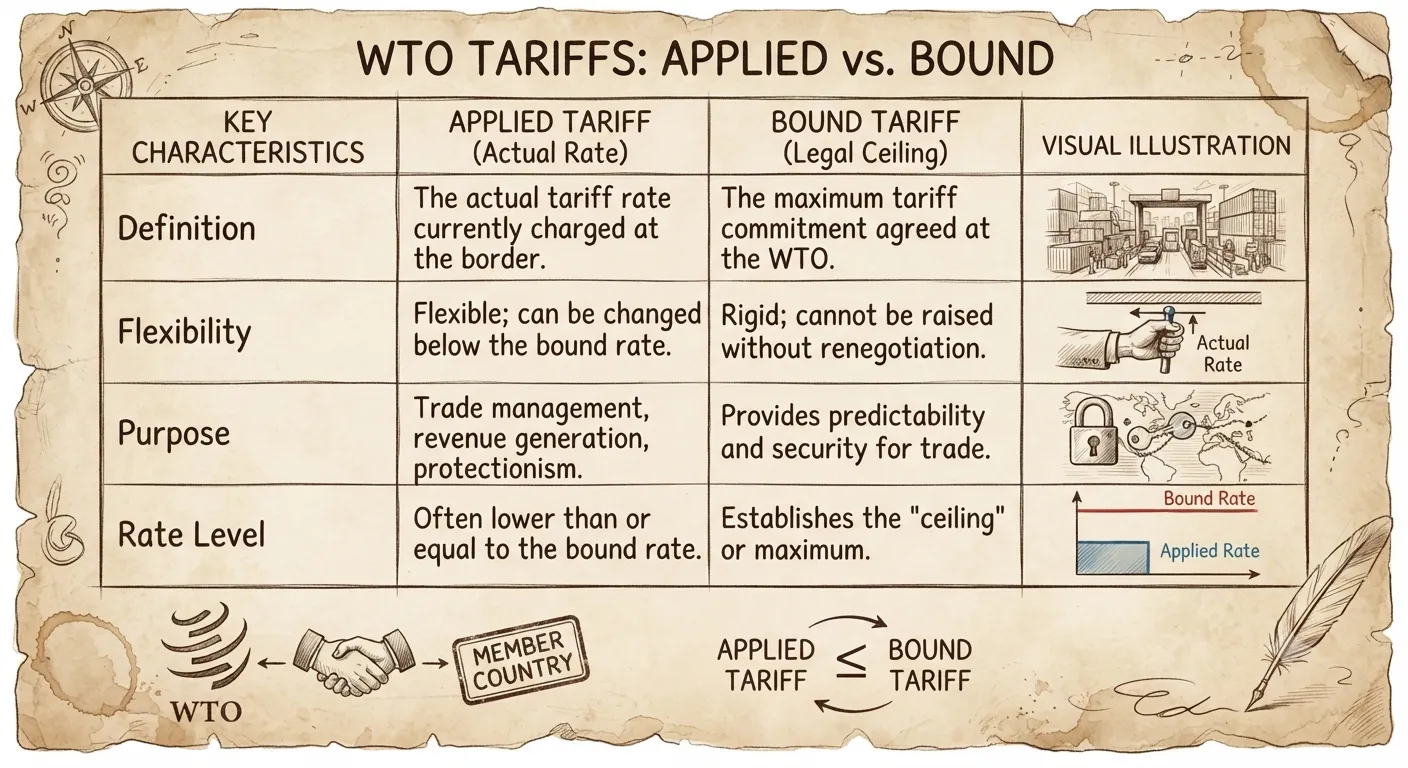
During multilateral trade negotiations (MTN), member countries explicitly agree not to exceed specified tariff limits, which are known as bound tariffs. These bounds set a legal ceiling, ensuring predictability and fairness in international trade relations.
- (i) Governments are completely free to charge lower rates than the bound tariffs, but they cannot exceed them without offering compensation to affected trading partners.
- (ii) Raising tariffs above bound levels requires formal notification, intense negotiation, and potentially making compensatory reductions on other products.
- (iii) This architecture provides a stable mechanism to balance domestic protection with international trade obligations.
Contingency Measures and Protection
Special economic situations allow countries to break normal rules and temporarily raise tariffs or limit imports to defend their economy or specific industries.
- (a) Safeguards: Emergency actions to protect domestic industries from sudden, damaging surges of imports.
- (b) Balance of Payment (BOP) measures: Restrictions designed to manage critical shortages in foreign exchange and stabilize the broader national economy.
Summary
Understanding tariffs is crucial for students preparing for economics or international trade exams. They serve as a foundational source of revenue, protect domestic industries, and regulate imports according to national priorities. The rules surrounding bound tariffs and contingency measures highlight the delicate balance nations must strike between domestic protection and global trade commitments.
Quick Revision Points for Students
Reviewing these core empirical and geographical trade facts ensures full retention for your upcoming examinations.
- (i) Tariffs fulfill a dual purpose: generating vital government revenue and shielding domestic industries from intense foreign competition.
- (ii) An ad valorem tariff is calculated as a fixed percentage of the good's value, while a specific tariff is applied as a flat, fixed fee per physical unit.
- (iii) Bound tariffs represent maximum legal limits agreed upon in multilateral trade negotiations that a country cannot exceed without penalties or compensation.
- (iv) There is a sharp global disparity in trade barriers: developed nations average low tariffs of around 4%, whereas developing nations average closer to 27% to manage their foreign exchange and growth.
Frequently Asked Questions (FAQ)
Q1: What is the main structural difference between an ad valorem tariff and a specific tariff?
A1: An ad valorem tariff is levied as a percentage of the item's total market value (e.g., 15% of the price), making it flexible as prices change. A specific tariff is a fixed monetary charge collected per physical unit of the item (e.g., Rupees 10 per kilogram) regardless of its price.Q2: Why do developing countries maintain significantly higher average tariffs than developed countries?
A2: Developing countries use higher tariffs (averaging around 27%) as essential instruments for generating government revenue, preserving scarce foreign exchange reserves, and safeguarding emerging domestic industries from dominant global competitors.Q3: Can a WTO member country raise its tariffs above the agreed "bound tariff" level?
A3: A country can only raise its tariff above the bound level by entering into formal negotiations with its trading partners. This process typically requires offering compensatory reductions on duties for other products to balance trade relations.