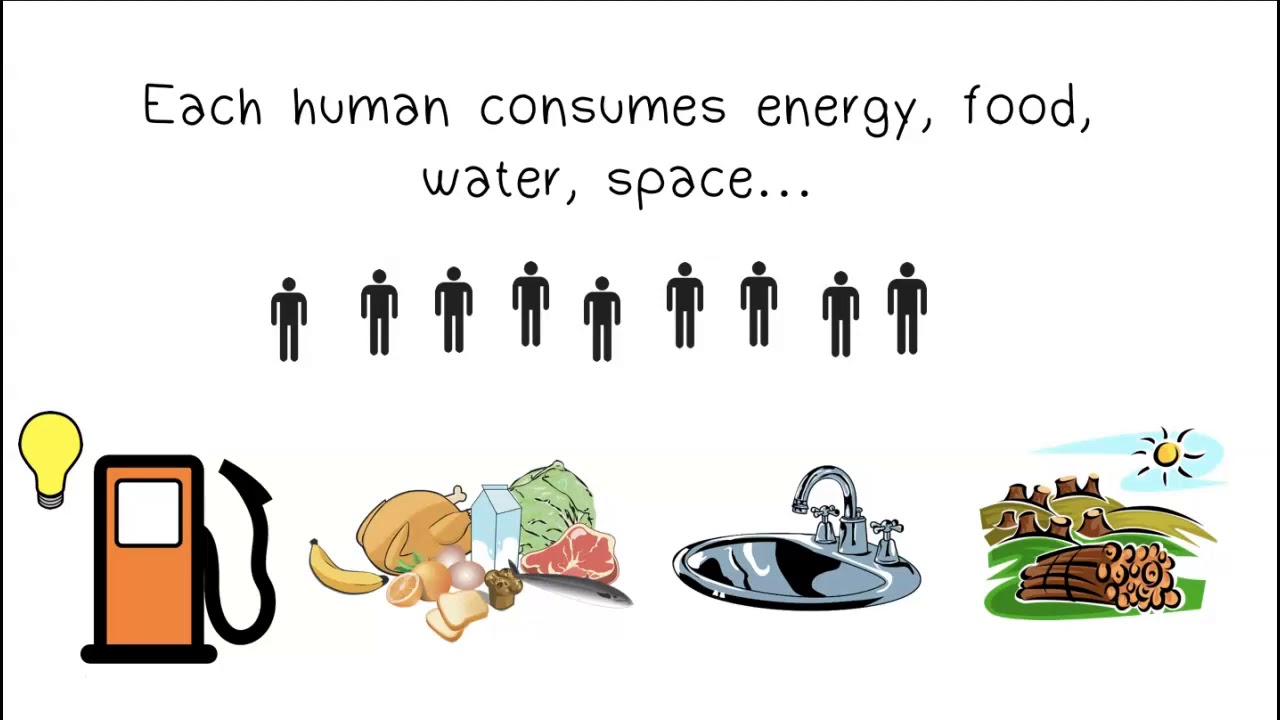
This detailed analysis explores how human resources function as units of consumption. We will look closely at the economic impact of overpopulation and the distinct demographic challenges that history and data present to us. This guide is built to help students of economics and social sciences cut through the noise while preparing for competitive examinations.
🎯 In this chapter, you will understand:
- How individuals function simultaneously as economic producers and consumption units.
- The direct impact of overpopulation on food security and domestic capital formation.
- How domestic supply shortages strain foreign exchange reserves and international trade.
- The strategic diversion of public funds from physical infrastructure to social overheads.
💡 Why this topic matters: Understanding how population growth shapes national consumption helps economists and policymakers balance short-term survival needs with long-term economic expansion.
🧠 Core Idea: Population acts as a double-edged sword; every person added to a nation is both a potential producer and an immediate consumer of national wealth.
Human Resources as Units of Consumption and Their Impact on Economic Development
Think of population as a double-edged sword. Every single person added to a nation is not just a potential producer, but an immediate, guaranteed consumer of the national cake. When we look at individuals purely as units of consumption, we see that they place a heavy, direct demand on the national product. The absolute numbers matter here; if a country's population expands faster than its economic infrastructure can stretch, it slips into overpopulation, triggering a structural domino effect that holds back overall growth.
- The Balance of Survival
The delicate equation between sheer population size and resource sustainability is what ultimately decides whether a nation grows wealthy or stays stuck. If consumption demand isn't closely balanced with actual productive capacity, economic stagnation is almost inevitable.
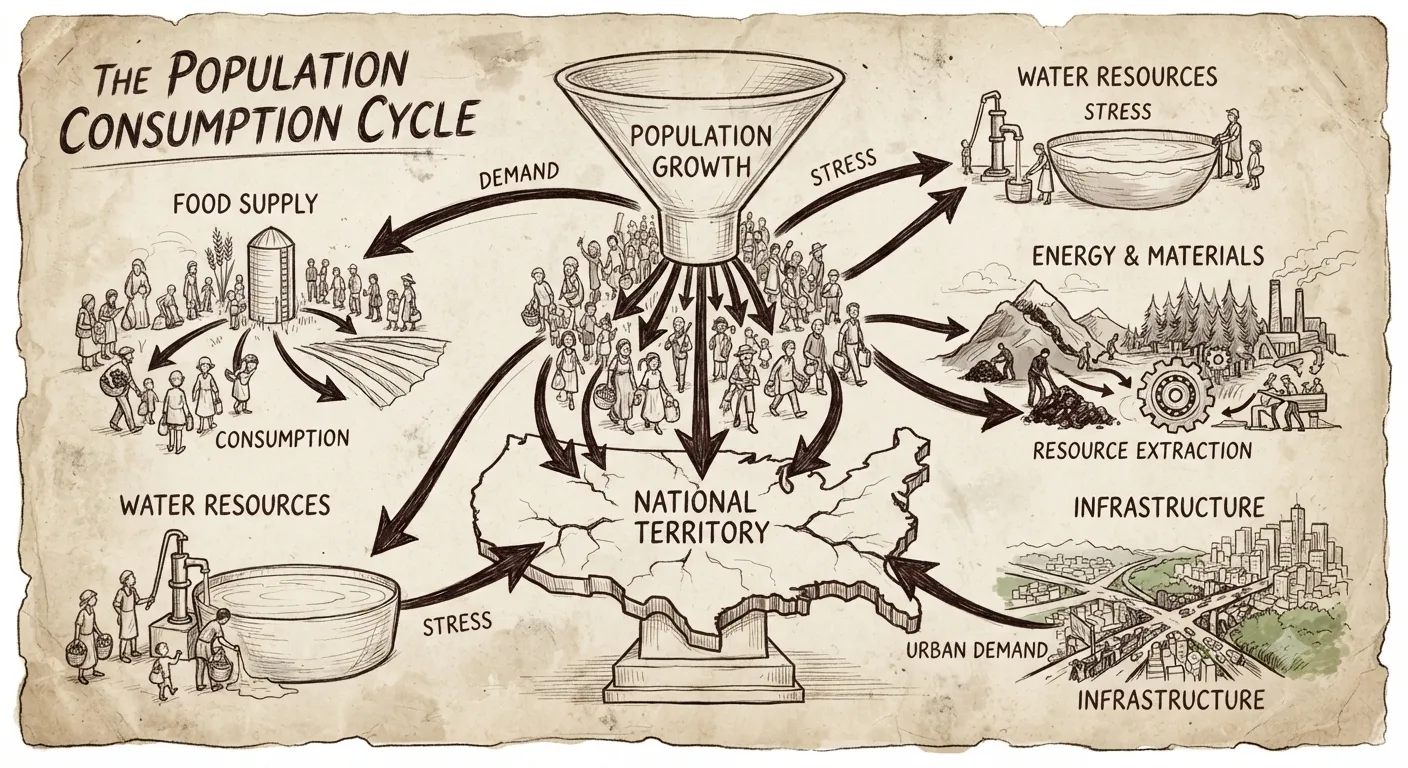
The Balance of Consumption and Productive Capacity - Asset vs. Liability
A population transitions from a highly praised demographic asset into a dragging liability the exact moment its collective consumption begins outpacing the growth of the national dividend.
The Socio-Economic Challenges of Rapid Population Growth
When a population explodes too quickly, it behaves like a massive drain on a developing economy's internal reserves, sparking resource depletion and systemic blockages across major sectors.
The Crisis of Food Scarcity and Supply Gaps
As human numbers climb, the daily market demand for basic food stocks accelerates at an unforgiving pace. In many underdeveloped countries, this produces an outright supply gap where local farms simply cannot keep up with the basic consumption needs of the public.
- (i) This rising demand triggers acute food shortages that hit vulnerable socio-economic demographics first and hardest.
- (ii) Failing to build true food self-sufficiency leaves a country fundamentally exposed, compromising both its national security and long-term public health.
Obstacles to Capital Formation and Investment
A massive chunk of a developing nation's gross output gets instantly swallowed up by immediate, unavoidable subsistence consumption. If you consume almost everything you produce today just to stay afloat, you are left with zero surplus to fund tomorrow's progress.
- (i) This heavy consumption drag brings the national rate of capital accumulation to a grinding crawl.
- (ii) Without a healthy investment surplus to bankroll new factories, schools, and technologies, the country's economic development remains trapped in a frustrating, generational cycle of poverty.
Trade Imbalances and Social Overhead Constraints
The heavy weight of unbridled domestic consumption does not just stop at a country's borders. It spills over into its international trade ledger and breaks down the quality of its public sector infrastructure.
Strain on the Balance of Trade and Foreign Reserves
When a country is hit by severe food deficits, its leaders face a brutal policy trade-off: they must start diverting scarce foreign exchange reserves away from long-term projects. Instead of buying advanced industrial machinery or productivity-boosting tech from abroad, they are forced to spend their cash on immediate food imports to feed their citizens.
- (a) This structural shift creates persistent trade deficits and drags down the country's international balance of payments.
- (b) Long-term economic planning goes out the window, because basic economic survival takes precedence over industrial expansion.
Rising Unemployment and Pressure on Social Overhead Capital
In typical Underdeveloped Countries (UDCs), massive population growth goes hand-in-hand with rising unemployment. This creates a painful feedback loop of economic instability that strains the state's fiscal capacity to its absolute limits.
Diversion of Funds from Physical Capital
High population density forces the government to spend aggressively on basic human survival needs—think education, health, and entry-level infrastructure.
- (i) These massive social overhead costs function as an emergency sponge, sucking up precious public funds.
- (ii) As a direct consequence, capital that should have gone toward direct physical capital formation—like power plants, transport networks, and manufacturing hubs—gets completely redirected.
⚡ Quick Revision Capsule: Human Resources & Consumption
A quick overview of key economic factors, their primary impact, and structural consequences on developing economies.
| Economic Factor | Primary Impact | Structural Consequence |
|---|---|---|
| Units of Consumption | Exerts direct demand on national product | Reduces available surplus for long-term growth |
| Food Scarcity | Creates domestic supply gaps in food stocks | Forces reliance on emergency food imports |
| High Subsistence Need | Swallows the majority of gross output | Stalls the national rate of capital accumulation |
| Foreign Exchange Strain | Diverts scarce reserves to food purchases | Limits import of productive industrial machinery |
| Social Overhead Pressure | Requires urgent funding for healthcare and education | Directly restricts physical capital formation |
📝 Summary
To look at the big picture, rapid population growth acts exactly like "extra weight carried by a race-horse." It heavily handicaps real economic progress by eating up surpluses before they can be used to drive productivity growth. For any student tackling this topic, the golden rule to remember is that whether a population becomes a valuable asset or liability depends entirely on its quality. By executing smart human capital development programmes and targeted investments, a country can successfully pivot, turning its dependent consumption units into highly productive forces that push the economy far beyond the limits of basic physical capital formation.
🚀 Quick Revision Points
Essential facts to review before examinations:
- (i) The double identity of population means humans are simultaneously producers and direct consumers of the national product.
- (ii) Overpopulation sets in when consumption demands outgrow what the domestic economic infrastructure can safely handle.
- (iii) High subsistence consumption stalls the rate of capital accumulation, leaving no investment surplus for industrial growth.
- (iv) Food scarcity hurts a nation's trade balance by diverting scarce foreign exchange away from capital machinery imports toward food supplies.
- (v) Heavy population pressure forces states to spend on immediate social overheads (health and education), shortchanging long-term physical capital formation.
- 💡 Exam Tip: Remember that whether population acts as an asset or a liability depends on its quality and available productive capacity relative to consumption demand.
❓ Frequently Asked Questions (FAQ)
Q1: What does it mean when we call human resources "units of consumption"?
A1: It emphasizes that before individuals can produce goods or contribute to economic growth, they require an immediate share of the national product (food, housing, healthcare) to survive, thereby exerting direct demand on existing resources.Q2: How does rapid population growth directly hinder national capital formation?
A2: When a population grows too quickly, the vast majority of a nation's gross output must be spent on immediate subsistence consumption. This leaves virtually no financial surplus to save or invest back into the economy.Q3: Why are underdeveloped countries forced into trade deficits due to overpopulation?
A3: Severe domestic food deficits force these nations to divert foreign exchange reserves to purchase food imports, meaning they cannot afford to import the industrial machinery needed for manufacturing expansion.