The principles of free trade and fair competition form the foundation of global commerce. Ideally, businesses win customers based on product quality and value rather than government support. However, market issues like subsidies and dumping disrupt this balance. Since these acts are unfair trade practices, the World Trade Organization (WTO) uses strict rules to keep the global market fair and open for everyone.
🎯 In this chapter, you will understand:
- How WTO rules prevent unfair trade practices and protect open markets.
- The main differences between prohibited, permitted, and specific subsidies.
- How countries use countervailing duties and dispute resolution to defend local businesses.
- The special subsidy exceptions given to developing nations and Least Developed Countries.
💡 Why this topic matters: Unfair trade rules prevent government subsidies from distorting global prices, ensuring a level playing field for domestic and foreign companies.
🧠 Core Idea: The WTO regulates government financial aid to prevent unfair advantages, while granting affected nations legal tools like countervailing duties to protect their local industries.
WTO Subsidy Regulations and Unfair Trade Practices in Global Commerce
When governments step in to lower production costs or protect local companies from foreign competitors, open markets break down. To stop trade disputes, global agreements work to balance these advantages.
- Balancing the Global Playing Field
True economic cooperation relies on clear rules where cross-border trade happens naturally. When a government financially supports its own businesses, it creates an unfair challenge for foreign competitors who do not receive similar aid.
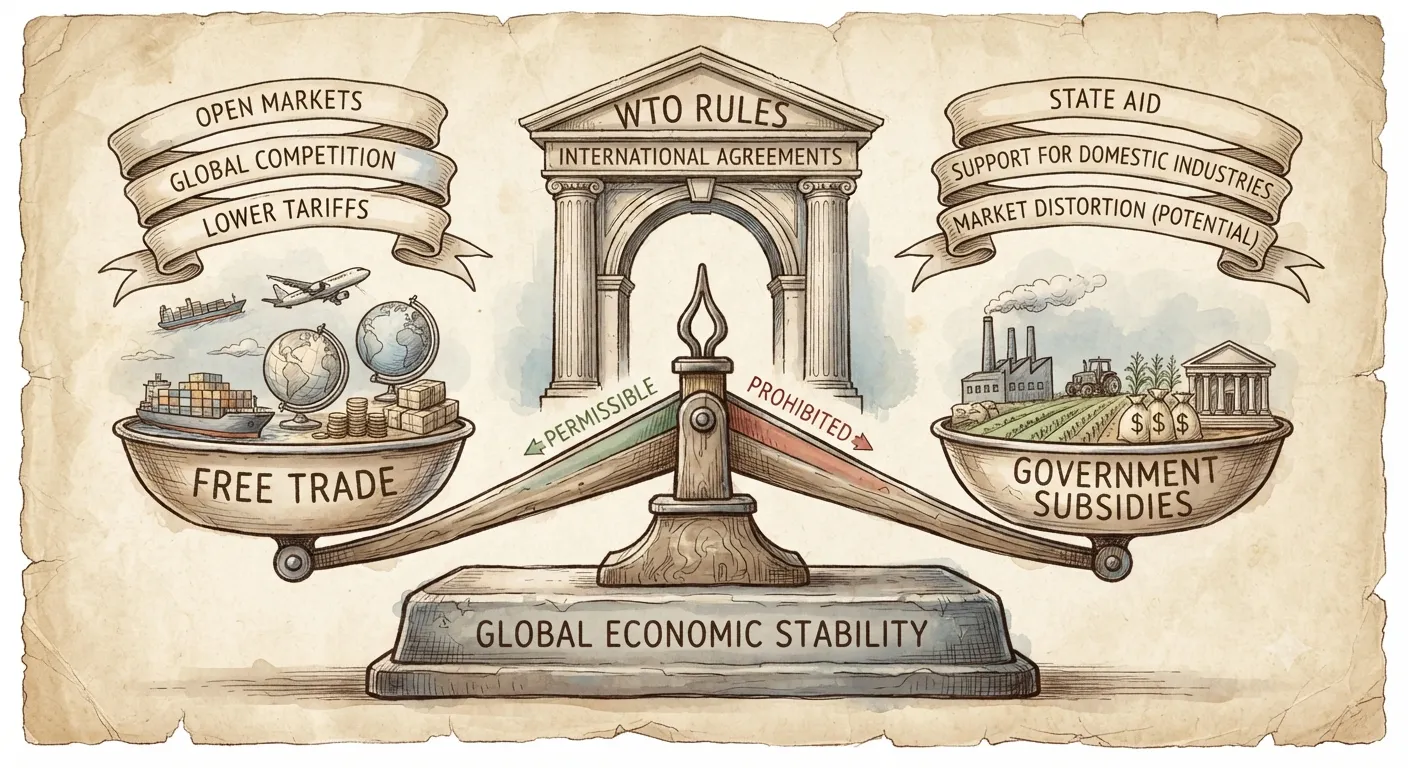
Subsidy Provisions under WTO
The WTO Agreement on Subsidies and Countervailing Measures (SCM) serves as the main rulebook. It defines what counts as an illegal government handout and what is allowed as regular economic support across industry and agriculture.
Types of Subsidies
The WTO divides financial support into categories based on how much they distort international trade.
- (i) Prohibited Subsidies: These are strictly banned. They include financial rewards tied directly to export performance or rules designed to reduce imports by favoring domestic products over foreign goods.
- (ii) Permitted Subsidies: These are broad forms of internal support that do not favor a specific industry, commonly called non-specific subsidies.
- (iii) Exemptions: To support fair growth, Least Developed Countries (LDCs) and developing economies with a GNP per capita below US$ 1000 receive special exceptions to use export help that is otherwise restricted.
Specific vs Non-Specific Subsidy
The main difference lies in how financial support is targeted. Non-specific subsidies provide general help to all businesses using clear criteria like company size. In contrast, specific subsidies target particular industries, requiring careful checks to prevent harm to foreign competitors.
- (a) Broad policies aim to support the overall economy without favoring specific companies or sectors.
- (b) Targeted industry support is allowed only if it avoids causing material injury or serious prejudice to foreign trade partners.
- (c) To confirm market damage, authorities review factors like falling output, lower sales, shrinking profits, reduced investment returns, lower factory use, job losses, and declining wages.
Relief Against Harmful Subsidies
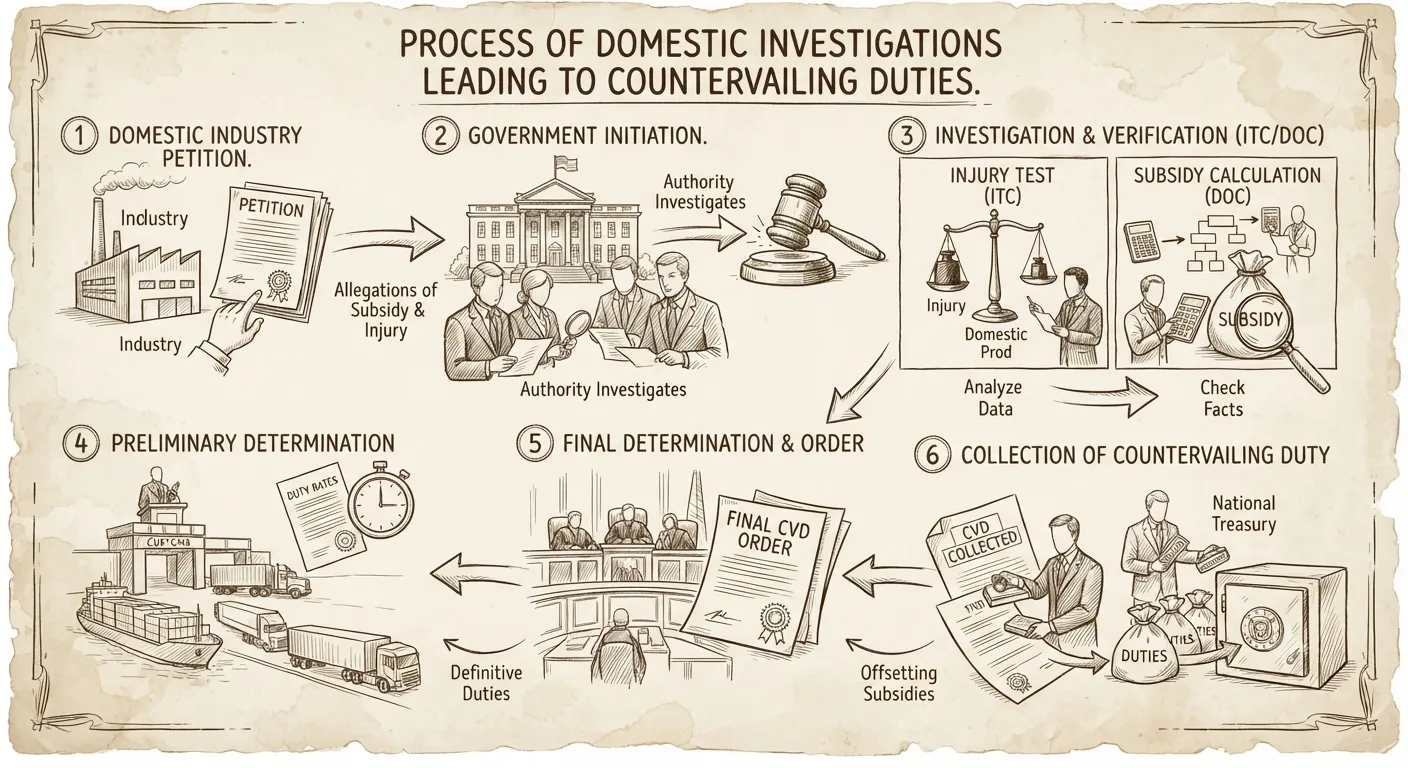
When an economy faces illegal foreign trade advantages, it has two main ways to protect itself: applying countervailing duties at its borders or bringing the dispute to the WTO panel.
- (i) Countervailing Duty: A special border tax applied when domestic industries suffer financial harm, offering quick protection while an investigation takes place.
- (ii) Dispute Settlement: A formal multilateral process for major trade disputes, where an official WTO panel directs the offending country to remove its policy.
- (iii) Investigation Process: Every step must remain transparent and evidence-based, proving that a subsidy exists and directly causes financial harm to local businesses.
Preference for Countervailing Duty
Although countries can use both protective methods, most prefer countervailing duties because they deliver faster protection under local control without international delays.
- (i) Delivers quick, practical protection against subsidized imports right at the port of entry.
- (ii) Avoids the long legal processes and delays of international panels.
- (iii) Keeps decisions within national legal systems where rules are clear and easy to follow.
⚡ Quick Revision Capsule: WTO Subsidy Rules and Defensive Remedies
A quick comparison of subsidy types, legal classifications, and protective measures under WTO rules.
| Subsidy Category / Tool | WTO Classification | Key Features & Exceptions |
|---|---|---|
| Prohibited Subsidies | Strictly Banned | Tied to export performance or domestic content rules; strictly prohibited for standard economies. |
| Permitted Subsidies | Allowed | Broad, non-specific subsidies available to all businesses using neutral criteria like size. |
| Development Exceptions | Special Permission | LDCs and countries with GNP per capita under US$ 1000 may use export assistance. |
| Countervailing Duty (CVD) | Domestic Defense Tool | A border tax applied after showing foreign subsidies caused material injury to local firms. |
| Dispute Settlement Panel | Multilateral Remedy | A formal WTO review process used to resolve trade damage and order the removal of illegal aid. |
📝 Summary
Understanding subsidy regulations under the WTO framework is essential for analyzing how countries balance open trade with domestic growth. By separating illegal trade practices like dumping from general economic aid, these rules help shield local businesses from price manipulation while maintaining steady global supply chains.
🚀 Quick Revision Points
Essential facts to review before examinations:
- (i) Free trade depends on fair competition, meaning products must compete on quality and fair market price rather than state support.
- (ii) The WTO SCM Agreement bans export-linked and import-substitution aid while allowing broad non-specific subsidies.
- (iii) Developing nations with a GNP per capita under US$ 1000 receive specific exceptions to help build their local industrial bases.
- (iv) Countries usually select countervailing duties over WTO litigation because they provide fast, locally managed protection against market harm.
- 💡 Exam Tip: Focus on the difference between specific and non-specific subsidies, along with why countries prefer countervailing duties over WTO dispute settlement for fast relief.
❓ Frequently Asked Questions (FAQ)
Q1: What exactly makes a subsidy "specific" under WTO rules?
A1: A subsidy is specific if it deliberately targets a particular enterprise, industry, or region, rather than being made available to all businesses using neutral criteria.Q2: How do nations legally protect themselves against subsidized foreign imports?
A2: They can launch transparent local investigations to prove economic damage, allowing them to collect targeted countervailing duties at their border, or submit the case to the WTO dispute settlement panel.Q3: Are developing countries forced to follow the exact same subsidy bans as wealthy nations?
A3: Not completely. The WTO provides special provisions allowing Least Developed Countries and developing economies with a GNP per capita under US$ 1000 to keep using export-linked incentives to grow their industries.