People have long wondered how our Solar System came to be. Over the last , scientists created different big ideas, called cosmological models, to explain how planets were born. This guide looks closely at main ideas like Jean and Jeffery’s Tidal Theory, Russel’s Binary Star Hypothesis, Hoyle’s Supernova Hypothesis, and Schmidt’s Interstellar Hypothesis. Understanding these different views is helpful for students learning Cosmology and Physical Geography for school examinations.
🎯 In this chapter, you will understand:
- How scientists explained planetary formation using passing stars and space dust.
- Why planets are arranged by size from small to huge and back to small.
- How binary stars and exploding supernovas helped explain what planets are made of.
- The difference between catastrophic events and gradual gathering of space particles.
💡 Why this topic matters: It helps us understand why planets travel in flat paths around the Sun and why inner planets are rocky while outer planets are gas giants.
🧠 Core Idea: Scientists moved from simple spinning gas cloud ideas to complex interactions between passing stars, explosions, and space dust clouds.
Major Cosmological Theories Explaining Planetary Formation and the Origin of the Solar System (20th Century Hypotheses)
During the , scientists changed how they thought about the origins of the Solar System. They went beyond simple spinning clouds of gas and started looking at pull from passing stars, star collisions, and clouds of dust floating in space. These models tried to give simple, logical reasons for how planets move and why they are made of different things than the Sun.
- (i) These ideas aim to explain why all planets travel in the same flat plane, why they are spaced out at different distances, and why their material makeup is different from the Sun.
- (ii) We can divide these ideas into catastrophic theories (which involve sudden, big cosmic events like collisions) and evolutionary theories (which involve slow, gradual growth over time).
Jean and Jeffery’s Tidal Theory: The Cigar-Shaped Ejection Hypothesis
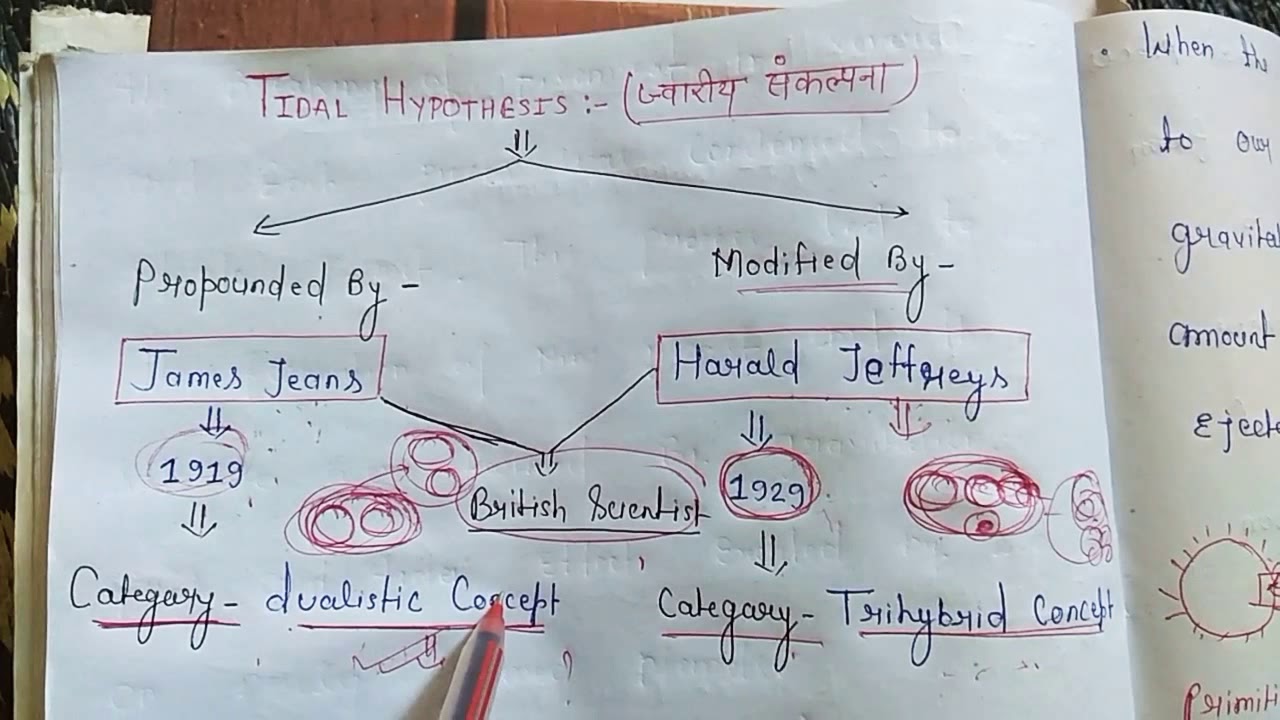
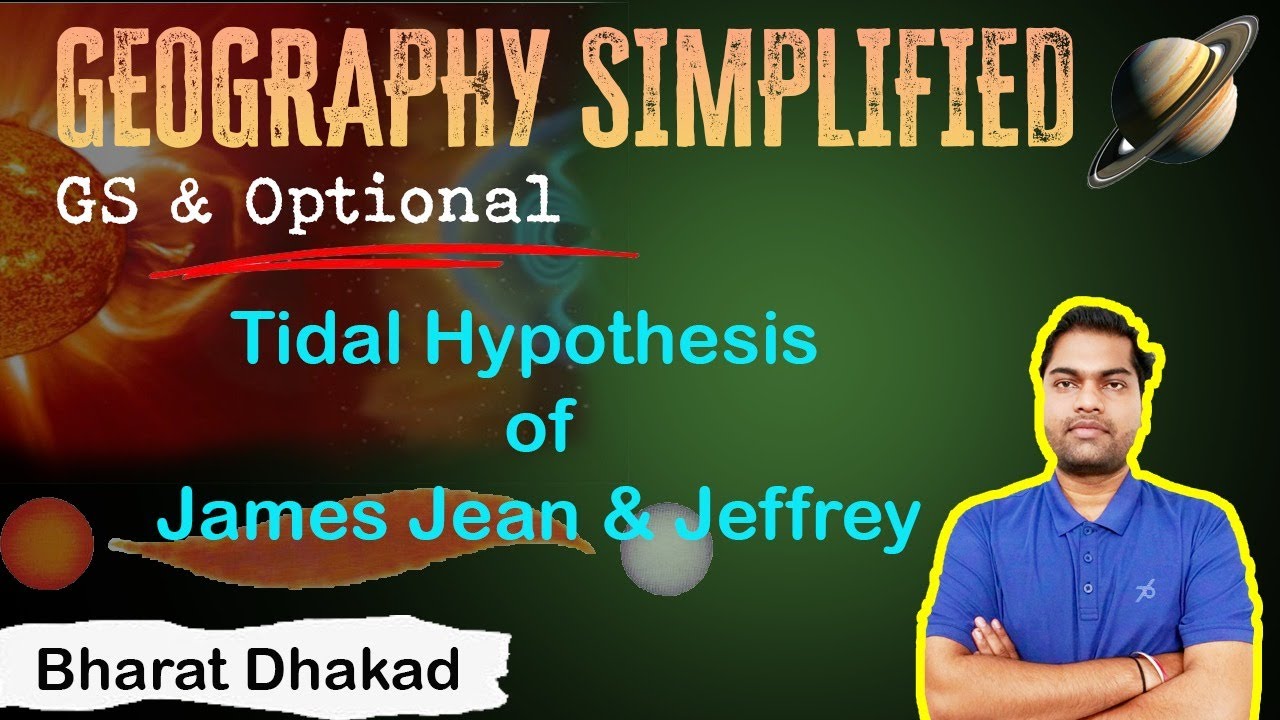
Proposed by Sir James Jeans in and later modified by Harold Jeffreys, the Tidal Theory is a sudden, catastrophic model. It suggests that a giant passing star pulled material out of our Sun using strong gravity, forming the planets.

Comparison with Chamberlin’s Theory and the Hot Proto-Sun Assumption
The Tidal Theory is similar to Chamberlin’s Planetesimal Theory from , but it makes a different guess about how hot the early Sun was.
- (i) Shared Mechanism: Both ideas say a heavy intruding star passed close to our early Proto-Sun and pulled out material using strong gravity (tidal forces).
- (ii) Proto-Sun's State: Chamberlin thought the early Sun was cold, but the Tidal Theory correctly assumed the early Sun was hot and glowing, making it easy to pull out hot gas.
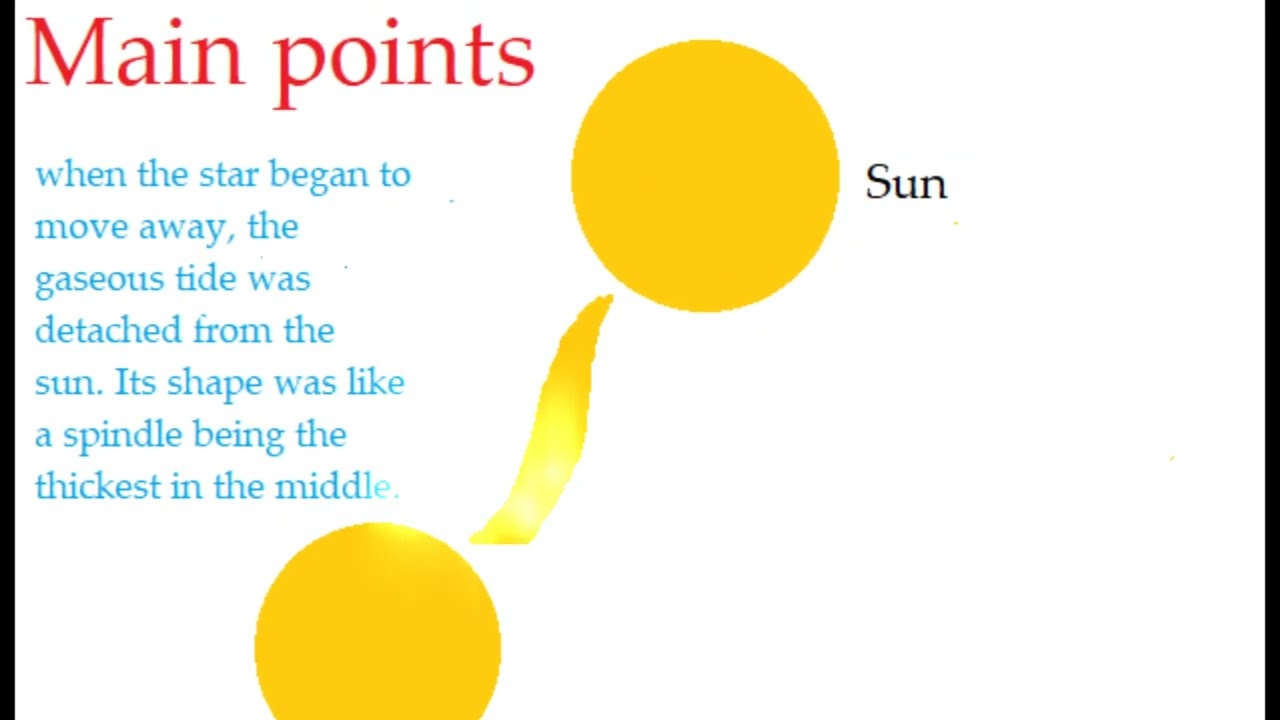
- (iii) Ejected Matter Form: Instead of pulling out loose bits of rocks, the star pulled out one big, hot, cigar-shaped tube of gas called a filament.
The Cigar-Shaped Filament and Explanation of Planetary Sizes
Jeans and Jeffreys said this pulled-out gas shape easily explains why our planets are sized the way they are.
- (a) A cigar shape is thick in the middle and thin at both ends. This means the most material came out in the center.
- (b) Accretion of Planets: As this gas tube cooled down, it broke into pieces. The thick middle part formed huge gas planets like Jupiter and Saturn, while the thin ends formed smaller planets like Earth or Pluto.
- (c) Best Interpretation: Many scientists thought this was a great explanation because it neatly matches the actual pattern of planet sizes seen in space today.
Russel’s Binary Star Hypothesis: Explaining Compositional Differences
Proposed by H.N. Russel in , the Binary Star Hypothesis modified the passing-star idea. He suggested that our Sun used to have a partner star, making it a Binary Star System.
The Role of the Intruding Star in the Binary Star System
This idea explains why planets are made of heavy elements like iron and rock, while the Sun is mostly light gas like hydrogen.
- (i) Initial Setup: Long ago, the early Sun had a closely orbiting companion star, and both spun around a shared center point.
- (ii) Ejection Mechanism: A third intruding star passed by. Instead of pulling gas from the Sun, its strong gravity pulled material away from the partner star.
- (iii) Circulation and Revolution: The pulled-out gas started spinning around our Sun, cooled down, and formed planets.
- (iv) Compositional Fit: This makes it easy to understand why planets have lots of heavy minerals, while the Sun stays lightweight and gaseous.
Hoyle’s Supernova Hypothesis: Formation from a Stellar Explosion
In , Fred Hoyle suggested a much more powerful origin story called the Supernova Hypothesis. He proposed that a nearby companion star blew up in a gigantic explosion.
The Cataclysmic Supernova Event and the Resulting Planetary Disc
An exploding star instantly sprays out huge amounts of heavy elements needed to build solid rocky planets.
- (a) Initial Stars: The system started with our early Sun and a much bigger, close-orbiting giant partner star.
- (b) Supernova Event: The giant partner star ran out of fuel, became unstable, and exploded violently as a supernova.
- (c) Debris Disc: The explosion threw out huge clouds of dust and gas. The Sun's gravity caught this material, creating a giant spinning disc around the Sun.
- (d) Planetary Building: Over time, the material in this spinning disc stuck together to build planets, leaving our Sun at the center.
Schmidt’s Interstellar Hypothesis: Accretion from Interstellar Dust
In , Otto Schmidt proposed the Interstellar Hypothesis. He moved away from star collisions and suggested that planets formed from space dust that the Sun picked up while traveling through the galaxy.
Capture of Interstellar Dust and the Accretionary Process
This theory explains how the Sun gathered tiny particles scattered across space and slowly clumped them into full-sized planets.
The Sun captures interstellar dust clouds which slowly clump together into planets. - (i) Initial Universe: Schmidt believed space was filled with scattered material called Inter-Stellar Dusts (dark matter and gas).
- (ii) Gravitational Capture: As our spinning Sun moved through space, its gravity pulled in this floating space dust, which began orbiting the Sun.
- (iii) Accretion and Condensation: Tiny dust specks bumped into each other, stuck together, and grew into larger rocks and planets through a process called accretion.
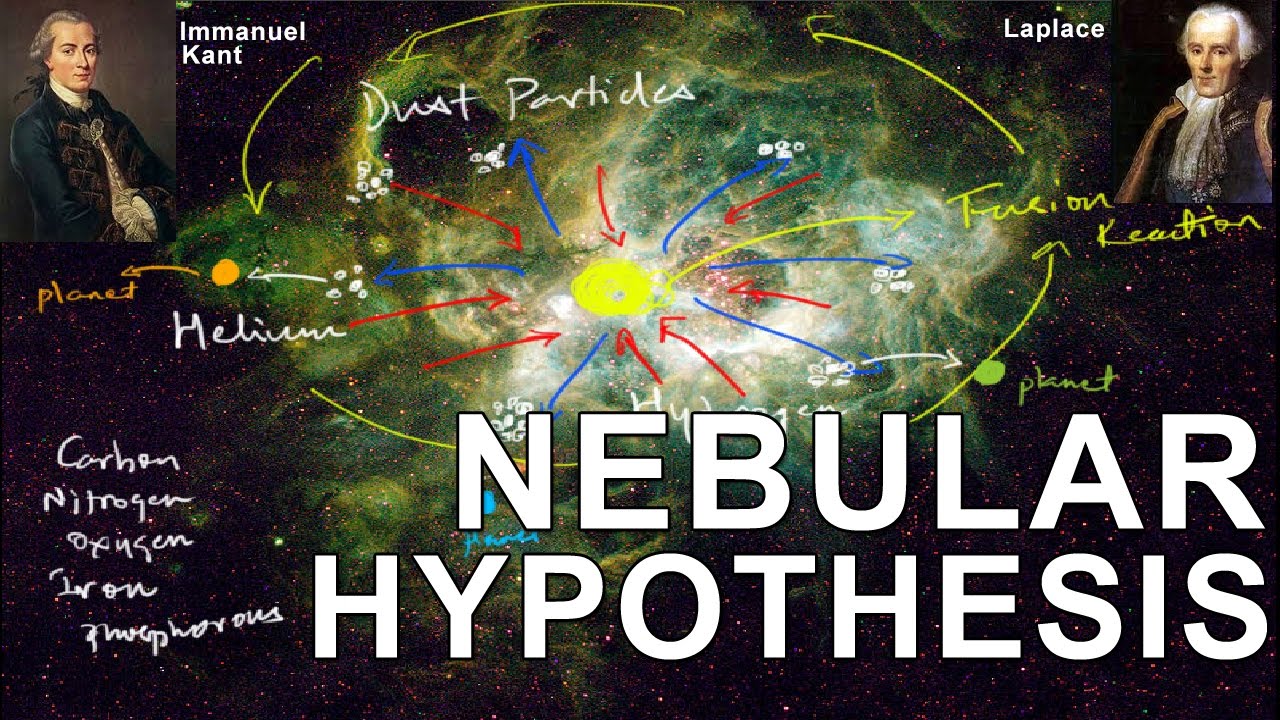
- (iv) Link to Earlier Theories: This theory is important because it helped connect older ideas from Immanuel Kant and P.S. Laplace with modern facts about space dust.
⚡ Quick Revision Capsule: Summary of Cosmological Theories
Here is a quick side-by-side comparison of the major 20th-century theories on how our solar system was made.
| Theory Name | Proposed By & Year | Main Idea / Mechanism |
|---|---|---|
| Tidal Theory | Sir James Jeans () & Harold Jeffreys | A passing star pulled a cigar-shaped tube of hot gas out of the Sun, which cooled into planets. |
| Binary Star Hypothesis | H.N. Russel () | A passing star pulled heavy matter from the Sun's companion star, explaining planet contents. |
| Supernova Hypothesis | Fred Hoyle () | A giant partner star exploded as a supernova, creating a dust ring that turned into planets. |
| Interstellar Hypothesis | Otto Schmidt () | The moving Sun caught floating Inter-Stellar Dusts, which clumped together through accretion. |
📝 Summary
The journey from sudden events like Jean and Jeffery’s Tidal Theory to gradual dust clumping in Schmidt’s Interstellar Hypothesis shows how scientific thinking about the origins of the Solar System improved over . Each theory tried to solve key puzzles, such as why big planets are in the middle or why planets have heavy metals while the Sun is made of light gas. Learning these key differences helps students build a strong base in Cosmology and do well in competitive examinations.
🚀 Quick Revision Points
Essential facts to review before examinations:
- (i) Catastrophic theories involve big outer space events, while evolutionary theories involve slow growth.
- (ii) The cigar-shaped gas tube in the Tidal Theory explains why Jupiter and Saturn are so big compared to inner planets.
- (iii) The Binary Star and Supernova theories explain why planets contain heavy minerals while the Sun is light gas.
- (iv) Otto Schmidt introduced the idea of the Sun catching scattered Inter-Stellar Dusts through gravity.
- 💡 Exam Tip: When writing exam answers, clearly name whether a theory relies on a passing star, a partner star explosion, or space dust accretion!
❓ Frequently Asked Questions (FAQ)
Q1: What is the main difference between catastrophic and evolutionary theories?
A1: Catastrophic theories rely on sudden, violent cosmic events like passing stars or explosions. Evolutionary theories suggest planets formed slowly through natural clumping of gas and dust over long periods.Q2: Why is the cigar shape important in Jeans and Jeffery’s Tidal Theory?
A2: The cigar shape was thick in the middle and thin at the ends, which explains why massive planets like Jupiter and Saturn formed in the middle while smaller planets formed on the outer edges.Q3: How did Hoyle’s Supernova Hypothesis explain heavy elements on Earth?
A3: Hoyle suggested a giant partner star exploded as a supernova, scattering heavy metals and dust into a spinning disc around the Sun, which later clumped into rocky planets.