India’s early interaction with its neighbors across Central and Southeast Asia stands as one of the most remarkable chapters in world history. Through a blend of sea trade, overland routes, and spiritual outreach, Indian culture moved far beyond the subcontinent without military conquest. Merchants, monks, and scholars carried religious beliefs, artistic motifs, and legal traditions into distant lands. Over time, kingdoms in Central Asia, Java, Sumatra, Cambodia, and beyond embraced these ideas, adapting them to create unique local cultures. Understanding these connections helps us appreciate how deeply interconnected ancient Asia was and how shared traditions shaped the region’s art, literature, and governance for centuries.
In this chapter, you will understand:
- How ancient trade routes facilitated early cultural exchange.
- The role of Buddhist missions and imperial patronage across Asia.
- The journey and contributions of Chinese pilgrims like Fa-Hien and Hiuen Tsang.
- The emergence of Indianized kingdoms in Maritime Southeast Asia.
Why this topic matters: This subject highlights the peaceful diffusion of religion, art, and language across ancient Asian networks. It forms an essential topic for history exams and provides key context for modern diplomatic and cultural links across Pan-Asian nations.
Core Idea: Ancient India established long-lasting cultural, commercial, and religious connections with Central and Southeast Asia. Driven primarily by trade networks, Buddhist and Brahmanical missions, and royal patronage, Indian philosophy, Sanskrit literature, and artistic styles deeply influenced Asian kingdoms while being thoughtfully integrated into local traditions.
India’s Enduring Cultural Impact on Central and Southeast Asia: A Historical Narrative of Trade, Religion, and Civilizational Diffusion
Long before modern borders existed, active commercial and spiritual channels tied India to wider Asia. These interactions established a shared foundation of artistic, philosophical, and social traditions that lasted for generations.
Foundations of Pan-Asian Contacts
India successfully built wide-reaching cultural contacts with neighbors across Central and Southeast Asia through steady trade, missionary work, and shared knowledge systems.
- Earliest recorded exchanges date back to ancient maritime and land channels, enabling a steady exchange of goods and ideas.
Religious Conduits for Civilizational Diffusion
Spiritual movements served as the strongest pathways for cultural interaction across vast geographic distances.
- Trade networks with ancient regions like Mesopotamia laid the groundwork for maritime contacts.
- Religious outreach, especially through Buddhism and Brahmanism, spread core philosophical ideas.
- Artistic and linguistic forms adapted into local customs, shaping the development of early Southeast Asian kingdoms.
- Scientific and technical knowledge moved alongside traders, influencing metalworking, astronomy, and architecture.
Early Cultural Contacts and Commercial Corridors: The Genesis of Pan-Asian Interaction
Merchant communities and travel routes formed the primary pipeline for early contacts. As traders moved across land and sea, they brought along stories, texts, and customs that caught the interest of local populations.
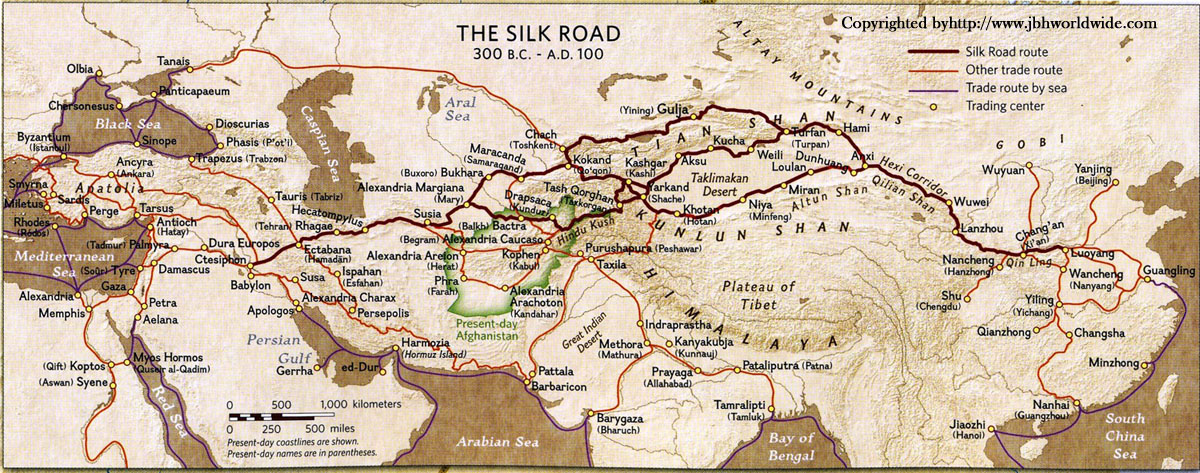
- The movement of goods was naturally accompanied by the exchange of languages, craftsmanship, and social customs.
Forging Early Cultural Linkages and the Vital Flow of Trade, Goods, and Ideas
From early urban centers to sprawling silk networks, Indian traders helped establish enduring routes across the continent.
- Archaeological finds of Harappan seals in West Asia prove that trade dates as far back as during the Indus Valley Civilization.
- The Chinese Silk Route served as a crucial network connecting China, India, Southeast Asia, and the Roman Empire.
- Royal missions dispatched during the reign of Emperor Ashoka in the helped spread Buddhist thought and Dhamma to Sri Lanka and Burma.
- Merchant guilds established trading outposts along coastline ports, serving as early points of cultural dialogue.
The Spread of Buddhism Across Asia: Role of Imperial Patrons and Devoted Chinese Pilgrims
Buddhism acted as a unifying bridge across Asia. Supported by powerful monarchs and carried by brave travelers, Buddhist teachings transformed art, literature, and learning centers from Afghanistan to China.
- Monasteries along major trade stops offered shelter to travelers while functioning as vibrant places of learning and translation.
The Era of Kanishka and Buddhism’s Great Expansion into Central Asia
Under the patronage of ruler Kanishka of the Kushan Dynasty, Buddhism reached far into Central Asia, China, and regions of modern Afghanistan.
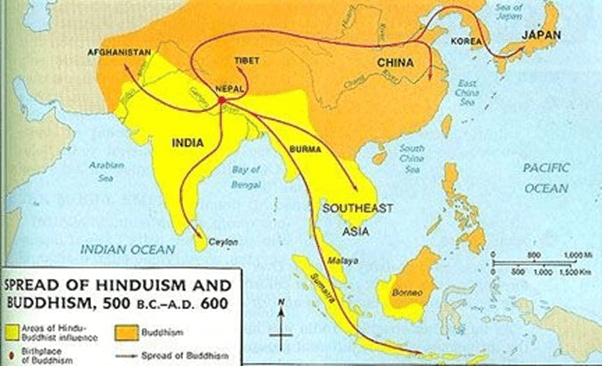
Map showing the spread of Hinduism and Buddhism alongside key historical timelines. - Famous Chinese pilgrims like Fa-Hien (who traveled between ) and Hiuen Tsang (who visited during ) made long, dangerous trips to collect original manuscripts.
- Oasis towns such as Tun Huang emerged as major hubs where monks translated texts and developed unique styles of Buddhist art.
- In turn, ideas like silk cultivation techniques traveled into India, reflecting a rich two-way cultural exchange.
Quick Revision Capsule: Key Channels of Cultural Contact
This table summarizes the main regions, primary routes, and major cultural contributions exchanged throughout ancient history:
| Region | Primary Route & Era | Core Cultural Contributions |
|---|---|---|
| West Asia & Mesopotamia | Overland & Maritime () | Commercial trade, weight standards, Harappan seals. |
| Central Asia & China | Overland Silk Route () | Spread of Buddhism, translation of manuscripts, Buddhist art at Tun Huang. |
| Sri Lanka & Burma | Maritime & Coastal Routes ( onwards) | Monastic outreach, Dhamma principles, Theravada Buddhist literature. |
| Maritime Southeast Asia (Indonesia/Java) | Sea Lanes () | Naval power of the Sri Vijaya kingdom, Sanskrit language adoption, temple design. |
| Indochina (Cambodia/Vietnam) | Maritime Trade Outposts () | Brahmanical and Hindu rituals, epics like Ramayana, statecraft principles. |
Summary
India’s cultural interaction with Central and Southeast Asia left a lasting mark on world history. Moving along land and sea trade corridors, traders, scholars, and religious figures shared philosophies, scripts, and architectural styles. Rather than imposing these customs by force, host regions welcomed and adapted them into their own cultures. From the artwork of Tun Huang along the Silk Route to the impressive temples of Java and Cambodia, these historical connections reflect a rich tradition of shared Asian heritage.
Quick Revision Points
Essential takeaways to review before examinations:
- (i) Early trade links are supported by archaeological finds of Harappan seals in ancient West Asian sites.
- (ii) The Chinese Silk Route served as a primary pathway for passing both physical goods and spiritual ideas.
- (iii) Imperial patrons like Ashoka and Kanishka were central to expanding Buddhist influence across Asia.
- (iv) Kingdoms in Southeast Asia, such as the Sri Vijaya kingdom, adopted Sanskrit, Hindu rituals, and Buddhist philosophy into local governance.
- Exam Tip: Remember that Indian cultural contact with Southeast Asia was peaceful and driven by trade and religion, not military conquest. Be ready to mention specific foreign pilgrims like Fa-Hien and Hiuen Tsang, as well as maritime centers like Sri Vijaya, when answering essay questions.
Frequently Asked Questions (FAQ)
Q1: How did trade routes help spread Indian culture to other parts of Asia?
A1: Trade routes provided safe passage and resources for merchants, monks, and scholars. As goods were traded along the Silk Route and sea lanes, travelers shared religious texts, languages, and artistic styles, which local rulers across Asia often adopted.Q2: What role did Chinese pilgrims play in preserving Indian Buddhist texts?
A2: Pilgrims like Fa-Hien and Hiuen Tsang traveled to India specifically to study at famous centers of learning and collect original Sanskrit scriptures. They translated these works upon returning to China, helping preserve important Buddhist literature for centuries.Q3: What does the term "Indianized kingdoms" mean in Southeast Asian history?
A3: It refers to ancient Southeast Asian states—like Sri Vijaya or Funan—that adopted Indian legal codes, political ideas, Sanskrit terminology, and religious traditions (Hinduism and Buddhism), blending them with their own native cultures.