The Indo-Parthian Empire was a major political power in ancient South Asia that emerged during the under its founding ruler, Gondophares I. Extending across critical territories from Taxila to the strategic Kabul valley, this kingdom played a key role in shaping regional trade, governance, and artistic traditions. Understanding the dynamics of this kingdom helps bridge the historical gap between the earlier Parthian and Indo-Scythian periods and the subsequent rise of the Kushan Dynasty, making it an essential subject for students of ancient Indian history.
In this chapter, you will understand:
- The origins and territorial expansion of the Gondopharid Dynasty
- The reign and political impact of Gondophares I
- Key archaeological evidence, coinages, and inscriptions from Taxila and Takht-i-Bahi
- Religious practices, Silk Road trade networks, and early Gandharan artistic developments
Why this topic matters: It explains how Central Asian and Iranian populations influenced northwestern Indian administration, trade routes, and early Greco-Buddhist visual art prior to the Kushan era.
Core Idea: Founded by Gondophares I in the late , the Indo-Parthian realm united key commercial centers in northwestern South Asia. The empire fostered a unique blend of Iranian, Hellenistic, and Indian cultural elements while acting as a critical trading hub on the Silk Road.
The Indo-Parthian Empire: Origins and Geopolitical Rise
The establishment of the Indo-Parthian kingdom, commonly referred to as the Gondopharid dynasty, marked the eastward push of Parthian influence into northwestern India. Initially centered at the ancient city of Taxila, the administration shifted its primary seats of power between Kabul and Peshawar over time. This strategic positioning turned the kingdom into a major trade hub connecting Central Asia, Iran, and the Indian subcontinent.
Roots and Territorial Independence
The origin and emergence of the Indo-Parthians stemmed from tribal movements in Central Asia that eventually formed an independent kingdom in northwestern South Asia.
- The original Parthians developed from the Parni, a Central Asian tribe that overthrew the Greek-led Seleucid Empire and became a major power rivaling Rome in the West.
Establishment of Independent Subcontinental Rule
The Indo-Parthians broke away as an independent branch during the late , establishing direct control over key territories in the subcontinent.
- Independent rule formally began in the late across northwestern South Asia.
- Shifting capitals like Taxila, Kabul, and Peshawar allowed the rulers to control vital commercial mountain passes.
- The empire effectively linked land-based Indian commerce directly with Iranian and Eurasian trade routes.
- Administrative shifts helped maintain regional security against rival nomadic groups.
Gondophares I and Political Expansion
Gondophares I systematically secured control over territories formerly held by the Indo-Scythians. This consolidation established a stable foundation for the Indo-Parthian realm and altered the political landscape of the region.
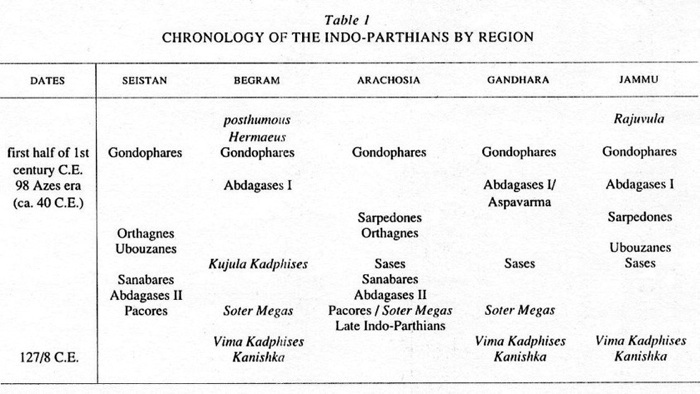
- Territorial expansion picked up momentum around following the decline of the Indo-Scythian monarch Azes.
Territorial Boundaries and Successors
At its peak, the empire spanned Arachosia (Kandahar), Seistan, Sindh, the Punjab, and the Kabul valley.
- Later rulers such as Sarpedones (Gondophares II) and Orthagnes (Gondophares III) managed smaller territories with less overall influence.
- By the mid-, the rising Kushan Empire gradually annexed these northern regions, leading to the empire's decline.
- Historical maps and coins help map the geographic extent and lineage of these rulers.
- The coin distribution highlights trade connections that stretched down to the Arabian Sea coastline.
Archaeology, Religion, and Cultural Syncretism
The Indo-Parthians left a clear imprint on regional archaeology, religious practices, and architectural traditions, fostering a distinct blend of foreign and local elements.
- Excavations at Taxila and the nearby Jandial Temple reveal strong architectural connections to Iranian Zoroastrianism.
Archaeological Evidence and Epigraphy
External records and local stone inscriptions help reconstruct the timeline and historical impact of the dynasty.
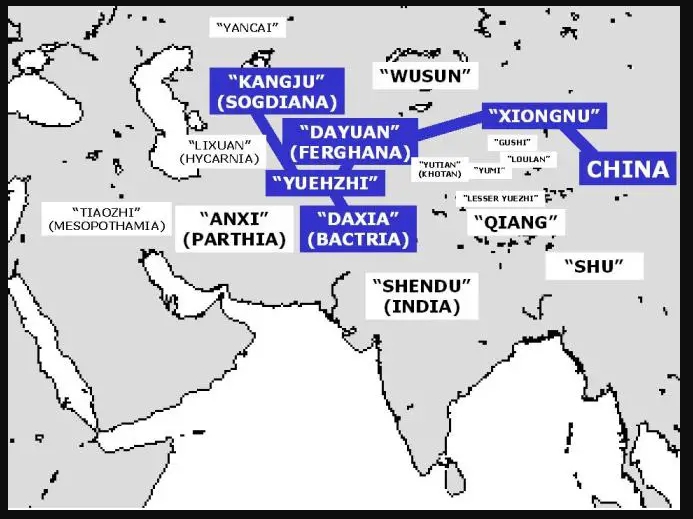
Zhang Qian's Map of Central Asia: Sima Qian - The ancient merchant handbook Periplus of the Erythraean Sea notes internal political rivalries among Parthian chieftains in Sindh.
- The stone inscription found at Takht-i-Bahi records the 26th regnal year of Gondophares I, helping date his rule to roughly .
- Successive kings like Abdagases I, Gondophares IV Sases, Ubouzanes, and Pacores are recorded through localized coin finds.
- Travel accounts compiled by the Chinese envoy Zhang Qian (recorded by historian Sima Qian in the Shiji) provide important context on Central Asian trade connections.
Indo-Parthian Dynasty Overview
A quick summary of key historical details concerning the Indo-Parthian Empire:
| Aspect | Details & Characteristics | Historical Significance |
|---|---|---|
| Founder | Gondophares I () | Established an independent kingdom away from main Parthian rule. |
| Key Capitals | Taxila, Kabul, and Peshawar | Secured trade nodes along Silk Road overland routes. |
| Religious Practice | Zoroastrianism, local Indian cults, and Shiva coin representations | Demonstrated religious tolerance and cultural synthesis. |
| Key Inscription | Takht-i-Bahi Inscription | Helps fix the chronology of Gondophares' reign. |
| Artistic Style | Early Gandharan art and Sirkap stone palettes | Blended Hellenistic, Persian, and early Buddhist aesthetics. |
Religious Traits and Early Gandharan Art
Unlike the strong Buddhist patronage of the earlier Indo-Greeks, official Indo-Parthian records show a preference for Iranian traditions alongside local Indian cults.
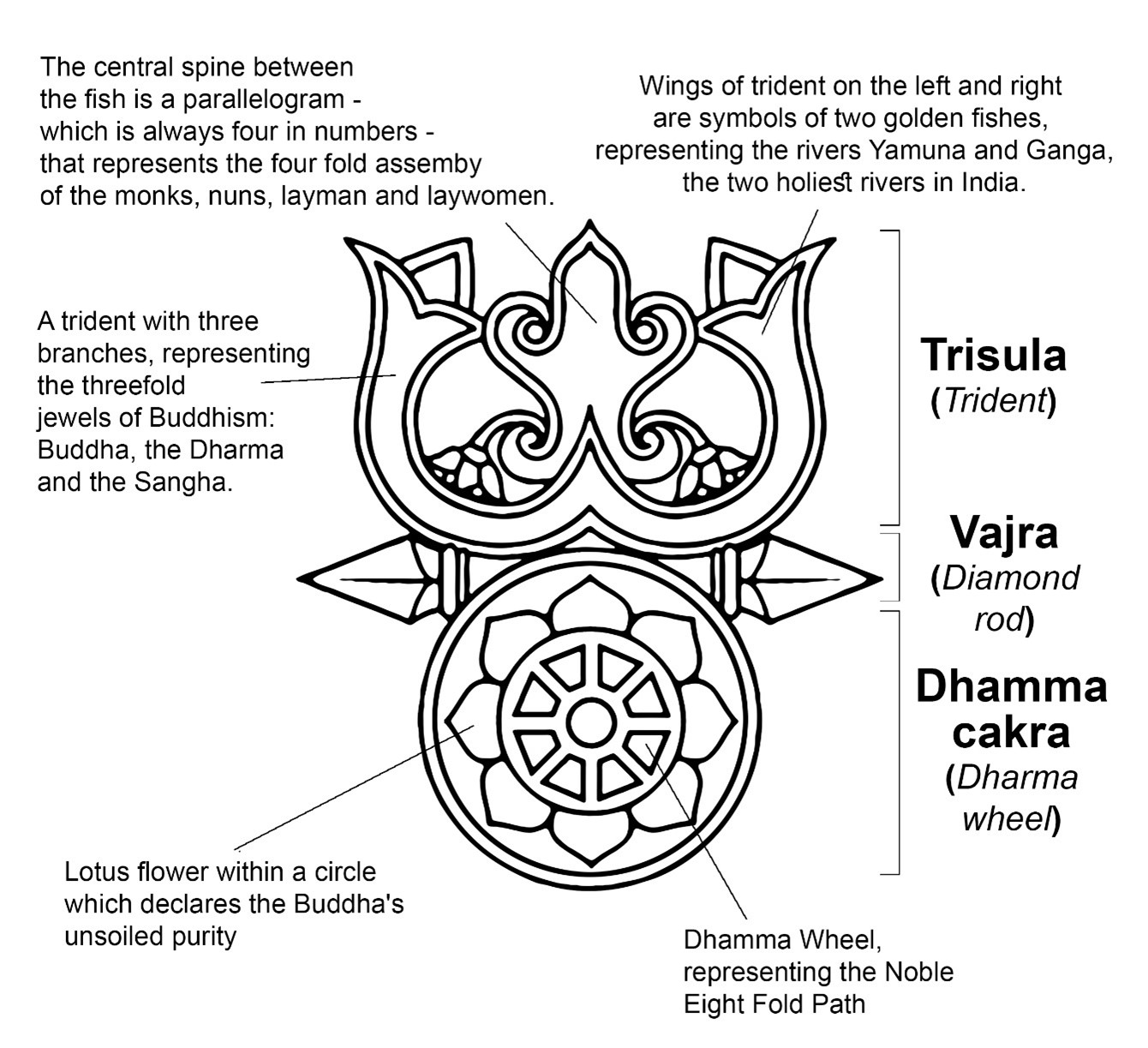
Coin imagery points to lingering adherence to Zoroastrianism, while select coins issued by Gondophares I feature the deity Shiva, reflecting practical local tolerance.
Architectural and Artistic Legacy
The Indo-Parthian period played a formative role in developing the early Gandhara art style, combining Greek, Persian, and Indian visual traditions.

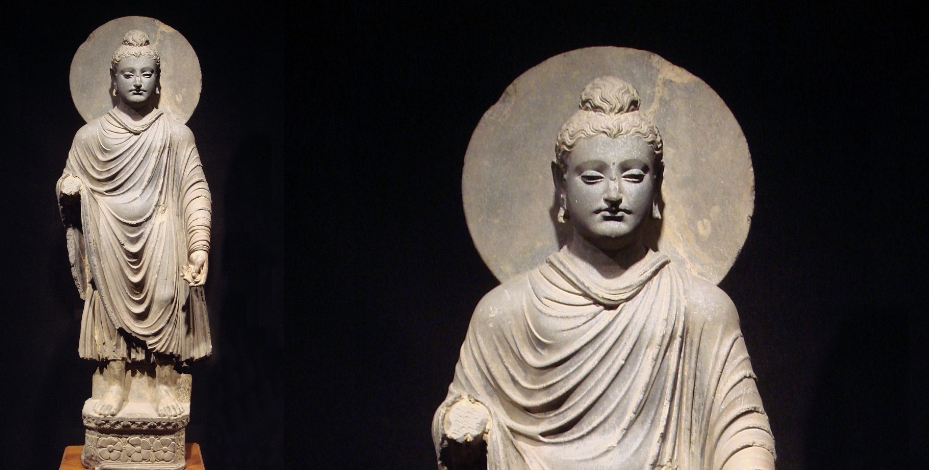
- Sculptures uncovered at Sirkap dated to display early Greco-Buddhist craftsmanship.
- Carved stone toilet trays (palettes) reflect fused Greek, Persian, and Parthian artistic themes.
- Early stone carvings from this era helped shape the initial visual depictions of the Buddha and Bodhisattvas before the Kushan period.
Silk Road Trade and Economic Role
Positioned along major international trade corridors, the Indo-Parthians acted as vital middlemen on the Silk Road, enabling commerce between India, China, and the Roman world.
Summary
The Indo-Parthian Empire under Gondophares I was a key regional power during the . By controlling important trade passages across northwestern South Asia, the empire facilitated cross-cultural exchanges among Iranian, Greek, and Indian populations. Its legacy remains visible through distinct coin types, early Gandharan artwork, and crucial inscriptions like Takht-i-Bahi.
Quick Revision Points
Key facts to remember for exam preparation:
- (i) Founded by Gondophares I in the late , with major centers at Taxila, Kabul, and Peshawar.
- (ii) The Takht-i-Bahi inscription provides essential chronological details regarding the reign of Gondophares I ().
- (iii) Religion was characterized by Zoroastrian roots, tolerance for Indian cults (including coins depicting Shiva), and evolving regional Buddhist art.
- (iv) The empire served as a Silk Road trade link before being absorbed by the expanding Kushan Empire in the mid-.
- Exam Tip: Focus on the Takht-i-Bahi inscription, the location of Jandial Temple at Taxila, and how Indo-Parthian coinage reflects cultural syncretism between Zoroastrianism and local Indian traditions.
Frequently Asked Questions (FAQ)
Q1: Who was the founder of the Indo-Parthian Empire?
A1: The empire was founded by Gondophares I in the late after breaking away from main Parthian rule.Q2: What is the historical importance of the Takht-i-Bahi inscription?
A2: The Takht-i-Bahi inscription dates the 26th regnal year of Gondophares I, establishing his rule around and offering a firm chronological baseline for the era.Q3: How did the Indo-Parthian Empire come to an end?
A3: By the middle of the , the rising Kushan Empire expanded southward into northern India, absorbing Indo-Parthian territories.