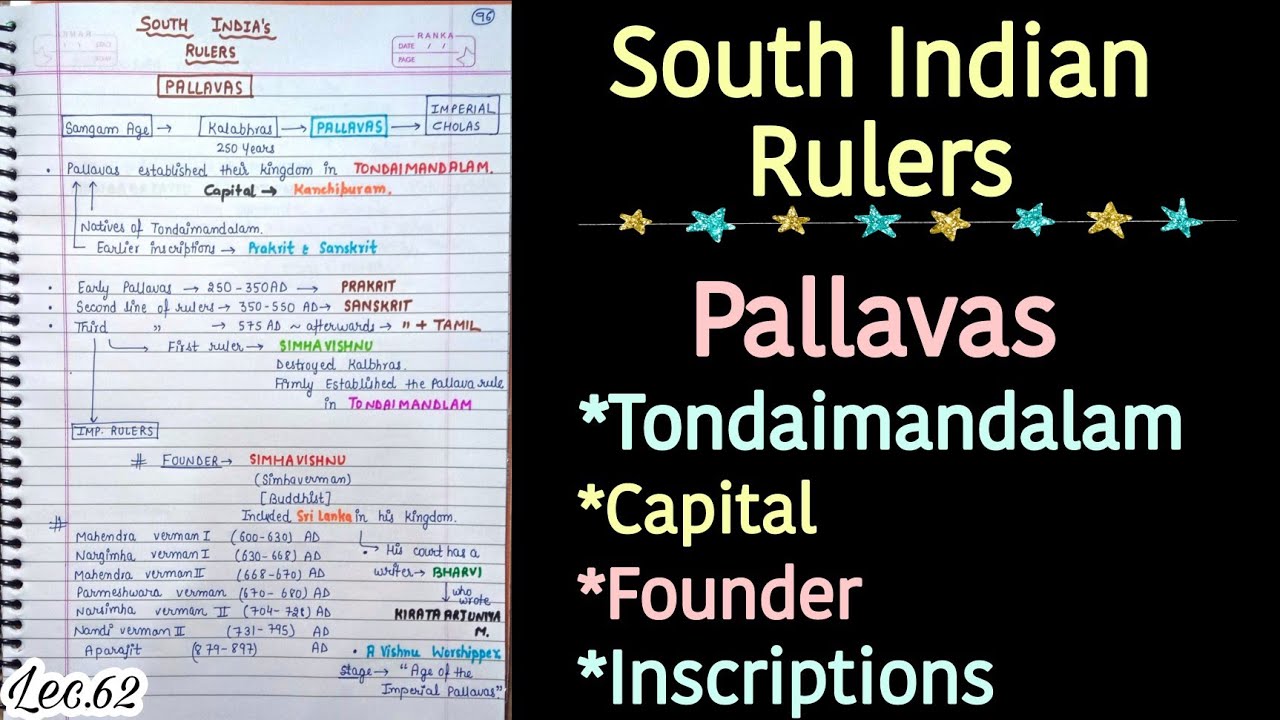
Between the , the Pallava dynasty presided over a transformative era across the Tamil region. This historical epoch saw the consolidation of structured social hierarchies alongside a massive resurgence in public devotion through the Bhakti movement. Royal patronage opened new pathways for temple administration, literary output in multiple languages, and advanced institutional education. Kanchi emerged as an intellectual focal point, attracting scholars across South and Central Asia. For students and history enthusiasts, understanding these social, religious, and academic shifts provides essential background for analyzing the medieval transition of South India.
In this chapter, you will understand:
- The structural changes in social stratification and Brahminical land grants during the Pallava period.
- The role of Kanchi and its prestigious Ghatika as premier regional and international study centers.
- The parallel growth of Sanskrit court literature and Tamil devotional Bhakti poetry.
- The co-existence and educational contributions of Hindu, Buddhist, and Jain monastic institutions.
Why this topic matters: This period defined the core features of classical South Indian culture, including temple-centered learning, land-grant administration, and vibrant devotional poetry that still influences Indian literature today.
Core Idea: Under the Pallavas, South India experienced social restructuring alongside an intellectual and religious boom. Land grants supported a rising scholarly elite, while royal centers like Kanchi nurtured multi-lingual literature, rigorous Vedic institutions, and prominent regional arts.
Profound Social and Religious Changes under Pallava Rule: Caste, Bhakti, and Education (c. 4th–9th Centuries CE)
The rise of Pallava power brought lasting structural changes to everyday social organization and institutional religious practice in the Tamil country.
Social Hierarchy and the Expansion of Land Grants
During this period, societal roles became systematically defined, establishing patterns that influenced regional governance for centuries.
- (i) Social stratifications became firmly codified, marking a distinct transition from the fluid social arrangements of earlier centuries.
- (ii) Members of the priestly class, the Brahmins, gained prominent standing in society and enjoyed direct access to royal courts.
- (iii) Pallava rulers regularly issued tax-free land grants, known as Brahmadeyas, which provided sustainable revenues for temple maintenance, ritual duties, and community education.
Education, Patronage, and Literary Developments under the Pallavas
Royal support turned the capital city of Kanchi into a renowned center for higher studies, drawing thinkers and students from across the subcontinent.
Kanchi: Center of Learning and International Scholars
Kanchi developed a solid reputation for intellectual openness, maintaining academic facilities for diverse philosophical schools.
- (i) The primary academy, the Ghatika of Kanchi, attracted students seeking advanced instruction from distant regions and neighboring kingdoms.
- (ii) Scholars like Mayurasarman, founder of the Kadamba dynasty, came to Kanchi specifically to master Vedic literature and grammar.
- (iii) The influential Buddhist logician Dinnaga spent considerable time studying in Kanchi, contributing to its lively tradition of debate.
- (iv) Academic records note that Dharmapala, who later served as the head of the famed Nalanda University, was originally a scholar from Kanchi.
Sanskrit Literature: Court Patronage and Royal Plays
Pallava royal courts regularly hosted celebrated poets and writers, generating notable classical Sanskrit compositions.
- (a) The distinguished poet Bharavi, creator of the epic Kiratarjuniya, composed his works under the patronage of King Simhavishnu.
- (b) Dandin, the celebrated author of Dasakumaracharita, served as a leading literary figure in the court of Narasimhavarman II.
- (c) Demonstrating royal literary interest, King Mahendravarman I authored the famous satirical play Mattavilasaprahasanam.
Tamil Literature: Bhakti Hymns and Epic Translation
Alongside Sanskrit court poetry, vernacular Tamil literature flourished through expressive devotional movements.
- (i) Devotional poets known as Nayanmars (Shaivite saints) and Alwars (Vaishnavite saints) composed thousands of emotional hymns in vernacular Tamil.
- (ii) The compiled Shaivite hymns in the Devaram and Vaishnavite verses in the Nalayira Divya Prabandham formed the core foundation of Tamil religious literature.
- (iii) Translation of classical epics advanced as well; Perundevanar, patronized by King Nandivarman II, rendered the epic Mahabharata into Tamil verse as Bharathavenba.
- (iv) The anonymous historical narrative poem Nandikkalambagam offers valuable insights into royal life during this era.
Performing Arts: Music and Dance
The era witnessed rapid developments in fine arts, which were closely integrated into daily temple life.
- (a) Music and dance received generous royal subsidies, with performance spaces built directly into monumental temple complexes.
Literature Centers: A Renaissance in Sacred Works
A widespread devotional movement altered the cultural layout of South India, driving creative expression across multiple regional languages.

Devotional Renaissance and Linguistic Patronage
Saints and poets traveled through towns and villages, spreading devotional ideas through easily understood local language verse.
- (i) Wandering spiritual leaders composed and recited publicly accessible hymns that formed the basis of popular regional religious practice.
- (ii) Literature dedicated to Shaiva and Vaishnava traditions was systematically collected and organized during this transformative phase.
- (iii) The Tamil language expanded its literary scope alongside traditional Sanskrit studies, enriching regional culture.
- (iv) Pallava monarchs displayed broad patronage across multiple languages, funding initiatives in Prakrit, Sanskrit, and Tamil.
Kanchi: Hub of Sanskrit Knowledge and Global Scholars
As a prominent scholarly city, Kanchi maintained debate halls and academies that drew thinkers from across Asia.
The educational institutions of ancient Kanchi functioned alongside major temple complexes as places for study and debate. - (a) Scholars frequented the assemblies of Kanchi to engage in structured philosophical debates and text analyses.
- (b) Eminent figures including the logician Vatsyayana, Dinnaga, and Mayurasarman spent years refining their scholarly work in Kanchi.
- (c) Academic training received in Kanchi carried high prestige, helping native scholars like Dharmapala achieve leadership roles at global learning hubs like Nalanda.
The Ghatika: Premier College at Kanchi and Curriculum
The academic standing of the Pallava capital was recorded by foreign observers, including the celebrated Chinese traveler (Hiuen Tsang), who visited the region during the .
Ghatika: The Academic Institution and Sanskrit Focus
The Ghatika operated as the primary institute of higher studies, offering structured training to scholars, administrative personnel, and visiting royalty.
- (i) Princes and nobles from neighboring regions enrolled in the Ghatika at Kanchi to study advanced administrative and philosophical subjects.
- (ii) Instruction focused primarily on advanced Sanskrit literature, legal treatises, grammar, and traditional philosophical texts like the Upanishads.
- (iii) Travel logs written by Yuan Chwang provide firsthand verification of Kanchi's rich academic atmosphere and high educational standards.
Other Sanskrit Colleges Patronized by Pallavas
The network of higher learning extended beyond the capital city to regional academic centers throughout the state.
- (a) Pallava administrators established and maintained secondary higher education academies at strategic centers like Kaveripakkam and Bahur.
Quick Revision Capsule: Pallava Culture & Literature
The following table summarizes the primary educational centers, literary works, and major personalities of the Pallava era:
| Domain | Key Features / Works | Historical Significance |
|---|---|---|
| Primary Academy | Ghatika at Kanchi | Premier higher education institution for advanced Sanskrit, Vedic, and philosophical studies. |
| Sanskrit Literature | Kiratarjuniya (Bharavi), Dasakumaracharita (Dandin), Mattavilasaprahasanam (Mahendravarman I) | High point of courtly Sanskrit poetry and satire supported directly by Pallava kings. |
| Tamil Devotional Literature | Devaram (Nayanmars), Nalayira Divya Prabandham (Alwars) | Foundation of the Bhakti movement, popularizing emotional vernacular poetry. |
| Tamil Secular Works | Bharathavenba (Perundevanar), Nandikkalambagam | Translation of classical epics and courtly poems into regional Tamil verse. |
| Diverse Academies | Kaveripakkam, Bahur, Buddhist Monasteries, Jain Mathas | Decentralized educational network providing multi-faith instruction across the realm. |
Summary
The Pallava period () formed a crucial turning point in South Indian history. It marked the establishment of organized land-grant systems through Brahmadeyas and saw the rapid rise of popular devotion through the Bhakti movement. Through strong royal patronage, institutions like the Ghatika at Kanchi became internationally renowned centers for higher studies in Sanskrit, philosophy, and logic. At the same time, the expressive Tamil devotional hymns of the Nayanmars and Alwars created a lasting cultural foundation. This unique combination of advanced scholarship, multilingual literature, and architectural evolution continues to make the Pallava era an important area of historical study.
Quick Revision Notes
Essential facts to review before examinations:
- (i) The Ghatika at Kanchi was the most prestigious college for advanced learning in the Pallava kingdom.
- (ii) King Mahendravarman I authored the celebrated Sanskrit satirical play Mattavilasaprahasanam.
- (iii) The Nayanmars (Shaivite) and Alwars (Vaishnavite) spearheaded the Tamil Bhakti movement through popular devotional poetry.
- (iv) Brahmadeya land grants helped establish self-sustaining scholarly communities and temple centers across South India.
- Exam Tip: When answering questions about Pallava administration and culture, emphasize the dual importance of royal Sanskrit court literature alongside the popular Tamil Bhakti movement, highlighting Kanchi's role as an international hub for education.
Frequently Asked Questions (FAQ)
Q1: What was the main function of the Ghatika at Kanchi during the Pallava period?
A1: The Ghatika was an elite educational institution and college in Kanchi that specialized in advanced Sanskrit studies, Vedic literature, grammar, and philosophical logic, attracting scholars and royal students from across India.Q2: How did the Bhakti movement influence Tamil literature under the Pallavas?
A2: The Bhakti movement encouraged saint-poets like the Nayanmars and Alwars to compose thousands of devotional hymns in vernacular Tamil, producing foundational literary compilations like the Devaram and Nalayira Divya Prabandham.Q3: What were Brahmadeya grants and why were they significant?
A3: Brahmadeya grants were tax-free land donations given by Pallava kings to Brahmins and temples. These grants established self-sustaining agricultural and educational communities that managed temples, preserved texts, and organized local schooling.