Starting around the , the history of North-Western India entered a dynamic period marked by constant geopolitical shifts, foreign movements, and rich cultural exchanges. Following the decline of the Mauryan Empire, the region became a primary gateway for several groups arriving from , Iran, and Afghanistan. Groups such as the Yavanas (Indo-Greeks), Sakas (Scythians), Pahlavas (Parthians), and Kushanas moved into these borderlands, establishing strong political footholds. Their arrival reshaped administration, trade networks, and artistic traditions across the northern subcontinent. Understanding these complex movements, the physical routes that allowed them, and the historical records that document them gives us clear insight into how ancient India connected with the wider Eurasian world during this transformative epoch.
In this chapter, you will understand:
- The geopolitical importance of North-Western India as a central borderland crossroads.
- The major foreign waves: Greeks, Scythians, Parthians, and Kushanas.
- The indigenous successor dynasties in Central and South India, including the Shungas and Satavahanas.
- The literary, epigraphic, numismatic, and foreign sources used to reconstruct this historical era.
Why this topic matters: This period explains the origins of cross-cultural artistic styles like Gandhara art, the expansion of early Silk Route trade connections, and critical historical concepts frequently tested in competitive civil services examinations.
Core Idea: The post-Mauryan era in North-Western India was defined by foreign incursions caused by Central Asian nomadic migrations. These invasions created diverse political centers that blended Hellenistic, Iranian, and Central Asian cultures with local Indian traditions, backed by evidence from coinage, inscriptions, and ancient literary records.
North-Western India: Geopolitical Dynamics and Foreign Invasions Post-Mauryan Era
North-Western India was a strategic meeting point where distinct cultures, trade routes, and military forces regularly intersected. The territories west of the upper Ganga and Yamuna rivers felt the direct impact of these large-scale population shifts, which were driven by territorial conflicts deep within Central Asia.
- Geopolitical position and migration factors shaping the frontier:
Political stability on the frontier depended on events happening far beyond Indian borders, making the region highly sensitive to external changes.
- (i) Long-standing historical ties connected North-Western India with Iran, Afghanistan, and Central Asia, keeping the borderlands open to new influences.
- (ii) From the mid-, intense warfare broke out between the Caspian Sea and China among several nomadic groups fighting for territory.
- (iii) Nomadic populations, including the Scythians, Sakas, Huns, and Turks, left the vast Steppes to find new pasture grounds after being blocked from expanding eastward into China.
Succession of Foreign Invasions and Consequent Political Transformations
Earlier campaigns by the Achaemenid Empire and Alexander the Great had established clear routes into the subcontinent. When Mauryan central authority collapsed, a series of new powers moved quickly to take control of these paths.
The Greeks (Yavanas) - Trailblazers of Hellenistic Influence
The first major group to enter were the Greeks, known in traditional Indian texts as the Yavanas. Their presence marked the start of lasting Indo-Greek connections in politics, trade, and local culture.
- (i) The Yavanas established early kingdoms in the North-West soon after Mauryan rule ended.
- (ii) They introduced Hellenistic ideas to the region, changing coin design techniques and inspiring artistic movements like the famous Gandhara School of art.
The Scythians (Sakas) and Parthians (Pahlavas) - Establishing New Power Centers
Following the Greeks, the Scythians (known locally as the Sakas) and the Parthians (or Pahlavas) entered the region. This transition brought new political rivalries and established distinct regional ruling branches.
- (a) The Sakas organized their territories into regional ruling seats called Satrapies across western and central India.
- (b) The Parthians migrated from Iran to carve out spheres of control, often forming alliances or competing directly with nearby Saka and Indo-Greek rulers.
The Kushanas - The Zenith of Central Asian Rule
The most influential power of this era were the Kushanas, a major branch of the Yueh-chi tribe. They united scattered territories into a vast empire spanning Central Asia and North India.
- (i) The Kushanas grew into the dominant ruling power, replacing the earlier authority of the Sakas and Parthians.
- (ii) Their state secured key overland market paths along the Silk Routes, making them key figures in ancient international commerce.
Geophysical and Cultural Linkages across Indo-Iranian Borderlands
The geography of the Indo-Iranian borderlands functioned as a natural highway rather than an impassable barrier, allowing people, trade items, and new ideas to flow smoothly between regions.

- Geographical factors supporting frontier interaction across mountain corridors.
Natural Facilitation of Cross-Regional Contacts
The overall geophysical characteristics of this border zone connected West Asia and Central Asia directly with Indian territories lying south of the Hindu Kush mountains.
- (i) Accessible mountain passes kept the north-western frontier open, supporting centuries of population movement and continuous cultural sharing.
Ashoka's Testimony to Indo-Hellenistic Connections
Indian monarchs actively maintained diplomatic ties with the North-West. Emperor Ashoka left behind official records confirming regular Indo-Greek cultural exchange during Mauryan rule.
- (a) The discovery of Ashoka's bilingual inscription at Kandahar, written in Greek and Aramaic, proves that Greek-speaking communities lived officially within his administrative borders.
- (b) In Rock Edict XIII, Ashoka explicitly mentions the Yonas (Yavanas) living in his realm and notes diplomatic contacts with five contemporary Yona rulers across West Asia, North Africa, and Greece.
Political Developments and Successor Dynasties in Central and South India
While the North-West experienced repeated foreign incursions, indigenous dynasties in Central India and the Deccan rebuilt regional political structures after the Mauryan Empire dissolved.
- Indigenous powers re-established local administration across the central and southern regions.
The Successors to the Mauryas: Shungas, Kanvas, and Satavahanas
Local ruling houses took over key Mauryan heartlands. The Shungas, Kanvas, and Satavahanas emerged as the primary indigenous powers defining this era.
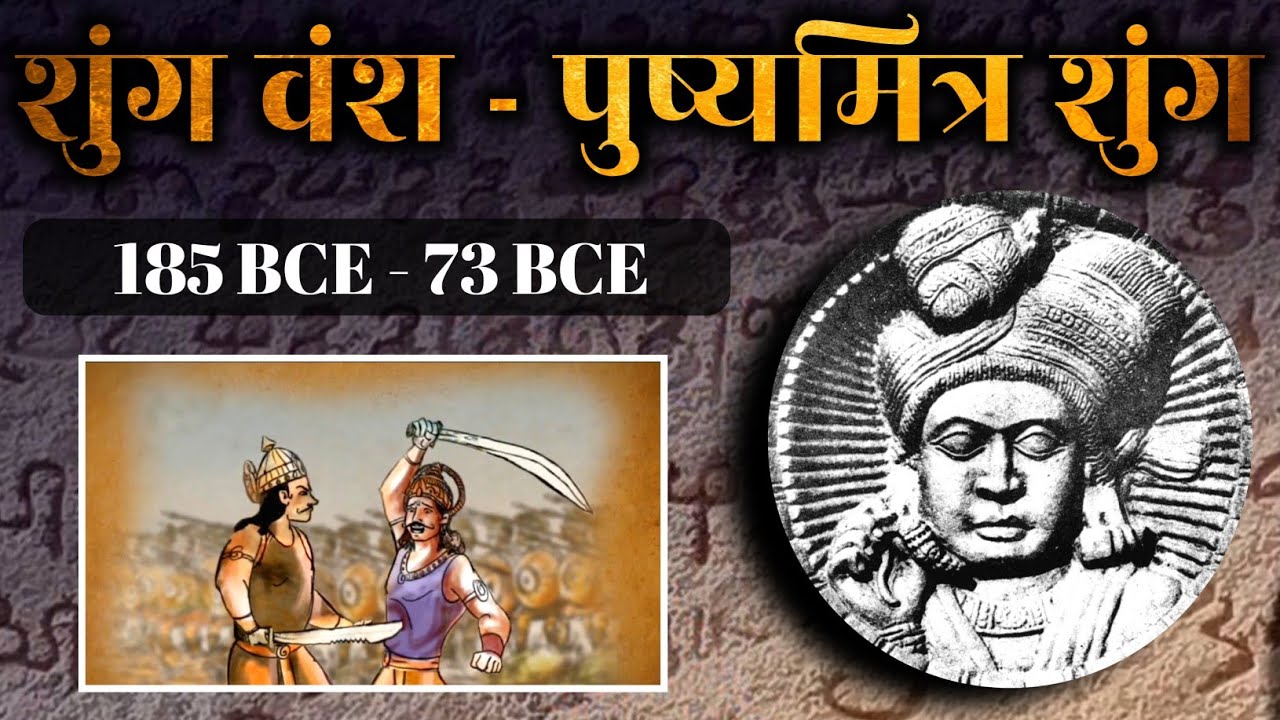
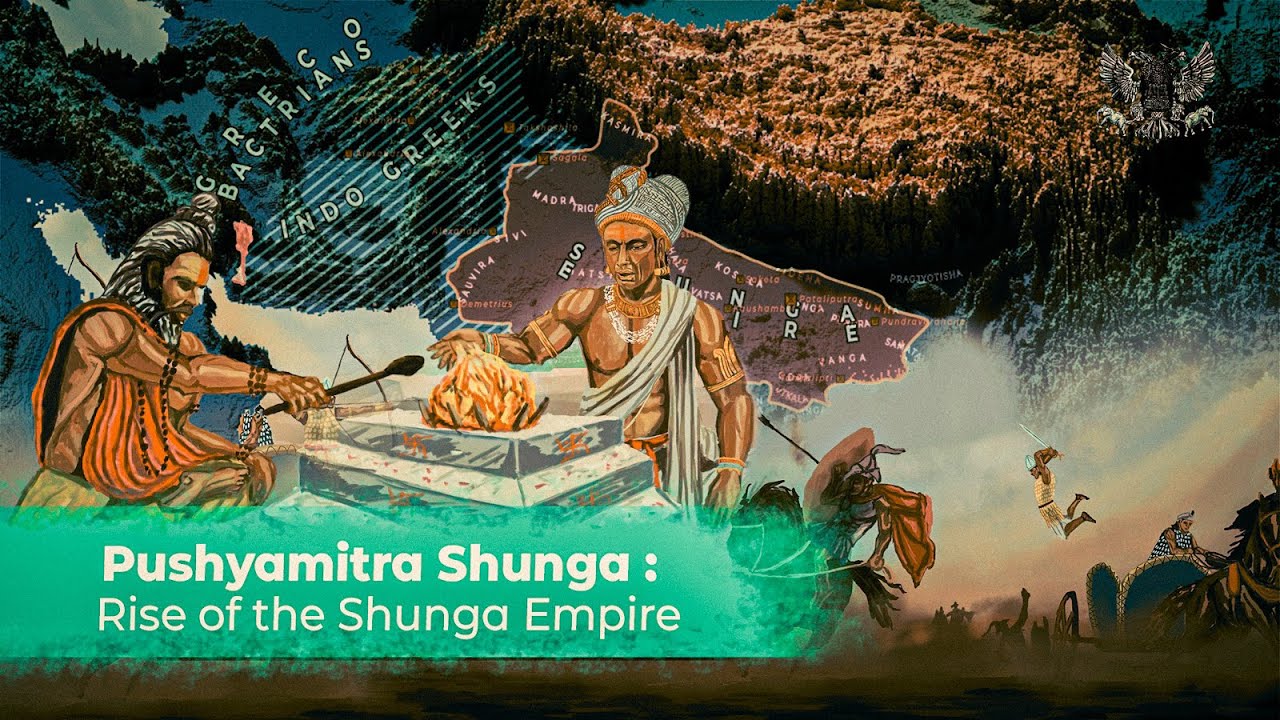
Territorial distribution of indigenous successor dynasties in Central India and the Deccan. - (i) The Shungas gained control over Magadha and surrounding areas right after the Mauryas fell.
- (ii) The Kanvas succeeded the Shungas, maintaining control over core northern territories for a brief period.
- (iii) The Satavahanas built a major power base in the Deccan, defending central routes against southward expansion by the Sakas.
Prominent Dynasties that Defined the Era
The broader history of this period involved a balance of competition, conflict, and peaceful coexistence among indigenous states and incoming powers.
- (a) Political power was distributed among multiple centers that competed for regional trade routes and agricultural lands.
- (b) Continuous contact between local rulers and incoming groups stimulated economic growth, urbanization, and new cultural traditions.
Quick Revision Capsule: Post-Mauryan Dynasties & Key Features
This capsule summarizes the key ruling dynasties, their origins, primary locations, and historic contributions during the post-Mauryan period:
| Dynasty / Group | Origin & Power Base | Key Historical Contribution |
|---|---|---|
| Indo-Greeks (Yavanas) | Bactria / North-Western Frontier | Introduced refined die-struck coinage and influenced the development of Gandhara art. |
| Sakas (Scythians) | Central Asian Steppes / Western Satrapies | Established widespread administrative Satrapies across Taxila, Mathura, and Western India. |
| Kushanas (Yueh-chi) | Central Asia / Northern & Central India | Secured international trade along the Silk Routes and promoted Buddhist art and architecture. |
| Shungas & Kanvas | Magadha / Central India | Preserved indigenous political structures in the eastern heartlands after the Mauryan fall. |
| Satavahanas | Deccan Region | Consolidated Deccan trade routes and blocked Saka southward expansion. |
Sources of Information: Reconstructing Post-Mauryan History
Historians reconstruct this complex era by piecing together evidence from texts, inscriptions, ancient coins, and accounts written by foreign observers.
Key Literary and Epigraphic Accounts
Classical Indian texts and stone inscriptions provide fundamental context for understanding post-Mauryan transitions and regional ruling lineages.
- (i) Important texts like the Mahabhasya of Patanjali and the Buddhist work Divyavadana record major political events and social conditions of the time.
- (ii) The traditional Puranas record detailed king-lists and genealogical records for dynasties like the Shungas and Satavahanas.
- (iii) Literary works, including the drama Malavikagnimitra by Kalidasa and the historical biography Harshacharita by Banabhatta, offer valuable context on court life and historical events.
- (iv) Inscriptions found at sites like Ayodhya, Vidisa, and Bharhut provide clear dates and details regarding royal patronage and public construction projects.
Numismatics and Foreign Records: Complementary Information
Coins and external records help corroborate local accounts, clarifying reign lengths and diplomatic ties along the frontier.
- (a) The astronomical text Gargi Samhita contains sections referencing political conflicts and historical events.
- (b) Coins minted by various regional families allow scholars to identify rulers who are omitted from surviving texts.
- (c) Inscriptions in Kharosthi script found throughout the Gandhara region and Central Asia supply operational details about trade, governance, and daily administration.
- (d) Greek and Latin accounts record the titles and campaigns of rulers who controlled the north-western borderlands, confirming their international connections.
The Milinda-Panha: Buddhism and the Yavana King Menander
A key source for the Indo-Greek era is the Pali text Milinda-Panha (meaning The Questions of Milinda). This work records a famous philosophical debate involving the Yavana king Menander and highlights the growing role of Buddhism in the North-West.
- (i) The text records detailed discussions on doctrine between King Menander and the Buddhist scholar Nagasena.
Chinese Chronicles and Central Asian Interactions
Official dynastic histories kept by Chinese historians offer indispensable information regarding nomadic movements across Central Asia toward India.
- (i) Records from China's Early Han and Later Han dynasties document the origins, migration, and expansion of the Yueh-chi tribe before they founded the Kushana Empire.
- (ii) Combining these diverse sources—Indian texts, local coins, rock inscriptions, and foreign chronicles—gives us a complete, reliable picture of this dynamic historical era.
Crucial Significance of North-Western Interactions for History Students
Studying North-Western India's interactions with Central and West Asia is essential for any deep study of ancient history. The arrival of the Yavanas, Sakas, and Kushanas transformed Indian art through movements like Gandhara Art and connected Indian markets directly to the Silk Route. Key evidence from the Milinda-Panha and Ashoka's inscriptions highlights the rich synthesis that took place along the north-west frontier.
Summary
The post-Mauryan era in North-Western India was a period of intense migration, geopolitical adjustments, and cultural synthesis. Driven out of Central Asia by territorial conflicts, foreign groups—including the Indo-Greeks, Sakas, Parthians, and Kushanas—crossed the Hindu Kush and established strong kingdoms across the north-western borderlands. These migrations introduced new styles of coinage, promoted long-distance overland trade along the Silk Routes, and sparked artistic movements like Gandhara art. At the same time, indigenous dynasties such as the Shungas, Kanvas, and Satavahanas maintained stability in Central India and the Deccan. Reconstructed through a rich mix of Indian literature, coins, Kharosthi inscriptions, and Chinese dynastic histories, this era remains a classic example of cross-cultural interaction in the ancient world.
Quick Revision Points
Key facts to remember for rapid review:
- (i) Central Asian nomadic movements pushed the Indo-Greeks, Sakas, Parthians, and Kushanas through the Hindu Kush into North-Western India.
- (ii) King Menander's philosophical dialogue with Nagasena is preserved in the Pali text Milinda-Panha.
- (iii) Ashoka's bilingual inscription at Kandahar in Greek and Aramaic confirms early Hellenistic presence in the borderlands.
- (iv) Chinese Han dynastic chronicles provide primary records tracking the Yueh-chi migration that led to the Kushana Empire.
- Exam Tip: Pay special attention to the overlapping timelines of foreign groups in the North-West versus indigenous dynasties in the Deccan. Questions often focus on matching specific sources (such as the Milinda-Panha or Kandahar inscription) with their corresponding rulers and architectural achievements like Gandhara art.
Frequently Asked Questions (FAQ)
Q1: Why did foreign groups repeatedly invade North-Western India during the post-Mauryan period?
A1: The collapse of centralized Mauryan authority left the north-western frontier open. Simultaneously, intense tribal conflicts in Central Asia forced groups like the Sakas and Yueh-chi to move southward in search of new pastures and territories, leading them through the accessible passes of the Hindu Kush.Q2: What is the historical importance of the text Milinda-Panha?
A2: The Milinda-Panha records a philosophical dialogue between the Indo-Greek king Menander (Milinda) and the Buddhist sage Nagasena. It serves as crucial literary proof of Indo-Greek patronage of Buddhism and highlights the cultural exchanges taking place in the North-West.Q3: How did the Kushanas influence ancient international trade?
A3: The Kushanas consolidated power across Central Asia and Northern India, securing key overland routes connected to the Silk Route. Their empire acted as a bridge between the Roman Empire, China, and India, promoting widespread trade and monetized economic growth.