The Bhimbetka Rock Shelters form an extraordinary archaeological site located in the central Indian state of Madhya Pradesh. Nestled within the foothills of the Vindhya Range, this complex houses an incredible record of early human presence, stretching from the Lower Paleolithic through the Mesolithic period into historical times. Spanning over 750 rock shelters across seven hills, the site displays thousands of vivid cave paintings that reveal how early human communities lived, hunted, and interacted with their natural environment over thousands of years. Recognized internationally as a UNESCO World Heritage Site, Bhimbetka remains an indispensable case study for understanding early human cultural development, prehistoric technology, and ancient artistic traditions in South Asia.
In this chapter, you will understand:
- The geographical layout and historical discovery of the Bhimbetka Rock Shelters
- Key structural features of famous sites like the Auditorium Cave and Zoo Rock Shelter
- The evolution of prehistoric rock art themes, natural pigments, and artistic styles
- The overall significance of Bhimbetka for historical and archaeological studies
Why this topic matters: Bhimbetka offers rare, continuous archaeological evidence of human habitations from the Stone Age through the medieval era. It serves as a foundational topic for competitive exams and history studies regarding Indian prehistory.
Core Idea: The Bhimbetka complex preserves over 100,000 years of continuous human activity. Its natural quartzite shelters and rich rock art document the cultural evolution, daily routines, social rituals, and environmental interactions of ancient human groups in central India.
Bhimbetka Rock Shelters: Tracing Prehistoric Life, Art, and Archaeological Significance
The monumental Bhimbetka complex offers a continuous window into the origins of human society in central India. These natural rock formations extend across an area of more than 10 square kilometers, preserving ancient tools, living spaces, and artistic expressions.
Geographical Coordinates and Strategic Location of Bhimbetka
Situated at coordinates , the site rests approximately 45 kilometers southeast of Bhopal along the southern border of the Vindhya Range. Its natural sandstone and quartzite formations provided durable shelter and safety for prehistoric bands.
- The complex spans a dense forest zone filled with diverse flora and fauna that sustained early human inhabitants.
The Seven Hills Encompassing the Bhimbetka Cluster
The archaeological shelters are distributed across seven distinct hills, each holding distinct clusters of habitation caves and artwork.
- The Vinayaka Hill
- The Bhonrawali Hill
- The central Bhimbetka Hill
- The Lakha Juar West and Lakha Juar East Hills
Background, Discovery, and Historical Exploration
The name Bhimbetka links local traditions with the Mahabharata, translates as Bhima's resting place. While local communities knew of the caves for generations, formal academic exploration began during the late 19th and mid-20th centuries.
- British official W. Kincaid made the earliest brief mention of the site in an academic paper in .
Systematic Study by Dr. V. S. Wakankar
Archaeologist Dr. V. S. Wakankar re-discovered the site in after noticing rock formations similar to those he had evaluated in Europe. Extensive excavations followed, unearthing ancient stone tools and multi-layered cave art.
- Excavations uncovered tools spanning the Acheulian phase to the Late Iron Age.
- The site received official designation as a UNESCO World Heritage Site in .
- Over 750 individual shelters have been cataloged across the entire cluster.
- Excavated layers show uninterrupted human presence spanning tens of thousands of years.
The Auditorium Cave and Zoo Rock Shelter
Among the hundreds of natural shelters, specific sites stand out due to their exceptional scale, geological formations, and concentration of prehistoric paintings.
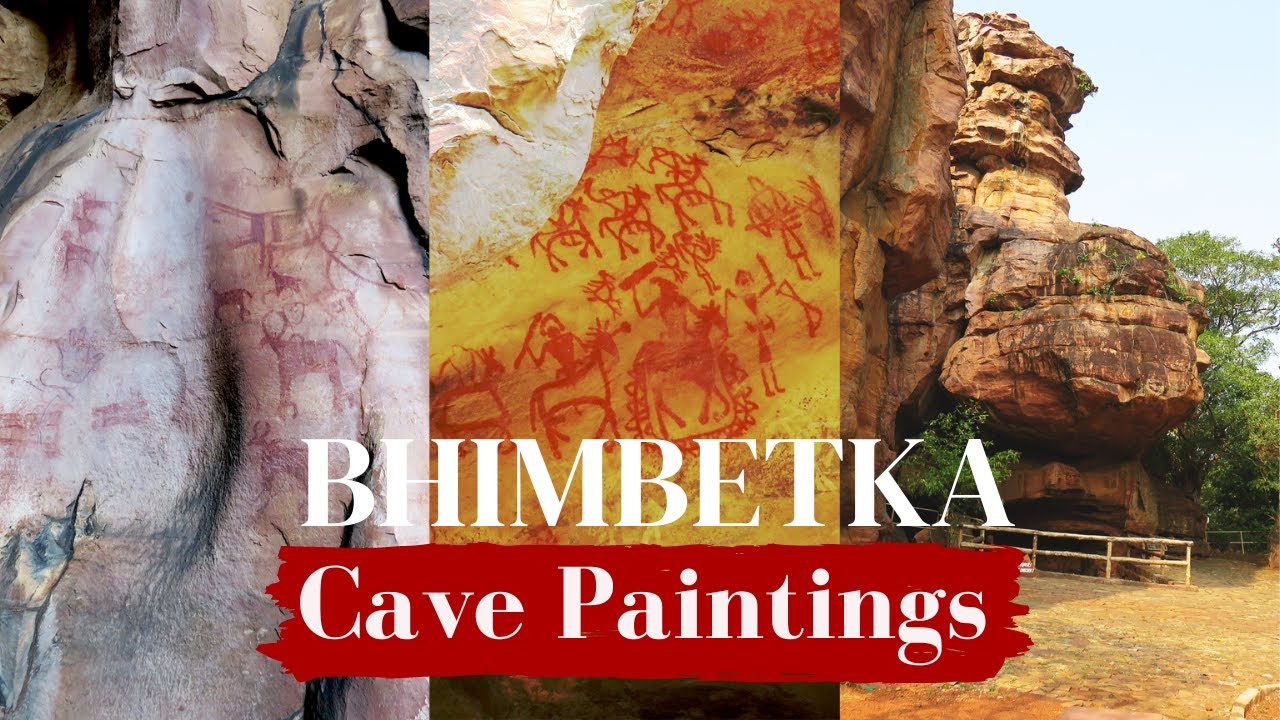
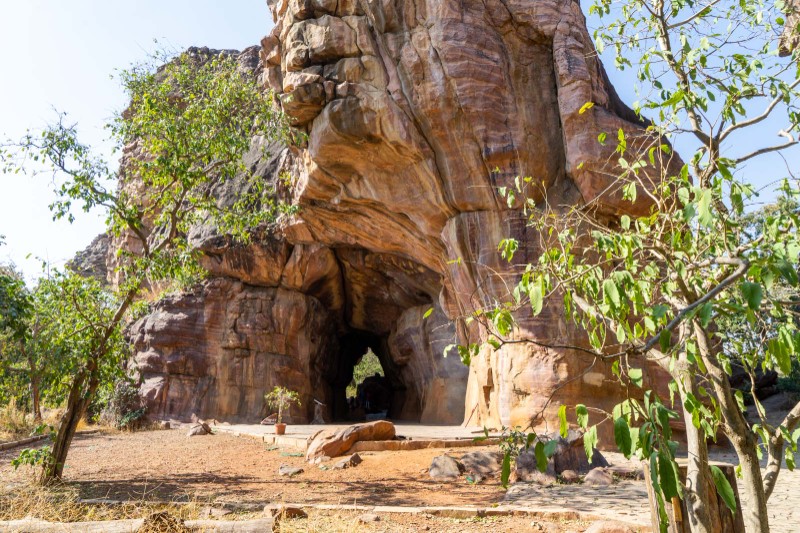
- The Auditorium Cave serves as the central focal point of the complex, featuring massive quartzite walls that resemble cathedral arches.
Structural Highlights of the Auditorium Cave
This large cave features a distinctive layout with four entrances that align like a cross when viewed from above.

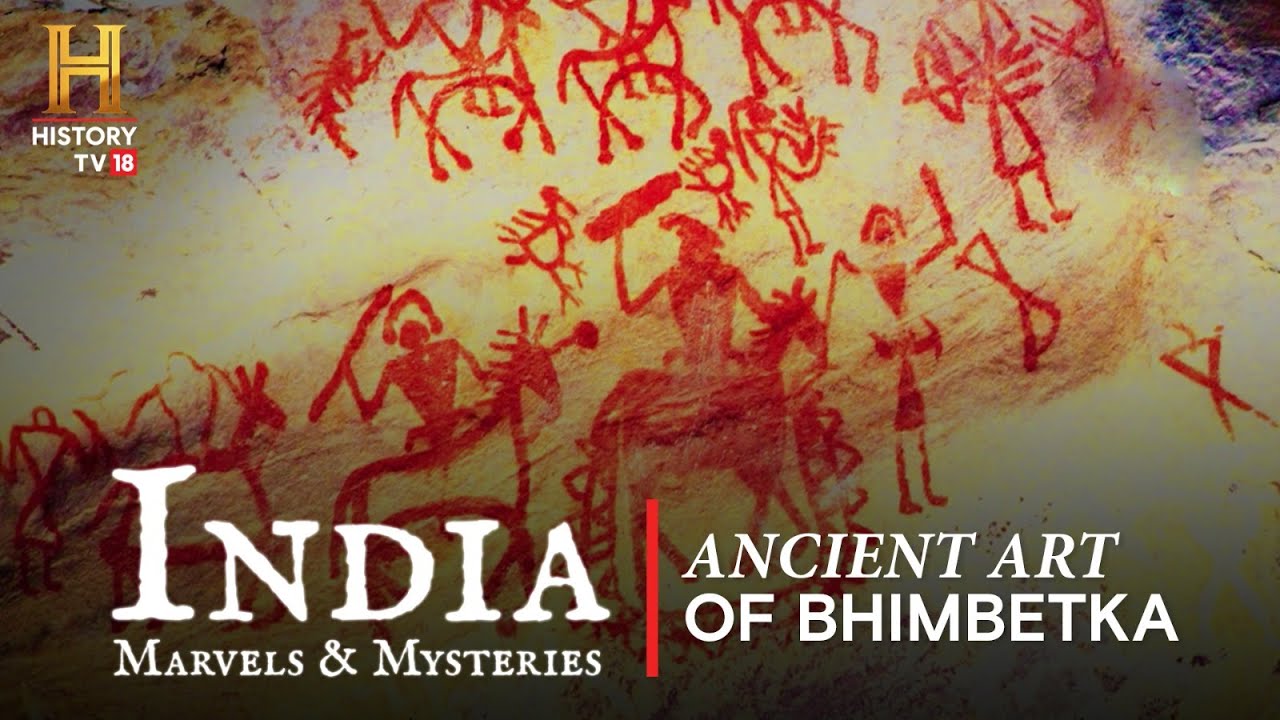
Prehistoric rock art at Bhimbetka depicting a communal dance scene - The main eastern entrance opens directly toward a large monolith termed the Chief's Rock.
- A smaller shelter known as the Zoo Rock Shelter contains dense paintings of wild animals alongside prehistoric cupules.
- Depicted wildlife includes bison, tigers, lions, elephants, and deer.
- Artistic pigments were prepared using natural substances such as manganese, hematite (red ochre), and charcoal.
Bhimbetka Feature Summary
Quick reference overview of the key geological and historical features of the Bhimbetka complex:
| Feature / Site | Key Characteristics | Historical Significance |
|---|---|---|
| Auditorium Cave | Massive structure with cross-shaped layout and "Chief's Rock" monolith | Central gathering space for early human communities |
| Zoo Rock Shelter | Contains dense animal paintings and carved cupules | Visual record of ancient fauna and early hunting culture |
| Natural Pigments | Made from mineral hematite, manganese, plant extracts, and charcoal | Demonstrates prehistoric knowledge of material preparation |
| Seven Hills Cluster | Includes Vinayaka, Bhonrawali, Bhimbetka, and Lakha Juar hills | Broad geographical footprint protecting over 750 shelters |
| Chronological Range | Extends from Lower Paleolithic through Mesolithic to Medieval times | Unbroken timeline of human technological and cultural evolution |
Summary
The Bhimbetka Rock Shelters remain one of the most vital prehistoric archaeological sites in Asia. By preserving stone tool assemblages, natural dwelling spaces, and thousands of rock paintings, Bhimbetka provides clear insight into early human culture, environmental adaptation, and social organization across tens of thousands of years.
Quick Revision Points
Key facts to remember for history and archaeology examinations:
- (i) Located in the Raisen District of Madhya Pradesh within the Vindhya Range.
- (ii) Archaeologist Dr. V. S. Wakankar initiated modern studies at the site in .
- (iii) Inscribed on the UNESCO World Heritage List in .
- (iv) Features rock art spanning from the Paleolithic and Mesolithic ages into the historic period.
- Exam Tip: Remember that Bhimbetka is famous for both its continuous tool technologies (from the Acheulian phase onwards) and its rock art pigments (hematite for red, manganese for dark shades). Pay close attention to the contributions of Dr. V. S. Wakankar.
Frequently Asked Questions (FAQ)
Q1: Where are the Bhimbetka Rock Shelters located?
A1: They are located in the Raisen District of Madhya Pradesh, India, along the southern edge of the Vindhya Range, roughly 45 kilometers southeast of Bhopal.Q2: Who discovered the Bhimbetka caves for modern archaeology?
A2: The site was systematically discovered and explored by the prominent Indian archaeologist Dr. V. S. Wakankar in 1957.Q3: What makes the rock art at Bhimbetka unique?
A3: The art spans multiple historical periods, uses durable natural mineral pigments, and portrays daily life, hunting, dances, and animal species with remarkable detail.