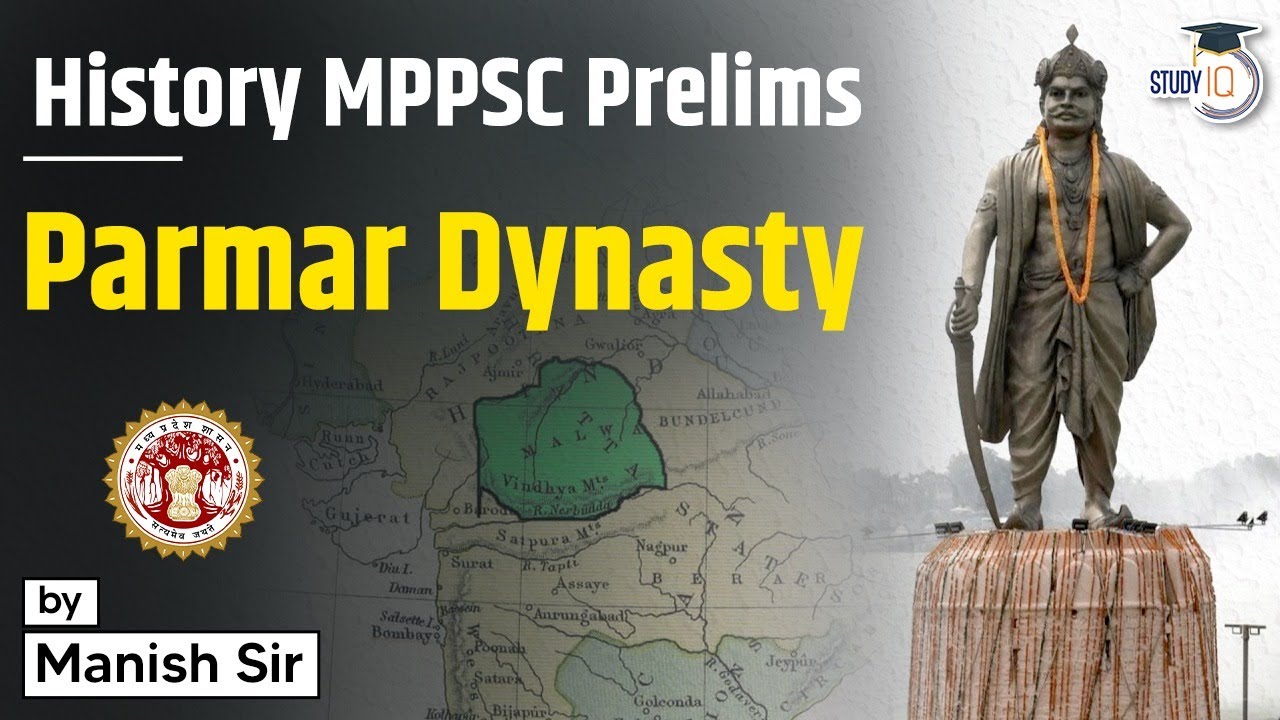
The story of the Paramaras of Malwa forms a critical chapter in the political history of north-central India during the early . Starting as local vassal chiefs or feudatories of the Rashtrakutas, they steadily gathered power as central empires began to crumble. By the , they transformed Malwa into a sovereign power ruled from their capital at Dhar. Their reign reached its highest intellectual and cultural peak under Raja Bhoja (), a rare monarch who combined statecraft with deep scholarship. Understanding the Paramaras—their contested origins, military campaigns, and enduring artistic monuments—is crucial for students and scholars examining how regional Rajput kingdoms shaped early medieval Indian governance and culture.
In this chapter, you will understand:
- The transition of Paramaras from feudatories to independent rulers of Malwa.
- The debate over their origins, including the Agnikula fire myth and epigraphic evidence.
- The military achievements and tragic end of Vakapati Munja.
- The administrative, literary, and cultural legacy of Raja Bhoja Paramara.
Why this topic matters: This topic highlights the structural shift from large imperial networks to regional Rajput states, offering key context for competitive examinations in Indian history and culture.
Core Idea: Emerging from the shadow of the Rashtrakutas and Pratiharas, the Paramaras built a dominant state in Malwa. Through rulers like Vakapati Munja and Raja Bhoja, they combined aggressive military expansion with monumental patronage of literature, religion, and architecture.
History and Dynastic Rise of the Paramaras of Malwa in 10th Century India
The rise of the Paramara dynasty reflects the shifting geopolitical balance in central India toward the end of the first millennium. Originally serving regional overlords, the Paramaras took advantage of decaying imperial authority to forge a independent kingdom centered in Malwa.
The Paramaras (also known historically as the Puar dynasty) served as imperial officers and regional commanders for the mighty Rashtrakutas of the Deccan. When Rashtrakuta strength eroded near the end of the , Paramara leadership declared complete sovereignty and established their seat of governance at Dhar.
- (i) The golden era of Paramara dominance unfolded during the reign of Raja Bhoja (), making him a direct contemporary of the Ghaznavid invader Mahmud of Ghazni.
- (ii) While Bhoja earned lasting renown as a polymath, author, and patron of learning, his administration faced endless border conflicts with surrounding regional powers.
- (iii) By the , internal pressures and external invasions diminished their domain, allowing the rival Chalukya rulers of Gujarat to seize control of central cities like Ujjain.
Geographical Setting and Contested Origin Theories of Paramara Rajputs
Situated west of the Kalachuri realm, the Paramara kingdom occupied a strategically vital trade and military crossroads in central India. Historians continue to analyze their exact ancestral roots due to conflicting mythological narratives and inscriptions.

Mount Abu Fire-Pit Theory: The Agnikula Origin of Paramaras
A famous tradition popularised in traditional bardic chronicles links the Paramaras to the legendary Agnikula Rajputs. According to this myth, the foundational ancestor of the clan emerged magically from a sacred sacrificial fire-pit atop Mount Abu in Sirohi, Rajasthan.
- (i) Promoting the Agnikula myth helped elevate the social standing of the royal line, framing their power as a direct gift from divine authorities.
- (ii) Claiming birth from a sacred fire allowed the Paramaras to integrate smoothly into traditional Kshatriya lineages, reinforcing their social authority as legitimate rulers.
Paramara Links to the Rashtrakuta Dynasty: The Harsola Grant
In contrast to traditional myths, historical inscriptions point to a more grounded political origin. The copper-plate inscription known as the Harsola Grant indicates that early Paramara commanders were connected directly to the royal house of the Rashtrakutas.
- (a) Early Paramara kings regularly adopted official titles like 'Amoghavarsha' and 'Prithvi Ballabh' in their formal records.
- (b) These titles match those used by prominent Rashtrakuta kings, suggesting clear administrative continuity or direct family links between the two houses.
Paramara Royal Lineage and Suryavamsi Connection
While theoretical debates persist, the Paramaras consistently asserted membership within prestigious solar warrior lineages (Suryavamsi Rajputs). Embracing the Agnikula origin myth served as a practical way to reinforce their high standing within medieval Rajput society.
- Foreign Origin Counter: Some modern scholars propose that early ancestors may have entered India alongside central Asian groups before assimilating into local society.
- Legitimacy Reinforcement: Adopting the Agnikula story helped silence questions about foreign roots, providing a clear statement of native origin and warrior status.
Military and Cultural Accomplishments of the Major Paramara Rulers
The founder of the Paramara dynasty was Upendra (also called Krishnaraja), who initially ruled as a vassal under the Gurjara-Pratiharas. As Pratihara power weakened, his successors gradually expanded their independent territory across central India.
Early Paramara Rulers and Expansion: Upendra to Siyaka II
Following Upendra, early rulers like Vairi Singh I, Siyaka I, Vakapati I, and Vairi Singh II systematically enlarged Paramara territory. The reign of Siyaka II (widely known as Siyaka Harsha) marked the formal break from outside control, confirmed by impressive military campaigns.
Epigraphic records detailing the military expansion under Siyaka II and Vakapati Munja. - (i) Strategic Victories:Siyaka II launched campaigns against the nomadic Hunas, securing strategic frontier districts.
- (ii) Defeating Adversaries: He defeated the Chalukya king Avantivarman Yogiraja II, extending Paramara influence further south.
- (iii) Rashtrakuta Invasion: In , Siyaka II attacked the declining Rashtrakuta capital of Manyakheta, plundering the city and declaring complete sovereign independence shortly before his death in
The Grand and Tragic Reign of Vakapati Munja ()
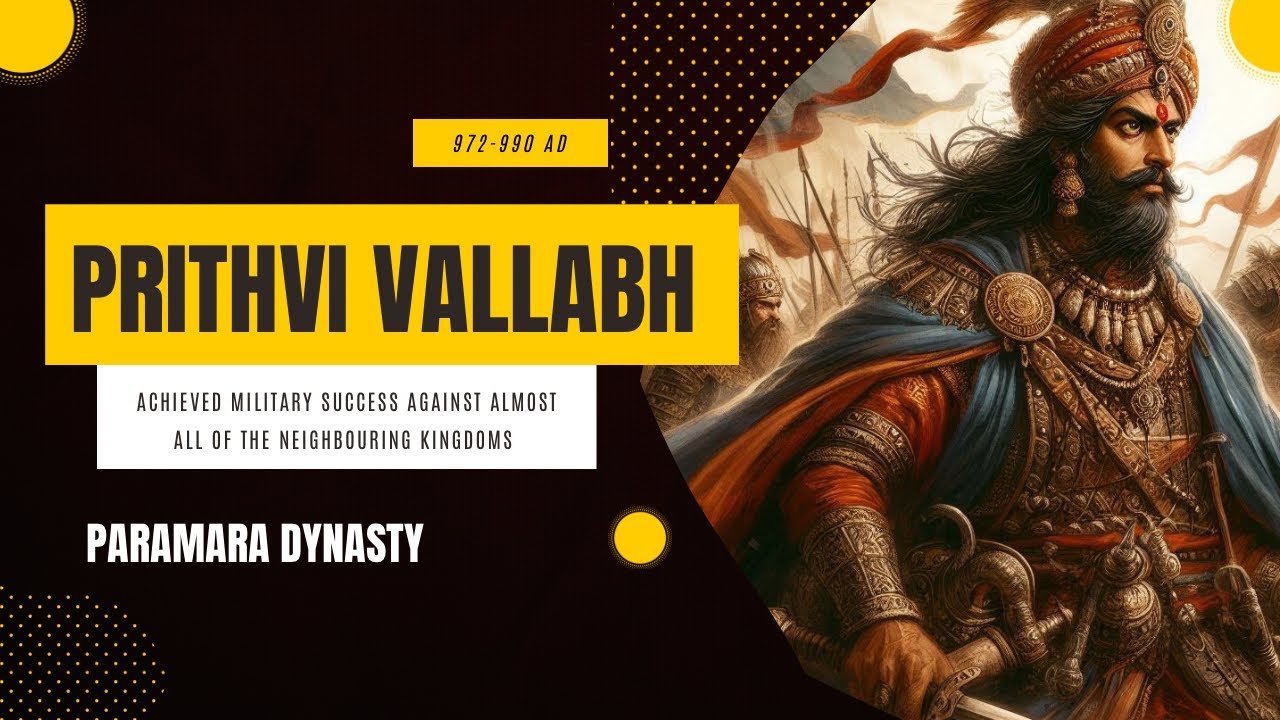
Succeeding Siyaka Harsha, Vakapati Munja governed Malwa from His reign brought political power, territorial expansion, and vibrant literary patronage. He took honorific names like Utpalraj and Amoghavamsa, along with grand imperial titles like 'Sriballabha' and 'Prithviballabha'.
- (a) Triumph over Kalachuris: He defeated Yuvaraj II of the Kalachuris of Tripuri, securing his eastern boundaries.
- (b) Challenging the Chalukyas:Munja forced Moolaraja I of the Chalukyas of Gujarat to retreat into the dry Marwar region.
- (c) Conquest in Abu Region: He defeated the Chauhans of Naddol, taking control of Mount Abu and placing his son Arnayraj as governor.
- (d) Raids and Victories: He campaigned against King Sakti Kumar of the Guhilas of Mewar, raiding his capital, while also containing Huna settlements along his borders.
Despite these remarkable victories, Vakapati Munja's final campaign ended in disaster. After defeating the Western Chalukyas of Kalyani six times, he ignored the advice of his chief minister, Rudraditya, and crossed the Godavari River to attack Taila II. He was captured in enemy territory. Though his loyal ministers arranged a secret escape route, Munja confided the plan to Taila II's sister, Mrinalvati, with whom he had fallen in love. She disclosed the plot to her brother, leading to Munja's imprisonment and public execution, bringing a tragic end to his famous reign.
The Brief Rule of Sindhuraj: Diplomacy and Military Revival
Following Munja's death, his brother Sindhuraj took the throne. Though his reign was brief, he restored military stability and recovered territories lost during the recent war with the Western Chalukyas.
- (i) Diplomatic Alliance: He formed a strong political alliance with neighboring Naga rulers by marrying Princess Sasiprabha of the Naga dynasty.
- (ii) Military Success:Sindhuraj defeated the Western Chalukya armies, regaining border areas lost during Munja's capture.
- (iii) Territorial Ambition: He focused his short reign on reorganizing internal defenses and rebuilding the kingdom's military confidence.
Raja Bhoja Paramara: The Scholar-King ()
The most celebrated ruler of the dynasty was Bhoja Paramara, who governed Malwa for over five decades from around Taking power after his father Sindhuraj, Bhoja gained renown as a skilled general, capable administrator, and exceptional patron of scholarship, earning the title Kaviraja (King of Poets).
- (a) Ambitious Military Campaigns:Bhoja fought campaigns on multiple fronts, clashing with the Solankis of Gujarat, the Chandelas of Bundelkhand, and the Kalachuris of Chedi to defend and expand Malwa's borders.
- (b) Enduring Challenge: Though he won major tactical victories, his long-term effort to completely subdue the Western Chalukyas led to drawn-out wars that strained his kingdom's resources.
- (c) Lasting Legacy: Beyond military affairs, Bhoja founded the famous university center Bhojshala at Dhar, authored works across engineering, astronomy, and poetry, and constructed the monumental Bhojeshwar Temple at Bhojpur.
Quick Revision Capsule: Key Paramara Rulers & Achievements
This quick reference guide summarizes the major Paramara monarchs, their military milestones, and their enduring contributions to medieval history:
| Ruler Name | Regnal Period | Key Historical Achievements |
|---|---|---|
| Upendra (Krishnaraja) | Early | Founded the Paramara line as a vassal ruler under Pratihara supreme authority. |
| Siyaka II (Siyaka Harsha) | Ended | Sacked the Rashtrakuta capital Manyakheta and established sovereign independence. |
| Vakapati Munja | Expanded borders across Rajputana and defeated Kalachuris; captured and executed by Taila II. | |
| Sindhuraj | Rebuilt military strength, formed a Naga matrimonial alliance, and recovered lost territories. | |
| Raja Bhoja I | Established the Bhojshala academy, built Bhojpur temple, authored major classical works, and led Malwa at its peak. |
Summary of the Paramara Dynasty
The Paramara dynasty of Malwa offers a valuable window into how regional states emerged, expanded, and governed in medieval India. From their roots as Rashtrakuta officers to their emergence as an independent kingdom at Dhar, the Paramaras left a permanent mark on central India. While rulers like Vakapati Munja showcased aggressive territorial ambition, monarchs like Raja Bhoja proved that military strength and artistic patronship could flourish together. Despite facing persistent regional conflicts with the Chalukyas, Solankis, and Kalachuris, their political institutions and architectural monuments remain central to the study of medieval Indian history.
Quick Revision Points for Students
Essential facts to review before examinations:
- (i) Capital moved from Ujjain to Dhar, which served as the cultural center of their kingdom.
- (ii) The Harsola Grant serves as the primary epigraphic record linking early Paramaras to the Rashtrakuta dynasty.
- (iii) The Agnikula fire myth from Mount Abu was popularized to affirm their Kshatriya status and sovereign authority.
- (iv) Raja Bhoja authored landmark Sanskrit texts, including Samarangana Sutradhara (architecture) and Sarasvati-Kanthabharana (grammar).
- Exam Tip: In civil service and history examinations, questions frequently focus on distinguishing between the Agnikula origin myth and epigraphic evidence like the Harsola Grant, as well as recognizing Raja Bhoja's literary contributions and engineering feats like the Bhojpur dam.
Frequently Asked Questions (FAQ)
Q1: Who was the actual founder of the Paramara dynasty of Malwa?
A1: The dynasty was founded in the early 9th century by Upendra (also known as Krishnaraja), who initially ruled as a vassal under the Gurjara-Pratiharas before his descendants secured full independence.Q2: What is the historical significance of the Harsola Grant?
A2: The Harsola Grant is the earliest available copper-plate inscription of the Paramaras. It provides direct evidence linking early Paramara rulers to the Rashtrakuta imperial line, as shown by shared royal titles like Amoghavarsha.Q3: Why is Raja Bhoja remembered as one of medieval India's most celebrated kings?
A3: Raja Bhoja () was both an accomplished general and a renowned scholar-king. He established the famous Bhojshala learning center at Dhar, constructed the Bhojeshwar Temple, authored major works across multiple fields, and made Malwa a premier center of art and education.