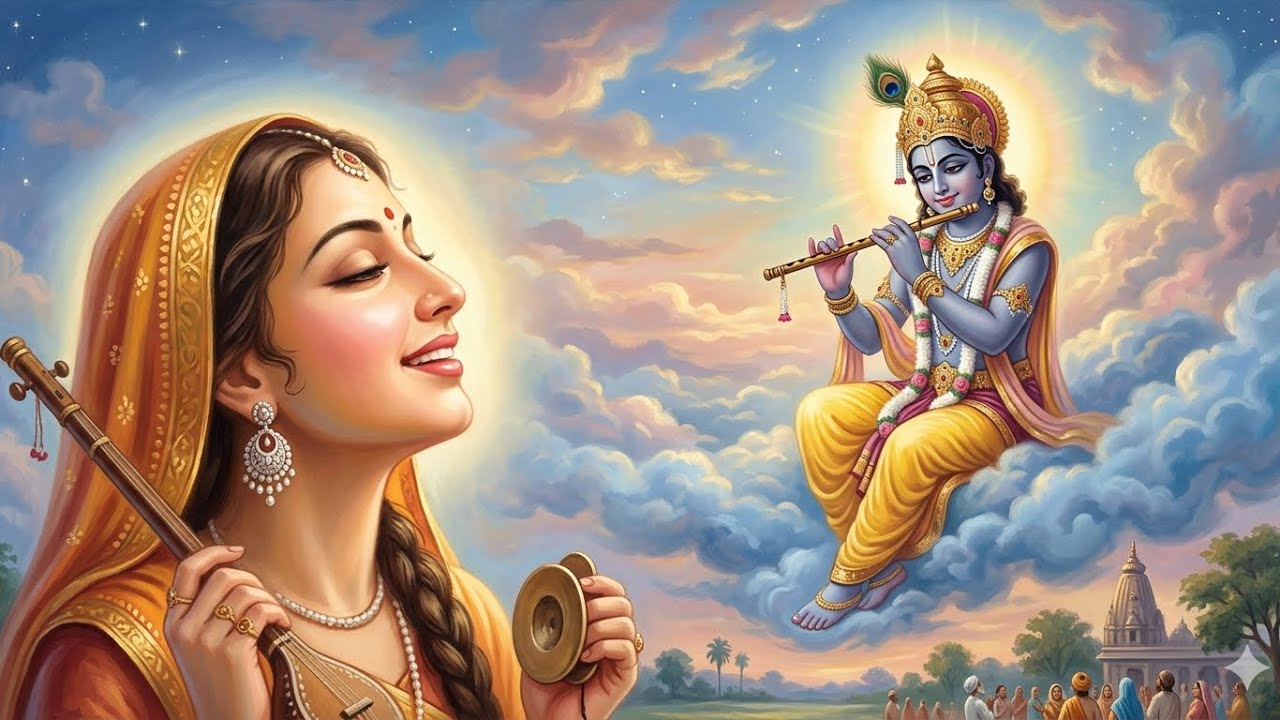
Meera, also known as Mirabai or Sant Meera, was a Hindu mystic poet and an ardent devotee of Lord Krishna. She became a central figure of the Bhakti Movement in medieval India, inspiring millions with her bhajans, spiritual devotion, and miraculous life stories. For students and exam preparation, studying Meera’s life, poetry, and spiritual journey is crucial to understanding the rise of devotional literature and religious reform movements in India.
🎯 In this chapter, you will understand:
- The early royal life and marriage of Mirabai in Rajasthan.
- Her deep personal devotion to Lord Krishna and defiance of social norms.
- The poetic, musical, and linguistic features of her famous bhajans.
- Her role in the Bhakti movement and lasting influence on Indian culture.
💡 Why this topic matters: Meera Bai bridges medieval Indian history, literature, religious philosophy, and early social reform movements, making her a frequent focal point in academic exams.
🧠 Core Idea: Complete surrender to divine love (Bhakti) can break down social, gender, and caste barriers, creating timeless cultural art.
Meera (Mirabai): Life, Spiritual Journey, Poetry, and Role in the Bhakti Movement (16th Century)
Meera’s life and poetry embody the essence of devotion, sacrifice, and spiritual freedom. Her journey from a Rajput princess to a Bhakti saint symbolizes resistance against societal constraints and complete surrender to Krishna. She challenged traditions, embraced music and poetry as spiritual tools, and became one of the most beloved saints of India.
- (i) Early life as a Rajput princess shaped her disciplined upbringing.
- (ii) Her marriage and widowhood triggered her deep spiritual devotion.
- (iii) She used poetry and music to express her love for Krishna.
Meera’s Life Journey and Background
Meera’s life story provides insights into her royal heritage, personal struggles, and devotion. Her biography is a vital chapter in understanding Bhakti saints of India.
Early Life and Family Background
Meera was born into the Rathore Rajput family of Kudki in Merta, Rajasthan. As the daughter of Ratan Singh Rathore and granddaughter of Rao Dudaji, she was raised amidst royal traditions. However, unlike her peers, she showed an extraordinary attraction towards Krishna even from childhood.
- (i) Childhood fascination with Krishna idols and bhajans.
- (ii) Grew up in Merta, a cultural hub of Rajasthan.
- (iii) Family lineage connected her to Rajput valor and Hindu traditions.
Marriage and Tragic Loss
In , Meera was married to Bhoj Raj, the crown prince of Mewar. However, her life changed tragically with his untimely death in . This event became a turning point, intensifying her devotion to Krishna and pushing her towards a spiritual path, even as her in-laws disapproved of her lifestyle.
- (i) Marriage into the royal house of Mewar.
- (ii) Widowhood at a young age led to personal isolation.
- (iii) Her grief transformed into unwavering devotion to Krishna.
Meera’s Spiritual Journey and Devotion
Meera’s spiritual journey illustrates her unyielding faith, endurance through persecution, and miraculous divine protection. Her life became a testimony of Bhakti ideals.

Intensification of Devotion
After her husband’s death, Meera dedicated herself completely to Krishna. Her in-laws opposed her spiritual singing and public devotion, but she continued regardless. This resistance made her devotion even stronger, symbolizing defiance against patriarchy and social norms.
- (i) Deepening of Krishna bhakti through music and prayer.
- (ii) Opposition from royal family due to her spiritual independence.
- (iii) Emerged as a symbol of faith over worldly ties.
Persecution and Miracles
Meera’s in-laws attempted to harm her multiple times with poisoned food, venomous snakes, and drowning attempts. Legends recount that divine grace saved her each time, reinforcing her saintly image among devotees and strengthening her popularity across India.
- (i) Poison turned harmless when offered to her.
- (ii) A snake in a basket transformed into a flower garland.
- (iii) She miraculously floated on water when thrown into a river.
Meera’s Poetry and Musical Devotion
Meera’s poetry and bhajans immortalized her devotion, shaping the cultural and spiritual fabric of Bhakti literature. Her songs became both personal expressions of love and collective acts of worship.
Devotional Poetry of Meera
Meera’s poetry, composed in Rajasthani and later preserved in Hindi, expressed her intense longing for Krishna. Her verses reflect both personal surrender and universal love, making them central to Bhakti literature. Her famous bhajan “Payoji maine Ram Ratan dhan payo” is an eternal expression of spiritual wealth.
- (i) Composed in the local dialect, easy to connect with common people.
- (ii) Themes of surrender, love, and divine union.
- (iii) Preserved as an integral part of Bhakti movement poetry.
Music in Devotion
Music was an inseparable part of Meera’s devotion. Her bhajans were sung in classical ragas, bridging spirituality and art. These songs became a medium of worship, strengthening her following and leaving a lasting impact on Indian devotional music.
- (a) Integration of music and spirituality.
- (b) Use of classical ragas for bhajans.
- (c) Bhajans continue to be sung across temples and households.
Summary of Meera’s Life, Poetry, and Bhakti Importance
Sant Meera stands as a timeless icon of devotion, sacrifice, and the Bhakti Movement. Her life journey from a Rajput princess to a Bhakti saint showcases the triumph of faith over adversity. Through her poetry, bhajans, and miraculous stories, she immortalized her love for Krishna. For students, Meera’s story is essential in understanding the Bhakti movement, women’s role in medieval India, and devotional literature.
Meera Bai’s Influence on Indian Mysticism, Bhakti Movement, and Modern Legacy
Meera Bai’s devotion reshaped the Bhakti movement and challenged social norms. Her spiritual journey symbolized freedom from caste and gender restrictions, and her teachings reflected a deeply personal path of love for Krishna. This made her a central figure in Indian devotional traditions.
- (i) Advocated personal devotion to God over ritualistic practices.
- (ii) Rejected rigid caste structures and gender inequality in spirituality.
- (iii) Became an enduring symbol of spiritual liberation and mystical expression.
Meera Bai’s Legacy and Shrines
Her memory is preserved in shrines and temples across India, particularly in Rajasthan, making her devotion timeless and accessible.
Shrines and Chittor Fort
The Chittor Fort is one of the most significant locations associated with Meera Bai. Her shrines symbolize her eternal devotion to Krishna and are revered pilgrimage sites.
- (i) Temples in Rajasthan honor her memory.
- (ii) Chittor Fort remains an important cultural landmark.
- (iii) Shrines highlight her continued spiritual influence.
Meera Bai’s Mystical and Spiritual Death
The mysterious accounts of her final years illustrate the depth of her spiritual connection with Lord Krishna.
Disappearance and Final Years
In her later years, Meera undertook pilgrimages to Dwarka and Vrindavan. Legends narrate her mystical disappearance into a Krishna idol, symbolizing the ultimate union of devotee and divine.
- (i) Undertook sacred pilgrimages in pursuit of spiritual fulfillment.
- (ii) Poisoned by her brother-in-law in , according to tradition.
- (iii) Disappeared into a Krishna idol, marking a mystical conclusion to her life.
Meera Bai’s Connection to Other Bhakti Saints
Meera’s devotion was nurtured under the guidance of Bhakti saints, demonstrating the interconnectedness of spiritual traditions.
Relationship with Ravidas
Meera regarded Ravidas as her spiritual guru. Her verses in his praise highlight the shared vision of Bhakti saints in promoting love, devotion, and equality before God.
- (i) Considered Ravidas as her guru and spiritual guide.
- (ii) Poems in his honor emphasize equality and devotion.
- (iii) Showcases harmony among Bhakti saints of medieval India.
Meera Bai’s Influence on Sikh Literature
Her poetry extended beyond Hindu traditions, leaving traces in Sikh devotional literature.
Inclusion in the Adi Granth
Meera’s compositions were included in the Adi Granth compiled in by Guru Arjan. Though later removed, this reflects her spiritual authority across traditions.
- (i) Recognized initially in Sikh scripture.
- (ii) Signifies her pan-Indian devotional importance.
- (iii) Highlights cross-cultural influence of her poetry.
Meera Bai in Modern Culture and Translations
Meera Bai continues to inspire modern culture globally through translations, performances, and literary works.
Meera in Popular Culture
Her life has been adapted into films, theatre, and literature, showcasing her enduring cultural presence.
- (i) Inspired films and stage performances.
- (ii) Represented in comic books and artistic retellings.
- (iii) Continues to influence global artists and writers.
Global Recognition through Translations
Meera’s bhajans have been translated into multiple languages, giving her universal recognition and appeal.
- (a) A.J. Alston’s Mystic Songs of Meera popularized her mysticism.
- (b) V.K. Subramanian’s Devotional Poems of Mirabai broadened her reach.
- (c) English renditions by Robert Bly and Jane Hirshfield carried her voice to global audiences.
Summary of Meera Bai’s Influence on Bhakti Movement and Culture
Meera Bai remains a timeless icon of Indian mysticism, Bhakti poetry, and devotional culture. From her spiritual defiance of caste and gender barriers in India to her global recognition through translations and popular culture, her influence is vast. For students, her life exemplifies the unity of literature, spirituality, and social reform, making her central to historical and cultural studies.
Meera Bai, the legendary saint-poetess of 16th century India, played a transformative role in the Bhakti movement and Indian mysticism. Her spiritual poetry, rejection of caste barriers, and devotion to Lord Krishna continue to inspire students, scholars, and spiritual seekers. For exam preparation, understanding Meera’s legacy is crucial as it connects history, literature, religion, and philosophy in one framework.
⚡ Quick Revision Capsule: Life & Legacy of Mirabai
Key historical details regarding Mirabai's timeline, works, and cultural impact for quick reference:
| Aspect | Key Historical Details | Significance / Impact |
|---|---|---|
| Birth & Lineage | Born in Kudki, Merta (Rajasthan) to Ratan Singh Rathore | High-ranking Rathore Rajput royal heritage |
| Marriage & Turning Point | Married Prince Bhoj Raj (); widowed in | Shifted focus completely from worldly life to Krishna Bhakti |
| Spiritual Teacher (Guru) | Associated with Guru Ravidas | Demonstrated unity and caste equality in the Bhakti movement |
| Famous Work | Bhajan: Payoji maine Ram Ratan dhan payo | Classic masterpiece of medieval devotional literature |
| Final Years | Pilgrimages to Vrindavan & Dwarka (disappeared ~) | Legendary merging into the idol of Lord Krishna |
📝 Summary
During the , Mirabai emerged from Rajasthan as a powerful voice of personal devotion and creative freedom. Rejecting traditional courtly expectations after her widowhood, she produced iconic bhajans cited in works like Mystic Songs of Meera while challenging gender and caste divisions of her era.
🚀 Quick Revision Points
Essential facts to review before examinations:
- (i) Mirabai was a key figure of the Bhakti Movement in medieval India.
- (ii) She composed poetry primarily in Rajasthani and regional dialects.
- (iii) She named Guru Ravidas as her spiritual guide, transcending caste boundaries.
- (iv) Her compositions were recorded in historical collections including early compilation efforts for the Adi Granth.
- 💡 Exam Tip: Focus on how Meera’s life illustrates both the literary style (vernacular bhajans) and the socio-religious impact (anti-caste, individual devotion) of the Bhakti Movement.
❓ Frequently Asked Questions (FAQ)
Q1: Where was Mirabai born and who was her family?
A1: She was born in Kudki (Merta, Rajasthan) into the Rathore Rajput clan as the daughter of Ratan Singh Rathore.Q2: What is the significance of her relationship with Ravidas?
A2: Mirabai regarded Ravidas (a saint from an underprivileged caste) as her guru, emphasizing that divine love transcends social hierarchy.Q3: Which famous bhajans are attributed to her?
A3: Her most famous compositions include Payoji maine Ram Ratan dhan payo, which highlights devotion as the highest spiritual wealth.