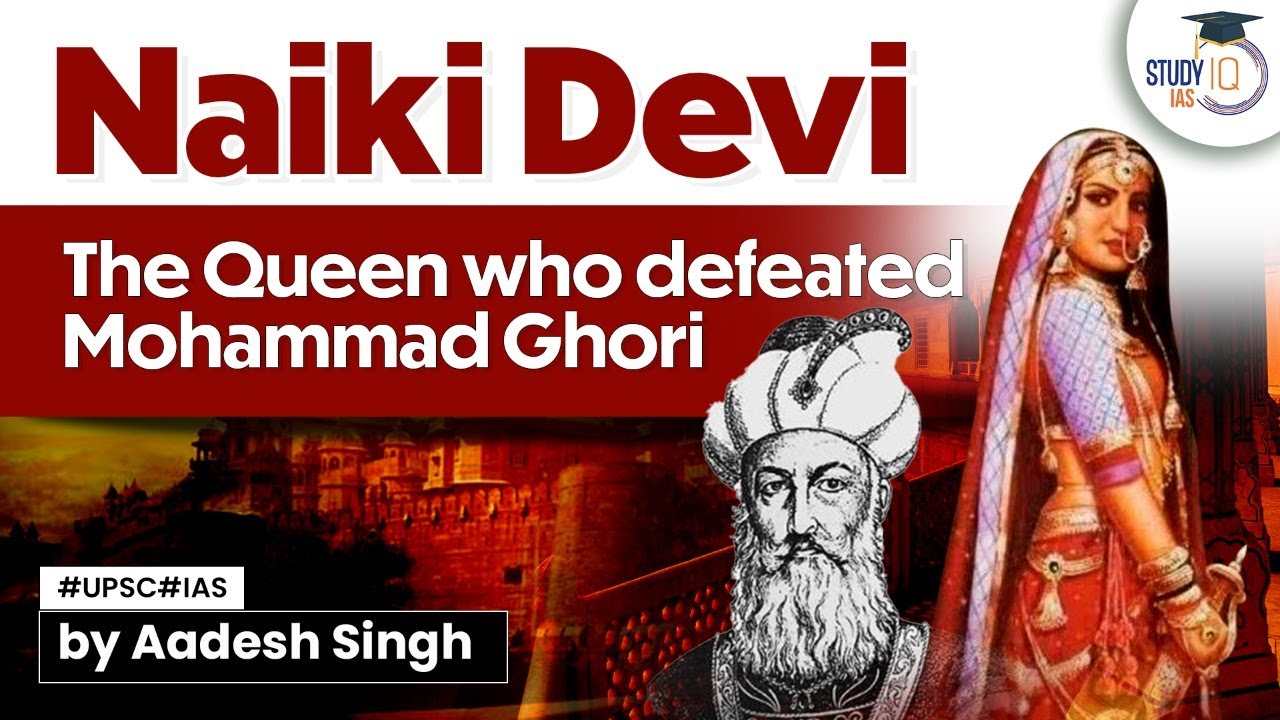
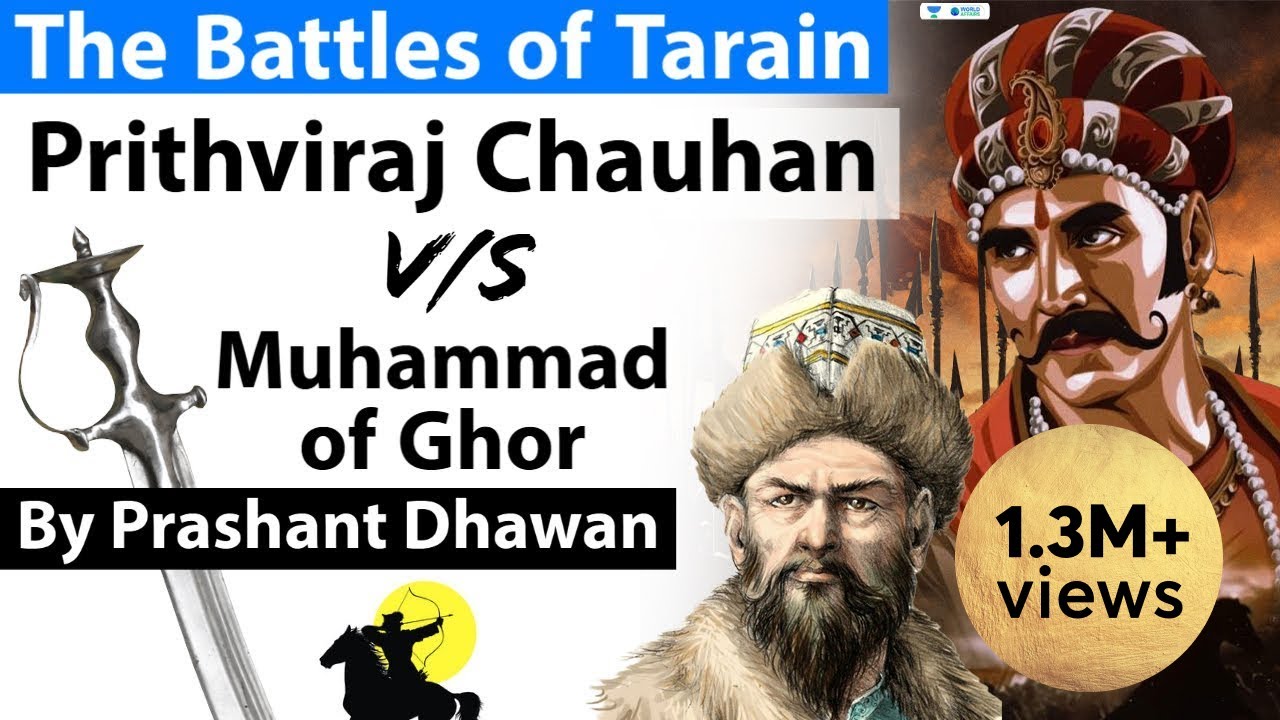
The rise of Muhammad Ghori, transitioning from a humble vassal state of Ghazni to becoming the undisputed founder of Muslim rule in North India, stands as a major turning point in Indian history. His calculated invasions, most notably the pivotal First and Second Battles of Tarain (, ), secured decisive victories against powerful figures like Prithviraj Chauhan and Jayachandra, thereby forging the foundational framework of the subsequent Delhi Sultanate. This critical historical period is highly important for students preparing for competitive exams as it offers deep insights into political fragmentation, effective military strategies, and the resulting lasting historical legacies of centralized Turkic governance.
🎯 In this chapter, you will understand:
- The political landscape of North India and Rajput fragmentation prior to Ghori's invasions.
- The major military campaigns, including the Battles of Tarain (, ) and Chandawar ().
- The establishment of the Delhi Sultanate by Qutubuddin Aibak in .
- The broader historical impact and cultural changes introduced during this era.
💡 Why this topic matters: It explains how decentralized regional powers in India gave way to centralized imperial rule, shaping medieval Indian political geography.
🧠 Core Idea: Strategic vision, military flexibility, and exploitation of internal political divisions enabled Ghori to establish permanent Turkic rule in India.
Muhammad Ghori’s Calculated Rise to Power and Enduring Legacy in India: Founding Turkic Rule (1175–1206)
Muhammad Ghori meticulously engineered a transformation from a localized vassal of Ghazni into a sweeping conqueror, ultimately establishing the crucial foundation for sustained Muslim rule in the Indian subcontinent.
His focused political and rigorous military campaigns effectively fractured North India’s pre-existing, decentralized landscape, powerfully setting the stage for the establishment of the powerful Delhi Sultanate shortly after his death.
- (i) The Ghori dynasty began its assertive emergence on the political stage following the significant decline of the centralized power previously held by Mahmud of Ghazni.
- (ii) Prior to launching his aggressive campaigns into the subcontinent, Muhammad Ghori dedicated significant effort to consolidate his power and administrative control over the strategic region of Ghazni.
- (iii) His repeated expansionist campaigns inevitably brought the prevailing independent Rajput kingdoms of North India into a fierce and direct military conflict with his rising authority.
The Political Condition of India: Rajput Fragmentation Before Ghori’s Invasions
Prior to the arrival of the Ghorids, the vast Indian subcontinent was characterized by a mosaic of regional powers, primarily governed by rival Rajput kingdoms, a state of affairs which significantly compromised their capacity for a united, collective defense against any foreign invasions.

Rajput Fragmentation and Internecine Rivalries: The Cause of Weakened Defense
The absence of a central paramount authority meant that regional figures, although powerful in their own right, prioritized localized control, leading to a constant state of internal conflict which critically diminished their ability to resist external threats.
- (i) Prominent and influential regional rulers, including Prithviraj Chauhan (Chahamana), Jayachandra (Gahadavala), Mularaja II (Solanki), and Lakshmanasena (Sena), individually dominated the fragmented political scene.
- (ii) Persistent and costly internecine warfare and deep-seated political rivalries among the various Rajput clans systematically eroded and weakened their collective military and political strength, exhausting resources and manpower.
- (iii) This widespread lack of political unity and strategic coordination effectively created the ideal opportunity and vulnerability that Ghori’s expansion required for successful territorial acquisition in the North.
Muhammad Ghori’s Strategic Invasions of India and Pivotal Battles
Through a carefully planned series of multi-year military campaigns conducted between and , Muhammad Ghori successfully established and cemented his control over the key strategic territories of North India.
Early Campaigns: Seizing Multan and Uch, and the Initial Resistance in Gujarat
Ghori’s military focus initially targeted the western frontiers, but he quickly faced both strategic successes and his first significant setback against organized Indian resistance, which temporarily checked his eastward advance.
- (i) His very first major invasion in resulted in the successful and swift capture of the strategically vital centers of Multan and Uch, securing a strong base of operations.
- (ii) However, his southward foray was repulsed when he suffered a decisive defeat at the hands of the Solanki ruler, Mularaja II, in Gujarat in the year .
The Decisive Battles of Tarain (1191, 1192) Against Prithviraj Chauhan
The twin conflicts fought near Tarain represent the most critical moment of the Ghorid campaign, marking the point where the strategic balance of power in North India dramatically shifted in favor of the invaders.
- (i) In – The First Battle of Tarain resulted in a major defeat for Ghori’s forces, who were successfully routed and defeated by the powerful coalition led by Prithviraj Chauhan.
- (ii) In – The Second Battle of Tarain saw Ghori return with meticulous preparation, achieving a decisive victory that permanently shattered the power of Prithviraj Chauhan, opening the heartland of India.
Further Expansion: Annexation of Kanauj, Delhi, Bihar, and Bengal
Following the victory at Tarain, Ghori and his trusted generals systematically moved to eliminate other key regional rulers, rapidly expanding the reach of the nascent Turkic territories and solidifying their long-term position.
Routes of conquest across Delhi, Kanauj, Bihar, and Bengal. - (a) The critical Battle of Chandawar in saw the defeat and death of Jayachandra, the powerful ruler of Kanauj, completely collapsing the important Gahadavala kingdom.
- (b) The strategic city of Delhi was secured and promptly placed under the loyal and capable administration of Qutubuddin Aibak, serving as Ghori's primary viceroy and spearhead.
- (c) The general Muhammad-bin-Baktiyar Khilji further expanded the Ghorid influence dramatically, leading successful campaigns into the wealthy and resource-rich regions of Bihar and Bengal.
⚡ Quick Revision Capsule: Key Campaigns and Battles of Muhammad Ghori
A quick chronological overview of the key military campaigns and expansion phases of Muhammad Ghori in India.
| Year / Timeframe | Battle / Event | Opponent / Region |
|---|---|---|
| Invasion of Multan and Uch | Local rulers of Multan and Uch | |
| Battle of Kayadara (Gujarat) | Solanki ruler Mularaja II | |
| First Battle of Tarain | Chahamana ruler Prithviraj Chauhan | |
| Second Battle of Tarain | Chahamana ruler Prithviraj Chauhan | |
| Battle of Chandawar | Gahadavala ruler Jayachandra of Kanauj |
Consolidation of the Delhi Sultanate by Qutubuddin Aibak
The successful campaigns initiated by Muhammad Ghori were fully realized in following his assassination, when his most trusted and capable general, Qutubuddin Aibak, formally declared independence and established the foundational dynasty of the Delhi Sultanate.
Qutubuddin Aibak’s Pivotal Role in Founding the Mamluk Dynasty
As the immediate successor to Ghori's territories, Aibak played an indispensable role in transitioning the vast conquests from a mere military occupation into a viable, independent political state, inaugurating a new era of governance.
- (i) He successfully consolidated all of Ghori’s conquests and vast territorial gains, transforming them into a unified and centrally administered territory.
- (ii) His ascendancy marked the formal establishment of the first continuous Turkic rule and stable political structure in the strategically crucial region of North India.
- (iii) By asserting his independence, Aibak became recognized as the legitimate founder of the Mamluk Dynasty, the earliest ruling lineage of the greater Delhi Sultanate period.
Muhammad Ghori’s Lasting Historical Legacy and Profound Impact
The enduring legacy of Muhammad Ghori is irrevocably tied to his monumental achievement of dissolving the Rajput political structure and establishing the nucleus that would grow into the powerful and long-lasting Delhi Sultanate, thereby initiating centuries of Turkic rule in India.
Historical Impact: Foundation for Muslim Rule and Cultural Integration
Ghori’s actions were not merely military victories; they represented a fundamental and irreversible alteration of the subcontinent's political landscape, creating channels for novel forms of cultural and administrative exchange that would define future centuries.
- (i) His conquests demonstrably laid the robust and permanent foundation for the centuries-long trajectory of Muslim rule and political influence in India.
- (ii) The subsequent political and administrative systems he introduced facilitated deep cultural integration and paved the way for profound societal and political change within the subcontinent.
- (iii) After his assassination in by Khokars, his capable military lieutenants, notably Aibak, ensured that his expansive political mission continued and flourished, securing the future of the new government structure.
📝 Summary
The consequential rise of Muhammad Ghori represents a decisive and critical shift in Indian history, marking the end of the fractured Rajput era. Through his strategic invasions and pivotal battles, including Tarain (, ) and Chandawar (), he systematically defeated major Rajput rulers and established the crucial territorial foundation of the Delhi Sultanate. For students and those focused on competitive exam preparation, understanding his detailed military campaigns, effective political strategies, and the resulting lasting legacy of is absolutely vital for grasping the significant historical transition from fragmented Rajput dominance to centralized Turkic rule.
🚀 Quick Revision Points
Essential facts to review before examinations:
- (i) Ghori Dynasty emerged following the decline of Ghaznavid power in Central and South Asia.
- (ii) Solanki ruler Mularaja II defeated Ghori in Gujarat in at the Battle of Kayadara.
- (iii) The Second Battle of Tarain () cleared the path for Turkic dominance in Northern India.
- (iv) Qutubuddin Aibak officially established the Mamluk Dynasty of the Delhi Sultanate in .
- 💡 Exam Tip: Pay close attention to the chronological sequence of battles: Multan (), Gujarat (), Tarain I (), Tarain II (), and Chandawar ().
❓ Frequently Asked Questions (FAQ)
Q1: What was the significance of the Second Battle of Tarain ()?
A1: It shattered the major Rajput confederacy led by Prithviraj Chauhan, effectively opening Northern India to Turkic establishment.Q2: Who established the Delhi Sultanate after Muhammad Ghori's death?
A2: Qutubuddin Aibak, Ghori's trusted general, declared independence in and founded the Mamluk Dynasty.Q3: Why were the Rajput kingdoms unable to stop Ghori's conquest?
A3: Severe political fragmentation, lack of a central authority, and continuous internecine warfare eroded their collective resistance capabilities.