The Turkish conquest of India, spanning the critical transition from the late 12th century to the early 13th century, stands as an undeniable watershed moment in medieval Indian history. This transformative period involved the strategic rise of powerful Central Asian dynasties, particularly the Ghaznavids, Ghurids, and subsequent independent Turkish rulers, culminating in pivotal military engagements like the epochal Battle of Tarain (1191–1192). These successes led to the rapid consolidation of Turkish power and the establishment of new administrative centers in key regions, including Delhi, Rajputana, and Bengal. For students preparing for competitive exams, a deep dive into these events is essential for understanding the fundamental and long-lasting transformation of the Indian polity, societal structure, and religious landscape under profound Turkish influence.
🎯 In this chapter, you will understand:
- How Ghaznavid incursions set the stage for later Turkish invasions in North India.
- The strategic moves of Muhammad Ghori and the decisive Battles of Tarain.
- The rapid spread of Turkish control into the Ganga valley and eastern regions like Bengal.
- The structural factors that led to the decline of Rajput resistance and the creation of the Delhi Sultanate.
💡 Why this topic matters: Understanding this period explains how northern India shifted from decentralized regional kingdoms to a centralized empire under the Delhi Sultanate.
🧠 Core Idea: The Turkish success was driven by centralized military administration, mobile cavalry tactics, and persistent state-building, exploiting political divisions among Indian rulers.
Turkish Conquest of India: Critical Campaigns, Shifting Power, and State Consolidation (12th–13th Century)
The Turkish conquest unfolded as a complex narrative of sustained military invasions, the dramatic shift of regional power centers, and the ultimate decline of organized Rajput resistance across North India. This monumental historical phase originated with predatory Ghaznavid raids and culminated decisively with the comprehensive foundation of formal Turkish rule in North India, constructing the essential framework for the future Delhi Sultanate.
- (i) The strategically vital early Ghaznavid conquests served as a crucial precursor, significantly shaping initial Muslim-Hindu political and social relations in the region.
- (ii) Simultaneously, the gradual increase in commercial and cultural exchanges, facilitated by trade routes and early settlements, played a key role in the subsequent spread of Sufism across the northern plains.
- (iii) The eventual failure of Rajput resistance was a critical factor, primarily stemming from a persistent lack of centralized political unity and a fragmented military approach among northern kingdoms.
Prelude to the Turkish Conquest: The Enduring Ghaznavid Influence and Blueprint
The earlier presence of the Ghaznavids provided more than just a historical footnote; it laid the geopolitical and military groundwork for subsequent Turkish advances deep into Punjab and the heartland of North India.

Ghaznavid Dynamics: Shaping Trade, Cultural Exchange, and Political Resistance
The century-long presence and recurrent campaigns of the Ghaznavids shaped regional trade networks, cultural exchange patterns, and the initial contours of political resistance encountered by later invaders. These persistent incursions softened defenses in North India, creating crucial strategic openings for the Ghurid takeover.
- (i) The sustained Punjab conquests under the Ghaznavids permanently altered administrative and social dynamics, creating frontier zones in Muslim-Hindu relations that the Ghurids later exploited, turning Lahore into a forward base.
- (ii) Extensive raids into the Gangetic valley, particularly those led by Mahmud of Ghazni, provoked military responses from major Rajput states further east, though these responses were uncoordinated and failed to establish a unified defense.
- (iii) The establishment of early Sufi preachers and settled Muslim trader colonies in areas like Lahore and Multan integrated the Islamic community into the existing regional social structure, setting the stage for deeper political penetration.
Central Asian Power Shifts: The Instability and the Ascendancy of New Empires
The geopolitical landscape of Central Asia was rapidly transformed by the decline of the once-dominant Seljuk Empire. This shift catalyzed the rise of successor powers, notably the Khwarizmi Empire and the Ghurid dynasty, effectively redirecting military expansion toward the fertile plains of India.
The Rise of the Ghurids: From Mountain Vassals to Imperial Contenders
The Ghurids, originally rulers of the mountainous region of Ghur in present-day Afghanistan, evolved from minor dependents into a significant imperial force. Their strategic planning and military strength allowed them to supplant the Ghaznavids and look eastward for territorial growth.
- (i) The Ghurids initially served as Ghaznavid vassals but capitalized on the declining power of their masters to emerge as a major regional power, eventually conquering Ghazni itself.
- (ii) A crucial moment arrived when the Ghurid leader, Sultan Alauddin Husain Jahansuz, successfully sacked Ghazni in , signaling the end of the Ghaznavid golden age and initiating Ghurid territorial expansion.
- (iii) Facing pressure from the powerful Khwarizmi Shahs to the north and west, the ambitious Ghurids shifted their primary focus and military campaigns toward the Indian subcontinent, viewing it as a lucrative domain.
Muizzuddin Muhammad's Campaigns: Consolidating Punjab and Striking into North India
Muizzuddin Muhammad Ghori personally led a series of calculated campaigns aimed at consolidating the strategic frontier of Punjab and expanding into the contested territory of North India.
Muhammad Ghori’s Strategic Expansion: Building a Permanent Base
Muhammad Ghori’s strategy focused on establishing a stable, permanent base of operations in India rather than temporary plundering raids, distinguishing him from earlier invaders.
- (i) Following the death of his brother, Ghiyath al-Din Muhammad, Muizzuddin became the ruler at Ghazni in , using it as his forward command post for Indian campaigns.
- (ii) After a major setback against the Chalukyas in Gujarat, he adapted his strategy, focusing instead on establishing a strong military and political base in Punjab by conquering Multan and Lahore from the last Ghaznavid remnants.
- (iii) By , Ghori secured a broad swathe of territory, including Peshawar, Lahore, and Sialkot, positioning himself directly against the major Rajput confederacies, particularly the Chauhans of Delhi and Ajmer.
The Battle of Tarain: The Ultimate Showdown Between Rajput and Turkish Might
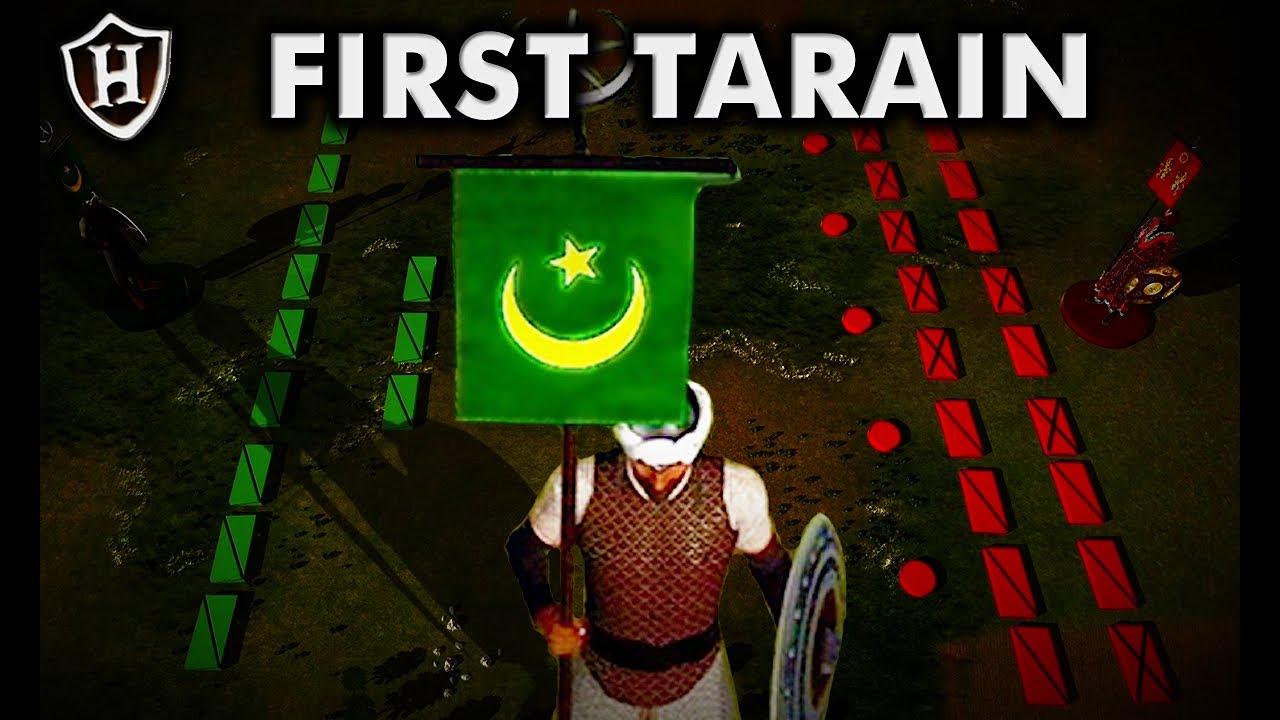
The two consecutive engagements fought at Tarain in and irrevocably altered the balance of power, shifting political control from fragmented Rajput kingdoms to the centralized military command of the Turkish rulers.
Outcome of the Battles: The Overthrow of Prithviraj Chauhan
The battles at Tarain highlighted both the initial vigor of the Rajput defense and the superior strategic planning, disciplined archers, and mobile cavalry tactics employed by the Ghurid forces in the second encounter.
- (i) The first encounter in saw victory for Indian forces as Prithviraj Chauhan, leading a coalition of Rajput rulers, defeated and routed the Ghurids, forcing Muizzuddin to retreat to Ghazni.
- (ii) In , a well-prepared Muizzuddin returned with a superior force. His disciplined and mobile Ghurid cavalry decisively defeated the army of the Rajputs through effective tactical maneuvers.
- (iii) The swift capture and execution of Prithviraj after the battle was a major blow, opening the key urban and political centers of Delhi and eastern Rajasthan to Turkish occupation.
Rapid Expansion into the Ganga Valley: Consolidating the Heartland
Following victory at Tarain, Turkish rule extended rapidly into the heartlands of Bihar and Bengal. This push was primarily driven by Muizzuddin's capable lieutenant, Qutbuddin Aibak, who managed the newly conquered territories.
Battle of Chandawar and Beyond: Subduing the Last Major Rajput Power
The defeat of the powerful Gahadavala kingdom of Kanauj, under its ruler Jaichandra, was the final major hurdle in securing the central Indo-Gangetic plain.
- (i) In , forces under Qutbuddin Aibak met Jaichandra of Kanauj at the Battle of Chandawar, where Jaichandra was defeated and killed, breaking the power of the Gahadavala state.
- (ii) This victory allowed the Turks to consolidate political and military control over the Ganga valley, the richest and most agriculturally productive region of North India.
- (iii) While Ghori returned to Central Asia, Qutbuddin Aibak stayed in India as viceroy, managing and expanding territory as the key figure in founding the Delhi Sultanate.
Bakhtiyar Khalji’s Bengal Campaign: Military Advance and Cultural Devastation
The conquest of Eastern India was led by Ikhtiyar-ud-din Muhammad bin Bakhtiyar Khalji, who conducted rapid campaigns that established Turkish control over Bengal and parts of Bihar.
Impact of Bakhtiyar’s Campaign: The Eastern Consolidation
The eastern campaigns were marked by high military speed, but also caused significant destruction that altered the religious landscape of the region, particularly affecting Buddhism.
- (i) The destruction of ancient learning centers like Nalanda and Vikramasila dealt a heavy blow to institutionalized Buddhism in its traditional heartland, accelerating its decline.
- (ii) This military drive consolidated Turkish political power across eastern India, integrating a vast new area and securing the eastern frontier.
- (iii) Subsequent rule and administration facilitated the gradual spread of Islam in Bengal, shaping the long-term demographic and cultural identity of the region.
Consolidation and Challenges: From Raids to State Formation
The assassination of Muizzuddin in did not stop the momentum. The administrative and military framework he established allowed Turkish rule to solidify into an independent state in North India.
Formation of the Turkish State: The Birth of the Delhi Sultanate
The final phase transformed military conquests into a stable, administered political state capable of handling internal and external pressures.
- (i) External threats from the Khwarizmis on the western frontier led Ghori’s successor, Qutbuddin Aibak, to focus on his Indian domains, making independence a practical necessity.
- (ii) Muizzuddin’s campaigns laid the political and military foundations for the permanent establishment of the Delhi Sultanate as an independent kingdom.
- (iii) This era marked a permanent transition from temporary raids to lasting state formation with centralized governance, led by Qutbuddin Aibak as the first Sultan.
Rajput Defeat: Structural Weaknesses and Strategic Analysis
The overall defeat of the Rajputs was primarily caused by internal structural and organizational weaknesses within their political and military systems, rather than a lack of individual bravery.
Reasons for Rajput Weakness: Fragmentation and Decentralization
Flaws in the Rajput military and administrative model contrasted sharply with the centralized, professional structure of the Ghurid forces.
- (i) The prevalent feudal system relied on local chieftains bringing separate contingents, which weakened army organization and made large-scale coordination difficult.
- (ii) In contrast, the Turks' centralized iqta system assigned land revenue rights in exchange for maintaining professional military units accountable directly to the Sultan, ensuring better central control and mobile standing forces.
- (iii) A lack of long-term strategic vision and unified command among competing Rajput rulers prevented them from forming a strong, lasting alliance against the Turkish advance.
⚡ Quick Revision Capsule: Key Battles & Milestones of Turkish Conquest
A quick comparison of major events, key figures, and political outcomes during the 12th and 13th century Turkish conquest of Northern India.
| Year / Event | Key Figures | Historical Outcome |
|---|---|---|
| : Sack of Ghazni | Alauddin Husain Jahansuz | Ended Ghaznavid supremacy, marking the rise of the Ghurid dynasty in Central Asia. |
| : Ghazni Base Established | Muizzuddin Muhammad Ghori | Ghazni became the forward operational base for launches into Punjab and northern India. |
| : First Battle of Tarain | Prithviraj Chauhan vs. Muhammad Ghori | Rajput coalition routed Ghurid forces; Ghori retreated to prepare a structured counter-offensive. |
| : Second Battle of Tarain | Prithviraj Chauhan vs. Muhammad Ghori | Decisive Ghurid victory using mobile cavalry; opened Delhi and Rajasthan to Turkish rule. |
| : Battle of Chandawar | Qutbuddin Aibak vs. Jaichandra of Kanauj | Defeated Gahadavala power; secured Turkish control over the fertile Gangetic plain. |
| : Foundation of Delhi Sultanate | Qutbuddin Aibak | Independent Turkish state formed after Ghori's death, establishing centralized Sultanate rule. |
📝 Summary
The Turkish conquest of India during the 12th and 13th centuries fundamentally altered the course of North Indian politics. It marked the decline of decentralized Rajput kingdoms and the rise of the centralized Delhi Sultanate. Strategic victories at Tarain and Chandawar, led by Muhammad Ghori, Qutbuddin Aibak, and Bakhtiyar Khalji, replaced fragmented feudal levies with an organized state framework powered by the iqta system. This period created lasting administrative, cultural, and social shifts across northern and eastern India.
🚀 Quick Revision Points
Essential facts to review before examinations:
- (i) Ghaznavid presence in Punjab established Lahore as an entry base for future invasions.
- (ii) Central Asian rivalries with the Khwarizmi Shahs pushed the Ghurids to focus expansion on India.
- (iii) The Second Battle of Tarain () was the primary turning point for Turkish rule in North India.
- (iv) The iqta system provided a centralized method to maintain standing military forces compared to decentralized feudal armies.
- 💡 Exam Tip: In exam questions comparing Rajput and Turkish military systems, highlight the structural contrast between the Turkish centralized iqta system with mobile cavalry and the decentralized Rajput feudal contingents.
❓ Frequently Asked Questions (FAQ)
Q1: What was the main turning point in the Turkish conquest of Northern India?
A1: The Second Battle of Tarain in was the major turning point, where Muhammad Ghori defeated Prithviraj Chauhan and established firm political footing near Delhi.Q2: How did the iqta system help the Turkish rulers?
A2: The iqta system allowed the Sultan to assign land revenue rights to military commanders in exchange for maintaining disciplined, standing military units, giving them stronger central control over their forces.Q3: Why did the Rajput kingdoms struggle to stop the Turkish advance?
A3: The Rajput kingdoms lacked political unity, relied on decentralized feudal armies that were hard to coordinate, and lacked a shared long-term defense strategy against centralized invasion forces.