The Gurjara-Pratihara Empire held a strategic and influential position in medieval Indian politics and administration across northern India, prominently active between . Their formidable rule contributed profoundly to sophisticated military strategies, unique temple architecture, Sanskrit literature, and complex governance systems, making their study vital for students preparing for history exams. Understanding the key Pratihara rulers and their effective administrative policies is key to comprehending the dynamic political and military landscape of northern India in the medieval era.
🎯 In this chapter, you will understand:
- The origins and territorial expansion of the Gurjara-Pratihara dynasty in northern India.
- Key rulers such as Nagabhata I, Bhoja I, and Mahendrapala I and their military feats.
- Distinct architectural features of Gurjara-Pratihara temples and famous literary works.
- The dynamics of the Tripartite Struggle for Kannauj and reasons for the empire's decline.
💡 Why this topic matters: The Gurjara-Pratihara Empire served as a powerful shield protecting western India from early foreign invasions while nurturing classical Nagara temple design and Sanskrit drama.
🧠 Core Idea: Strong imperial rule based out of Kannauj unified large parts of northern India through military strength, extensive patronage of literature, and regional temple construction.
👑 Gurjara-Pratihara Empire: Military Prowess, Administration, and Architecture in Northern India (730–1036 CE)
The Gurjara-Pratiharas rapidly emerged as a dominant power in the northwestern regions of the Indian subcontinent, earning renown for their disciplined military prowess and far-reaching administrative innovations. The dynasty rose amidst the political fragmentation following King Harsha's reign, eventually establishing firm control over strategic areas including Rajasthan, Malwa, and the coveted capital of Kannauj, while simultaneously exerting considerable influence over neighboring princely regions.
Origins and Lineage of the Dynasty
Historical roots of the dynasty show a combination of bardic traditions and geographical migration in western India.
- (i) The dynasty's early origins remain a subject of historical debate; while some scholars suggest a connection to migrations from Central Asia following the collapse of the Gupta period, their historical roots are firmly established in western India.
- (ii) They initially settled in Rajasthan and famously traced their lineage to bardic rituals performed at Mount Abu, thereby aligning themselves with the powerful and symbolic Agnikula Rajputs.
- (iii) The name Pratihara literally translates to "doorkeeper," a symbolic title referencing their mythical ancestor Lakshmana, who is traditionally described as the devoted guardian of Lord Rama.
🏛️ Political History and Structure of the Gurjara-Pratihara Dynasty
The Pratiharas effectively ruled from approximately to , establishing their imperial capital at the strategically vital city of Kannauj, which became the focal point of continuous military campaigns and shifting political alliances.

Notable Rulers and Their Military and Political Contributions
The power of the empire was cemented by a succession of strong rulers who were not only military leaders but also active patrons of culture and administration.
- (i) Nagabhata I (): Recognized as the founder of the dynasty's true power, he is credited with successfully repelling the initial and persistent Arab invasions that threatened to overrun western India.
- (ii) Vatsaraja (): A significant expansionist, he extended the growing empire’s territory and notably defeated Dharmapala, the powerful Pala ruler of Bengal, marking the start of the Tripartite Struggle.
- (iii) Nagabhata II (): He achieved the pivotal capture of the city of Kannauj, made key political alliances with distant kingdoms like Andhra, Vidarbha, and Kalinga, and continually engaged in warfare against the Deccan-based Rashtrakutas.
- (iv) Bhoja I (): Considered the greatest ruler of the dynasty, he brought the empire to its peak:
- (a) He successfully restored and substantially strengthened the empire after earlier setbacks.
- (b) He reconquered major territories like Malwa and Gujarat, notably defeating Krishna II of the formidable Rashtrakuta dynasty.
- (c) He adopted the imperial and deeply symbolic title Adivaraha (Prime Boar incarnation of Vishnu), which prominently features on his widespread coinage.
- (d) His vast military strength and the peaceful prosperity of his kingdom were praised by the contemporary Arab historian Sulaiman.
- (v) Mahendrapala I (): He was successful in maintaining and further expanding the large territorial integrity inherited from his predecessor.
- (a) He was a significant patron of learning and literature, most famously supporting the renowned scholar and dramatist Rajashekhara.
🎨 Architectural and Literary Heritage
Beyond military strength, the Pratiharas created lasting contributions in temple architecture and classical Sanskrit literature.
Architectural Contributions and Distinct Temple Style
The Pratiharas developed and patronized a highly recognizable style of temple construction that left an indelible mark on the architecture of northern and western India.
The architectural grandeur of Teli-ka-Mandir in Gwalior, showing early Nagara design elements. - Gurjara-Pratihara Style: They systematically developed the characteristic Gurjara-Pratihara temple style, known for distinct ornamentation and structural features within the broader Nagara traditions.
- Teli-ka-Mandir, Gwalior: A unique, towering temple notable for its unconventional roof structure within Nagara architecture.
- Mahavira Jain Temple, Osian: Recognized as the oldest surviving Jain temple in the Western Indian region.
- Bateshwar Temples, Madhya Pradesh: A massive, sprawling cluster of nearly 200 temples dedicated to the worship of Shiva, Vishnu, and Shakti.
- Baroli Temples, Rajasthan: An aesthetically rich complex of eight distinct temples dating back to the , famous for detailed stone carvings.
Literary Contributions and Intellectual Life
The Pratihara court provided extensive patronage to scholars, resulting in the creation of several classic works, particularly in Sanskrit drama and poetics.
- Rajashekhara's Masterpieces: Patronized by Mahendrapala I and his son, Rajashekhara was one of the most brilliant literary figures of the era, authoring works like:
- (i) Karpuramanjari – A celebrated drama written entirely in Prakrit.
- (ii) Bala-Ramayana and Bala Bharata – Highly regarded adaptations of the great Indian epics.
- (iii) Kavyamimansa – A foundational treatise on the principles and practice of poetry.
- Foreign Accounts: The records of the Arab traveler Sulaiman offer critical external evidence about King Bhoja's reign:
- (a) They describe the kingdom's immense wealth and formidable military forces, especially its powerful cavalry.
- (b) They highlight a stable trade system primarily based on the extensive circulation of gold and silver currency.
- (c) They attest to the overall prosperity, safety, and security enjoyed by citizens inside the Pratihara realm.
- Rajashekhara's Masterpieces: Patronized by Mahendrapala I and his son, Rajashekhara was one of the most brilliant literary figures of the era, authoring works like:
The Tripartite Struggle for Kannauj
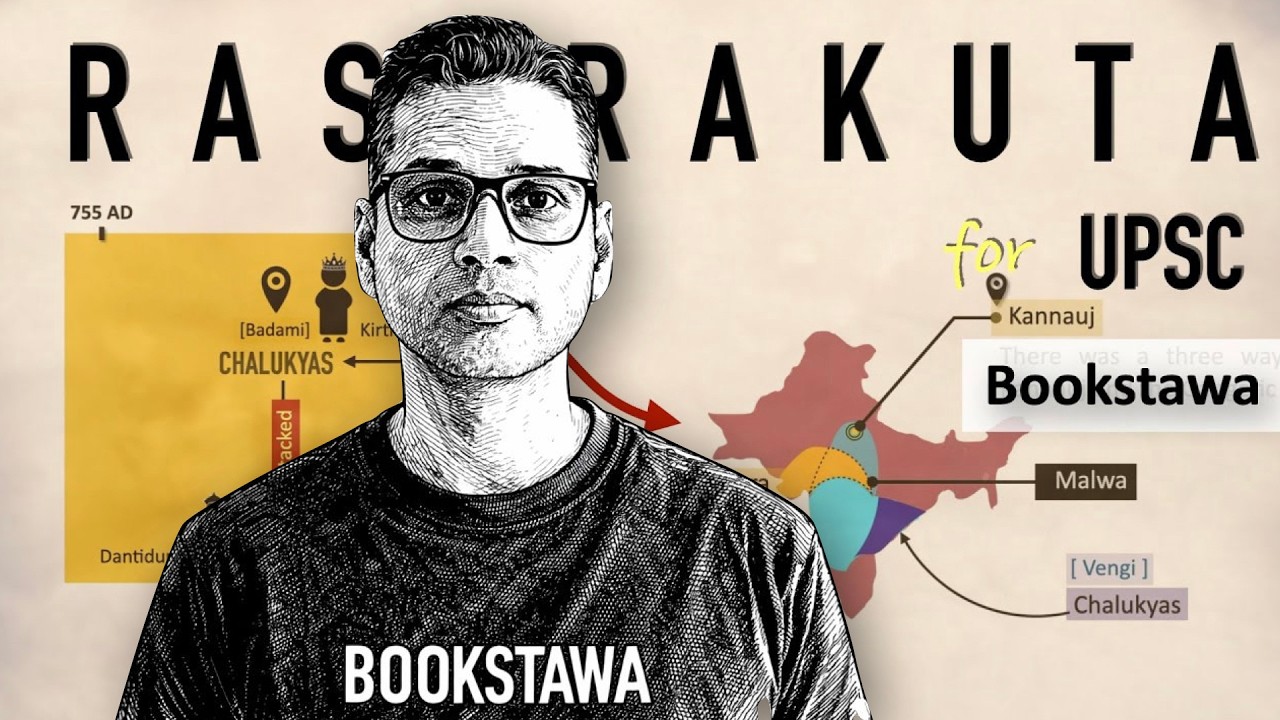
The struggle to control the strategic and symbolically important city of Kannauj dominated northern Indian politics for over two centuries, with the Pratiharas being a central participant.
- (i) Following the death of Harsha, the city of Kannauj was left without a stable imperial successor, plunging the Ganges Valley into a power vacuum.
- (ii) Initially, the city was controlled by Yashovarman, who temporarily allied with the Kashmiri king Lalitaditya Muktapida.
- (iii) The long struggle for control centered on three great powers: the Pratiharas (West), the Palas (East), and the Rashtrakutas (South).
- (iv) The Pratihara king Vatsaraja gained an early advantage by defeating Dharmapala of Bengal and the Rashtrakuta ruler Dantidurga.
- (v) This victory was reversed when the Rashtrakuta king Dhruva marched north and defeated Vatsaraja.
- (vi) Ultimately, Nagabhata II reclaimed and secured the title of master of Kannauj, extending Pratihara control over Malwa and parts of Bihar.
⚡ Quick Revision Capsule: Gurjara-Pratihara Dynasty
This quick summary table presents key details about major kings, cultural works, and architectural highlights for quick exam review.
| Category | Key Details & Figures | Historical Significance |
|---|---|---|
| Founding Rulers | Nagabhata I () | Established true dynastic power and successfully repelled early Arab military invasions. |
| Greatest Imperial Monarch | Bhoja I () | Took the title Adivaraha, made Kannauj the stable capital, and expanded control over Malwa and Gujarat. |
| Literary Patronage | Scholar Rajashekhara supported by Mahendrapala I | Authored famous classical texts including Karpuramanjari, Kavyamimansa, and Bala-Ramayana. |
| Major Architectural Sites | Teli-ka-Mandir (Gwalior), Bateshwar Cluster (MP), Baroli (Rajasthan) | Pioneered the Gurjara-Pratihara temple style within northern Indian Nagara architecture. |
| Key Foreign Account | Travel records of Arab writer Sulaiman | Documented the huge army, strong security, thriving trade, and widespread gold and silver coinage. |
📝 Summary
The Gurjara-Pratihara Empire played a pivotal and strategically vital role in shaping medieval Indian politics, administration, and culture between . Their significant contributions to the development of unique temple architecture, influential literature, and a centralized governance structure are crucial areas of study for students preparing for history exams. Analyzing the Pratiharas reveals deep insights into effective military strategies, complex political alliances (especially the Tripartite Struggle for Kannauj), and widespread cultural developments documented in works like Kavyamimansa and accounts of visitors like Sulaiman.
🚀 Quick Revision Points
Essential facts to review before examinations:
- (i) The term Pratihara means "doorkeeper," reflecting symbolic descent from Lakshmana.
- (ii) Capital city Kannauj served as the political prize during the multi-century Tripartite Struggle against the Palas and Rashtrakutas.
- (iii) Bhoja I adopted the coin title Adivaraha and was recognized for maintaining strong internal security.
- (iv) Master dramatist Rajashekhara composed the famous Prakrit play Karpuramanjari under Pratihara royal patronage.
- 💡 Exam Tip: Questions frequently ask about the three parties in the Tripartite Struggle (Pratiharas, Palas, Rashtrakutas), King Bhoja I's title (Adivaraha), and court poet Rajashekhara's literary works.
❓ Frequently Asked Questions (FAQ)
Q1: Who was the most powerful ruler of the Gurjara-Pratihara Empire?
A1: King Bhoja I () is considered the most powerful ruler. He restored the empire's power, took the title Adivaraha, and established strong rule from Kannauj.Q2: What was the Tripartite Struggle and who took part in it?
A2: The Tripartite Struggle was a two-century conflict for control over the strategic city of Kannauj in northern India, fought between the Pratiharas of the west, the Palas of Bengal, and the Rashtrakutas of the Deccan.Q3: Which famous scholar was patronized by the Pratihara court?
A3: The eminent Sanskrit poet and playwright Rajashekhara was patronized by King Mahendrapala I. He wrote celebrated literary works including Karpuramanjari and Kavyamimansa.