The Turkish Conquest of India represents a monumental shift in the subcontinent's history, fundamentally altering the geopolitical landscape between . This era saw relentless incursions led by powerful figures like Mahmud Ghazni and the strategic establishment of Muslim rule by Muhammad Ghori, critically weakening independent Rajput kingdoms and setting the stage for the creation of the Delhi Sultanate. This transformative period is essential knowledge for students preparing for history exams, offering deep insights into medieval Indian state formation and socio-political evolution.
🎯 In this chapter, you will understand:
- The two main phases of Turkish invasions led by Mahmud Ghazni and Muhammad Ghori.
- The foundation and administrative consolidation of the Delhi Sultanate.
- Socio-economic, cultural, and military changes under Indo-Islamic rule.
- The key chronological events leading from to .
💡 Why this topic matters: It marks the transition from early medieval regional kingdoms to a centralized empire, introducing lasting cultural, economic, and administrative systems in India.
🧠 Core Idea: Early wealth raids destabilized Indian polities, enabling subsequent invaders to establish long-term political control and build a unified state apparatus.
Turkish Conquest of India: From Wealth Raids of Mahmud Ghazni to Imperial Foundation by Muhammad Ghori ()
The beginning of Turkish dominance in India was catalyzed by powerful rulers whose invasions sought both immense wealth and territorial control. The saga unfolded in two major phases: initial wealth-focused raids, followed by systematic political expansion.
The first phase focused on plundering resources, while the second phase built lasting administrative structures across northern India.
- (i) The Plunderer, Mahmud Ghazni: He executed approximately 17 major raids into India. His notorious attack on the sacred Somnath Temple in brought immense wealth back to Ghazni and deeply unstable northern political structures.
- (ii) The Destabilizing Effect on India: Ghazni's repeated campaigns fractured the decentralized resistance of Rajput kingdoms, stripping accumulated wealth and leaving a power vacuum that later Central Asian rulers exploited.
- (iii) The Founder, Muhammad Ghori: Unlike his predecessor, Ghori focused on strategic land expansion and political control. He established a lasting presence in northern India, leading directly to the foundation of the Delhi Sultanate.
Summary: Importance of Turkish Conquest in Medieval Indian History
The transformative Turkish Conquest of India, spanning from , marked the definitive end of early medieval political setups. While Mahmud Ghazni destabilized the region through raids, Muhammad Ghori used military strategy to reshape political, economic, and cultural setups. This led to the establishment of the Delhi Sultanate, making this an essential topic for students preparing for history exams who need to understand the origins of Muslim rule and social synthesis in India.

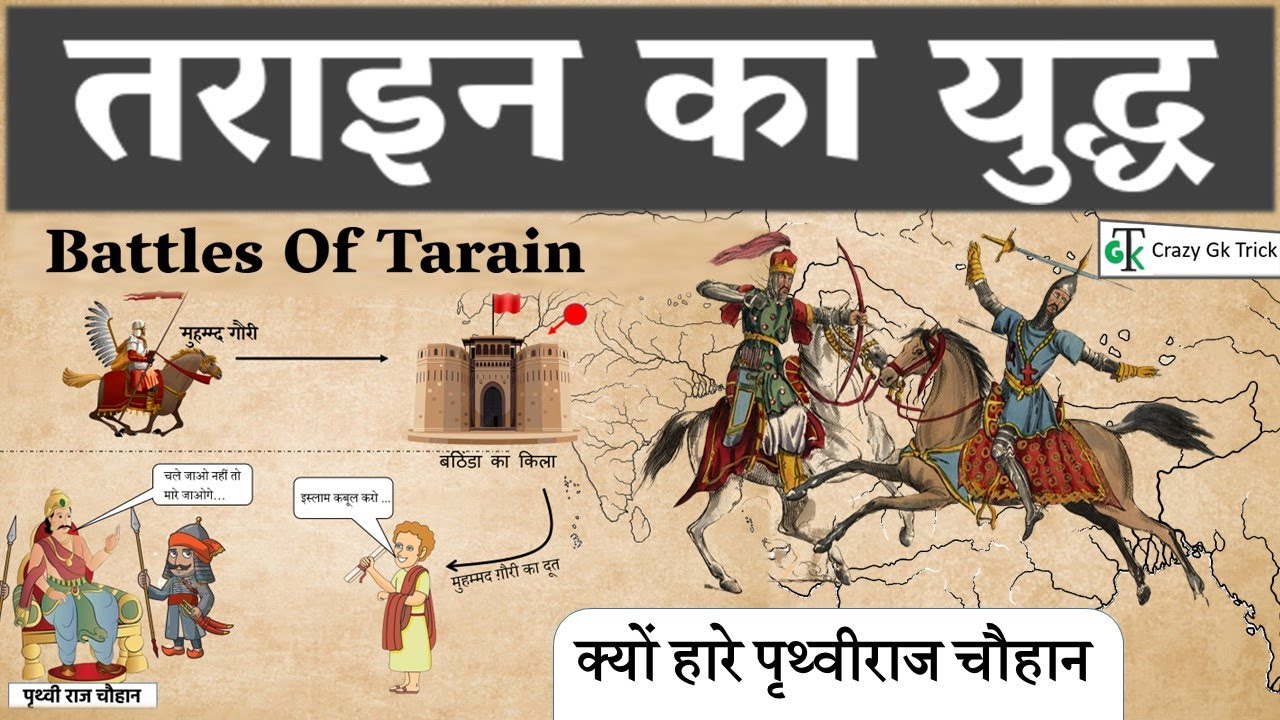
The Delhi Sultanate represents a turning point in Indian history, starting with Muhammad Ghori's decisive victory over the Rajput king Prithviraj Chauhan at the Second Battle of . This period brought centuries of continuous Muslim rule in North India, along with major administrative reforms, higher economic prosperity from trade, and a rich cultural synthesis. Understanding these governance changes is crucial for all students preparing for history exams.
- The foundation of the Delhi Sultanate introduced centralized governance and acted as a catalyst for widespread socio-political and economic transformation across the region.
- Following the victory at Tarain in , Turkish power was consolidated. The Sultanate adopted a Persian administrative framework, expanded trade routes, and encouraged urban growth.
- (i) Consolidation of Power: Turkish military and political leadership was firmly established over key regions of northern India.
- (ii) Centralized Governance: Rulers like Iltutmish and Alauddin Khalji built a strong central administrative system, replacing scattered local feudal structures.
- (iii) Cultural and Administrative Tool: The official use of the Persian language in courts and offices helped standardise governance and encouraged long-term cultural integration.
Transformations During the Delhi Sultanate Era
The Sultanate period brought large-scale, lasting changes across social, cultural, economic, and military fields, showing an era of new ideas and cultural adapting.
Socio-Cultural Impact: Indo-Islamic Synthesis and Architectural Marvels
A new, combined culture—often called Indo-Islamic culture—developed through daily interactions between the Hindu population and the Muslim ruling class, affecting everyday life, art, and societal habits.
- (i) Cultural Fusion: A major legacy was the deep Indo-Islamic cultural synthesis created through continuous community interaction.
- (ii) Persian Influence: Strong Persian traditions were adopted in art, building design, literature, and courtly etiquette.
- (iii) Social Mobility and Caste: The new political hierarchy challenged rigid traditional caste barriers, offering new paths for protection and upward mobility, especially for lower-caste groups.
- (iv) Architectural Icons: Grand structures were built combining local and Central Asian styles, such as the famous Qutb Minar.
- (v) Fostering Learning: Educational centers called madrasas and libraries were opened across the kingdom to support advanced learning and research.
Economic Impact: Commercial Growth, Trade Networks, and Urbanization
Political stability and centralized management gave a strong push to domestic and overseas business, bringing higher economic output in key sectors.
- (a) Trade Boom: Internal and international commerce expanded quickly, supported by standardized coins and better road connections.
- (b) Agricultural Innovation: New farming methods and high-value crops were brought from Central Asia, boosting total crop yields.
- (c) New Commercial Hubs: Rapid urbanization took place, turning cities like Delhi and Lahore into major trade and administrative centers.
- (d) Integrated Trade: Indian traders were linked directly into lucrative Central Asian trade networks.
Military Impact: Centralized Forces and Defense Strategy
To keep internal order and defend against the dangerous Mongol threat, the Sultans created a strong, highly organized military system.
- (i) Centralized Forces: The state maintained large standing armies with a primary focus on fast, well-equipped cavalry units.
- (ii) Strategic Defense: Careful defense planning and military updates successfully protected northern borders against repeated Mongol invasions.
- (iii) Fortified Security: A network of strategic forts and posts was built to protect trade routes and defend borders.
Cultural Impact: Fusion, Language, and Patronage
Royal patronage helped literature, arts, and architectural innovations thrive throughout the territory.
Indo-Islamic art and architectural motifs developed during the Sultanate era. - Arts and Culture: A unique fusion of Indo-Islamic culture became the main feature of architecture, painting, and written literature.
- Language and Literature: The Persian language became the official court language, while local popular languages like Hindvi also grew.
- Iconic Construction: Impressive structures like the Qutb Minar complex and the grand Alai Darwaza were constructed as symbols of imperial power and design.
Political, Social, and Economic Changes: Administrative Uniformity and Taxation
The Delhi Sultanate reworked traditional governance, social life, and revenue structures across North India.
Political Changes: Centralized Muslim Rule and New Administrative Systems
The Sultanate established a centralized monarchy that replaced older, fragmented local kingdoms.
- (i) Establishment of Dominion: Long-term Muslim rule was successfully set up across broad areas of North India.
- (ii) The New Capital:Iltutmish made Delhi the official capital, establishing it as the center of power.
- (iii) Ideological Influence: Governance drew political legitimacy through symbolic recognition from the Caliph of Baghdad.
- (iv) The Iqta System: The Iqta system—granting land revenue rights in place of cash salaries to officials—was introduced for unified administration and resource control.
- (v) Military Professionalism: Professional army recruitment and regular pay for permanent standing troops made the state forces efficient.
Social Changes: Impacts on Caste, Feudalism, and Urban Life
Bringing in a new ruling class that operated outside traditional caste structures influenced social hierarchies and town life.
- (i) Caste Dynamics: In growing cities and through Sufi spiritual teachings, strict traditional caste rules became somewhat less rigid.
- (ii) Impact on Rural Feudalism: Administrative governors called Iqtadars checked the power of traditional feudal lords, changing village tax collection methods.
- (iii) Urban Inclusivity: Cities grew more diverse, bringing together craft workers, laborers, Hindu traders, and Muslim settlers in common economic life.
Economic Changes: Trade Revival, New Taxation, and Economic Boost
Taxation and trade rules were designed to secure state income while supporting market growth across regions.
- (i) Commercial Revival: Major towns like Multan, Lahore, Delhi, and Lakhnauti became busy centers for trade and production.
- (ii) Taxation Reforms: Standard taxes were collected systematically, including Zakat (alms tax), Khams (war plunder tax), Jizya (protection tax on non-Muslims), and Khiraj (land revenue tax).
- (iii) Productivity and Labour: Unfree and slave labor was widely used in public construction, workshops, and farming, raising total output.
- (iv) Cultural Development: The use of Persian in administrative records along with early Hindvi literature encouraged learning.
Religious and Administrative Continuity
The state took practical steps to maintain everyday stability among its diverse subjects.
- Religious Continuity: The popularity of Sufi saints grew widely, while standard Hindu religious practices were mostly allowed to continue undisturbed.
- Administrative Uniformity: Using Persian across all official departments created a clear, uniform bureaucratic process.
⚡ Quick Revision Capsule: Key Administrative & Economic Features
A quick comparison of administrative, economic, and military mechanisms introduced during the Sultanate period:
| Domain | Key System / Concept | Primary Impact / Function |
|---|---|---|
| Administration | Iqta System | Assigned land revenue collection to officers in place of cash salaries, unifying state revenue. |
| Taxation | Khiraj & Jizya | Standardized land revenue (Khiraj) and protection tax on non-Muslim subjects (Jizya). |
| Military | Standing Army & Cavalry Focus | Centralized troop management and strategic fort networks to counter Mongol invasions. |
| Language | Persian & Hindvi | Persian served as the administrative language while Hindvi developed as a regional spoken language. |
| Architecture | Indo-Islamic Style | Constructed landmark structures like Qutb Minar and Alai Darwaza combining arches and domes. |
Timeline of Ghaznavids and Ghurids: Chronology Leading to the Delhi Sultanate
Here is the chronological order of key events from Mahmud Ghazni's raids to the establishment of the Delhi Sultanate under Qutubuddin Aibak:
- (i) : Mahmud of Ghazni expands the Ghaznavid Empire through repeated military campaigns into the subcontinent.
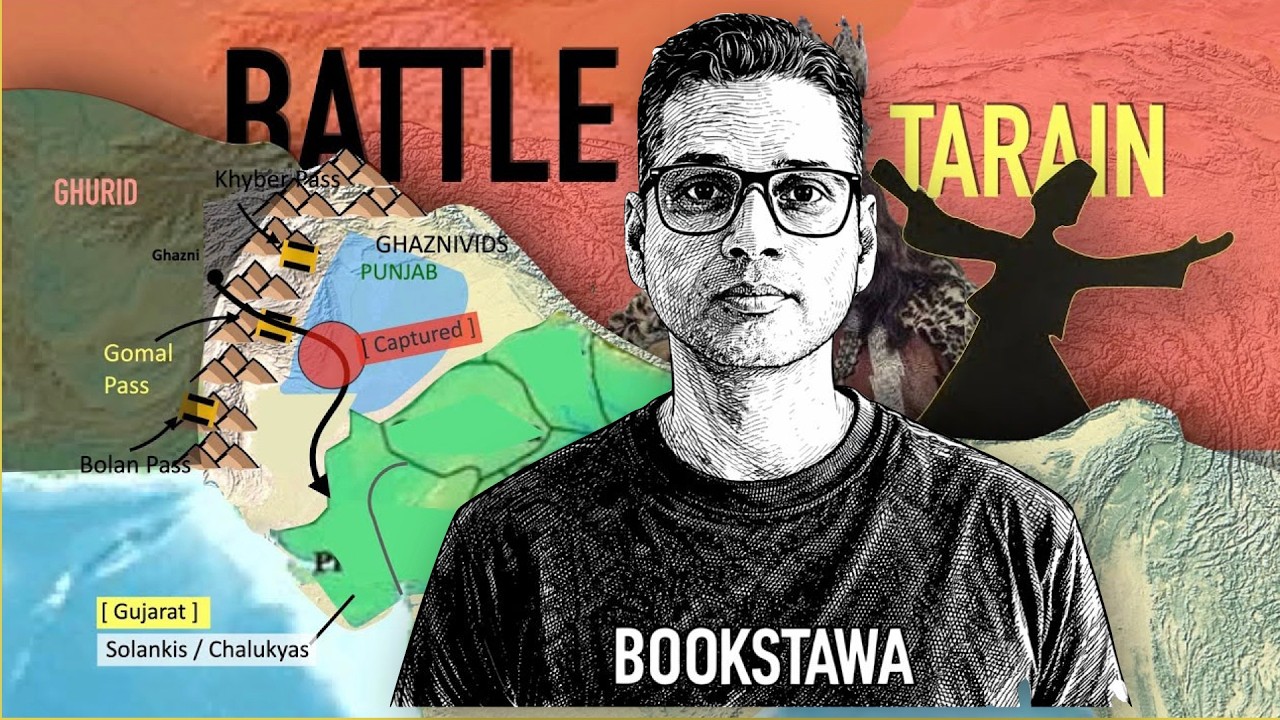
- (ii) : Mahmud defeats the Hindushahi ruler Jayapala at the Battle of Waihind near Peshawar.
- (iii) : Control over Punjab is secured after defeating Jayapala's successor, Anandapala.
- (iv) : Mahmud's campaign to conquer the mountain region of Kashmir fails due to difficult terrain and weather.
- (v) : Deep inland raids are carried out targeting major temple cities of Mathura and Kannauj.
- (vi) : The famous raid on the Somnath temple takes place, yielding massive wealth.
- (vii) : The city of Varanasi is raided, showing the wide geographic reach of the Ghaznavid army.
- (viii) After Mahmud's death: The Ghaznavid empire weakens rapidly due to internal succession fights and local rebellions.
- (ix) : The Ghurid dynasty rises under Muhammad Ghori, who defeats Prithviraj Chauhan in , paving the way for Qutubuddin Aibak to found the Delhi Sultanate in .
📝 Summary
The establishment of the Delhi Sultanate following the Second Battle of was a defining turning point in medieval Indian history. This era institutionalized Muslim rule and brought systemic changes in political governance, social structure, and economic policies. Its lasting contribution is the unique Indo-Islamic culture, the official use of Persian in record-keeping, and centralized administration that influenced later empires for centuries. This foundational topic is vital for students preparing for history exams to grasp how medieval India evolved into a combined socio-political state.
🚀 Quick Revision Points
Essential facts to review before examinations:
- (i) Mahmud Ghazni led 17 raids between , mainly targeting economic wealth such as Somnath in .
- (ii) Muhammad Ghori aimed for territorial control, defeating Prithviraj Chauhan at the Second Battle of .
- (iii) Iltutmish established Delhi as the permanent capital and organized the land revenue system called Iqta.
- (iv) Major taxes introduced were Khiraj (land tax), Jizya (protection tax), Zakat (alms tax), and Khams (booty tax).
- 💡 Exam Tip: Always distinguish between Mahmud Ghazni (wealth raids) and Muhammad Ghori (empire building) in long-answer history questions. Remember that (Second Battle of Tarain) marks the actual political turning point.
❓ Frequently Asked Questions (FAQ)
Q1: What was the main difference between Mahmud Ghazni and Muhammad Ghori's invasions?
A1: Mahmud Ghazni focused primarily on plundering wealth from temples and cities through repeated raids (). In contrast, Muhammad Ghori fought to capture territory and establish permanent political control in India.Q2: What was the Iqta system in the Delhi Sultanate?
A2: The Iqta system was an administrative land assignment given to military officers (Iqtadars) who collected land revenue from that territory to maintain troops and support state administration instead of taking cash salaries.Q3: Why is the Second Battle of Tarain considered a turning point in Indian history?
A3: Fought in , the Second Battle of Tarain saw Muhammad Ghori defeat Prithviraj Chauhan, breaking Rajput political dominance in North India and opening the door for the founding of the Delhi Sultanate in .