The period between and , often termed the early medieval era of Indian history, signifies a critical phase where three monumental empires—the Pala dynasty, the Pratiharas, and the Rashtrakutas—vied fiercely for dominance over the fertile plains of North India. This intense Tripartite Struggle fundamentally shaped political power distribution, accelerated cultural growth, and established lasting precedents in religious patronage. For students and those engaged in exam preparation, a deep understanding of these powerful dynasties is vital for comprehending India’s medieval political landscape.
🎯 In this chapter, you will understand:
- The origins, geographical spread, and significance of the Palas, Pratiharas, and Rashtrakutas.
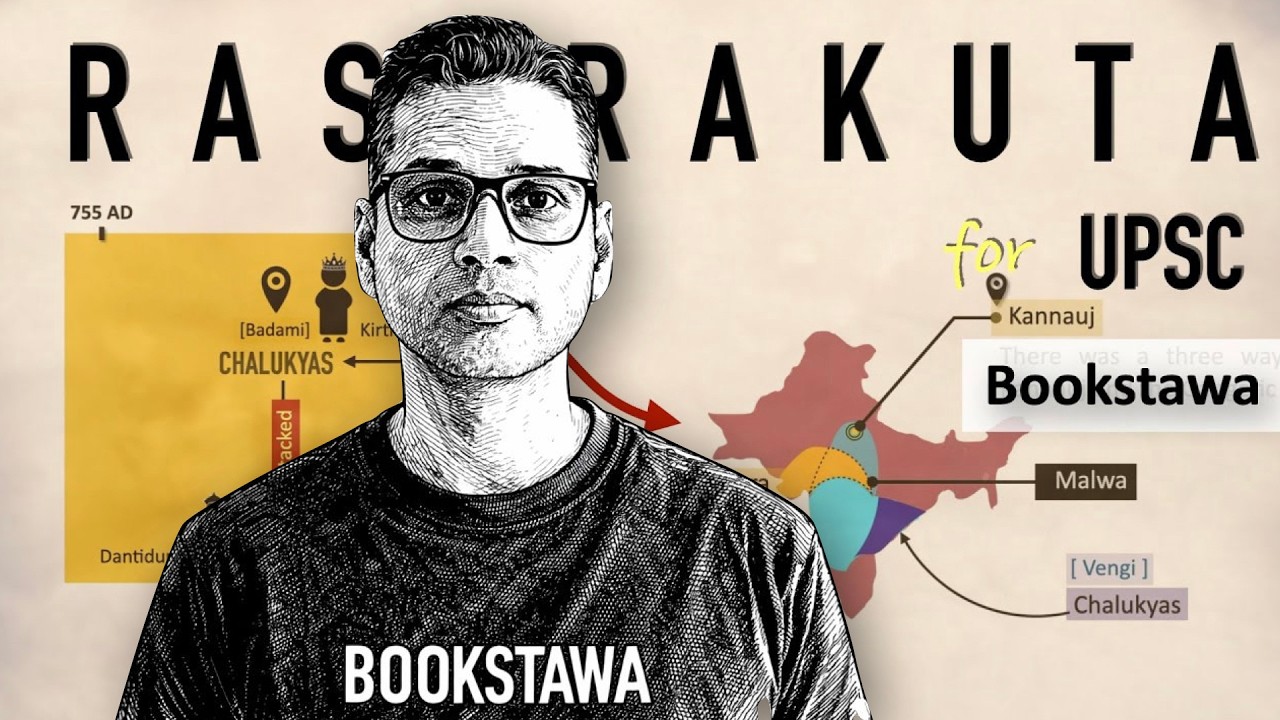
- The political dynamics and strategic importance of the Tripartite Struggle over Kannauj.
- Key cultural, architectural, and educational achievements including Vikramshila and the Kailasa Temple.
- The enduring historical legacy and exam-relevant facts of early medieval statecraft.
💡 Why this topic matters: Understanding these three empires clarifies how regional powers maintained balance, defended boundaries, and built monumental heritage that defines medieval Indian history.
🧠 Core Idea: The competition for North Indian supremacy driven by control over Kannauj spurred competitive patronage in religion, literature, and architectural engineering.
⚔️ The Tripartite Struggle and Political Dominance: Major Indian Empires of the Early Medieval Period (750–1000 CE)
From the to the , three major regional entities controlled key parts of the subcontinent: the Palas in the east (Bengal and Bihar), the Pratiharas in the north, and the Rashtrakutas on the Deccan plateau.
- (i) Each dynasty maintained strong political stability in its home region and encouraged vibrant cultural growth.
- (ii) Their frequent wars centered on taking control of Kannauj, a major struggle that repeatedly altered the regional power balance.
- (iii) Rulers across all three houses supported multiple traditions, giving resources to Buddhism, Hinduism, and Jainism while promoting grand art and architecture.
👑 The Rise of the Palas: Buddhist Patronage and Cultural Flourishing in Bengal and Bihar
The Pala dynasty brought political stability to eastern India, championed Buddhism, and funded major learning centers across Bengal and Bihar.

The Dynasty's Origins under Gopala: Establishing the Foundation for Stability
The Pala era began when Gopala was chosen by local leaders around to end a state of political confusion known as matsyanyaya (law of the fishes).
- (i) Gopala united Bengal, bringing long-overdue political stability to the eastern region.
- (ii) He earned recognition as the first major Buddhist king of Bengal, starting a long tradition of royal patronage.
- (iii) His foundation allowed the Pala lineage to rule successfully for several generations.
Territorial Expansion and Zenith under Dharmapala: The Patron of Vikramshila
King Dharmapala (c. ) strengthened his kingdom and extended its reach despite constant military pressures from northern and southern rivals.
- (a) He extended Pala influence into and temporarily gained authority over Kannauj.
- (b) Dharmapala actively led Pala forces in the Tripartite Struggle against the Pratiharas and Rashtrakutas.
- (c) He founded the world-renowned Vikramshila University, which became a famous center for Vajrayana Buddhist learning.
🛡️ The Pratiharas: A Dominant Military and Political Force in North India
The Pratihara dynasty (or Gurjara-Pratiharas) grew into a leading power in northern India, renowned for its organized army and successful defense of border areas.
Origins and Early Rulers: Nagabhatta I and the Defense Against Arab Invasions
Starting near Malwa, the dynasty rose to prominence under Nagabhatta I (c. ).
- (i) The early Pratiharas successfully repelled Arab invasions from Sindh, shielding inner Indian territories.
- (ii) They created a secure base across North India to manage vital trade and military routes.
- (iii) Strategic alliances helped them build steady strength for future expansion.
Peak of Power under Bhoja and Mihira Bhoja: Controlling the Heart of India
The empire reached its largest extent under Bhoja I (also called Mihira Bhoja, c. ) and his immediate successors.
- (a) Their realm covered key areas in Rajasthan, Gujarat, Madhya Pradesh, and centered around their capital at Kannauj.
- (b) They actively fought and secured major victories in the Tripartite Struggle against the Palas and Rashtrakutas.
- (c) The Pratiharas held power in North India for over two centuries through organized administration and strong defenses.
🏛️ The Rashtrakutas: A Deccan Powerhouse of Art, Culture, and Engineering Excellence
The Rashtrakutas established a commanding empire in the Deccan, influencing peninsula politics and producing lasting works of art, architecture, and literature.
Foundation by Dantidurga: Establishing Military Supremacy in the Deccan
Dantidurga (c. ) laid the foundation of Rashtrakuta rule by defeating the Chalukyas of Badami.
- (i) He brought previously separated regions of central and southern India together under one ruling house.
- (ii) His successful military campaigns ensured firm control across the Deccan plateau.
- (iii) This strong political foundation enabled later kings to focus on cultural and artistic projects.
Cultural and Literary Flourishing under Amoghavarsha I and Krishna I
During the long rule of Amoghavarsha I (c. ), learning and literature flourished, while earlier ruler Krishna I commissioned world-famous stone architecture.
Monolithic Kailasa Temple (Cave 16) at Ellora, commissioned by Rashtrakuta King Krishna I. - Literary Advances:Amoghavarsha I supported Jainism and encouraged Kannada literature, authoring the landmark work Kavirajamarga.
- Architectural Marvels: Under Krishna I, artisans carved the monolithic Kailasa Temple out of a single rock cliff at .
- Enduring Legacy: These rulers left behind a legacy of engineering skill and artistic patronage preserved in rock-cut temples and historical inscriptions.
⚡ Quick Revision Capsule: Early Medieval Empires (750–1000 CE)
A comparison of the three major ruling dynasties during the Tripartite Struggle:
| Dynasty | Primary Region & Capital | Key Rulers & Key Contributions |
|---|---|---|
| Palas | Bengal and Bihar (Capital: Pataliputra / Gaur) | Gopala (founder, ended matsyanyaya), Dharmapala (founded Vikramshila University). |
| Pratiharas | North India & Malwa (Capital: Kannauj) | Nagabhatta I (stopped Arab advance), Mihira Bhoja (expanded power across North India). |
| Rashtrakutas | Deccan Plateau (Capital: Manyakheta) | Dantidurga (founder), Krishna I (built Kailasa Temple), Amoghavarsha I (wrote Kavirajamarga). |
📝 Summary
The period between and transformed the political and cultural landscape of India. The constant struggles between the Palas, Pratiharas, and Rashtrakutas over Kannauj prevented a single centralized empire from controlling the whole subcontinent, but fostered distinct regional traditions in art, architecture, and literature, as recorded in classical works like Kavirajamarga.
🚀 Quick Revision Points
Essential facts to review before examinations:
- (i) The main cause of the Tripartite Struggle was controlling the strategic and fertile city of Kannauj.
- (ii) Gopala established Pala rule around after being selected to bring political order.
- (iii) The Pratiharas under Nagabhatta I successfully defended northern pathways against early Arab invasions.
- (iv) King Amoghavarsha I wrote Kavirajamarga, one of the earliest available works in Kannada literature.
- 💡 Exam Tip: Focus on linking each king with their specific architectural or literary contribution: Dharmapala with Vikramshila University, Krishna I with the Kailasa Temple at Ellora, and Amoghavarsha I with Kavirajamarga.
❓ Frequently Asked Questions (FAQ)
Q1: What was the main reason behind the Tripartite Struggle?
A1: The main reason was taking control of Kannauj, which was the symbol of political authority and economic wealth in North India during that era.Q2: Who founded the Pala Dynasty and what was matsyanyaya?
A2: Gopala founded the dynasty around . The term matsyanyaya refers to a state of political chaos where stronger forces dominate weaker ones without rule of law.Q3: Which Rashtrakuta king built the Kailasa Temple at Ellora?
A3: Rashtrakuta King Krishna I commissioned the monolithic Kailasa Temple (Cave 16) at Ellora, which was carved out of a single rock face.