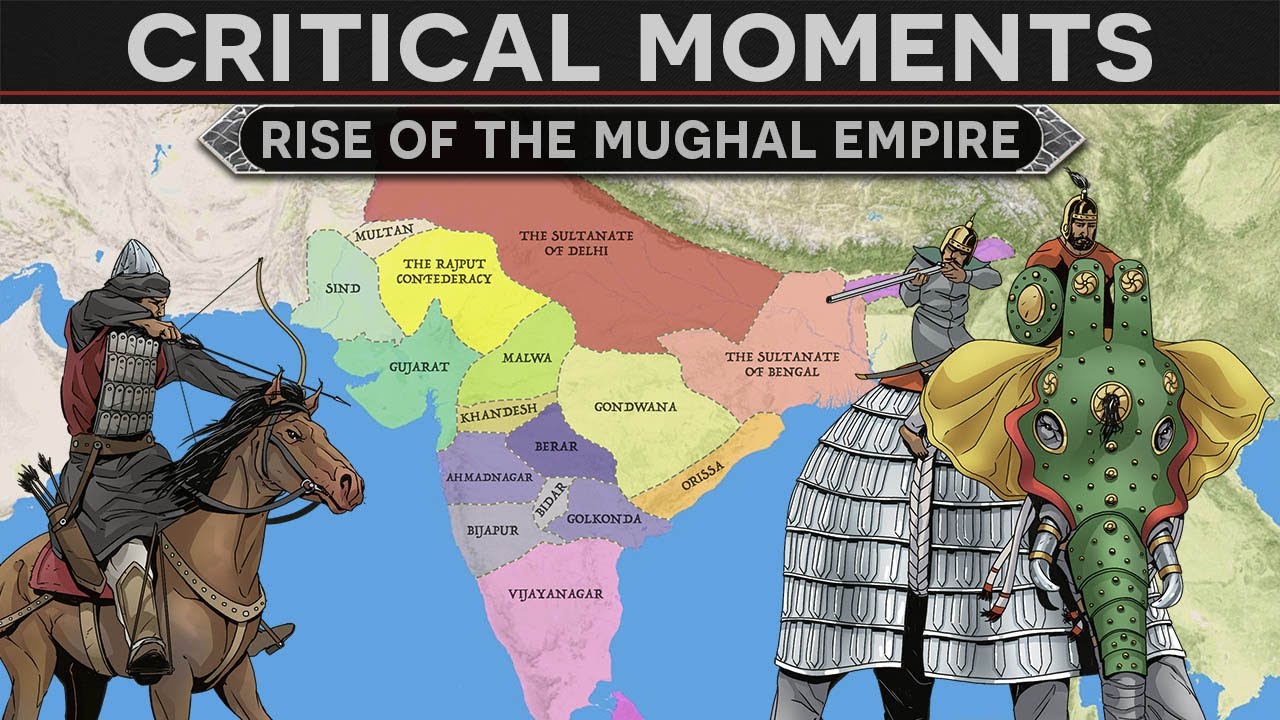
The military marches led by Emperor Akbar against strong kingdoms in Rajasthan, the rich trade markets of Gujarat, and the eastern lands of Bengal during the reshaped Indian history. These events built strong Mughal authority across northern and western India. Understanding these events helps students grasp how Mughal expansion worked alongside local Rajput resistance and early administrative systems.
🎯 In this chapter, you will understand:
- How Akbar secured the strategic hill forts of Rajasthan through long sieges and diplomacy.
- The economic motives behind taking control of Gujarat's valuable sea trade routes.
- The military tactics used to defeat the remaining Afghan rulers in Bengal.
- How these conquests laid the groundwork for a centralized Mughal Empire.
💡 Why this topic matters: It explains how strategic planning, quick troop movements, and smart alliance-making created one of the largest empires in South Asian history.
🧠 Core Idea: Akbar combined force, diplomatic offers, and rapid troop marches to bring diverse and powerful independent regions under a single central government.
Conquest of Rajasthan, Gujarat, and Bengal: Analyzing Akbar’s Military Campaigns and Consolidation of Mughal Dominance (16th Century)
Akbar's main goal was to connect major regional centers into a unified network under imperial supervision.
His expansion strategy relied on long sieges, swift troop movements, and organized governance to bring important regions under imperial oversight.
These military efforts showed his skill as a general and his vision as a ruler building lasting state power across the northern and western regions.
- (i) Over roughly , Emperor Akbar added major territories in Rajasthan, wealthy trading hubs in Gujarat, and fertile areas in Bengal to establish firm Mughal control.
Rajasthan Campaign: The Saga of Rajput Resistance and Unfolding Mughal Military Strategy
Strong mountain fortresses served as symbols of regional independence. Capturing them was essential for securing the central trade roads.

Siege of Chittor (1568): A Display of Rajput Sacrifice and Mughal Might
The fort of Chittor guarded the main trade lines connecting Agra to the coastal markets of Gujarat.
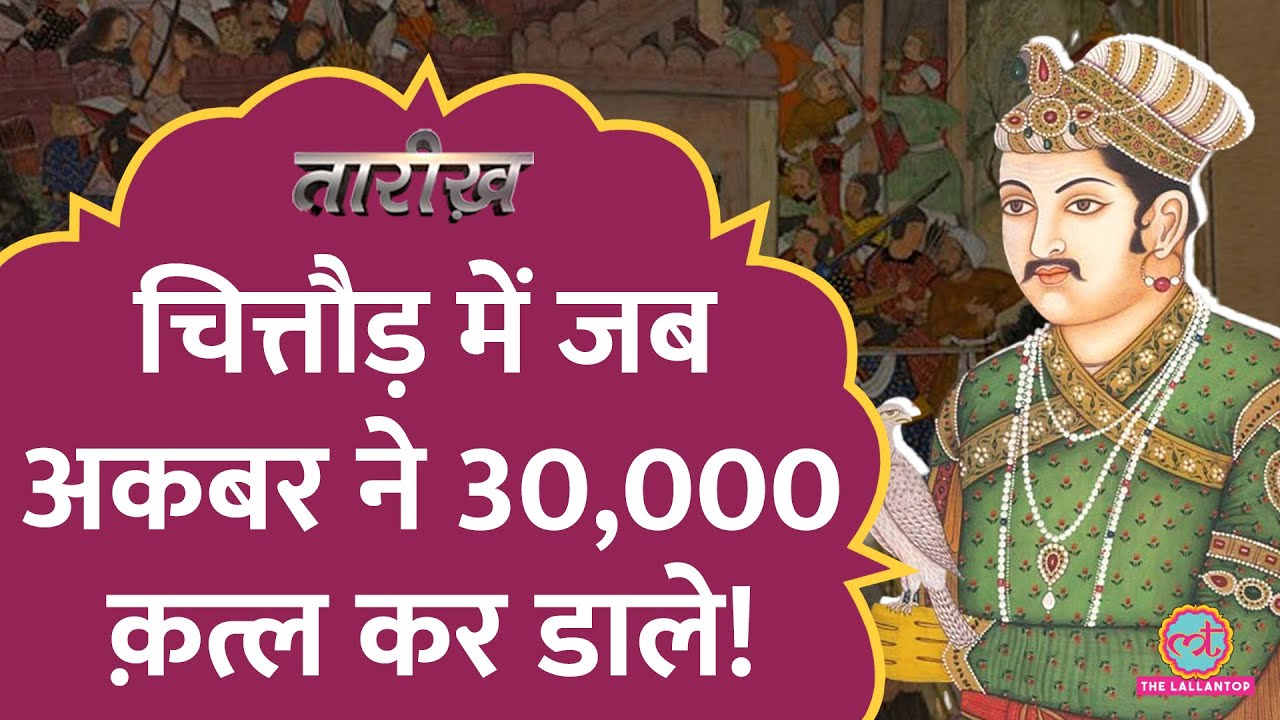
- (i) After a tough six-month siege in , Rana Udai Singh moved into the nearby hills. The defense was carried on by two brave commanders, Jaimal and Patta, with help from local farmers.
- (ii) When the walls were finally broken, a harsh carnage took place where nearly 30,000 defenders died. To honor their extraordinary bravery, Akbar later built statues of Jaimal and Patta at the entrance of the Agra fort.
Conquest of Other Rajput Forts and Subsequent Submissions
The fall of Chittor led many other regional rulers to reconsider their stance toward imperial power.
- (i) The strong fort of Ranthambhor surrendered soon after Chittor, while Jodhpur had already been brought under imperial oversight during an earlier effort.
- (ii) Most Rajput rajas, including the heads of Bikaner and Jaisalmer, agreed to form alliances with Akbar. Only the kingdom of Mewar kept fighting to stay fully independent.
Gujarat Campaign: Highlighting Strategic Trade Importance and Mughal Assertion of Control
Gujarat was a center for overseas trade and local manufacturing. Controlling its ports added vital revenue to the state treasury.
Rapid Advance and Capture of Ahmedabad (1572)
Rich farmland and busy textile centers made Gujarat a valuable addition to the growing state.
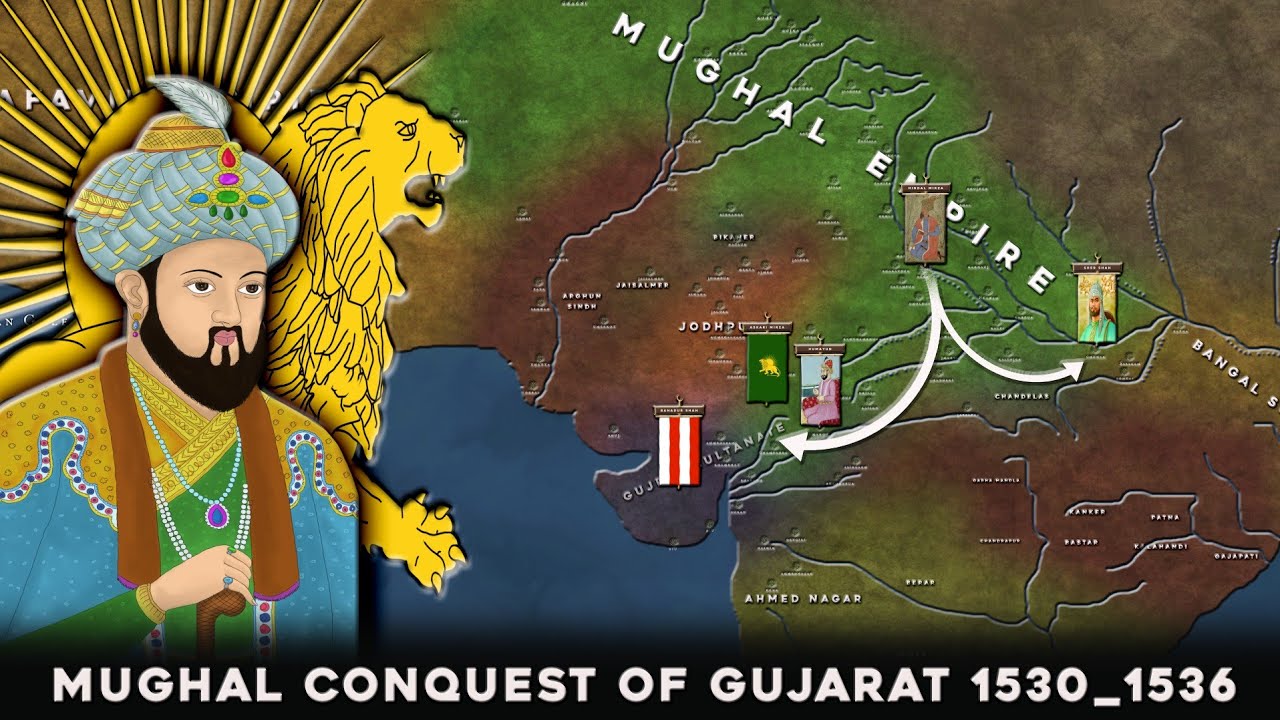
- (i) Akbar based his claim on Gujarat partly on the earlier reign of his father, Humayun, but his immediate goal was stopping local revolts started by a rebel faction called the Mirzas.
- (ii) The chief city of Ahmedabad surrendered in without a long fight. Akbar then moved to secure the trade centers of Broach, Baroda, and the main port of Surat.
Siege of Surat, Encounter with Portuguese, and Rapid Campaign
This action brought imperial officials into direct contact with international traders on the ocean routes.
Coastal ports in Gujarat connected inland trade routes to foreign merchants. - (i) At the port of Cambay, Akbar saw the open sea for the first time and spoke with Portuguese merchants who were building trade bases along the coast.
- (ii) When the Mirzas started a new revolt, Akbar led an extraordinarily fast march. He rode from Rajasthan to Ahmedabad in just 11 days with 3,000 soldiers in , defeating an army of 20,000 and securing the province.
Bengal Campaign: Consolidating Mughal Imperial Power in the Eastern Territories
The eastern lands were the last major area held by independent Afghan leaders in northern India.
Afghan Resistance, Imperial Flotilla, and the Capture of Patna
Local leaders in Bengal under Daud Khan challenged central authority, making an eastern campaign necessary.
- (i) Imperial armies focused on breaking the hold of remaining Afghans in Bengal and Orissa after Daud Khan stopped following imperial directions.
- (ii) Conflicts among local leaders created a clear opportunity for imperial forces to step in and extend their boundaries eastward.
- (iii) Using a river flotilla along the Ganges, Akbar took the fortress of Patna, securing supply lines across Bihar.
Final Defeat of Daud Khan and the End of Afghan Kingdom (1576)
Systematic pressure from senior generals gradually broke local opposition in the east.
- (i) Experienced commanders like Khan-i-Khanan Munaim Khan pushed eastern forces back until Daud Khan asked for temporary peace terms.
- (ii) Fighting ended in when Daud Khan was defeated and executed, ending independent Afghan rule in the north.
- (iii) Securing Bengal completed the initial phase of empire building, allowing the court to focus on internal administration.
⚡ Quick Revision Capsule: Akbar's Major 16th-Century Military Campaigns
This table summarizes the three key expansion campaigns, their main targets, and their historical outcomes.
| Region | Key Rulers & Resistance | Strategic Outcome |
|---|---|---|
| Rajasthan | Rana Udai Singh, Jaimal, Patta | Captured Chittor () & Ranthambhor; secured overland trade lines to Gujarat. |
| Gujarat | The Mirzas, local merchants | Took Ahmedabad () & Surat; gained direct access to maritime revenue and sea trade. |
| Bengal & Bihar | Daud Khan (Afghan rule) | Captured Patna via river flotilla; defeated Daud Khan (), ending northern Afghan rule. |
📝 Summary
Between and , military campaigns led by Emperor Akbar established firm Mughal control over Rajasthan, Gujarat, and Bengal. By using planned sieges, fast troop marches, and administrative alliances, the state brought key trade routes and rich lands under a single central government.
🚀 Quick Revision Points
Essential facts to review before examinations:
- (i) The siege of Chittor in secured the main passages between central cities and western ports.
- (ii) The rapid 11-day march to Ahmedabad in ended the revolt of the Mirzas in Gujarat.
- (iii) Defeating Daud Khan in ended independent Afghan rule in northern India.
- (iv) Strategic alliances with local Rajput rajas helped create a stable base for the central administrative system.
- 💡 Exam Tip: Remember key dates like 1568 (Chittor), 1572-1573 (Gujarat campaign & rapid march), and 1576 (Bengal & Battle of Rajmahal) as they frequently appear in timeline questions.
❓ Frequently Asked Questions (FAQ)
Q1: Why was Gujarat so important to Akbar's expansion plans?
A1: Gujarat had fertile land, thriving craft centers, and major seaports like Surat that controlled trade with Western Asia and Europe.Q2: How did Akbar handle the brave defense of Chittor by Jaimal and Patta?
A2: Though the fall of the fort was followed by a harsh local carnage, Akbar later honored the courage of Jaimal and Patta by erecting statues of them at the Agra fort gate.Q3: What unique military method helped imperial forces capture Patna in the Bengal campaign?
A3: Imperial forces used a powerful river flotilla along the Ganges to move troops and supplies smoothly into Bihar and take Patna.