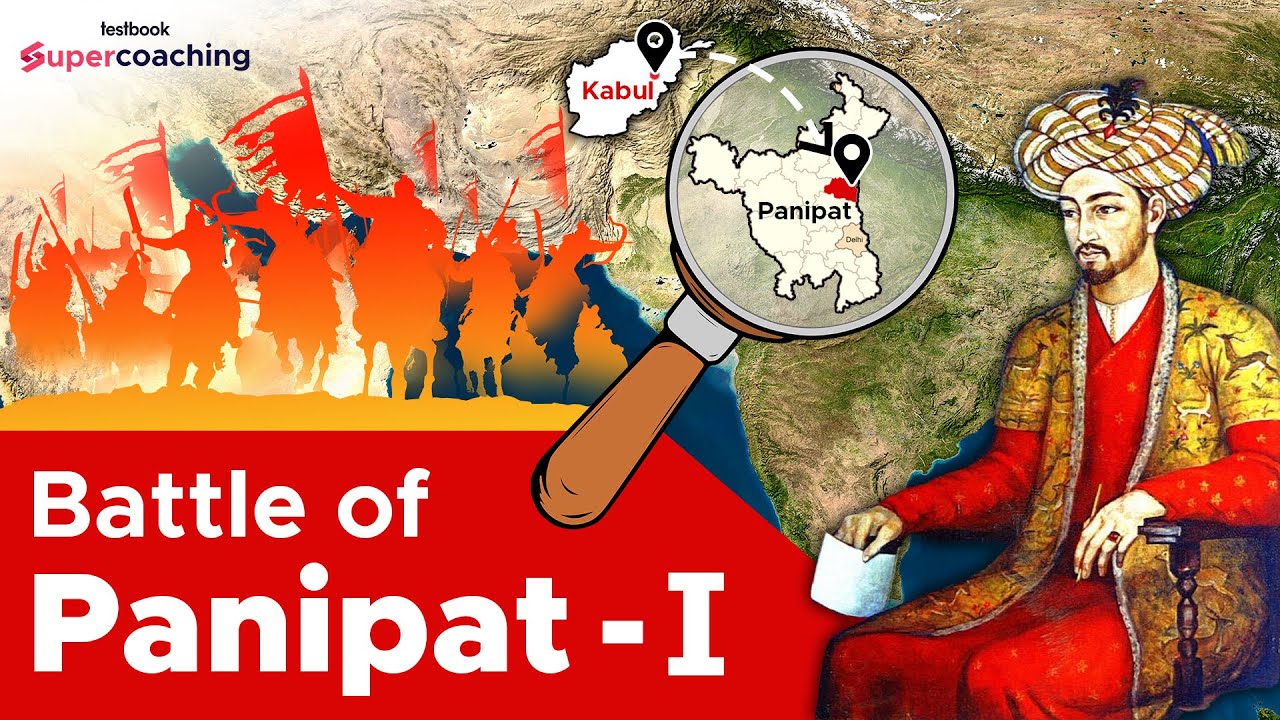
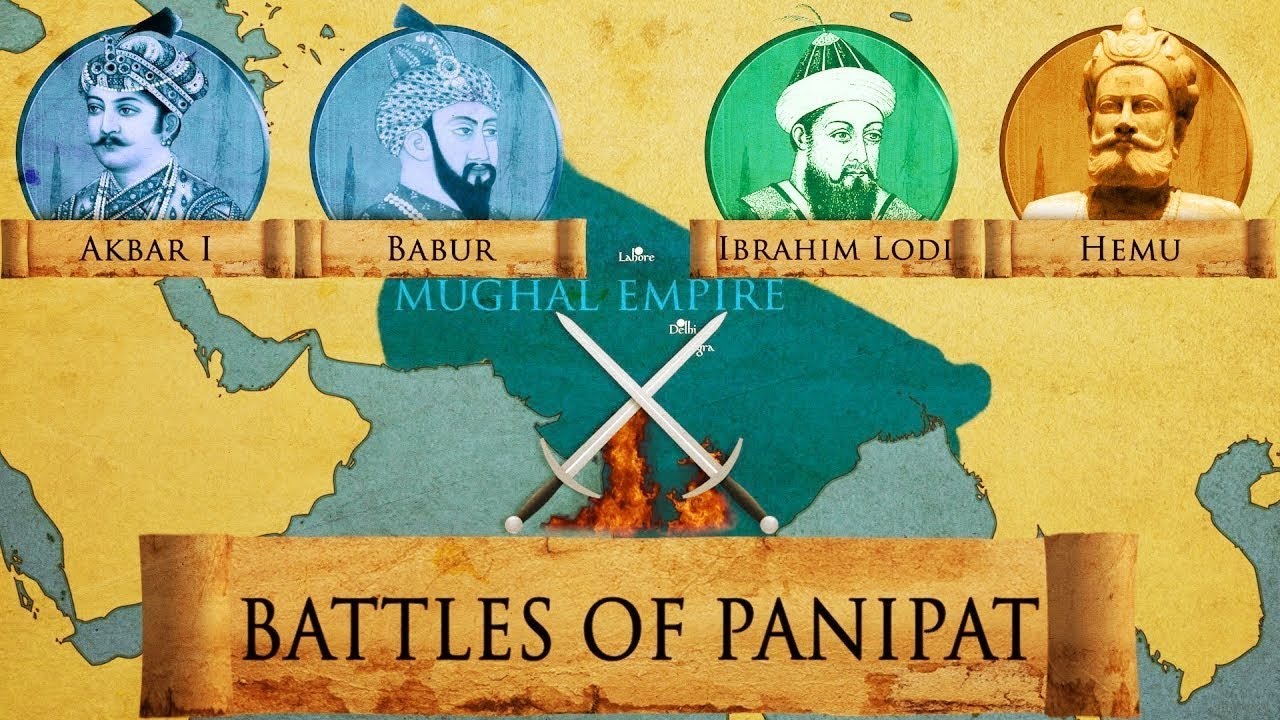
The Battles of Panipat stand as watershed moments in Indian military history, fundamentally altering the political landscape of to India. Spanning three monumental clashes—the First Battle of Panipat in , the Second Battle in , and the Third Battle in —these conflicts pitted formidable forces led by key historical figures like Babur, Hemu, Akbar, and Ahmad Shah Durrani against one another, decisively marking the rise, survival, and fragmentation of great empires. A detailed understanding of these decisive engagements is crucial for students preparing for history exams, offering unparalleled insights into warfare evolution, power consolidation strategies, and the dramatic political shifts across the subcontinent.
🎯 In this chapter, you will understand:
- How military tactics and early artillery helped Babur establish Mughal rule during the First Battle of Panipat ().
- The political circumstances and military turning points of the Second Battle of Panipat ().
- The causes, alliance structures, and devastating outcomes of the Third Battle of Panipat ().
- The strategic lessons and historical significance of all three battles for competitive examinations.
💡 Why this topic matters: The plains of Panipat changed the rulers of India three distinct times, directly deciding who controlled the northern subcontinent.
🧠 Core Idea: Each battle represented a major shift in warfare, moving from traditional elephant cavalry to modern gunpowder artillery and heavy cavalry tactics.
Battles of Panipat: Comprehensive History, Key Events, and Outcomes Shaping India ()
The plain of Panipat, strategically located near Delhi, served as the battleground for three landmark military contests that reshaped North India's political map.
- (i) The First Battle of Panipat () was the critical juncture that heralded the establishment of the Mughal Empire in India, effectively dismantling the waning authority of the Lodi dynasty.
- (ii) The Second Battle of Panipat () was a struggle for survival and supremacy, vital for securing and consolidating Mughal power under young Akbar against the formidable challenge posed by Hemu, a local claimant.
- (iii) The Third Battle of Panipat () proved to be a geopolitical disaster for the ambitious Maratha Empire, resulting from their catastrophic clash with the forces of Ahmad Shah Durrani and profoundly impacting the subsequent power vacuum in Northern India.
The First Battle of Panipat: Babur’s Strategic Triumph Over Ibrahim Lodi ()
This legendary confrontation near the town of Panipat is immortalized as the moment when Babur, leveraging superior military technology and tactics, successfully laid the durable foundation of the Mughal Empire in India, marking the dawn of a new era.

Key Details of the Engagement and Babur’s Innovative Strategy
The battle was a classic demonstration of how military innovation and strategic positioning could overcome massive numerical disadvantage, fundamentally changing the nature of warfare in the subcontinent.
- (i) The conflict was primarily fought between the invading forces of Zahir-ud-din Muhammad Babur and the ruling forces of the Delhi Sultanate under Sultan Ibrahim Lodi, serving as a decisive pivot point in Indian history.
- (ii) Babur fortified his position brilliantly, employing the Ottoman military tactics of Rumi method, which involved arraying carts chained together to provide protection and support for his gunpowder artillery.
- (iii) Despite the vast size of the Lodi army, Babur's strategic and tactical deployment, which included the flanking maneuver known as Tulughma, led to the crushing defeat and death of Ibrahim Lodi himself on the battlefield.
- (iv) The Lodi army was overwhelmingly superior in numbers, estimated at approximately 100,000 men and 1,000 war elephants, contrasting sharply with Babur’s highly mobile force of about 12,000 soldiers.
- (v) The actual battle was remarkably brief, lasting only two to three hours, vividly demonstrating the unprecedented effectiveness and destructive power of the newly introduced gunpowder artillery and firearms.
- (vi) Babur's ultimate victory instantly granted him control over the major political centres of Delhi and Agra, establishing the initial territorial base of the Mughal state.
Immediate Consequences and Strategic Outcome for the Mughals
The immediate results of the battle secured the initial foothold for the Mughals in India, simultaneously bringing an end to the nearly 320-year-old Delhi Sultanate.
- (i) Babur successfully seized control over the wealthy twin capitals of Delhi and Agra, marking the complete collapse of the Lodi dynasty.
- (ii) The triumph enabled Babur's consolidation of power, transforming him from a Central Asian leader into a recognized ruler in North India.
- (iii) The immense treasures acquired from Lodi strongholds significantly eased Babur's financial constraints, providing resources for subsequent military campaigns.
- (iv) Despite the victory, Babur still faced resistance from regional powers like Rana Sanga of Mewar and remaining eastern Afghan leaders.
Laying the Foundation of the Dynasty: Aftermath and Early Challenges
While the battlefield victory was decisive, establishing an enduring empire came with immediate difficulties and opposition.
Early Mughal field artillery used to break traditional cavalry lines. - Logistical Difficulties: Babur faced challenges due to widespread local resistance and the complex needs of controlling a vast, unfamiliar territory.
- Internal Dissent: New campaigns were challenged by initial hesitancy among his commanders and the harsh local climate, testing his Central Asian troops.
- Stable Base: By overcoming these early hurdles, Babur established a stable political and military base, laying the foundation of the Mughal dynasty that endured for centuries.
The Second Battle of Panipat: Mughal Supremacy Secured Against Hemu ()
Fought dramatically on , this battle was a life-or-death struggle that ultimately solidified Mughal authority in North India, ending the challenge posed by Hemu's brief rule following Emperor Humayun’s death.
Political Background and the Rapid Rise of Hemu
The power vacuum created after the decline of the Sur Empire and the sudden death of Humayun gave Hemu the opportunity to capture the capital city.
- (i) Following the death of Sher Shah Suri in , the Sur dynasty fell into internal power struggles and instability.
- (ii) Mughal Restoration:Humayun regained possession of Delhi and Agra in , but his sudden death in enabled the skilled administrator Hemu to claim effective power.
- (iii) Hemu's Claim: Upon taking the capital, Hemu declared himself an independent ruler, adopting the title of Vikramaditya.
The Course of the Battle and the Defeat of Vikramaditya
The engagement was fiercely contested, with Hemu's initial charge threatening to crush Mughal forces before a turning point changed the outcome.
- (i) On , Hemu's larger army met Mughal forces nominally led by young Akbar but strategically commanded by his regent, Bairam Khan.
- (ii) Fatal Charge: Hemu initiated an elephant charge that disrupted Mughal formations, but imperial forces countered with strategic cavalry attacks and missile fire.
- (iii) The turning point occurred when Hemu was struck in the eye by an arrow, causing immediate panic among his troops and leading to his army's defeat with an estimated casualties.
Aftermath: Consolidation of Power and Akbar’s Supremacy
The result of the Second Battle ensured the survival of the young Mughal state and paved the way for future expansion.
- (i) Hemu's Execution: Captured on the battlefield, the wounded Hemu was executed by Bairam Khan, removing the primary threat to the Mughal throne.
- (ii) End of Resistance: The battle ended major Sur resistance and permanently consolidated Mughal power across North India.
- (iii) Akbar’s Era: Victory secured political stability for Akbar's reign, setting the stage for administrative expansion and imperial growth.
The Third Battle of Panipat: The Maratha Catastrophe and Afghan Triumph ()
Fought on , this conflict was a clash between the Maratha Empire and the Afghan alliance led by Ahmad Shah Durrani, resulting in heavy casualties and shifting 18th-century power balances.
Historical Background: Maratha Expansion and Conflict
The Marathas had emerged as a dominant power in India, but expanding northward brought them into direct conflict with Afghan interests.
- (i) The 27-year Mughal-Maratha War () weakened the Marathas initially, but they rebuilt strength under Peshwa Baji Rao.
- (ii) By , under Balaji Baji Rao, Maratha influence reached Punjab, triggering a reaction from Afghan ruler Ahmad Shah Durrani.
Immediate Causes and Opposing Alliances
Actions from both sides escalated tensions into full military mobilization near Panipat.
- (i) Durrani's Campaign: Maratha expansion into Punjab moved Durrani to march into India to reclaim lost ground.
- (ii) Afghan Coalition: Durrani built an alliance with local Afghan groups, the Rohillas, and Nawab Shuja-ud-Daula of Awadh by .
- (iii) Maratha Leadership: The Maratha army, led by Sadashivrao Bhau, moved north to face the Afghan-led forces.
Course of the Battle: Logistical Failure and Military Defeat
Despite large troop numbers, the Maratha campaign suffered from severe supply shortages and superior Afghan field strategy.
- (i) Marathas achieved early success capturing Kunjpura, but supply line cutoffs and lack of local support led to starvation in their camp.
- (ii) Organized Afghan field artillery and cavalry maneuvers countered and broke the desperate frontal attacks of the Maratha force.
- (iii) The encounter resulted in heavy military losses and a disorganized retreat for the Maratha army.
Immediate Results and Long-Term Historical Significance
The defeat halted immediate Maratha expansion in the north and created a temporary power vacuum.
- (i) Massive Casualties: The Maratha forces lost an estimated 60,000–70,000 soldiers in battle and retreat, damaging their immediate influence.
- (ii) Afghan Influence:Ahmad Shah Durrani confirmed Shah Alam II as nominal Mughal emperor before returning to Afghanistan.
- (iii) Rise of Regional Powers: The Maratha retreat allowed regional powers like the Sikhs, Rajputs, and Jats to strengthen independent positions.
- (iv) Maratha Recovery: Under Mahadji Shinde, the Marathas rebuilt their northern political influence by .
⚡ Quick Revision Capsule: Comparison of the Three Battles of Panipat
A quick summary comparing key parameters across all three historic Panipat battles:
| Battle Parameter | First Battle () | Second Battle () | Third Battle () |
|---|---|---|---|
| Primary Opponents | Babur vs. Ibrahim Lodi | Akbar (Bairam Khan) vs. Hemu | Marathas vs. Ahmad Shah Durrani |
| Key Military Tactics | Rumi method (linked carts) & gunpowder cannons | Heavy cavalry counter-charges against war elephants | Swivel guns (zamburaks) and tight field artillery formations |
| Decisive Turning Point | Babur's Tulughma flanking maneuver | Hemu being struck in the eye by an arrow | Cutoff of Maratha supply lines leading to starvation |
| Primary Victor | Babur (Mughal Empire) | Akbar (Mughal Empire) | Ahmad Shah Durrani (Afghan Coalition) |
| Historical Consequence | End of Delhi Sultanate; start of Mughal rule | Consolidation of young Akbar's imperial reign | Temporary halt of northern Maratha expansion |
📝 Summary
The sequence of the Battles of Panipat serves as a definitive turning point, playing a pivotal role in shaping the political and military contours of Indian history by determining the fate and succession of major powers like the Mughals and the Marathas. From Babur’s victory in , which introduced gunpowder warfare, to Akbar’s consolidation in , and the Marathas’ defeat in , these conflicts profoundly influenced imperial stability, methods of empire-building, and the regional balance of power. Understanding the strategies, causes, and consequences of these three decisive battles is essential for students preparing for competitive exams and for fully appreciating India’s complex historical military evolution.
🚀 Quick Revision Points
Essential facts to review before examinations:
- (i) The First Battle () introduced firearms and field cannons using the Rumi method.
- (ii) Ibrahim Lodi became the only Sultan of Delhi to die on the actual battlefield.
- (iii) The Second Battle () ended Hemu's brief reign as Vikramaditya and established Akbar's throne.
- (iv) The Third Battle () remains one of the largest single-day combat engagements of the .
- 💡 Exam Tip: Questions frequently ask about specific military tactics introduced by Babur (Tulughma and linked artillery carts) and the political consequences of the battle on Maratha power.
❓ Frequently Asked Questions (FAQ)
Q1: Why were all three battles fought at Panipat?
A1: Panipat offered flat terrain suited for large armies, sat along major invasion routes toward Delhi, and allowed commanders to maneuver large military formations efficiently.Q2: What were the main reasons for Babur's victory in 1526?
A2: Babur used effective field artillery, rapid cavalry movements (Tulughma), and linked carts (Rumi method) to counter Ibrahim Lodi's larger troop numbers.Q3: What was the primary impact of the Third Battle of Panipat?
A3: It severely reduced Maratha troop numbers in the short term and created a power vacuum in Northern India that regional powers and the British East India Company later exploited.