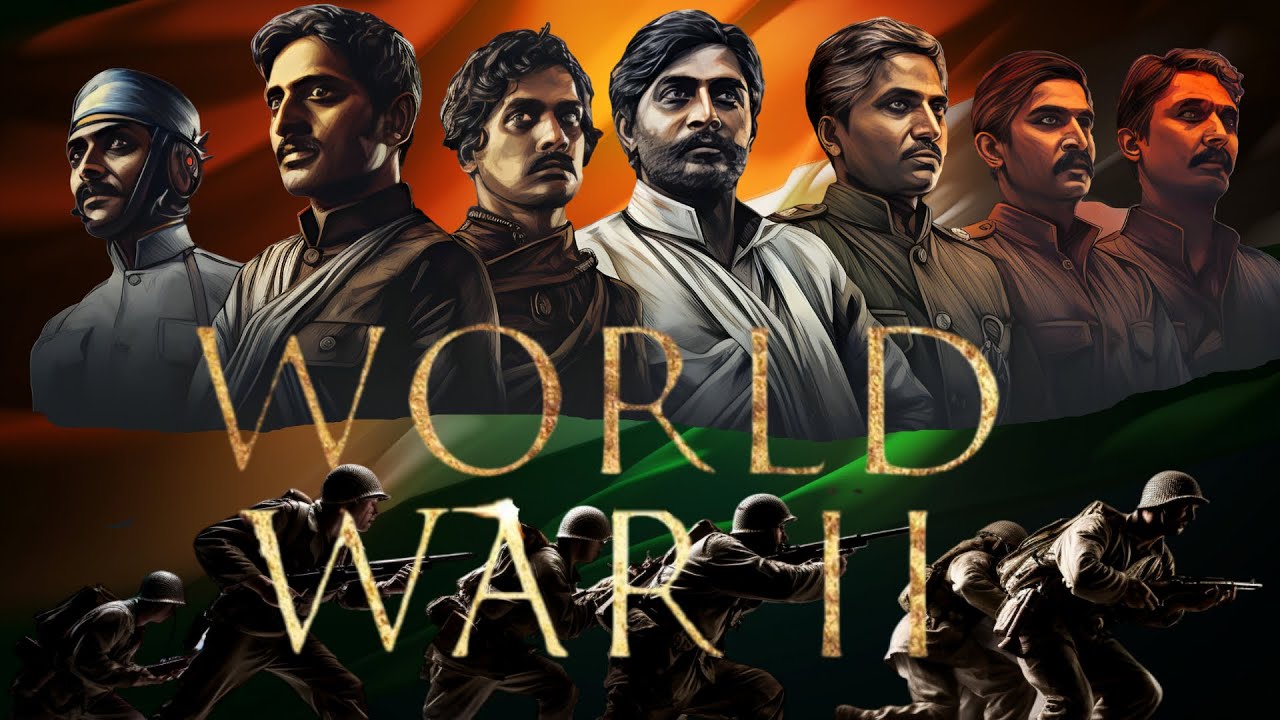
The final chapters of British rule in India were written through two distinct yet powerful national upsurge movements that changed the country's future forever. As political groups like the Congress and Muslim League negotiated with the colonial government during , a parallel wave of public anger sparked major revolts. Movements such as the INA Release Movement and the Royal Indian Navy Revolt weakened the foundations of British power in India.
🎯 In this chapter, you will understand:
- The difference between political negotiations and mass revolts between .
- How the trial of Indian National Army soldiers united the entire country.
- Why the Royal Indian Navy Revolt made the British realize they could no longer control India.
- The role of major peasant and worker movements like Tebhaga, Worli, and Telangana.
💡 Why this topic matters: It explains how both political discussions and widespread public revolts together forced the British to leave India in .
🧠 Core Idea: India's independence was achieved not just through high-level political talks, but also through powerful revolts by soldiers, sailors, farmers, and factory workers across the nation.
The Dual Strands of National Upsurge and the Road to Independence (1945–1947)
Between and , India's path to freedom was driven by two distinct paths of action that happened at the same time.
This period was not only about official political talks. While leaders met in negotiation rooms, millions of citizens protested on the streets, making it impossible for the British Raj to rule India any longer.
- (i) The Diplomatic Strand: This involved detailed discussions and political negotiations between the British Government, the Indian National Congress, and the Muslim League. While these talks aimed to transfer power peacefully, growing political divisions eventually led to the partition of the country.
- (ii) The Revolutionary Strand: At the same time, a huge wave of mass protests spread across the nation. Industrial workers, farmers, and citizens of princely states joined strikes and public demonstrations, showing that they would no longer accept colonial rule.
Mass Actions and Grassroots Movements Against British Rule
The second path of the national upsurge appeared as a series of bold, united protests that proved how strongly ordinary Indians wanted complete freedom.

The Indian National Army (INA) Release Movement
The public trial of INA officers at the historic Red Fort became a powerful unifying issue for all Indians. People viewed these soldiers who fought under Subhas Chandra Bose as national heroes rather than prisoners.
- (i) Public rallies were organized across the country demanding the immediate release of Indian National Army prisoners.
- (ii) The movement brought together people from all walks of life, creating a united front against British legal decisions.
- (iii) It greatly boosted the spirit of nationalism, showing that even soldiers in the British-led army now supported independence.
The Royal Indian Navy Revolt (1946)
In , sailors of the Royal Indian Navy (RIN) started one of the most important military revolts in British colonial history. What began as a protest against bad food and racial abuse quickly turned into a large political uprising.
- (a) The strike started on naval ships in Bombay and quickly spread to bases in Karachi, Calcutta, and Madras.
- (b) A remarkable feature of the revolt was the total unity among Hindu and Muslim sailors, who raised their flags together in defiance of British authorities.
- (c) This event showed deep dissatisfaction within the military, proving to the British that they could no longer rely on Indian soldiers to maintain colonial rule.
Regional Agrarian Struggles: Tebhaga and Worli
While major cities experienced revolts, rural areas saw powerful peasant movements fighting against unfair landlord systems and heavy taxes.
The Tebhaga Movement in Bengal
Sharecroppers in Bengal fought a organized campaign to keep two-thirds of their crop harvest for themselves, instead of giving half to the landlords.
The Worli Tribal Revolt
Tribal farmers in Maharashtra organized a strong uprising against oppressive local landlords and moneylenders, proving that the desire for freedom had reached rural communities.
The Great Peasant and Workers' Uprisings
The final years of British rule were marked by localized struggles that challenged both foreign rule and local feudal systems.
- (i) Punjab Kisan Morchas: Large protests by farmers in Punjab fought for agricultural rights and fair treatment regarding irrigation lands.
- (ii) Travancore Resistance: The Punnapra-Vayalar uprising in Travancore was a landmark revolt where workers and farmers fought against unfair royal administration.
- (iii) The Telangana Revolt: A massive peasant movement in Hyderabad state where rural communities took up arms against oppressive feudal landlords and the ruler's forces.
⚡ Quick Revision Capsule: Key Movements (1945–1947)
This table summarizes the main popular movements that weakened colonial rule during the final years of the British Raj.
| Movement Name | Key Features & Location | Historical Impact |
|---|---|---|
| INA Release Movement | Protests against the trials of Red Fort prisoners across India. | United diverse political groups and boosted patriotic spirit nationwide. |
| Royal Indian Navy Revolt | Naval strike starting in Bombay (). | Proved that Indian military forces were no longer loyal to the British. |
| Tebhaga Movement | Peasant harvest rights agitation in Bengal. | Demanded that sharecroppers keep two-thirds of their harvest. |
| Worli Tribal Revolt | Tribal uprising in Maharashtra. | Challenged local money-lenders and unfair land ownership. |
| Telangana Movement | Armed peasant struggle in Hyderabad state. | Fought against oppressive feudal rule and landlord exploitation. |
📝 Summary
Between and , the combined pressure of political negotiations and popular revolts brought an end to British rule in India. Events like the INA trials, the Navy Mutiny, and rural peasant protests proved that all sections of Indian society were ready for independence, leading directly to freedom in .
🚀 Quick Revision Points
Essential facts to review before examinations:
- (i) The period featured both top-level political negotiations and widespread popular protests.
- (ii) Public reaction to the INA trials united citizens across regional and political lines.
- (iii) The RIN revolt showed that the military could no longer be used to maintain colonial power.
- (iv) Peasant struggles in Bengal, Maharashtra, and Hyderabad challenged unfair local landlord systems alongside British rule.
- 💡 Exam Tip: Focus on how the RIN Revolt and INA trials directly influenced the British decision to speed up their departure from India.
❓ Frequently Asked Questions (FAQ)
Q1: What were the two main strands of the national upsurge between 1945 and 1947?
A1: The two strands were high-level diplomatic negotiations for power transfer and grassroots mass revolts by workers, farmers, and military personnel.Q2: Why was the Royal Indian Navy Revolt of 1946 so important?
A2: It demonstrated that Indian military personnel were openly rejecting British authority, removing the colonial power's ability to enforce control by force.Q3: What was the main demand of the Tebhaga Movement in Bengal?
A3: Sharecroppers demanded two-thirds share of the harvested crops for themselves instead of giving half to landlords.