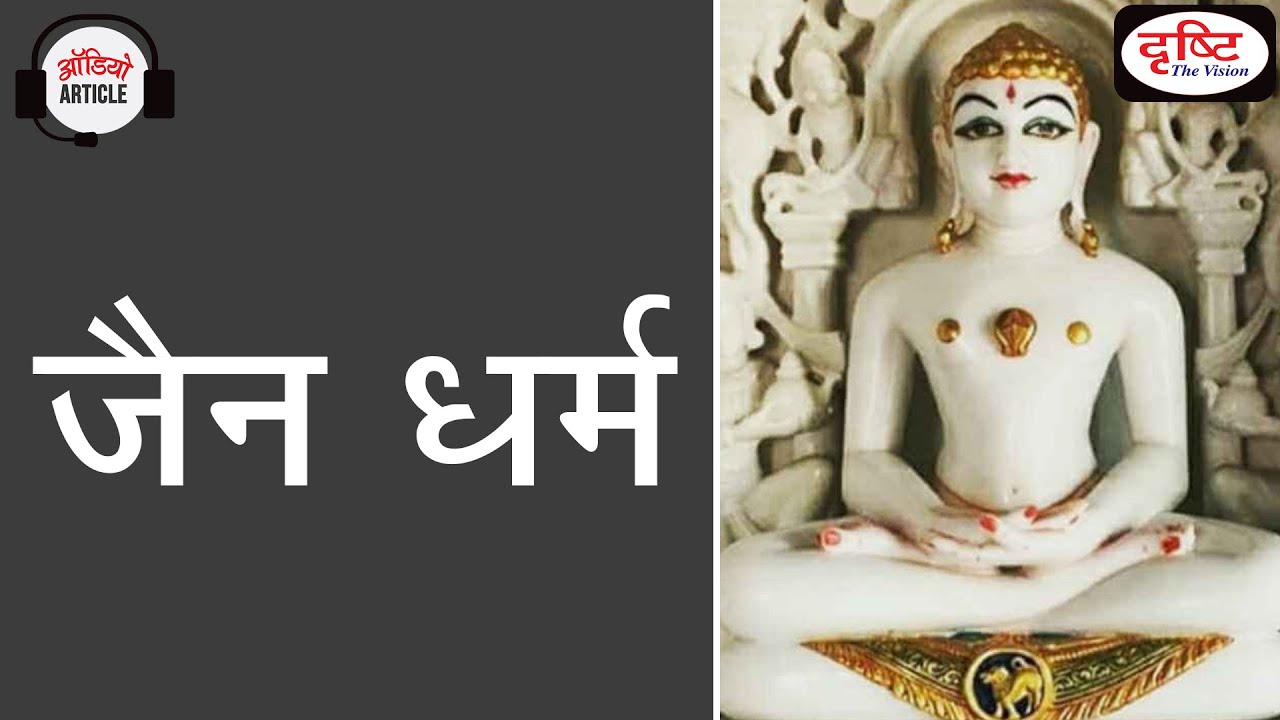
Jainism, founded in the by Vardhamana Mahavira, is one of the prominent ancient Indian religions emphasizing moral discipline, nonviolence (ahimsa), and spiritual emancipation. This philosophy, with its unique doctrine of karma, non-absolutism, and metaphysics, is crucial for students preparing for history and philosophy exams, and highlights the perfection of the soul through ascetic life and vows (vratas).
🎯 In this chapter, you will understand:
- The origins and primary moral principles of Jainism founded by Mahavira.
- The logical system of anekantavada and partial perspectives (naya).
- The distinction between soul (jiva) and non-living matter (ajiva).
- The five stages of spiritual bondage and final emancipation (Moksha).
💡 Why this topic matters: Jainism introduces fundamental ideas of strict non-violence, multi-sided reasoning, and individual moral responsibility that shaped Indian philosophy and ethics.
🧠 Core Idea: Every soul can reach complete spiritual perfection and freedom by removing karmic matter through self-discipline, right knowledge, and strict ethical conduct.
📌 Jainism: Philosophy, Metaphysics, and Spiritual Emancipation from 6th Century BCE
Jainism focuses on clear moral principles, self-control, and physical discipline as the path to free the soul from worldly suffering.
An Overview of Jainism and Its Core Principles
Jainism emphasizes moral living and ascetic practices to achieve spiritual liberation. It rejects the concept of a creator supreme being and centers on ahimsa, self-discipline, and vows as key instruments for attaining perfection.
- (i) Founded by Vardhamana Mahavira in the , forming a complete system of religious ethics and philosophical inquiry.
- (ii) Emphasizes ahimsa (nonviolence) towards all living beings, standing in direct contrast to traditional Vedic sacrifice rituals.
- (iii) Introduces vratas (vows) to guide followers in living a balanced moral and disciplined life.
📌 Philosophical Foundations of Jainism
The logical and epistemological foundations of Jain philosophy were systematically developed by thinkers like Kundakunda and later Umasvati. Understanding these concepts is key to grasping Jain metaphysics and logical thinking.

Development of Jaina Logic
Jaina logic evolved from early sacred texts like the Bhagavati-sutra to systematic writings by Kundakunda () and Siddhasena (). Key thinkers such as Akalanka, Hemchandra, Prabhachandra, and Yasovijaya further expanded on logical techniques, valid knowledge, and textual interpretation.
- (i) Introduced multi-valued logic to explain complex realities and nuanced truths.
- (ii) Integrated non-absolutism (anekantavada) directly into everyday reasoning.
- (iii) Emphasized partial perspectives (naya) for analyzing the different aspects of reality.
Core Principles of Jaina Metaphysics
Jain metaphysics establishes a clear distinction between jiva (soul) and ajiva (nonliving substance). It explains karma as a physical substance that attaches to the soul, creating continuous cause-and-effect chains across the universe.
- (a) Doctrine of anekantavada (non-absolutism) – reality possesses infinite facets and cannot be described by a single view.
- (b) Doctrine of naya – individual viewpoints provide partial truths rather than the complete picture.
- (c) Karma – physical matter that binds jiva to ajiva, driving the cycle of birth, death, and rebirth.
📌 Knowledge and Epistemology in Jainism
Knowledge (jnana) in Jainism is classified as sensory or non-sensory, focusing on valid knowledge (pramana). The highest stage of understanding is omniscience (kevala-jnana), reached when all karmic dirt is completely removed.
Jiva and Ajiva Characteristics
The foundational separation between soul (jiva) and matter (ajiva) forms the core of Jain worldview. Grasping this distinction is essential to understand how the soul becomes trapped by karma and how it breaks free.
The dual classification of existence into Jiva and Ajiva - Mati: Basic empirical perception gained through human senses and normal mental reasoning.
- Aparoksha: Direct internal knowledge obtained without relying on physical sense organs.
- Jiva Types: Souls are categorized either as Samsari (bound in worldly life) or Siddha (completely liberated).
- Ajiva Categories: Non-living elements comprising Pudgala (matter), Dharma (principle of motion), Adharma (principle of rest), Akasa (space), and Kala (time).
Asrava, Bandha, Samvara, Nirjara, and Moksha
The five principles explain the step-by-step path of the soul from worldly bondage to final release in Moksha. This spiritual progression provides a roadmap for understanding ultimate liberation.
- (i) Asrava – the initial flow of karmic matter into the soul.
- (ii) Bandha – the binding of karmic particles to the soul due to passions and actions.
- (iii) Samvara – stopping any new karmic matter from entering the soul.
- (iv) Nirjara – burning away and shedding old, accumulated karma.
- (v) Moksha – complete freedom of the soul from matter, reaching eternal perfection.
⚡ Quick Revision Capsule: Key Concepts of Jain Philosophy
A summarized look at the main pillars, stages of bondage, and metaphysics of Jainism for fast revision.
| Concept Category | Key Term & Definition | Core Significance |
|---|---|---|
| Ethical Foundation | Ahimsa (Non-violence) | Strict avoidance of harm toward all living beings in thought, word, and deed. |
| Epistemology | Anekantavada (Non-absolutism) | Acknowledges that truth and reality have multiple sides and infinite aspects. |
| Metaphysics | Jiva & Ajiva | The dual nature of existence separating conscious souls from non-conscious matter. |
| Spiritual Process | Samvara & Nirjara | Halting new karmic inflow and purging existing karmic matter from the soul. |
| Ultimate Goal | Moksha / Kevala-jnana | Attainment of omniscience and absolute liberation from the cycle of rebirth. |
📝 Summary
Jainism provides a detailed philosophical, metaphysical, and logical system originating in the . Grounded in ethical nonviolence and karma theory, its core doctrines—including jiva, ajiva, anekantavada, and moksha—offer essential insights for students exploring Indian philosophy and historical traditions as documented in texts like the Bhagavati-sutra.
🚀 Quick Revision Points
Essential facts to review before examinations:
- (i) Founded by Vardhamana Mahavira in the as a reaction against ritual sacrifices.
- (ii) Anekantavada asserts that reality is multi-faceted, analyzed through partial viewpoints (naya).
- (iii) Existence is divided into conscious entities (jiva) and five types of non-conscious substances (ajiva).
- (iv) Liberation (Moksha) requires complete removal of karmic matter through strict vows (vratas).
- 💡 Exam Tip: Remember the clear sequence of karmic bondage and release: Asrava (influx) → Bandha (bondage) → Samvara (stoppage) → Nirjara (shedding) → Moksha (liberation).
❓ Frequently Asked Questions (FAQ)
Q1: Who founded Jainism and when did it emerge?
A1: Jainism was formally established in its prominent form by Vardhamana Mahavira during the .Q2: What is the core idea of Anekantavada?
A2: Anekantavada is the doctrine of non-absolutism, stating that reality is complex and has many perspectives, so no single human view represents the ultimate truth.Q3: How does Jainism view the concept of Karma?
A3: In Jainism, karma is considered actual physical substance (pudgala) that sticks to the soul (jiva), keeping it bound in the cycle of birth and rebirth until cleared.