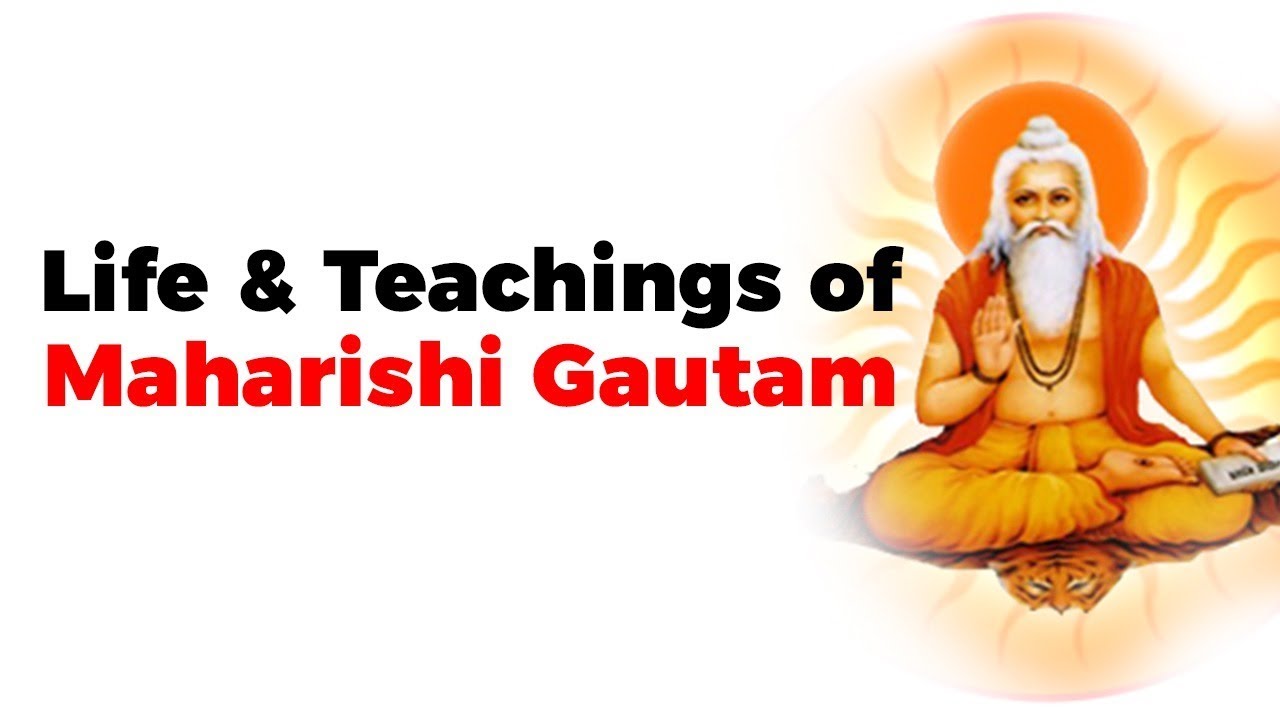
The sage Gotama or Gautama is the founder of the Nyāya system, a prominent ancient Indian philosophical school. Known as Akşapāda, he authored the foundational Nyāya-sutra. The system, also called Tarkaśāstra or the science of reasoning, is crucial for students studying Indian philosophy, logic, and epistemology in . This detailed explanation covers Nyāya epistemology, sources of knowledge, and perception, making it essential for exam preparation and conceptual clarity.
🎯 In this chapter, you will understand:
- The origins and foundational thinkers of the Nyāya school.
- The four valid means of knowledge (Pramāṇas) recognized in Nyāya.
- The classification of perception into indeterminate (Nirvikalpa) and determinate (Savikalpa).
- The logical structure of inference (Anumāna), causality, and the path to liberation (Mokşa).
💡 Why this topic matters:Nyāya provides the logical backbone for ancient Indian thought, establishing systematic rules for debate, clear thinking, and correct knowledge acquisition.
🧠 Core Idea: True freedom from suffering comes through correct knowledge (Pramā), which is gained by rigorous testing of reality through valid logical methods.
The Sage Gotama or Gautama: Founder of the Nyāya System and its Philosophical Foundations
The Nyāya tradition grounds its logical principles in foundational texts written across centuries by dedicated thinkers.
- Introduction to the Nyāya System by Gautama
The Nyāya system, founded by Gotama or Gautama, is the science of reasoning and logic. It is also called Pramānaśāstra or Hetuvidya, emphasizing critical study, debate, and epistemology. The main sources include Gautama's Nyāya-sutra, Vātsayana's Nyāya-bhāsya, Udayotkara's Nyāya-vārtika, and Vāchaspati's Tatparya-tika. Later scholars like Udayana and Jayanta expanded the system with significant works. Nyāya is allied with the Vaiśeşika system, focusing on logic, epistemology, and atomistic pluralism.
- (i) Epistemological focus:Nyāya develops methods for acquiring valid knowledge (Pramā) and understanding reality.
- (ii) Metaphysical alignment: Adopts Vaiśeşika atomistic metaphysics while maintaining independent logical inquiry.
- (iii) Goal of liberation: Both Nyāya and Vaiśeşika view life as suffering, with liberation attained through correct knowledge.

Epistemology (Pramānaśāstra) in the Nyāya System
The Nyāya system defines knowledge (Jňāna) as cognition (Buddhi), apprehension (Upalabdi), and experience (Anubhava). Valid knowledge manifests objects as they are (Paratahpramānya), while invalid knowledge includes memory, doubt, error, and hypothetical reasoning.
Valid and Invalid Knowledge in Nyāya
Valid knowledge corresponds to reality and reveals both subject and object. Invalid knowledge misrepresents reality and includes four kinds:
- (i) Memory (Smŗiti): Representative cognition not directly presenting the object.
- (ii) Doubt (Samśāya): Uncertain cognition preventing clear understanding.
- (iii) Error (Viparyaya): Misapprehension of an object.
- (iv) Hypothetical reasoning (Tarka): Speculative cognition lacking certainty.
Sources of Knowledge (Pramanas) in Nyāya
The Nyāya system recognizes four valid means of knowledge, expanding beyond Vaiśeşika's two:
- (a) Perception (Pratyakşa): Direct cognition through sense-object interaction.
- (b) Inference (Anumāna): Logical reasoning from known premises.
- (c) Comparison (Upamāna): Knowledge derived via analogy or similarity.
- (d) Verbal testimony (Śabda): Reliable knowledge obtained from authoritative sources.
Perception (Pratyakşa) and its Types in Nyāya
Perception is the first and foremost valid Pramana, involving direct cognition through sensory interaction. Nyāya distinguishes between indeterminate and determinate perception.
Indeterminate Perception (Nirvikalpa)
This is the initial stage of perception without conceptualization or naming (avyapadeśya). It is raw awareness of 'that', free from discrimination or synthesis.
- (i) Immediate apprehension of an object.
- (ii) Psychological experience devoid of logical processing.
- (iii) Pre-conceptual stage before determination of 'what' the object is.
Determinate Perception (Savikalpa)
The later stage where the object is clearly recognized with its name and attributes, forming conceptual, relational, and articulate knowledge.
- (a) Assimilation, discrimination, analysis, and synthesis applied.
- (b) Recognition of objects as specific entities (e.g., rope as rope).
- (c) Integration of cognitive awareness into logical understanding.
Unified Perception Concept
Nyāya maintains that indeterminate and determinate perceptions are stages of the same process, not distinct kinds. Separation occurs only in thought for analytical purposes.
The two-stage progression from raw awareness to structured perception. - Stage Progression: Indeterminate perception evolves naturally into determinate perception.
- Cognitive Unity: Cognitive reality remains singular, ensuring consistent epistemological analysis.
Summary of Nyāya System and its Significance
The Nyāya system founded by Gautama is foundational for Indian logic and philosophy students. Covering epistemology, perception, inference, comparison, and verbal testimony, it guides critical reasoning and valid cognition. Understanding Nyāya enhances analytical skills and provides deep insight into Indian philosophical thought, making it essential for academic study and competitive exams.
The Nyāya philosophy offers a systematic approach to valid knowledge acquisition and Indian epistemology, covering inference (Anumāna), comparison (Upamāna), verbal testimony (Śabda), and the theory of causality. This detailed exposition from ancient Indian philosophy is crucial for students preparing for philosophy, logic, and competitive exams seeking deep understanding and clarity of thought.
Nyāya Philosophy: Inference, Comparison, Verbal Testimony, Causality, and Liberation
Beyond direct perception, Nyāya provides robust logical tools to infer unobserved truths, trust authoritative accounts, understand cause-effect dynamics, and work toward spiritual liberation.
- An overview of the Nyāya system and its methods of acquiring valid knowledge.
The Nyāya school classifies valid knowledge (pramāṇa) into perception, inference, comparison, and verbal testimony. These methods serve as the foundation for logical reasoning, critical analysis, and attaining Mokşa. Each pramāṇa provides unique insights into the cognition process, ensuring a rigorous framework for understanding reality.
- (i) Perception: Direct cognition through senses, forming the basis of all further knowledge.
- (ii) Inference: Indirect or relational knowledge derived through reasoning and recognition of invariable connections.
- (iii) Comparison & Verbal Testimony: Additional means to understand objects and concepts not directly perceptible.
Inference (Anumāna)
Inference is indirect knowledge obtained through logical reasoning and is a central concept in Nyāya epistemology. It demonstrates how cognition arises via a 'mark' (hetu) connecting the minor and major terms.
Principles of Anumāna
The Nyāya system emphasizes that inferential knowledge relies on the middle term (linga) found in the minor term (pakşa) and invariably associated with the major term (sādhya), a relation called Vyāpti. This invariable concomitance ensures valid cognition.
- (i) Minor term (pakşa): The subject under observation, e.g., a hill where smoke is seen.
- (ii) Major term (sādhya): The predicate to be established, e.g., fire in the hill.
- (iii) Middle term (hetu): The connecting evidence, e.g., smoke that indicates fire.
- (iv) Example: Observing smoke on a hill leads to the inference that fire is present, demonstrating logical reasoning in Nyāya.
Comparison (Upamāna)
Upamāna is knowledge derived through analogy, connecting words and their denotations. It allows recognition of unfamiliar objects based on similarity.
Mechanism of Comparison
Comparison helps a learner relate a newly encountered object with known entities. Recognition depends on prior knowledge provided by reliable sources or speech (sabda).
- (i) Word-object relation: Identifying an unknown animal as a 'gavaya' due to resemblance to a domestic cow.
- (ii) Role of prior knowledge: The person learns the name and attributes of the object through trusted verbal testimony.
- (iii) Practical importance: Enables understanding and communication of objects not directly experienced, aiding exam preparation in logic and philosophy.
Verbal Testimony (Śabda)
Śabda is a pivotal source of valid knowledge in Nyāya. Knowledge obtained through trustworthy speech, whether ordinary or scriptural, is considered reliable.
Types of Verbal Testimony
There are two main categories: ordinary verbal testimony (lokavākya) and scriptural verbal testimony (śāstravākya). Both emphasize the credibility of the source for ensuring validity.
- (i) Ordinary testimony: Comes from a knowledgeable and trustworthy individual.
- (ii) Scriptural testimony: Derived from sacred texts like the Vedas.
- (iii) Trustworthiness: The reliability of the speaker or text is essential for valid cognition.
Theory of Causality in Nyāya
The Nyāya system highlights the invariable relation between cause and effect. Understanding causality is crucial for logical reasoning and philosophical analysis.
Types of Causes
Causality explains how effects are produced. Nyāya classifies causes into material, efficient, and final.
- (i) Material cause (upādāna): Substance from which the effect arises.
- (ii) Efficient cause (nimitta): The agent or force producing the effect.
- (iii) Final cause (prayojana): Purpose or goal for which the effect occurs.
- (iv) Principle of Vyāpti: Effect invariably follows the cause whenever the cause exists, ensuring logical consistency in reasoning.
Liberation (Mokşa)
In Nyāya, Mokşa is the ultimate aim of life, representing freedom from suffering and mental distractions. It is attained through knowledge, logical reasoning, and elimination of ignorance.
Path to Liberation
Attaining liberation requires understanding reality, practicing right cognition, and following ethical conduct guided by logic.
- (i) Elimination of ignorance: Recognizing the root cause of suffering.
- (ii) Right knowledge: Knowledge of self, world, and causal relations.
- (iii) Practical means: Right cognition, action, and conduct based on Nyāya principles.
⚡ Quick Revision Capsule: Summary of Nyāya Pramāṇas & Concepts
The table below summarizes the key pillars of Nyāya epistemology for fast review before examinations.
| Pramāṇa / Concept | Definition / Core Meaning | Key Example or Subtype |
|---|---|---|
| Perception (Pratyakşa) | Direct cognition through sense-object contact. | Nirvikalpa (Indeterminate) & Savikalpa (Determinate) |
| Inference (Anumāna) | Indirect knowledge via invariable relation (Vyāpti). | Observing smoke on a hill to infer fire. |
| Comparison (Upamāna) | Knowledge gained through analogy and similarity. | Identifying a gavaya (wild cow) based on description. |
| Verbal Testimony (Śabda) | Knowledge received from reliable and expert sources. | Lokavākya (Ordinary) & Śāstravākya (Scriptural) |
| Liberation (Mokşa) | Cessation of suffering attained through right knowledge. | Dispelling ignorance through valid Pramā. |
📝 Summary
Developed in , the Nyāya-sutra by Gautama laid the groundwork for Indian logic and analytical philosophy. By detailing how human beings acquire true knowledge through direct sense experience, deduction, analogy, and expert testimony, Nyāya shows that correct thinking is the key to dispelling ignorance and reaching spiritual release (Mokşa).
🚀 Quick Revision Points
Essential facts to review before examinations:
- (i) Gotama (Akşapāda) founded the Nyāya system and wrote the Nyāya-sutra.
- (ii) Nyāya accepts 4 valid Pramāṇas: Pratyakşa, Anumāna, Upamāna, and Śabda.
- (iii) Perception moves from pre-conceptual (Nirvikalpa) to structured conceptual awareness (Savikalpa).
- (iv) Inference relies on Vyāpti—the invariable relation between smoke (hetu) and fire (sādhya).
- 💡 Exam Tip: Always remember the three terms in Nyāya inference: Pakşa (minor term/subject), Sādhya (major term/thing to prove), and Hetu (middle term/reason). Questions frequently ask you to identify these in the classic hill-and-fire example!
❓ Frequently Asked Questions (FAQ)
Q1: Who is the founder of the Nyāya system?
A1: The sage Gotama (also known as Gautama or Akşapāda) founded the Nyāya system and authored the Nyāya-sutra.Q2: What are the four Pramāṇas in Nyāya philosophy?
A2: The four valid sources of knowledge are Perception (Pratyakşa), Inference (Anumāna), Comparison (Upamāna), and Verbal Testimony (Śabda).Q3: What is the difference between Nirvikalpa and Savikalpa perception?
A3: Nirvikalpa is raw, immediate awareness without names or labels, while Savikalpa is structured perception where an object's name, class, and attributes are clearly recognized.