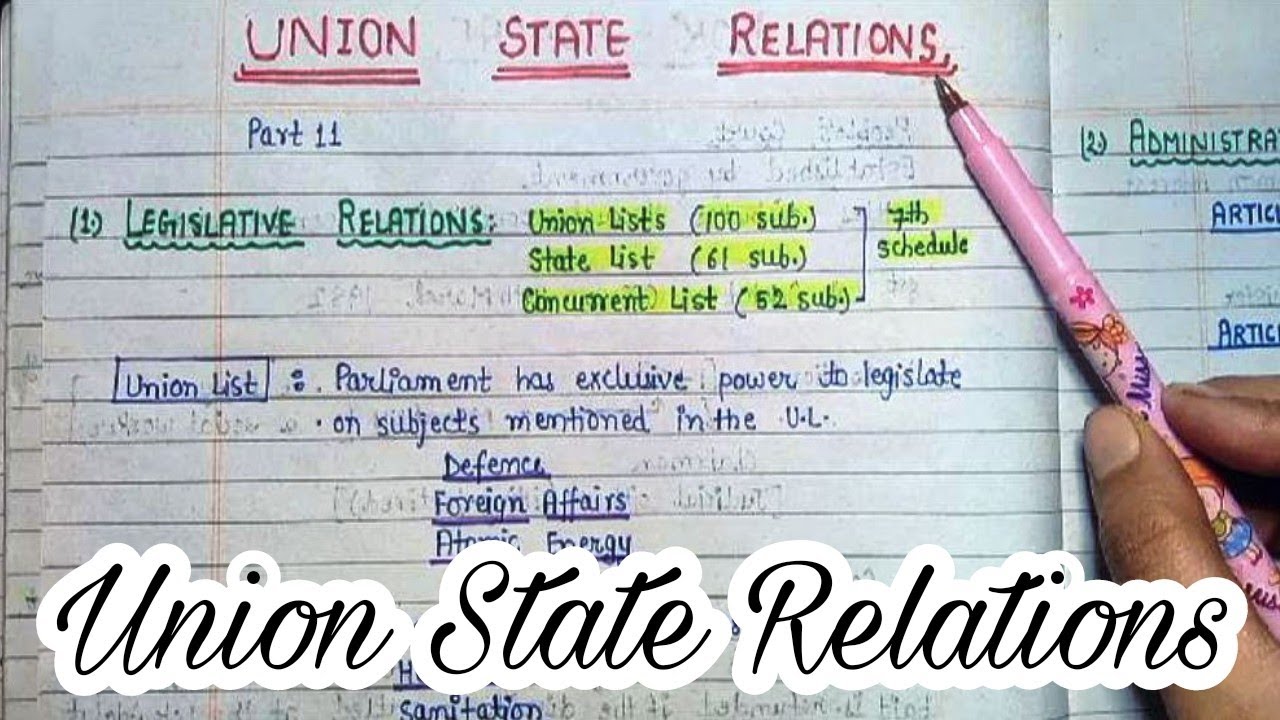
Explore the intricate dynamics of Centre-State Financial Relations, a cornerstone of Indian federalism defined under Part XII of the Constitution of India. Think of Indian federalism like a big family sharing a household budget: the Central Government (the Centre) and the regional leaders (the States) need clear rules so both can run their households smoothly without arguing over who collects the cash or pays the bills. Written into constitutional rules under Articles 268 to 293, this framework defines the Allocation of Taxing Powers to ensure smooth governance. This comprehensive guide details these essential principles, offering essential insights for students and competitive exam aspirants aiming for a deep, easy-to-understand grasp of fiscal governance.
🎯 In this chapter, you will understand:
- How Part XII of the Constitution divides money duties between the Union and the States.
- The three main lists that give taxing authority to Parliament and State Assemblies.
- The difference between levying a tax, collecting it, and sharing the collected income.
- The legal limits put on state powers regarding trade, electricity, and water resources.
💡 Why this topic matters: It explains how tax money paid by citizens is divided so that both national defenses and local town services like schools, roads, and hospitals get fair funding.
🧠 Core Idea: Money collection is centralized for big national matters, but funds are shared back to states so local development never starves.
Centre–State Financial Relations: The Constitutional Framework and Taxing Powers (2026 Edition)
A complex narrative of fiscal federalism unfolds through the constitutional arrangements that bridge the gap between the Union and the States. The financial system of India is not just a collection of complicated laws; it is an organized plan designed to keep our nation united while giving each state enough independence to manage its own affairs through teamwork and clear rules.
- (i) The foundational rules are written directly into Part XII of the Constitution of India, creating a neat and organized system for revenue sharing.
- (ii) These rules make sure that the Union Government and State Governments have clearly marked legal spaces so they do not clash or tax the exact same things in confusing ways.
- (iii) In addition to the primary articles, extra rules help fine-tune these financial agreements so both levels of government stay financially healthy.
Understanding the Allocation of Taxing Powers in the Federal System
The Constitution acts like a supreme umpire, explicitly dividing the authority to raise money through taxes between Parliament and individual State Legislatures.

The Three-Fold Distribution of Taxation Authority
To avoid arguments and keep duties crystal clear, the Constitution uses the logic of the Seventh Schedule to divide items into specific lists. This keeps Parliament and State Assemblies working peacefully within their own boundaries.
- (i) Exclusive Union Authority:Parliament has the sole power to collect taxes on items in the Union List, which includes 15 subjects like national defence and international trade.
- (ii) State Autonomy in Taxation: Every State Legislature has the exclusive right to place taxes on the 20 subjects listed in the State List, such as local agriculture and police services.
- (iii) Concurrent Taxing Rights: There are 3 items in the Concurrent List where both the Union and States share the right to set taxes.
- (iv) The Role of Residuary Powers: If a brand-new tax idea appears that isn't on any list, these residuary taxation powers automatically belong to Parliament. In past years, this covered things like the gift tax, wealth tax, and expenditure tax.
The Distinction Between Levying, Collecting, and Distributing Taxes
An interesting design of the Indian tax framework is separating who makes the rule to tax, who physically collects the money, and who gets to spend the final cash reserves.
Case Study: Income Tax and Revenue Sharing
A classic real-world demonstration of how this works in practice involves personal earnings and tax collection across the nation.
- (i) For example, personal income tax is officially levied and collected by the Centre.
- (ii) However, to keep federalism strong, a large portion of this collected cash is later shared with the States so local schools, hospitals, and roads get funded.
Constitutional Restrictions on State Taxing Powers
Even though states get plenty of freedom to manage their money, the Constitution adds smart limits and safety checks to protect business across state lines and preserve a strong national economy.
Restraints on Professional Taxes and Commodity Sales
A state's power to tax its citizens is not limitless. Specific constitutional limits place a cap on professional taxes and set rules on buying and selling goods.
- (i) Professional Tax Ceiling: A state can tax people on their professions, trades, and employments, but the law strictly says no single person can be charged more than ₹2,500 per year.
- (ii) Trade and Commerce Restrictions: States can tax the purchase or sale of goods (except newspapers), but they must follow four simple safeguards:
- (a) Deals happening outside the state border cannot be taxed by that state.
- (b) No state tax can be placed on items that are being imported or exported to or from foreign countries.
- (c) Trade moving across state borders stays protected from individual state taxes.
- (d) Parliament can declare certain goods as items of special significance, which limits how much a state can tax them.
Restrictions Regarding Electricity and Water Resources
Essential services like electricity and water—especially when tied to national facilities or rivers passing through multiple states—have extra safeguards against state taxes.
- Electricity Exemptions: A state cannot impose a tax on electricity when it is:
- (i) Consumed by or sold to the Union Government.
- (ii) Used to build, operate, or maintain any railway run by the central government or a railway company.
- Inter-State River Authorities: Taxing water or hydroelectric power generated by inter-state river valley authorities requires following a strict step-by-step process:
- (i) The proposed state bill must be held for the President’s consideration.
- (ii) Official approval or assent from the President is mandatory before the tax can legally take effect.
- Electricity Exemptions: A state cannot impose a tax on electricity when it is:
⚡ Quick Revision Capsule: Centre-State Taxing Breakdown
Here is an easy snapshot summarizing how taxing authority and restrictions are split between the Union and the States under Indian fiscal federalism:
| Tax Category / Power | Authority / Body Responsible | Key Constitutional Limits / Rules |
|---|---|---|
| Union List Taxes | Parliament (15 Subjects) | Covers national subjects like income tax, customs, and corporation tax. |
| State List Taxes | State Legislatures (20 Subjects) | Covers local items like land revenue, agricultural income, and state excise. |
| Residuary Tax Powers | Parliament Exclusively | Applies to new unlisted taxes (e.g., historical wealth tax or gift tax). |
| Professional Taxes | State Legislatures | Strictly capped at a maximum liability of ₹2,500 per person per year. |
| Utility Taxes (Water/Power) | States (With Restrictions) | Exempts Union railways; inter-state river water taxes require Presidential assent. |
📝 Summary
Understanding Centre–State Financial Relations is essential for students to appreciate how Part XII and Articles 268 to 293 maintain national balance. By setting clear boundaries for the Allocation of Taxing Powers and outlining fair limitations, the Constitution of India guarantees that both central and state governments have the resources to build a prosperous society. Designed back in and constantly adapting through modern fiscal updates, this federal structure remains a top priority for any Indian Polity study plan.
🚀 Quick Revision Points
Essential facts to review before examinations:
- (i) Part XII governs financial relations through Articles 268 to 293.
- (ii) The Seventh Schedule sets 15 tax subjects for the Union and 20 for the States.
- (iii) Unlisted tax powers are known as residuary powers and belong solely to Parliament.
- (iv) State-levied professional tax cannot exceed ₹2,500 annually per individual.
- 💡 Exam Tip: Remember that income tax is levied and collected by the Union, but its proceeds are distributed to the States based on recommendations from the Finance Commission.
❓ Frequently Asked Questions (FAQ)
Q1: Which part of the Indian Constitution governs financial relations between the Centre and States?
A1: Part XII of the Constitution covers these relations, specifically under Articles 268 to 293.Q2: What happens if a tax subject is not mentioned in the Union, State, or Concurrent lists?
A2: Such taxes fall under residuary taxation powers, which belong exclusively to Parliament.Q3: Can a state government tax electricity used by the Indian Railways?
A3: No, the Constitution of India explicitly prohibits states from taxing electricity consumed by or sold to the Union Government or used for railway operations.